

He Too Takes all Kinds - part 1


Bryan Chapell: If the question is, "Are you welcome?" Jesus says, "If you come to me, you are welcome," even despite the horrid things in your past, the horrid things you know about yourself. He knows it too and still puts the welcome mat down.
Guest (Male): So glad you joined us for today's Unlimited Grace, the audio broadcast ministry of pastor and author Bryan Chapell. In today's episode, Pastor Bryan shares a lesson from John chapter four and five.
In this passage, Jesus makes it clear that the Gospel is not for those who are worthy, but for those who are welcomed by His amazing grace and love. You can find this lesson and many others when you visit UnlimitedGrace.com. And while you're there, look for this wonderful resource from Dr. Chapell, Holiness by Grace.
In this book, Pastor Bryan will guide you through reassuring scripture passages to discover how works and obedience are not a means of establishing or maintaining salvation, but a grateful response to God's mercy. Let's hear now from Dr. Bryan Chapell as he shares the lesson, "He Too Takes All Kinds."
Bryan Chapell: Some time ago, a visiting pastor went to a church and, in the course of his preaching, noticed a young woman who, through the course of the sermon, just by the look of her eyes, showed deep guilt and deep pain. Being sensitive, the pastor went to her after the service and asked a question, "Would you like to know what it means to be forgiven and to have a life with Jesus Christ?" And the eyes that had pain and guilt behind them looked down, filled with tears that hit the floor, and she said, "I am not worthy."
Said the preacher, "The issue is not whether you are worthy, but whether you are welcome." What Jesus is doing in this passage of scripture is making it very clear that His Gospel, His good news, His forgiveness, His offer of a new life is not for those who are worthy, but for those who are welcomed by an amazing grace that is His own love for those who are truly unworthy.
If we don't know that, if something in us doesn't recognize that this Gospel, this good news that we have, is for those who are unworthy, then not only will we reach a point in our lives where we will wonder if we are welcome, but the message that we have from Christ will wither within us so that those we love the most will not know the welcome either.
If the issue is not our worthiness but our welcome, you have to recognize Jesus must make it very clear. And the way He does so in this passage is just by dealing with a particular man in a particularly difficult circumstance. His son is dying. Now, other people's sons have died. Other people have had children they get sick, but why this man? Why does he get such attention? And what Jesus is doing is saying, "I want to show you how wide the door of welcome truly is."
Now, all we know about this man, if you're saying, "Why is he in the Bible?" is what we're told in verse 46: Jesus came again to Cana in Galilee where He made the water wine, and at Capernaum, there was an official whose son was ill. That's all we know. He's an official whose son was ill.
Now, if you look at that word "official," in some of your Bibles it will say something like "nobleman." Others will say a "royal official," because the language there simply says "the king's man." He is one who represented the king of the nation at that time. Now, that's something you need to know. What you know is the commentators now debate, was this a Jew or was this a Gentile? Because you may remember while Jesus is at Cana performing this miracle, the official came from Capernaum, another city.
The other city was a much more major city. Capernaum was on the Sea of Galilee. It was the place where militaries and the markets of that ancient world crisscrossed. It was a place of commerce and communication. It was the intersection of major highways of the ancient world. This official comes from Capernaum, but the other thing you should know about Capernaum is even though it's in Israel, it is under Roman occupation.
For this official to come to Jesus from Capernaum means that he's a collaborator. The Romans who have oppressed the Jews now have control, and whoever this man is, whether he's Jew or Gentile, he has the status of a Gentile according to Jewish law because he's collaborating with the enemy, with Gentiles. He is now oppressing his own people, or else perhaps at the behest of the Romans, he's a mercenary of another nation oppressing the people. Whatever reason, if Jesus shows him mercy, then the news will spread. He is an official, a royal from Capernaum.
Why do we need to know that? Because of those to whom Jesus has spoken so far. I mean, if you've been here a few weeks and you kind of recognize where we've been in these conversations introducing us to Jesus in the book of John, you recognize Jesus started with His mom, the wedding feast at Cana. The next conversations, of course, are with His cousin, John the Baptist, on both sides of the Jordan River. Then the next conversation is with a religious rabbi from His own faith, Nicodemus.
So far, we've had family and faith. Next, the conversation with a Samaritan woman, if you will, a half-Jew, one not without knowledge of Jewish heritage, but not fully Jewish yet. So far, we've dealt with family and cousin and faith leader and one of His faith heritage.
But you may remember something else when Jesus spoke to Nicodemus, He said, "For God so loved the world that He gave His only son that whoever believes in Him should not perish but have eternal life." The question is, how wide is "whoever"? Remember in the first chapter of the book of John, it says, "He came into the world, but the world did not know Him." Yet God so loved the world that He gave His only son that whoever believes—well, out of the world, is that just meant to be family, faith leaders, people of the same heritage, or could it be wider than that? And when Jesus is now dealing with this Gentile-status official from Capernaum, what you see is the door opening wide.
Particularly important for us in this day and age. While we may not always recognize it, we live in the age of the most rapid expansion of Christianity in the history of the world. People from Nigeria that was mentioned in the prayer earlier, people from South America, Africa, Asia are coming to the Lord in unprecedented numbers. But they're also coming to our shores and our town in unprecedented numbers from different parts of the world. And if we are just going to extend the Gospel to those of our own family and faith and heritage, we are forgetting how wide is the door and the welcome mat that is intended to be there.
If we really understand the welcome that is intended, we have to ask ourselves not only "why this man?" but "why this miracle?" After all, this man comes and he just asks, "My son is dying, will you help?" And Jesus helps him. I mean, there were other people to help. There are other parts of the world that he could have helped people, other towns, but this man and this place, why? Why this miracle now?
To answer the question, maybe you have to simply ask the question, "Why any miracle?" Why do miracles occur in the Bible? And to answer, you have to look at when they occur. Now, you probably think because in our Bibles, it's a book that covers over 2,000 years of history and there are lots of miracles in there, you get the sense that since there's such concentration here, miracles must just be happening all the time, one after another, in those Bible times.
But it's not actually that way. If you were to look in the Old Testament, you have a time from Abraham to Jesus of about 2,000 years and 70 miracles approximately recorded. Now, if you do the math, that's about one miracle per generation. And even that's not the full picture, because the miracles are happening in clusters at particular times, as though when there's a new message, a new era of the Gospel breaking out, that's when you get the fireworks going off and you get this whole cluster of miracles at a time.
The first major cluster of miracles is around the time of Abraham and the early patriarchs: Abraham, Isaac, and Jacob. As God gave the promise to Abraham that he would make him a father of many nations, "Abraham, you're the start of something big." And when God makes the promise that Abraham will be the start of something big, there's a whole series of miracles that occur around him and his children and grandchildren.
But then there's a long period from the time of 2000 until 1400 BC that there's virtually no miracle recorded at all. And then what happens at that time is the Exodus. As God's people are in slavery in Egypt and Moses comes to release them, suddenly we get the fireworks going off again, another cluster of miracles as God is saying, "Not only have I given you promise, but I am going to release you from bondage to get you into the Promised Land."
And now that next series of miracles occurs. But then there's nothing that happens again basically until the time of David. Now what we have is the rule of God being established through a Davidic King to whom God makes a promise, "David, through you, I will establish an eternal kingdom." And the rule of God that's being promised from the time of David forward begins to have, again, the cluster of miracles around it as God is saying, "Under my rule is my power to be established."
And yet, despite that great expression of the reign and the rule of God, the people turn away from God. And when they do, they are put in slavery, into exile again, until the time of Daniel and the prophets that follow him from the year 600 forward, and suddenly we get the great cluster of miracles again.
The miracles happen in these fireworks displays roughly every 400 to 600 years. Roughly half a millennium goes by between each of the clusters of miracles. And what's happening, if you can put it all back together, if you say miracles occurring to make some great impression of the next in-breaking of the kingdom, the next great message of the Gospel coming forward, what has unfolded?
First, God says, "Here's my promise." Then He says, "Here is release from bondage. And as you are released from bondage, you can know the reign and rule of the Word of God over you. And when you turn away, I will still redeem my people and give them the land again."
Promise to release, to rule, to redemption. If you follow the pattern, what the miracles in the Old Testament are doing—each major fireworks display—is saying, "This is the Gospel being pointed to." The God of promise is the God who will release you from your bondage, and He will provide rule for your lives, and though you would turn away from Him, He will not turn away from you. He is the redeeming God.
But now we are to the New Testament. And now the question is going to be, if He is the redeeming God, who's going to do the redemption and for whom? And now John is on the scene. And he's already told us, at Cana, Jesus did his first sign. What did He do? He turned the water into wine to make the wedding go well. He's a God who has power over material things to help everybody who needs help and will turn to Him.
If the question is "By whom will this redemption occur?" the first sign at Cana said, "This one." But now this is the second sign at Cana. Do you remember that? John makes the point. He says it very specifically in verse 54: "This was now the second sign that Jesus did when He had come from Judea to Galilee." Now, it's not the second of all signs that Jesus had done. Remember, He'd been in Jerusalem, and even in Jerusalem, Nicodemus came to Him saying, "You must be from God because no one could do the signs that you are doing except He come from God."
And yet here we are back at Cana, the city of messages. And at Cana again, we are told by John, "This is the second sign." Not by whom the redemption will come, but for whom the redemption will come. And for whom does this redemption, this glory, this goodness, this grace ultimately come?
The King's man. A man whose son is dying and he comes to Jesus asking for help. And we can just read right past those words and not ask the really serious question. Wait, King's man? What King? I mean, who's in charge of this official? Who's he really serving? You know the town of Capernaum is under Roman occupation, but remember the Romans kind of put their vassal kings in place.
So if this is the King's man, what king does he serve? The answer is Herod. Herod, whose father also of the same name, in order to murder Jesus as a two-year-old, killed the babes of Bethlehem. But this Herod, not his father, this Herod had a mistress who maneuvered for the head of John the Baptist, Jesus' cousin. And it will be this same Herod that turns this same Jesus over to Pilate to be crucified. This king's man is an enemy of the King of Heaven.
But he comes to Jesus and he says, "Will you help me? My son is dying." And despite all the betrayals and the enemy action that this man has participated in, Jesus says, "The door's open. I'll help you." It's an amazing statement of the Gospel, that this redemption that God is offering is not just for the people of family, it's not just for the people of faith, it's not just for the people of heritage, it is for those who have walked away, turned against, fought against the purposes of the Savior.
And it's a message for us yet today. As we would first think, who's the Gospel for? Pastor Carrie already prayed earlier in the service for persecuted Christians around the world, and you think what would it mean if you are one of those people? If you were one of those four Muslim converts in Iran who, just this last week, because you partook of communion as an Islamic convert—now listen, the Christians were not flogged, but those Muslims who had become Christians were taken by their own countrymen, taken out, and received 80 lashes for taking communion with Christians though they were born Muslims. Would you pray for those who despitefully use you and persecute you? Would you do that?
Or what if you were in Eritrea right now? And some of you will be aware that for much of this last month, the Christian world as a whole has been praying for a particular Christian woman imprisoned in Eritrea, not for being a convert, just for being a Christian. And this week she died of pneumonia. In prison with her were 3,000 other Christians who are still there.
Or what about last month at the Westgate Mall in Nairobi, Kenya, where the terrorists came in and asked who were Muslims, and they separated out those who were Muslims and then killed those Christians and others who were not Muslims? Is the Gospel you believe wide enough for such as they? Because it was wide enough in Jesus to receive even those who had done that kind of evil to His family and would do it to Him.
It is a wide Gospel. We need to know it too. We need to know it when we recognize we are the people who maybe have been people of faith for a while but have turned our back on Jesus. Maybe it was in our teen years, maybe it was in just an action of a night, maybe it was just in the action of a youth or against a youth or in a moment of anger, or maybe it's been a long time anger at God and we have called Him our enemy and we've treated Him as the same, and we think there is no way that we would be worthy to come to God again. And He says, "The issue is not whether you are worthy, it is whether I am going to welcome you."
And what He is making clear through this man in John chapter four is that He will welcome those who turn to Him and come to help. And that's the message of the open door that's here. If the question is, "Are you welcome?" Jesus says, "If you come to me, you are welcome," even despite the horrid things in your past, the horrid things you know about yourself. He knows it too and still puts the welcome mat down.
But, of course, the welcome mat is not just for people who recognize that they may be the enemies. It may be for some of us who have been hurt by those who now need the Savior. And what Jesus is teaching us is surely one sign of an open door is a worn sofa that we invite in all kinds of people all the time. But another sign of an open door is a forgiving heart that even when you and your family have been hurt by someone, you say, "For the sake of the Gospel and the ministry of Jesus, I want you to know that He welcomes enemies, not just the people of family and faith. He even welcomes enemies who will come to Him." Why is this man here? Why is this miracle here? So that we will know how wide is the door of Jesus' welcome.
Friends, before you continue with your day, I'd love the opportunity to pray for you. Let's do that together now. Lord, thank You for delivering us from slavery to sin. Help us really to believe in that deliverance so that we continue through this day, presenting ourselves to You as ones who have been brought from death to life in Christ. May the privileges of grace grant us the power of love to live for You. We pray in Jesus' name, Amen.
Guest (Male): That's Pastor Bryan Chapell, and you've been listening to Unlimited Grace. If you'd like to hear more from Dr. Chapell, you can find a collection of valuable resources at UnlimitedGrace.com. When you visit, you will find today's message and many others from Pastor Bryan. Also, be sure to request a copy of Dr. Chapell's book, Holiness by Grace. We'll send you this book right away as our way of saying thanks for your most generous financial support. Please be sure to join us next time as once again we endeavor to put Christ at the center of our efforts so that lives might be transformed by His unlimited grace. This ministry is brought to you by Unlimited Grace Media and continues to be made possible with your generous financial support.
Featured Offer

In Bryan Chapell's book, you will learn how God's unlimited grace leads us to heartfelt obedience and transforming joy. Explaining why grace is important and giving us tools to discover it in all of Scripture, Unlimited Grace helps us to see how gospel joy transforms our hearts and makes us passionate for Christ's purposes.
Past Episodes

Featured Offer
In Bryan Chapell's book, you will learn how God's unlimited grace leads us to heartfelt obedience and transforming joy. Explaining why grace is important and giving us tools to discover it in all of Scripture, Unlimited Grace helps us to see how gospel joy transforms our hearts and makes us passionate for Christ's purposes.
About Unlimited Grace
About Bryan Chapell
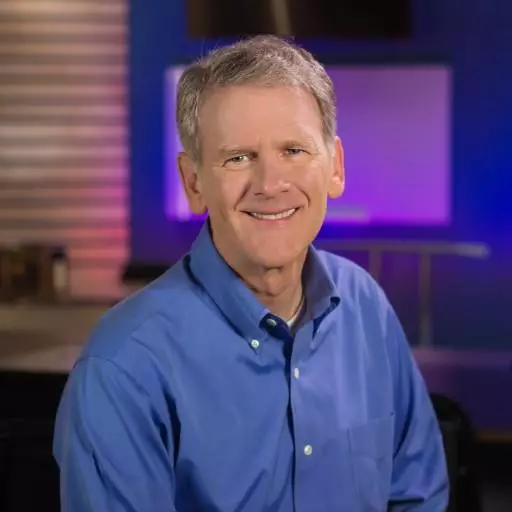
Bryan Chapell, Ph.D. is the Stated Clerk Pro Tempore of the Presbyterian Church in America (PCA), based in Lawrenceville, GA.
Dr. Chapell is an internationally renowned preacher, teacher, and speaker, and the author of many books, including Each for the Other, Holiness by Grace, Praying Backwards, The Gospel According to Daniel, The Hardest Sermons You’ll Ever Have to Preach, and Christ-Centered Preaching, a preaching textbook now in multiple editions and many languages that has established him as one of this generation’s foremost teachers of homiletics.
Dr. Chapell is passionate about sharing the truth of God's grace with others, because it provides the freedom and fuel for transformed lives of joy and peace.
He and his wife, Kathy, have four adult children, a growing number of grandchildren, and lives rich with friends, fishing and faith.
Contact Unlimited Grace with Bryan Chapell
info@unlimitedgrace.com