

Having God's Temple Vision - Part 2


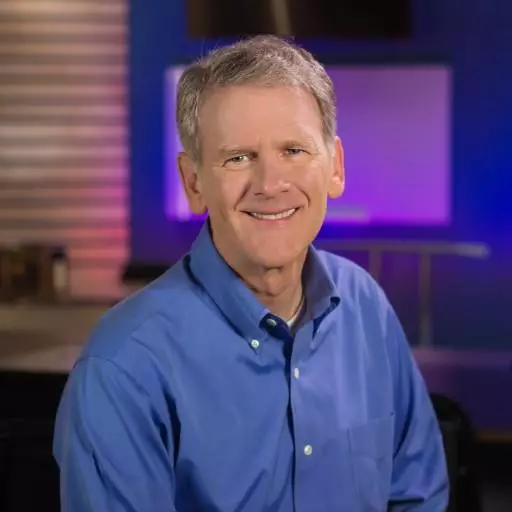
Pastor Bryan the second half of a lesson from Exodus 25-31. Dr. Chapell highlights ways in which God shows mercy towards His people and provisional care through His son.
Guest (Male): Do you not know without the shedding of blood there is no sacrifice for sin? For 1500 years we have practiced this. You had to sprinkle blood on the mercy seat for us to be consecrated. And here comes the New Testament gospel where the apostles say, "No! With the sacrifice of Jesus, once for all, the blood is done!"
Host: So glad you joined us for today's Unlimited Grace, the audio broadcast ministry of pastor and author Bryan Chapell. In today's episode, Pastor Bryan shares the second half of a lesson from Exodus chapters 25 through 31. Dr. Chapell highlights the ways in which God shows mercy towards His people and provisional care through His son.
You can find this lesson and many others when you visit unlimitedgrace.com. And while you're there, look for a new Christmas devotional from Pastor Bryan Chapell. We're providing this free resource to help you use this holiday season as an opportunity to center your attention on the arrival of our Savior.
This 20-day Christmas devotional is available for download today. Let's hear now from Dr. Bryan Chapell as he shares the second half of the lesson, Having God's Temple Vision.
Bryan Chapell: Let me ask that you would turn there now. Look to the Lord's word. We will look at Exodus. Did you gasp when you saw the text? Seven chapters! Exodus 25 through 31. It took God 40 days and 40 nights to give those seven chapters to Moses. We're only going to take about 40 minutes.
But it's important to recognize what is happening. God is describing the tabernacle in which He will dwell with His people. And He tells them about Himself in the many pieces of it. Let me ask that you would stand as we would honor God's word and to get just a flavor, we'll look at Exodus 25 verses 1 through 9 as we begin.
The Lord said to Moses, "Speak to the people of Israel that they take for me a contribution. From every man whose heart moves him, you shall receive the contribution for me. And this is the contribution that you shall receive from them: gold, silver, and bronze, blue and purple and scarlet yarns and fine twisted linen, goat's hair, tanned ram skins, goat skins, acacia wood, oil for the lamps, spices for the anointing oil and for the fragrant incense, onyx stones and stones for setting for the ephod and for the breastpiece. And let them make me a sanctuary that I may dwell in their midst. Exactly as I show you concerning the pattern of the tabernacle and all of its furniture, so you shall make it."
Let's pray together. Heavenly Father, in types and symbols, you prepared your people for the coming of your son. And now we look back to not only what they saw but the apostles and prophets testified for us. He came and is coming again. Help us to understand more of Him by the way in which you were revealing Him to your people through the ages, we pray. In Jesus' name, Amen. Please be seated.
A report looking at 17,000 teens in five nations and summarizing 24 studies. This result—you knew it probably before I would say it: regular use of violent video games leads to increased physical aggression as well as desensitizing kids to inappropriate social behavior and making them more willing to engage in self-risk. Our instincts told us that.
But what would change it? With a culture that's inundating kids with the fun, even the addictive nature of the video games when they become graphic and violent? Another study, same week, put out by Harvard, the C.H. Chan School for Public Health, saying the discovery is those teens who are regularly involved in worship are less likely to do drugs, less likely to engage in premarital sex, far less likely to do themselves harm.
The sanctuary helps anybody. And it's not just kids. Another study, two weeks ago, before so much of the awfulness came out of the polarization of our culture over the politics of the Supreme Court nomination. A study that was done for the anxiety level of children whose parents are regularly engaged in political discussion in the home.
Again, not a surprise, anxiety goes up and parents tend to know it, but are not able to stop themselves. Why? One commentator said, "After the slow news of the weekend, we all know Monday morning we will be able to take another hit from the cocaine pipe of political rage, and we can hardly wait." And our kids can hardly bear it.
Do we need some sanctuary? I know there's something to getting away and we do too, but things in their right priority have to be considered. The lake houses, the travel sports, the competitions of various sports that take us out of church ultimately become so regular that they eclipse church.
And we have to say, can I biblically point to how many times per year you're supposed to be in church? And I can't. But I can say we need some sanctuary. And it's not just about getting away from the world. Sanctuary biblically is not just separation from the world, it is separation unto God.
What was the second half of verse eight? Do you remember back in Exodus 25? "Let them make me a sanctuary that I may dwell in their midst." This is not just about separation from the world but union with God. And it's so precious, this notion of separated unto God, that in the New Testament where the Apostle John would talk about the coming of Jesus, he would say, "The word was made flesh and dwelt among us." You know what the word "dwelt" is? Tabernacled. Jesus was from heaven, He became flesh and He tabernacled among us.
And it's even the New Testament saying to us, when we have sanctuary, not just separation from the world but separation unto God, we are existing in the reality that is making Jesus real to us and present and powerful in bringing peace and satisfaction to our hearts because we're not just getting away from the world. It's Jesus saying, "Come away with me." And it's that Norah Jones lyric that is the gospel power yet for us: "Come away with me," says Jesus. Do we need that?
Again, a friend this last week, being honest, said, "We come to church and we get all charged up. But then the rest of the week wears us down." It was said with some grief but dealing with the realities we deal with. We love being here, we love the songs, the music, the uplift. And then we've got to face the real world.
Or is that the real world? If in fact what happens here is able to fuel you, to give you energy and strength and faith and confidence for whatever has to be faced, then I don't want to get caught in that bifurcation of the real world and the worship world that we compartmentalize these two pieces. We want to say, these are both real worlds.
And a lot of our decision-making as people of faith is which world is the one from which you are going to take energy? Which is the greater reality in which you will live? They're both real. I mean, you take again the polarities of the Supreme Court decision of the last couple of weeks. And you don't get much more real than that: the grittiness and the accusation and the hatred and the difficulty and the power plays. And you say, "That is real."
But in the midst of all that, do you remember there was just the account of a 10-year-old girl at a dinner table praying for those who were putting her father on trial? That's our reality too. And for us as believers, we have some choice of which reality will trump the other.
But as for me and my household, we will serve the Lord. We will worship the Lord. I know I've got the other reality to face, but this reality is real. God is real, present with His people. If I can just separate at times from everything else that would distract me, from the other priorities that would take me, if I can just have some sanctuary with God, it becomes so powerful for my heart and for my family and for everything that we want to actually take into our values and into the world.
But what will draw us here? Because we know it is time away from that world or the fun or the money or the employment or the persons of that world. What would actually bring us to the sanctuary that God is designing? And He tells us with clarity that is amazing. It is mercy for people who need sanctuary that would bring you here.
Host: You're listening to Unlimited Grace, the audio broadcast ministry of pastor and author Bryan Chapell. Thank you so much for taking the time to listen to today's broadcast. We'll return to our lesson from Pastor Bryan here in a minute, but I wanted to take a moment to share some ways that this program is growing and how you can be a part of what we're doing here at Unlimited Grace Media.
We know that each episode is made possible by God's grace and by the tremendous support of listeners like you. Through your help, we are now sharing the good news of God's unlimited grace in over 50 nations across the globe. And now we have another way that you can be a part of supporting our efforts.
We want to include you as part of a future episode. As we enter this holiday season, what are you thankful for and how are you seeing God's grace at work? You can call 229-41-GRACE and share with us your message of thanksgiving. Once again, call 229-414-7223 and leave us a brief message that we might include in an upcoming episode of Unlimited Grace.
We look forward to sharing your stories and messages of encouragement during this time of reflection and thanksgiving. As it is written in Hebrews, "let us consider how we may spur one another on toward love and good deeds." And now, more from Pastor Bryan Chapell on today's Unlimited Grace.
Bryan Chapell: God said to Moses, "The people, they shall make an ark of acacia wood. Two cubits and a half shall be its length, a cubit and a half its breadth, and a cubit and a half its height." Amazing. One of the most powerful gospel messages in all the Old Testament is found in a little box: three and a half feet by two and a half feet by two and a half feet.
And if you can get away from thinking about Indiana Jones for a moment, you may actually be thinking of the gospel that is on display. Yes, there is glory here. I mean, we recognize that in verse 11: "You shall overlay it with pure gold, inside and outside." Okay, it's glorious, it's wonderful.
Verse 16: "And you shall put into the ark the testimony that I give you." Glorious box. What goes in the box? The testimony of the righteousness of God. Do you remember Moses is going to receive tablets of stone whereon are inscribed the commandments of the expectation of the righteousness of God? So put into the box is the required righteousness. What else? Verse 18: "And you shall make two cherubim of gold, of hammered work shall they be on the two ends of the mercy seat."
Why do you need mercy? Verse 20: "The cherubim," that is those angel figures, "shall spread out their wings above the box, overshadowing the mercy seat with their wings, their faces toward one another; toward the mercy seat shall the faces of the cherubim be." We don't see this in the Indiana Jones version. Yes, there the cherubim face each other, but in the Bible, they face down.
Why? Do you remember when Isaiah will describe such heavenly figures around the holy throne of God? They sing "Holy, Holy, Holy is the Lord God Almighty." And with six wings they are flying. But with two they cover their eyes, and with two they cover themselves. Only with two do they fly because they recognize they can neither see nor be exposed by the holiness of God.
And here are the cherubim who are above the testimony of God of His required righteousness, but they look down. Why do they look down? Verse 22: "There I will meet with you," says God, "and from above the mercy seat, from between the two cherubim that are on the ark of the testimony. I will meet with you."
Why do the cherubim look down? They cannot gaze upon the holiness of God. God comes down to deal in all His holy glory before His people. The image that is on display is that below the mercy seat is the holiness that is required, and above the mercy seat is the holiness that is displayed from heaven. And there is a problem there for the people of God because the holiness that is required is not the holiness that we display. What can bring us together? The mercy of God.
And what is to us just a lid, kind of fancy, that's put on the top of the ark of the covenant, is in fact what God is designing to show you His mercy. What is that design? We don't get the full picture in this passage. We have to go forward into Leviticus where the ceremony is itself described, what will happen with the mercy seat.
Leviticus 19 and verse 14, Moses is instructed, "The high priest shall take some of the blood of the burnt offering for sin and sprinkle it with his finger on the front of the mercy seat." Verse 19: "He shall sprinkle some of the blood on it and cleanse it and consecrate it from the uncleanness of the people of Israel."
The law stands as testimony against them. It is the righteousness that is required. Above is the righteousness of God on display from heaven. And between is the mercy that is consecrated in blood. As God is reminding His people and us always, "Without the shedding of blood, there is no forgiveness of sin." Life for life. If you have taken away life, then life must be provided. And the life is provided in sacrifice, the life of another so that you might have life with God.
The fullest and perhaps the best explanation is way over in Hebrews chapter 9. In Hebrews chapter 9, we read these words, looking way back at these events. In the same way, Moses (verse 21 of Hebrews 9), sprinkled with blood both the tent and all the vessels used in worship. Indeed, under the law, almost everything is purified with blood, and without the shedding of blood, there is no forgiveness of sins.
But Hebrews chapter 10 and verse 12: "But when Christ had offered for all time a single sacrifice for sins, He sat down at the right hand of God." When His sacrifice was made once for all, the sacrificing stopped. No more sacrifice. Why?
Verse 19 of chapter 10: "Therefore, brothers, since we have confidence to enter the holy places by the blood of Jesus, let us draw near with a true heart in full assurance of faith, with our hearts sprinkled clean from an evil conscience and our bodies washed with pure water." You just have baptism so much in your experience, you don't understand how a Jew would have been appalled by what was just said.
"What do you mean that we are consecrated, set apart by water sprinkled upon us? Do you not know that without the shedding of blood there is no sacrifice for sin? For 1500 years we have practiced this. You had to sprinkle blood on the mercy seat for us to be consecrated."
And here comes the New Testament gospel where the apostles say, "No! With the sacrifice of Jesus, once for all, the blood is done! No more baptism in blood. Now the baptism that signals what the blood has accomplished. You are made clean. You are made right with God by your faith in what the blood has accomplished."
Now it's the heart commitment. But as your heart is committed to Christ and you recognize He provided the sacrifice in your behalf, you are made right with God. And when you undergo baptism, what are you signifying? "I believe the blood is done. I believe that I am washed by the blood of Jesus Christ and I celebrate it with my family and friends in the body of Christ."
It's a beautiful picture, but it is not the full picture. The full picture of what is actually being stated is what Kevin prepared for the baptism: a quote out of Ezekiel. I didn't know he was going to do that, he stole my verse. What does Ezekiel say? That God would claim back wandering people, His wandering people, saying, "I will take you from among the nations. I will sprinkle clean water on you and you shall be clean. Not blood."
But even Jewish people wandering away will be gathered back from the nations and sprinkled with water. Baptism with what is made right by pure water, not by blood anymore. And that's not the full picture.
The full picture is Isaiah when he says the Messiah will come and He will not just sprinkle the Jews who are being brought back from many nations. But says Isaiah, when the Messiah comes, "He will sprinkle many nations." All peoples are now those that God is gathering in by His blood to be washed from their sin, to know His mercy.
It's that great message that remember Philip is going down the road one day and he comes across an Ethiopian eunuch who by being an Ethiopian eunuch is of a different ethnicity than Philip. By being a eunuch, he is demonstrating that he's involved in the pagan practices of a king of some sort.
And yet despite that fact, as he reads these words, "When the Messiah comes, He will sprinkle the nations that they may be cleansed," he says to Philip, "Here's water. What keeps me from being baptized?" What does Philip say? "Not a thing."
It's the same message to you. It's the reminder that the picture is complete when we are in it, when you are in it. It's what God was planning from the very beginning, that the message would be saying, "You can come from the nations. You can come with past sin." It's not your perfection, it's not your background that will make you right before God. It is your acknowledgment of your need for His mercy. And when you say, "God, you are holy and I am not. I know the requirements and I know the display. I need some mercy here." Then He says, "I will give you my mercy."
And so that we will get it clear, Jesus tells a story. There were two men who went up to the temple to pray. One raised his eyes toward heaven and said, "God, I thank you that I'm not like other people. I'm respectable and respected, and I thank you for that, God."
And the other man would not even lift his eyes to heaven. He had taken advantage and hurt other people. And as he looked down, he simply said, "God, be merciful to me, a sinner." And Jesus said, "It was that man who was reconciled to God that day, not the one who pretended his righteousness."
The message to you, my friends, it's the old message. What will make you right with God? Nothing in you. But the mercy of God in your behalf. And when you believe that, He will cleanse you from all unrighteousness and all past, He will, and you can know His grace.
Host: That's Pastor Bryan Chapell and you've been listening to Unlimited Grace. Please be sure to join us next time as once again we endeavor to put Christ at the center of our efforts so that lives might be transformed by His unlimited grace. This ministry is brought to you by Unlimited Grace Media and continues to be made possible with your generous financial support.
Featured Offer
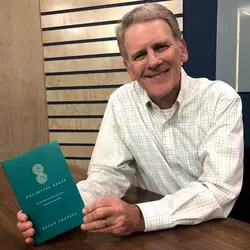
In Bryan Chapell's book, you will learn how God's unlimited grace leads us to heartfelt obedience and transforming joy. Explaining why grace is important and giving us tools to discover it in all of Scripture, Unlimited Grace helps us to see how gospel joy transforms our hearts and makes us passionate for Christ's purposes.
Past Episodes

Featured Offer
In Bryan Chapell's book, you will learn how God's unlimited grace leads us to heartfelt obedience and transforming joy. Explaining why grace is important and giving us tools to discover it in all of Scripture, Unlimited Grace helps us to see how gospel joy transforms our hearts and makes us passionate for Christ's purposes.
About Unlimited Grace
About Bryan Chapell
Bryan Chapell, Ph.D. is the Stated Clerk Pro Tempore of the Presbyterian Church in America (PCA), based in Lawrenceville, GA.
Dr. Chapell is an internationally renowned preacher, teacher, and speaker, and the author of many books, including Each for the Other, Holiness by Grace, Praying Backwards, The Gospel According to Daniel, The Hardest Sermons You’ll Ever Have to Preach, and Christ-Centered Preaching, a preaching textbook now in multiple editions and many languages that has established him as one of this generation’s foremost teachers of homiletics.
Dr. Chapell is passionate about sharing the truth of God's grace with others, because it provides the freedom and fuel for transformed lives of joy and peace.
He and his wife, Kathy, have four adult children, a growing number of grandchildren, and lives rich with friends, fishing and faith.
Contact Unlimited Grace with Bryan Chapell
info@unlimitedgrace.com