

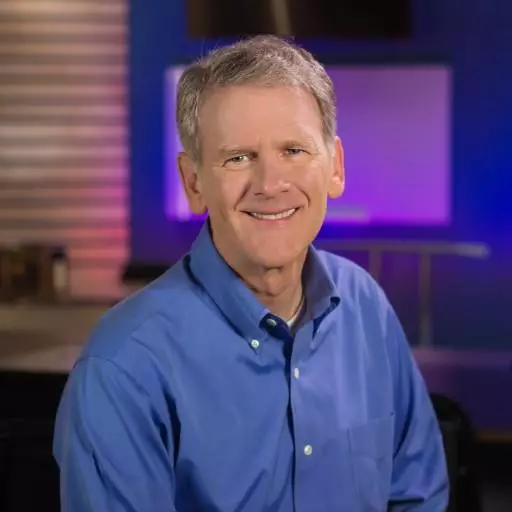
God's Knitting - Part 2


Bryan Chapell: If I can love one who is flawed, how much more do I understand how great is God's grace toward me? It's why the church stands for the least of these, for the helpless, for the damaged, for the flawed, so that we will be demonstrating the grace of God for the sake of the gospel and speak of it in those terms. We must show, if we really believe in this grace, that the grace doesn't just change others. Ultimately, it changes us.
Guest (Male): So glad you joined us for today's Unlimited Grace, the audio broadcast ministry of pastor and author Bryan Chapell. In today's episode, Pastor Bryan shares the second half of a lesson from Psalm 139. Dr. Chapell highlights this Psalm that is a reminder that we are fearfully and wonderfully made in the womb and precious to God.
You can find this lesson and many others when you visit UnlimitedGrace.com. And while you're there, look for Pastor Bryan's new book, *Are We Living in the Last Days?* With a balanced biblical explanation about the Book of Revelation and Christ's return, Pastor Bryan will help you understand the hope that unites all Christians. Let's hear now from Dr. Bryan Chapell as he shares the second half of the lesson, "God's Knitting."
Bryan Chapell: Now let me ask that you would look in your Bibles at Psalm 139. As we do begin a new year, as we begin to think about new starts for our lives, we also think about new lives that God is starting even in the womb and how His word declares the value, the beauty, and the preciousness of life even in the womb. Let's stand and read this key passage from God's word about the preciousness of life that He is making even in the womb.
Verse 11 of Psalm 139 through verse 16. The psalmist writes, "If I say, 'Surely the darkness shall cover me, and the light about me be night,' even the darkness is not dark to you; the night is bright as the day, for darkness is as light with you. For you formed my inward parts; you knitted me together in my mother's womb. I praise you, for I am fearfully and wonderfully made. Wonderful are your works; my soul knows it very well. My frame was not hidden from you, when I was being made in secret, intricately woven in the depths of the earth. Your eyes saw my unformed substance; in your book were written, every one of them, the days that were formed for me, when as yet there was none of them."
Let's pray together. Father, we ask your blessing this day. Even as I would now be bringing a message on the preciousness of life in the womb, we don't hide from each other that these are controversial and difficult and for some very painful issues. And so we ask for the superintendence of your Spirit to lead us not to the opinions of men, not to the vagaries of a culture or the opinions of an age. Take us to the assurances of your word. Help us, we pray, for we ask it in Jesus' name. Amen. Please be seated.
In 2013, Gallup poll data was analyzed by Michael New, who is professor of political science at University of Michigan. And he says this in his analysis of that data. Regarding abortion, we have been collecting opinion data since the early 1970s. Starting around the year 2000, something very interesting happened. The 18 to 29 age group became the most pro-life age group in American culture, more pro-life even than senior citizens.
Now, I must tell you people are having trouble explaining that. After a generation, almost a half century of abortion, why is it that young adults are becoming more pro-life even than senior citizens? Reasons are not clear but probably include, said New: number one, high-resolution ultrasound. Seeing the child as God sees, a work and a wonder of God. Two, not so happy for us, normalization of single-parent families in popular culture. The fact that you can be a single parent and not have shame about that means that more are willing to value children even if born to a single parent.
But perhaps most telling, this: why has the younger generation become the most pro-life? Because a generation raised in a society of disposable families increasingly has sympathy for children seemingly discarded for the convenience of parents. Isn't that interesting? In a culture of divorce where there's been the erosion of family, where there's been the erosion of care for children by maintaining marriage for their sake if not for others, where children are discarded for the convenience of parents, the children raised in that generation are rebelling.
Rebelling for the sake of things that are consistent with the gospel to say, "We are not just about your convenience. We are valuable, and we sympathize with those who would be discarded simply because they would seem to be an inconvenience or a difficulty in some way." The conviction actually of young Christian adults that children in the womb are a work and a wonder of God is actually one of the bright hopes of the church in our age. That young people, being affected by this culture and seeing "we can't keep going in a way that devalues everybody who simply is flawed or inconvenient," are actually standing against the flow. We take great courage and hope from those young people who are saying the Bible is my guide, not just the opinions of my peers.
Of course, it's not enough simply to say that the child alone is of value. I took care in saying we want as a church to say each child of God is valuable to God because we're not just talking about the child in the womb. When the psalmist says, "I am fearfully and wonderfully made," then there's a present tense to that, even an adult tense. Yes, he says, "I was precious in the womb," but he even still says, "I am fearfully and wonderfully made."
At the beginning of the psalm, the psalmist says, "God, you know when I sit down, when I rise up. You know my thoughts, you're acquainted with all my ways. Such knowledge is too wonderful for me." The psalmist is saying, "God, you still care about me. I'm still your precious child." All of our life, we are precious to God. The reason that we must as a church claim the value, the preciousness of every child of God is because we are called to be the defender of the defenseless.
Two ways we need to think about that. Number one, do you recognize that because of abortion in this nation and then because of the way other nations of the world have followed us in that path, that the goals of those who a generation or two generations ago sought to eliminate unwanted portions of society by various eugenic measures, their goals have been far exceeded, beyond what they have ever dreamed.
As a consequence, if you are unwanted, or of the wrong race, or of the wrong gender, you are the ones most likely to be eliminated by abortion either in this country or in the larger world. It is the church that must say each child of God is of infinite value. The church should be saying, "Listen, we will not allow anyone to say that because you are of a perceived wrong color or wrong gender or unwanted in some way that you are not precious to God." The church will defend that you are precious to God because we say you are a work and a wonder of God.
And it's not just the infant version of that. If each child for all of life is precious to God, that means the mother of the child is precious to God too. If we say that, we would recognize that what we are actually doing is speaking into one of the most difficult aspects of the sacredness of life debate. We wonder how we will gain traction in the lives of young women whose circumstances are so difficult that they are being driven to decisions that they actually don't want to have to make. And we are wrong as a church not to sympathize with the difficulty of the life situation that they are now facing.
But what will turn them from removing a work and a wonder of God from their lives is the sense that they are a work and a wonder of God. That the acceptance of others, that the removal of shame, that the hiding of a problem is not required by their God who loves them and values them. A remarkable article by Frederica Mathewes-Green tried to analyze the subject of why women have abortions. She wrote this: "I spent a year researching the book, seeking to discover the reasons most women choose abortion. I expected to find practical problems heading the list: financial needs, childcare woes, pressure to drop out of school. Yet after reviewing several studies and conducting my own, no clear pattern emerged.
But when I spoke with groups of post-abortion women, a nearly unanimous consensus appeared. Women had abortions in nearly every case because of relationships. Most often, it was to please the father of the child who was pressuring for the abortion. In a couple of cases, the woman spoke of lying on the abortion table praying that the husband or boyfriend would burst in and say, 'Stop, I've changed my mind.' The second most common reason was pressure from a parent, most often the girl's mother."
Convincing a woman carrying a child of her inherent value to God, regardless of what other people may think or threaten, is actually a powerful tool for life. It's not a political tool, but it's a tool of the spirit of the soul where we say to people, "The reason that you need not act against the instincts and desires of your own heart in order to placate another or to get rid of somebody else's threats of rejection is that God loves you, and he treasures you, and you are precious to him. You are a work and a wonder of God. You don't have to do this to be valued. You are precious to your God."
We will only say such things if we truly believe that grace changes people's hearts, that the gospel itself is powerful. We have to believe in the power of grace to actually change people. And that's what's happening in this psalm as well. God's love for his flawed creatures is a source of special praise in the psalm. In the 14th verse, the psalmist says he's wonderfully made. But by the end, the 24th, he says, "See if there's any offensive way in me now."
The writer does not fear that his flaws will result in God's rejection. In fact, he's urging God, "Examine me, see if there's anything wrong in me that I might repent of it, that I might take it to you, that you would make it right in my life." He does not fear the rejection of God on the basis of flaws. That is grace in itself. And it's grace that we have to say. Flaws should not result in rejection. Flaws do not devalue before God. So when parents fear and grieve the coming of a flawed child, first we should never minimize the pain and the fear of what that may mean for a family. At the same time, we should not permit ourselves to think that children who are not perfect are not precious.
Guest (Male): You're listening to Unlimited Grace, the audio broadcast ministry of pastor and author Bryan Chapell. It may seem hard for younger Christians to believe, but people over 50 were raised during an era when 90% of Americans identified as Christian. These older believers were once part of a majority group that understood the mission of the church was to take control of our culture, to halt its evils.
At the same time, Christians under 50 have lived their entire lives perceiving themselves as a minority that needs to make credible their faith to a secular, pluralistic culture. These distinct experiences and perceptions have a profound impact on the priorities different generations have for church ministry. It's no wonder that younger and older believers don't always see eye to eye.
In his new book, *The Multigenerational Church Crisis*, Dr. Bryan Chapell asks the question, "What could be accomplished in the name of Christ if we could better understand each other?" This practical and hopeful book is backed by thorough research, revealing how to open the lines of communication, appreciate the experiences that shaped each generation in your church, and unite in one mission to impact your community and the world.
You can request your copy of *The Multigenerational Church Crisis* when you donate online at UnlimitedGrace.com or by calling 844-41-GRACE. That's 844-414-7223. And now, more from Bryan Chapell on today's Unlimited Grace.
Bryan Chapell: I've said to you before, I try to find the right times to say it. I have a younger brother who is mentally and socially very disabled, and he has been since his birth. Now at age 50, he resides in a prison because of wrong choices and wrong actions. But as much as I have wished other things for him in his life, I have never wished him dead.
He is alive. And because he is alive even in prison, he has become a believer in Christ Jesus. And because he is a believer in Christ Jesus, even with his eight-year-old mind, he prays. And he writes letters to unbelieving nieces and nephews to try to tell them about the grace of God toward him. So terribly flawed, so amazingly precious to God.
And it's not just his good that is accomplished by believing that God holds precious what is flawed. I recognize in my own heart that the more that I have been able to treasure, to call precious one in my own life who is so flawed, how much more I understand of the grace of God. That if I can love one who is this flawed, how much must God love me? One whose sin caused the death of his son and the suffering of my savior.
If I can love one who is flawed, how much more do I understand how great is God's grace toward me? It's why the church stands for the least of these, for the helpless, for the damaged, for the flawed, so that we will be demonstrating the grace of God for the sake of the gospel and speak of it in those terms. We must show, if we really believe in this grace, that the grace doesn't just change others. Ultimately, it changes us.
What action, after all, does love require? Love for the unlovely, that's required of us. Love for sinners. In Jesus' name, it means forgiving those who have sinned. It also means warning those who are considering it. Not because we want to be harsh or mean but because we actually want to protect people from the consequences of disobedience, from their own heart's pain from taking away from their lives a work and a wonder of God.
If we really believe in the power of grace, that means that we will be providing homes for the needy and the rejected. It means that we will be providing adoption for the abandoned. Humble confession of our own need of grace and loving others enough to warn. Even loving the abortionists. Well, you say, "But the abortionists are our spiritual enemies." Yes, and the Bible says, "Love your enemies."
If we do not have the power of the gospel, we have nothing. It is the gospel that will enable us to do what is necessary to change opinions, to change hearts, and to win others to the cause of Christ. Many of you now know the story of Norma McCorvey. Norma McCorvey is her real name. Her legal name was Jane Roe in the *Roe v. Wade* Supreme Court decision.
Some of you know that Jane Roe, Norma McCorvey, has become a Christian and turned her back on the abortion industry that once employed her and fought for her at the Supreme Court level, resulting now in the deaths of 55 million in this country alone. The key person in the battle for the soul of Norma McCorvey was a seven-year-old girl named Emily Mackey.
Emily's mother actually worked in the pregnancy resource offices next door to the abortion clinic that Norma McCorvey served in Dallas, Texas. Her biographer, Gary Thomas, writes this: "Emily's (that is the seven-year-old) blatant affection, frequent hugs, and direct pursuit disarmed Norma, who was skilled at cursing and spitting upon abortion protesters. The little girl's interest was all the more surprising considering Emily made it very clear that Norma's lifestyle and office was not acceptable to the child. Early on in their relationship, Norma McCorvey said to Emily, 'I like kids. I wouldn't let anyone hurt little kids.' To which Emily responded, 'Then why do you let them kill babies in your clinic?'"
The childlike innocence cut Norma McCorvey's heart. She was not won over by political efforts. She was not won over by intellectual arguments. It wasn't until Emily's mother, Rhonda, broke down one day and said she had considered aborting Emily, the child that Norma had learned to love because the child loved Norma. It was that that broke Norma McCorvey.
So that when the family invited Norma McCorvey to their church, Norma ultimately went and named the name of Jesus as her savior, and ultimately wrote, "I just want to undo all the evil I have done in this world. I am so sorry God, I am so, so sorry. As far as abortion is concerned, I just want to undo it. I want it to all go away." Well, it hasn't gone away, but her sin has.
As far as the east is from the west, God is so great in his grace that one who would be responsible for the court case that has resulted in the abortions of 55 million children is in the heart of God and in the safety of heaven by the grace of God. What changes people? The gospel. And it's that that we must say. Now, if you know more of the life of Norma McCorvey, you know that it's still a mess.
You know there's still a long way to go. But God loves flawed people, and he cares for great sinners who turn to him and ask for his grace. What must the church do? Tell the world of the grace that won your heart, flawed creature that you are. Tell everyone around you that we have to treat sinners the way that God treated us by giving his son in sacrifice for your heart and mine and making us his own, not by our good but by his.
And when we pray to that God, asking, "Lord, help me not to stand on my pride. Help me not to stand on my platform. Help me to stand on the gospel of Jesus Christ that saved me by your grace alone. Help me make that my message." God is making children precious to him, precious to us. You are precious to him too. That is the gospel. That is our power for this day and this issue.
Guest (Male): That's Pastor Bryan Chapell, and you've been listening to Unlimited Grace. If this message has been an encouragement to you, you can find a collection of more valuable resources at UnlimitedGrace.com. When you visit, you will find today's message and many others from Pastor Bryan.
Once again, go to UnlimitedGrace.com or you can give by calling 844-41-GRACE. That's 844-414-7223. Please be sure to join us next time as once again we endeavor to put Christ at the center of our efforts so that lives might be transformed by his unlimited grace. This ministry is brought to you by Unlimited Grace Media and continues to be made possible with your generous financial support.
Featured Offer
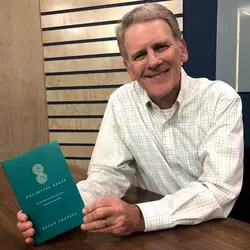
In Bryan Chapell's book, you will learn how God's unlimited grace leads us to heartfelt obedience and transforming joy. Explaining why grace is important and giving us tools to discover it in all of Scripture, Unlimited Grace helps us to see how gospel joy transforms our hearts and makes us passionate for Christ's purposes.
Past Episodes

Featured Offer
In Bryan Chapell's book, you will learn how God's unlimited grace leads us to heartfelt obedience and transforming joy. Explaining why grace is important and giving us tools to discover it in all of Scripture, Unlimited Grace helps us to see how gospel joy transforms our hearts and makes us passionate for Christ's purposes.
About Unlimited Grace
About Bryan Chapell
Bryan Chapell, Ph.D. is the Stated Clerk Pro Tempore of the Presbyterian Church in America (PCA), based in Lawrenceville, GA.
Dr. Chapell is an internationally renowned preacher, teacher, and speaker, and the author of many books, including Each for the Other, Holiness by Grace, Praying Backwards, The Gospel According to Daniel, The Hardest Sermons You’ll Ever Have to Preach, and Christ-Centered Preaching, a preaching textbook now in multiple editions and many languages that has established him as one of this generation’s foremost teachers of homiletics.
Dr. Chapell is passionate about sharing the truth of God's grace with others, because it provides the freedom and fuel for transformed lives of joy and peace.
He and his wife, Kathy, have four adult children, a growing number of grandchildren, and lives rich with friends, fishing and faith.
Contact Unlimited Grace with Bryan Chapell
info@unlimitedgrace.com