

God's Knitting - Part 1


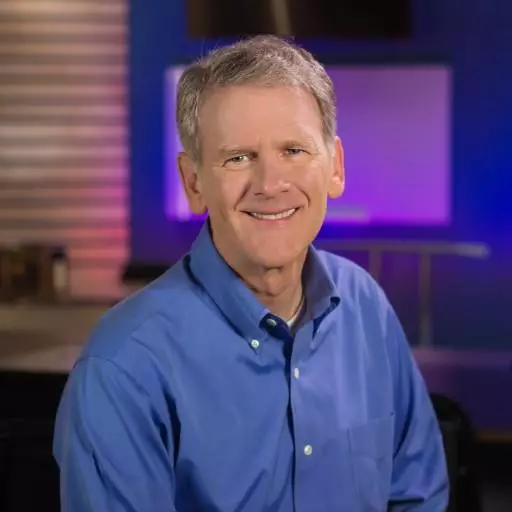
Bryan Chapell: Now, if a psalmist in an ancient time recognized the wonder of a child, how much more should we in a scientific age, who understand so much more of what must happen, begin to say, "This is a wonder that this child is being made."
Guest (Male): So glad you joined us for today's Unlimited Grace, the audio broadcast ministry of pastor and author Bryan Chapell. In today's episode, Pastor Bryan shares a lesson from Psalm 139. In addressing the challenging and often divisive issue of abortion, Dr. Chapell turns to the truth in the word that reveals to us that God's hand is at work in our lives, even before we are born.
You can find this lesson and many others when you visit unlimitedgrace.com. And while you're there, look for Pastor Bryan's book, The Multi-Generational Church Crisis. This compelling book asks the question of the church: what could be accomplished in the name of Christ if we could better understand each other? Let's hear now from Dr. Bryan Chapell as he shares the lesson, God's Knitting.
Bryan Chapell: Knit one, purl two. Knit one, purl two. Knit one, purl two. The chant of expectant motherhood, or expectant grandmotherhood. It's almost a caricature in our culture that when someone is expecting a baby, they take up knitting. How wonderful that even as you go to the scriptures, the image that God presents for the child in the womb is not that God is knitting for the child in the womb, but God is knitting the child in the womb. That that is actually the image that God is presenting, and it's telling us something precious and wonderful about that which is yet unseen by humanity and yet precious to God already.
As we think about this day, what is precious to God because he is making it for himself, I have to just confess to you that always this is a difficult subject to address. As we think about addressing the issues of unborn life in this culture, you and I recognize that this has been a hard issue for a lot of years. We typically mark a controversial time in our culture from the 1973 Roe versus Wade decision. And as I look back over my own ministry, I recognize that I began preaching just a few years after that particular court decision that legalized abortion in this nation.
And as a consequence, I have a voluminous file of messages and information on this particular issue. And as I look at it again, it just reminds me that part of the difficulty of dealing with issues of life in the womb are the complexity of the issues themselves. I mean, as I look back over 40 years of sermons on this subject—it's just amazing for me to think, how could I have done that? 40 years of messages on this particular subject. I recognize that the debate has sometimes been on political fronts. And so we have debated over the course of time—as I say these things, you'll remember them.
We have debated such things as: what will Medicare provide? What will the military provide? What should foreign aid provide? What can schools say? What can counseling clinics say? What can parents know? At what term can an abortion be performed? What techniques can be used? What research will be allowed? What parental notification is allowed? What medical expertise must be provided? What delay can be required? What information can be provided? What pictures can be shown? All have been debated in the public square and in the political arena.
But the issues aren't just concentrated there. I know, as many of you do from decades in the church, that the church itself has struggled on particular issues at particular times. In the church, we have also debated whether danger to a mother's health justifies abortion, whether deterioration of infant health warrants abortion, how much adoption is our responsibility if we're going to label abortion unbiblical. What is an appropriate legislative strategy? What political associations are proper or productive?
What religious alliances are we willing to support for the sake of unborn life? How often should we address this subject? How graphically should we address this subject? Whether addressing the subject of life in the womb is helpful at all to the primary agendas of the gospel, or is it in fact counterproductive? I must tell you that when we last year were beginning our town hall meetings talking about Unlimited Grace and a new start for this church, a friend of mine watched on the web those particular town hall meetings and actually challenged me: "Bryan, what are you doing? You're supposed to be leading this church forward in a new start, and yet you're talking about old issues that put people off. This is not the way forward," said a friend of mine, Bible-believing, and yet at the same time questioning, was this subject actually counterproductive to the purposes of the church and the goals of the gospel?
There just simply isn't any universally acceptable way to speak about these concerns. And many of us, even in the church, find it futile. After all, we've been talking about this for 40 years plus, and abortion still happens with regularity and vast numbers in this culture. So if it's so futile, why do we bother? The most compelling reason that I can think of is 55 million abortions since 1973 in this nation alone. And even if you don't think that the unborn child is a matter of great concern, everyone would acknowledge, absolutely everyone would acknowledge, that abortion is something that is tragic and emotionally wrenching for the mother and the father and the family, regardless of what you believe about the child.
The simple fact that 55 million people minimum have been affected means for the church not to speak at all is simply to avoid, if not betray, our responsibility. I think of it this way: 9/11 in New York City, 3,000 people were killed, profoundly affecting our culture. But when it comes to abortion, we are talking about 20,000 times that many people being affected. For us to say nothing is simply not to do the job of the church. And it is the job of the church that I want to address this day. I recognize if I move beyond church responsibilities, if we talk about political strategies, if we talk about alliances with various parties and so forth, I recognize that while we have strong convictions in that regard, that may also be divisive.
What I want to make sure we do at least for the moment is say, what is the responsibility of the church? What is it that we are called to do above all other things? I'm simply going to talk today about what must the church say and what must the church do. I want to start very straightforwardly. What must the church say about this subject if it is to be biblical and responsible? The first thing that we must simply say is the unborn child is a work of God. I mean, that's plain. As you look here, the child in the womb is made by God. The psalmist says in verse 13, "God knitted me together in my mother's womb." There are not merely brute chemical and biological forces at work. The perspective of a person of faith is: God is at work, even in knitting together a child in the womb.
That means not only is the child a product of what God is doing, but is actually seen by God in the womb. That is said as well. The psalmist says in verses 15 and 16, "My frame was not hidden from you when I was made in secret, when I was intricately woven in the depths of the earth." And the footnotes in many of your Bibles will have you understand that's a colloquialism for the womb of the mother. "I was not hidden from you when I was woven together. Your eyes saw my unformed substance." That is, neither the darkness of the womb nor the cell structure that's yet to form a recognizable human body hides the child from God. Even if that child is not seen by humanity or cannot see yet, God sees. It's within his hand, within his ability.
What would it mean to us to recognize that whether or not the child sees or can be seen, that there's still the reality of that child there? As I was working on this message, I was, at least for part of the time, on an airplane, and the man sitting beside me was playing peek-a-boo with the child in front of us. Which means, you know the game, that occasionally the child will hide his eyes and somehow thinks that because he can't see, he can't be seen, right? And so, you know, the child will hide and then pull the hands away, and the man beside me would say, "I see you." Well, he could see him, you know, even when his hands were up. But the game was to say, "I see you when you see me." But the reality was the child was seen even when the child could not see.
The reality of the Bible is this: even when the child cannot see or be seen, God is saying, "I see you." And that in itself is relating to the preciousness, the value, and the reality of that child. The psalmist says that God does not merely see the child. Perhaps even more precious is that God says he foresees the days that were formed for that child's life. Verse 16 at the end: "In your book were written every one of them, the days that were formed for me, when as yet there were none of them." I love the way the NIV that a number of you have translates this particular verse: "All the days ordained for me were written in God's book before one of them came to be." Isn't that precious? All the days ordained for me were written in God's book before one of them came to be.
Because we have a new grandchild, we're getting reacquainted with all the baby paraphernalia, right? And one of them is that book about the first year of life, right? In which you collect all the collectibles and the hair, but also has the calendar of all the stages of progress of the baby. To think that what God has before the child is born is the book of every day ordained for the child before the child even comes to be. As though God is saying, "I hold precious what I intend by accounting the days ordained even before they come to be." God tells us that this is not a process that even begins with the biological start of the child.
I mean, think how the Bible is helping us to see with the perspective of faith what is not accessible just by biology alone. God says to Jeremiah in the book of Jeremiah, the first chapter and the fifth verse, "Before I formed you in the womb, I knew you." Or we've been looking in the book of Ephesians in recent weeks. Paul reminds us there that we were actually loved by God before the creation of the world, before its foundations were laid, God loved his own. The unborn child is simply a work of God, seen by God, knit by God, known by God.
And the fact that that child is a work of God is not all that the psalmist here says. The child, even unborn, is not simply a work of God, but a wonder of God. Did you catch the words in verse 14? The psalmist says, "I praise you, God, for I am fearfully and wonderfully made." That word "fearfully" is just talking about the awe, the wonder, even in the psalmist's mind, of the child that comes forth out of the womb. Now, if a psalmist in an ancient time recognized the wonder of a child, how much more should we in a scientific age, who understand so much more of what must happen, begin to say, "This is a wonder that this child is being made."
With what we know about the irreducible complexity of DNA and RNA and neurotransmitters and cell division and oxygen transfer and heart chemistry and cell electricity and all that's happening on not just the macro level, but the micro level, to make a few cells divide and become a baby, and ultimately become a bride, and a couple of old age, and a hand helping the helpless, all because of that knitting that God did once upon a time in the womb. The psalmist speaks great truth when he says, "I am wonderfully made." The reality that God is saying is that the child even in the womb is not just a work of God, but a wonder of the hand of God.
Guest (Male): You're listening to Unlimited Grace, the audio broadcast ministry of pastor and author Bryan Chapell. It may seem hard for younger Christians to believe, but people over 50 were raised during an era when 90 percent of Americans identified as Christians. These older believers were once part of a majority group that understood the mission of the church was to take control of our culture, to halt its evils. At the same time, Christians under 50 have lived their entire lives perceiving themselves as a minority that needs to make credible their faith to a secular, pluralistic culture.
These distinct experiences and perceptions have a profound impact on the priorities different generations have for church ministry. It's no wonder that younger and older believers don't always see eye to eye. In his new book, The Multi-Generational Church Crisis, Dr. Bryan Chapell asks the question: what could be accomplished in the name of Christ if we could better understand each other? This practical and hopeful book is backed by thorough research, revealing how to open the lines of communication, appreciate the experiences that shaped each generation in your church, and unite in one mission to impact your community and the world.
You can request your copy of The Multi-Generational Church Crisis when you donate online at unlimitedgrace.com or by calling 844-41-GRACE. That's 844-414-7223. And now, more from Bryan Chapell on today's Unlimited Grace.
Bryan Chapell: You know, I watch enough Antique Roadshow that I'm convinced that on some journey into my attic, I'm going to find the Van Gogh or the Rembrandt or the—you know, that's going to make us wealthy. And I may not be a good enough art critic, you know, that I may recognize the painting for all of its value, for all of the artistry that goes into it. But I'll at least recognize the signature. If it says "Rembrandt," I'm going to pay attention. I know if that's true at all, you know, that there is great value here.
But do you recognize that what God is saying about what he is knitting together in the—if that child in the smallest, smallest scheme, very beginnings of life, is part of God's handiwork, then it's not a Rembrandt and it's not a Van Gogh, it is a Jehovah. The child is a Jehovah. Whoa, look at that! This is the value and the preciousness that God is putting as he puts his own name upon the child that is being knit together in the womb. If we recognize anything that we should be saying as a church, it's just very simple: that we look at passages of scripture that remind us of God's hand that works beyond the creation order such as we can see, and say what the Bible says. The child in the womb is a work of God and a wonder of his handiwork.
These two thoughts, that the child even unborn is a work and a wonder of God, should form the foundation of how the church responds to all the issues regarding abortion and dealing with the value of life while yet in the womb. But we also have to, of course, answer what should the church do about such issues. To answer, I've already told you I'm not going to focus on political strategies or debates in the public square. Now, if I'm not focusing on that, it's not because I don't believe those things are important.
Particularly for those who have public influence, for those who have educational influence, for those of you who are in the science and health professions, it's vital that you take truth into your spheres of influence. But for the moment, I want to make sure that in my sphere of influence, in the church, we are doing what we should do and not get derailed by the debates about what everybody else should do. I say that because I recognize what I think some of you have recognized: even the most ardent and loyal pro-life supporters in this country and in the church of Jesus Christ in this country have begun to question whether some of the efforts of the last four decades have too closely aligned the ministry of the church with the efforts of politics.
And I'm just not talking in the abstract. I must tell you, I have been a leader in some of these efforts, and I look back at times and recognize how much zeal and energy I poured into relying upon political answers rather than trusting in the spiritual work of God, and pouring my energies and efforts into that truth and those efforts as well. I again am not saying that the political efforts are unimportant. I am saying we have to make sure what the church does as well. And so today, I want to say: what should the church do?
Number one: teach the value of each child. The fact that the child in the womb is a work and a wonder of God gives the church a right and a responsibility to insist that even though the child may be unseen by the world, it is valuable to God. This is the most critical thing we must say over and over again: the child is a work of God and a wonder of God. It is our primary and essential responsibility. Now, what we must recognize is we are not the only ones who believe that in the church. That if the child can be recognized for the preciousness that it is, that opinions strongly change.
The prestigious New England Journal of Medicine reports that when mothers see an ultrasound image of the child, an emotional bond takes place even before the child's movement is felt. Now, think about what we normally talk about quickening, the first sense of motion of the child in the womb. Even before the quickening occurs, if a mom can see what God sees, then there's an immediate valuing of that child. The consequence of that is that we are seeing more and more opinions being changed in this culture. I have said to you that I recognize there is a certain flagging of energy in the church because of our sense of the futility of our efforts.
But if we do not sense and stay current with changes that are occurring in our culture, we may give up long before we should. Do you believe that when we say that the child in the womb is precious, that we are actually saying what most people in this culture already agree with? Now, survey after survey tells us that most people believe that abortion for convenience on demand is wrong. Now, most people believe that abortion on demand and for convenience is wrong. They already believe that. But we also have to acknowledge in the church that due to so many perceived government intrusions in our culture, many Americans, even though they believe abortion is wrong, also believe that it is wrong for the government to be involved in making decisions for people about abortion.
Now, that's hard for us. But by being frustrated by that reality, we should not fear to say most people believe pregnancy terminations for all but the most extreme circumstances are immoral and wrong. Most people already believe that. Starting around the year 2000, something very interesting happened. The 18 to 29 age group became the most pro-life age group in American culture. The conviction actually of young Christian adults that children in the womb are a work and a wonder of God is actually one of the bright hopes of the church in our age.
That young people, being affected by this culture and seeing we can't keep going in a way that devalues everybody who simply is flawed or inconvenient, are actually standing against the flow. We take great courage and hope from those young people who are saying the Bible is my guide, not just the opinions of my peers.
Guest (Male): That's Pastor Bryan Chapell, and you've been listening to Unlimited Grace. Please be sure to join us next time as once again we endeavor to put Christ at the center of our efforts so that lives might be transformed by his unlimited grace. This ministry is brought to you by Unlimited Grace Media and continues to be made possible with your generous financial support.
Featured Offer

In Bryan Chapell's book, you will learn how God's unlimited grace leads us to heartfelt obedience and transforming joy. Explaining why grace is important and giving us tools to discover it in all of Scripture, Unlimited Grace helps us to see how gospel joy transforms our hearts and makes us passionate for Christ's purposes.
Past Episodes

Featured Offer
In Bryan Chapell's book, you will learn how God's unlimited grace leads us to heartfelt obedience and transforming joy. Explaining why grace is important and giving us tools to discover it in all of Scripture, Unlimited Grace helps us to see how gospel joy transforms our hearts and makes us passionate for Christ's purposes.
About Unlimited Grace
About Bryan Chapell
Bryan Chapell, Ph.D. is the Stated Clerk Pro Tempore of the Presbyterian Church in America (PCA), based in Lawrenceville, GA.
Dr. Chapell is an internationally renowned preacher, teacher, and speaker, and the author of many books, including Each for the Other, Holiness by Grace, Praying Backwards, The Gospel According to Daniel, The Hardest Sermons You’ll Ever Have to Preach, and Christ-Centered Preaching, a preaching textbook now in multiple editions and many languages that has established him as one of this generation’s foremost teachers of homiletics.
Dr. Chapell is passionate about sharing the truth of God's grace with others, because it provides the freedom and fuel for transformed lives of joy and peace.
He and his wife, Kathy, have four adult children, a growing number of grandchildren, and lives rich with friends, fishing and faith.
Contact Unlimited Grace with Bryan Chapell
info@unlimitedgrace.com