

Glory


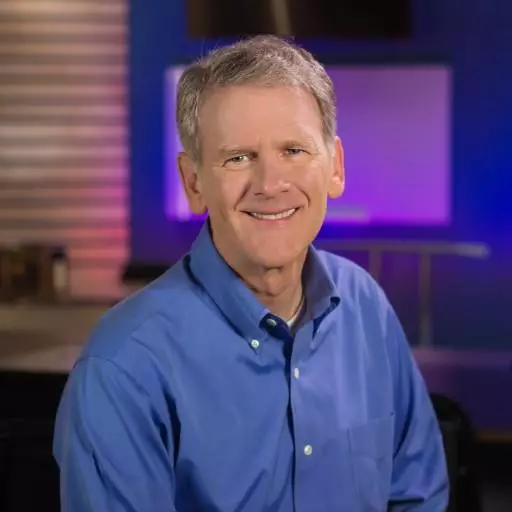
Pastor Bryan shares a lesson from Phlippians 2. Dr. Chapell investigates the glory found in co-laboring with Jesus Christ while in the workplace. As we seek to serve and benefit others without pride or selfish ambition, we show the world the character of Christ.
Bryan Chapell: The power and the purposes of God are in every conversation, in every day, in every contract, in every meeting, in every telephone call, in every memo, in every stroke of a pen, or a brush, or a scalpel. God is there, by His power and through His purposes, actually bringing His glory into our lives, and we can actually live with that mindset.
Chris Obak: So glad you joined us for today's Unlimited Grace, the audio broadcast ministry of pastor and author Bryan Chapell. In today's episode, Pastor Bryan shares a lesson from Philippians 2. Dr. Chapell investigates the glory found in co-laboring with Jesus Christ while in the workplace.
As we seek to serve and benefit others without pride or selfish ambition, we show the world the character of Christ. You can find this lesson and many others when you visit UnlimitedGrace.com. While you're there, check out the new daily devotional podcast called Daily Grace. Pastor Bryan will guide you through a devotion each day to help focus your attention on God's grace as you study His Word. Let's hear now from Dr. Bryan Chapell as he shares the lesson entitled, "Glory."
Bryan Chapell: Words of Ron Wagley, CEO, former president of Transamerica Occidental Life, one of the nation's largest financial services companies. He wrote: "It would be wrong to think that you cannot be a Christian in today's business world. When you consider the unethical behavior of some corporate leaders, businesses need Christians who live out their biblical principles in their biblical and business practices."
Then he writes honestly: "I wish I could tell you that I had always had this mindset, but that would not be true. When I got out of college, my Christianity could best be described as a stained-glass religion. Though I had become a Christian as a youth, I regarded Christianity as a church thing, something that belonged behind stained-glass windows. Faith had no place or relevance in the real world, particularly for one anxious to climb the ladder of success."
Getting was what determined my values and my priorities. Getting was never enough, though, to satisfy. Nothing came quickly enough. My life was characterized by frustration. When will I get enough? Why is it not coming faster? I never gave much thought to my Christian faith, except for the occasional moment of panic in a tragic or hard time, or offering self-centered prayers to God to get me what I wanted. I treated God as though He were an on-call genie in a bottle. When all else fails, call out to God.
Then God began to deal with me. He began to deal with me through His Word. I slowly began to integrate my faith in my family, in my marriage, and finally in my career. The latter did not come easy. Once I heard, if your faith doesn't make a difference in the things that make a difference, then what's the difference? For me, the area of biggest difference in my life, after my family, was my career. But God had to do an overhaul of my mind to make a difference there.
How does God do that? How does God actually begin to overhaul an entire mindset of our lives so that even in the everyday places of work, He is making a difference? That faith itself is something real and robust and powerful for the everyday things of life so that we begin to recognize that the power and the purposes of God are in every conversation, in every day, in every contract, in every meeting, in every telephone call, in every memo, in every stroke of a pen, or a brush, or a scalpel. God is there, by His power and through His purposes, actually bringing His glory into our lives, and we can actually live with that mindset.
Now, the CEO is honest enough to say that is tough to actually have that mind, but it's the reason we celebrate on Easter the risen power of God. If God had the power to bring life to death, then He has the power to change our minds to begin to swirl around what is in us in such a way that we, who have lived for self, who have lived with an orientation to me, can actually begin to live for glory, even glory that is beyond ourselves.
How does that happen? It's actually the wording of verse five as the apostle begins to take us on a journey in this brief text, from cradle to cross to crown. In verse five, the apostle says, "Have this mind among yourselves, which is yours in Christ Jesus." What is the mind that we could have which is ours being granted by the risen Lord? It is the mindset that begins just by perceiving the glory of Christ, first just in the cradle.
That cradle glory is what's actually being described in verses six and seven, which describe Christ, though He was in the form of God, did not count equality with God a thing to be grasped, but made Himself nothing, taking the form of a servant, being born in the likeness of a man. The first key thought is that Christ, even in the cradle, came in the form of God.
Now, that doesn't make a lot of sense to us until we think of what that word "form" means. It's actually an old symbol of hot wax that's being impressed by the signet ring of a king. That form takes the image, takes the imprint of what is striking it. We are being told that Christ was in very form God, that the imprint of God, God Himself, the exact reality of who God was, was in Christ Jesus.
The writer of Hebrews says it very simply: He is the radiance of the glory of God, the exact imprint of His nature. So, in some of your translations here, it actually says that Jesus was by very nature God. But now we have a problem where I struggle with how could it be that He who was God would be a baby. In the modern lingo, how do you put God in a bod? And more than that, in a baby?
I mean, that's almost impossible to think of. And yet, it's precisely what the apostle is saying in verse seven: He emptied Himself. He made Himself nothing, taking the form, there's that word again, of a servant. He came in the likeness of a man. He's in the likeness of God. He's in the likeness of a man. He has the form of God. He has the form of man.
It's hard to think that even when Jesus is a baby in the manger, He continues, the writer of Hebrews says, to control all things by the word of His power. Think of that. He's in the manger and still controlling creation by His power. Now, we have trouble making sense of that. In fact, it worries us a little bit. If He's controlling the world while He's in the manger, what happens when He burps?
What happens when He poops? I mean, is that the earthquakes and the tsunamis? Is that why we sing "Away in a Manger," "no crying He makes"? That we're concerned that nothing happen? It's the mystery that we say is part of the reality of the Spirit's revelation, and if we don't capture it, we actually begin to make mistakes of what we think about God because people cannot quite capture that great mystery of God made incarnate, coming in the flesh.
Sometimes people just dismiss Jesus. He's just a man, moral man, good man. But the reason I can dispense with him is that I don't actually believe He's God. But the reality of what God is saying to us is that key beginning of verse seven: He emptied Himself. He made Himself nothing. It's a very special word in the Greek that is *kenosis*.
It says as a pitcher when it pours the water out, it's emptying itself, but it still stays the same pitcher, still stays the same vessel. When Jesus came to Earth, He emptied Himself of the possessions and the power and the glory of heaven, and at the same time, He maintained the godlike nature that He was.
Now, I must tell you that when I was in seminary, I was pastoring a small church in Southern Illinois. A great Easter service for us was about 30 people. I can remember a few weeks before Easter time, I, having heard from my professors in seminary of the importance of that word *kenosis*, I began to just elaborate on the significance of *kenosis*.
Jesus stayed God, though He came in the form of man, He was still God. He is still God. I can remember saying to my people, the farmers and miners of that community, "the word's *kenosis*, *kenosis*!" I know when people were having roast pastor for lunch later that day, they were wondering what he was so worked up about.
A few weeks later, we had our mission conference. The people who came to us that particular mission conference were Paul and Carolyn London, missionaries long-term in Africa until health issues took them to New York City, where they ministered to African students. They were our mission conference speakers there in Southern Illinois, in that little church.
I can remember that as Paul London began his message to our people, he said, "Turn with me in your Bibles to Philippians 2." Immediately I thought, "Oh, no. They're going to be so bored. I just preached on this two weeks ago." Then Paul London said to our folk, "Folks, you know when Carolyn and I were in Africa, we were in a very desert region. And so people had to dig deep wells into the desert to get their water."
It's not wells like you think about, where you have a rope and a bucket down into the earth. He said they actually dig deep slits into the ground, and then they notch the shaft so that people actually begin to walk down into the well, going down, down. The reason they have to do that is because there's not a lot of water at the bottom of the well.
The water is just seeping along the walls of the well. It's often there by condensation. They take cloths and they wipe the walls and wring them into skins. That's how they get their water. There was a time that a man went down into the well, and as he had gotten his water and was coming back up with a heavy skin, as he hit one of those notches, it gave way and he fell to the bottom of the well.
He broke a leg; he couldn't get out. He was a large man. People began to debate: Who's going to help him? Who's going to get him out? No one wanted to. Finally, the chief came, and the chief, recognizing there was a man broken at the bottom of the well, took off his headdress, took off his royal robe, and went down, down, down into the well. He took the man that was broken and took him back up to safety in a rescue.
Paul London said to my people, "Folks, when the king took off his headdress and his robe, did he stop being the chief of that tribe?" My people said no. He said, "That's what Jesus did when He came to Earth. He took off His heavenly glory, but He did not stop being God. He was still God."
Chris Obak: You're listening to Unlimited Grace, the audio broadcast ministry of pastor and author Bryan Chapell. I hope you have been enjoying this encouraging message from Pastor Bryan. If this program has been a blessing to you, I want to share with you a new way in which you can receive daily encouragement from Dr. Chapell.
We've recently launched a daily devotional podcast entitled, "Daily Grace." If you've already signed up to receive daily devotions by email, this podcast is a great companion piece. You can watch and listen to Pastor Bryan share these devotions daily when you visit UnlimitedGrace.com. You can also find this podcast on all major podcast platforms or watch it on YouTube.
This is just another way that we want to serve you with Christ-centered content and help focus your attention on the grace of God that pervades all of Scripture. Let us know what you think of this new podcast. We're always encouraged to hear from you. And now, more from Bryan Chapell on today's Unlimited Grace.
Bryan Chapell: Now at the end of that service, I had the misfortune of standing beside Paul London as people left church that day. One after another said, "Oh, Pastor London, I never understood that passage until you told that story." Now you understand. He is still God made flesh. What difference does it make to us? It's actually being explained in the opening verses of this passage.
What difference does it make to have the mind in us that was also in Christ Jesus, who humbled Himself for our sake? Paul says in verse three, "Do nothing from rivalry or conceit, but in humility count others more significant than yourselves. Let each of you look not only to his own interest, but also to the interest of others." That's the model, that's the example of Christ Himself.
What did He do? He had this mind that He would not do things for conceit, for self-interest. Now, there's a certain secular wisdom in that. If you do everything out of conceit, then even in the business world, people will not trust you. You're just out for yourself, for your own glory. We can use that at times, but I fear you're going to use me. You will damage yourself if your only motivation is conceit.
How do you go against that? The apostle says, "Count others more significant than yourselves." Now, that's tough on us. Some of your translations actually say, "Consider others better than yourselves." We all struggle with that. We are all made in the image of God. Those who are in Christ Jesus are robed in His righteousness. We have His perfections in our place by His work. How can I consider somebody better than I?
Do I say they're stronger, taller, better looking, even if they're not? What does that mean? The explanation is actually verse four. There we read, "Let each of you look not only to his own interest, but also to the interest of others." Consider the interest of others higher than your own. Now, for everybody who's a student, I have to apologize to you because the modern translations we have of verse four are not nearly as helpful at test-taking time as they used to be in the King James version.
Some of you were raised on the King James; remember what verse four used to say? You actually used to quote this to your teacher before you'd take a test. Remember what the King James used to say? "Look not every man on his own things, but every man look also on the things of others."
What would it actually mean, though, to look out for the things of others more than for your own? In some sense, that's easy if you're thinking about the physical needs of some of you in your workplace, like moms, who recognize you have to give up sleep to enable the sleep of a child. You put their interest above your own.
But what if it's the child of God you're concerned about in the workplace? And you're doing nothing out of rivalry or selfish ambition. Recognize that there are those people who for their conceit, for their rivalry, for their competition, are willing at times to undercut, to move past, to actually damage you. To actually perceive that their spiritual needs are still your interest.
In fact, their spiritual and eternal interest may be above your own so that while you have every right to bitterness and anger and to undercut back, for their interest's sake, that are eternal, you would actually put their interest above your own. You become co-laborer with Jesus Christ in the purposes of God.
That is glory, not just for self. It's bringing the reality of the risen Lord who gave Himself for us into the workplace to say, I'm expecting God to work through my example for the soul of those for whom I become responsible, even in the workplace, to do nothing out of rivalry and vain ambition because that's what Jesus did.
What actually gives me the instruction, the ability to know what that is about? Not just the message of the cradle, but the glory of the cross itself. What is the glory of the cross? That's described actually in verse eight. It talks about Jesus was found in human form, but He humbled Himself by becoming obedient to the point of death.
He poured out everything, even life itself. He left nothing on the field. He exhausted Himself in obedience to His God, which means that He was perfect and pure in His life. And yet, not only did He pour Himself out into death, verse eight continues, "even death on a cross." Perfect in obedience, and yet died in shame and agony.
The cross was not just torture; it was humiliation. It was that by which the society said, "That person is without regard, that person, no matter what you may think of them, is actually to be stepped upon and crushed and thought awful of." Christ was willing to do that. He poured Himself out even unto death on a cross.
We wonder why that is. The Scriptures explain in part it's because of the justice of God. Remember all those people we talked about last week coming into Jerusalem? They were coming because of the Passover. They had been taught by God in olden times, in the Old Testament, that because they were not perfect, the way in which they would reconcile themselves to God was with a sacrifice like a Passover lamb.
There was some justice to be administered by a holy God. God ultimately said, because no lamb suffices, I'm going to send my perfect Son to make sacrifice for the sins of those who would trust in Him. We still have trouble making sense of that. Why didn't God just forgive? Just be merciful. Well, we recognize justice does not just say it doesn't matter, just go ahead.
If all the Brussels and Paris bombers are caught, we don't expect the judge to say, "Oh, it doesn't matter. We don't mind." We expect justice. And for God to be holy, He must be just. And in justice He says there has to be a penalty for sin, but in mercy He said, "I will exact the penalty from my Son and not from those who trust in my mercy."
Could God have done it a different way? That's a question such as we may ask next week when we begin to talk about honest answers to honest questions. Could God have done it a different way? Maybe, we'll never know. But something we do know about God's willingness to sacrifice Himself in the person of His Son for us is that love becomes undeniable. For heaven itself given up and the glory and the honor that was His as our Savior for our sake. I don't know if it could have been done a different way than the cross, but what I recognize when the cross is seen is love is undeniable. He gave Himself up for us. I need to remember that love because of the glory that's not just in the cross but ultimately in the crown.
Hi friend, this is Bryan Chapell. I'm so glad you chose to spend some of your valuable time studying the Scriptures with me today. If God has spoken to you about an issue, a problem, or situation you're dealing with and you'd like to ask Him to help you get things straightened out, I'd like to pray with you right now for His guidance.
Heavenly Father, Your understanding of this world is beyond what I can imagine, and Your love for me more than I can fathom. So I come seeking Your wisdom and trusting Your heart. I turn this concern over to You and I entrust it to You. Please show me the path that I should take by guiding me with Your Word. Help me to take the next right step and then trust You to do as You know is best. For then we shall be truly blessed. I pray this in Jesus' name, Amen.
Chris Obak: That's pastor Bryan Chapell, and you've been listening to Unlimited Grace. If this message has been an encouragement to you, you can find a collection of more valuable resources at UnlimitedGrace.com. When you visit, you will find today's message and many others from Pastor Bryan. While you're there, you can sign up for Pastor Bryan's daily devotional sent right to your inbox.
Please be sure to join us next time as once again we endeavor to put Christ at the center of our efforts so that lives might be transformed by His unlimited grace. This ministry is brought to you by Unlimited Grace Media and continues to be made possible with your generous financial support.
Featured Offer

In Bryan Chapell's book, you will learn how God's unlimited grace leads us to heartfelt obedience and transforming joy. Explaining why grace is important and giving us tools to discover it in all of Scripture, Unlimited Grace helps us to see how gospel joy transforms our hearts and makes us passionate for Christ's purposes.
Past Episodes

Featured Offer
In Bryan Chapell's book, you will learn how God's unlimited grace leads us to heartfelt obedience and transforming joy. Explaining why grace is important and giving us tools to discover it in all of Scripture, Unlimited Grace helps us to see how gospel joy transforms our hearts and makes us passionate for Christ's purposes.
About Unlimited Grace
About Bryan Chapell
Bryan Chapell, Ph.D. is the Stated Clerk Pro Tempore of the Presbyterian Church in America (PCA), based in Lawrenceville, GA.
Dr. Chapell is an internationally renowned preacher, teacher, and speaker, and the author of many books, including Each for the Other, Holiness by Grace, Praying Backwards, The Gospel According to Daniel, The Hardest Sermons You’ll Ever Have to Preach, and Christ-Centered Preaching, a preaching textbook now in multiple editions and many languages that has established him as one of this generation’s foremost teachers of homiletics.
Dr. Chapell is passionate about sharing the truth of God's grace with others, because it provides the freedom and fuel for transformed lives of joy and peace.
He and his wife, Kathy, have four adult children, a growing number of grandchildren, and lives rich with friends, fishing and faith.
Contact Unlimited Grace with Bryan Chapell
info@unlimitedgrace.com