

Faith of a Lamb - Part 1


astor Bryan shares a lesson from Daniel 4. This story of Nebuchadnezzar reminds us that the God of all creation is the one who grants us blessing, so that we can be free from the pressures of this world and the kingdoms that we build in this life.
Speaker 1: What is it that says, I'll be happy, I'll be secure, if I can just get this? And as a consequence, we end up living in fear, and the gospel is calling us to freedom, to recognize that in generosity we are actually depending upon the graciousness and goodness of God and believing he will provide the daily bread. He will provide what is necessary for our happiness and for our families. And so we are freed by our own graciousness to understand how good our God is.
Speaker 2: So glad you joined us for today's Unlimited Grace, the audio broadcast ministry of pastor and author Brian Chapel. In today's episode, pastor Brian shares a lesson from Daniel 4. The story of Nebuchadnezzar reminds us that the God of all creation is the one who grants us blessing so that we can be free from the pressures of this world and the kingdoms that we build in this life. You can find this lesson and many others when you visit unlimitedgrace.com. And while you're there, look for pastor Brian's book, The Multigenerational Church Crisis. This compelling book asks the question of the church, what could be accomplished in the name of Christ if we could better understand each other?
Let's hear now from Dr. Brian Chapel as he shares the lesson, Faith of a Lamb.
Speaker 1: I met a traveler from an antique land who said, Two trunkless legs of stone stand in the desert. Beside them, half buried in the sand, a shattered face lies, whose frown and sneer of cold contempt well tell that its sculptor knew the person he represented. And on the pedestal beneath the legs, these words appear. My name is Ozymandias, king of kings. Look on my works, ye mighty, and despair. Nothing beside remains. Round the decay of that colossal wreck, boundless and bare, the lone and level sands stretch far away. Percy Shelley's fabled Ozymandias well reflects the account of the real Nebuchadnezzar, a king who boasted of a power, of a wisdom, of an accomplishment that supposedly elevated him to immortality, only to discover that it could be ruined in a moment.
Ozymandias, despite his boasting, ultimately is ruined by time and erosion and nothing is around him but desert sands. Nothing is around Nebuchadnezzar by the end of this account than the grace of God. It really is important that we see that. I mean, if we only see in this account of Nebuchadnezzar a reiteration of Humpty Dumpty, you had a great fall, we really haven't got the picture. Yes, it is certainly true that we are being taught here that pride comes before a fall. But that's just the first line. The deeper message is and God picks up those who are fallen.
Those who boast will not know him, but the broken can. And it's that message of hope for those who have lost wealth, wisdom, respect, or believe that they could that Daniel chapter 4 is written a message of amazing hope. If you think about what we are to take away from Daniel chapter 4, you really can't miss it. It's actually said three times, in verse 32, verse 25, and most clearly in verse 17. I'll ask that you look there because there we actually read the decree of what is to be learned. Verse 17, the sentence is by decree of the watchers, the decision by the word of the holy ones to the end that the living may know that the most high rules the kingdoms of men and gives it to whom he will and sets over it the lowliest of men.
What what's the takeaway? The first takeaway is the living are to know that the most high rules the kingdom of men. Nebuchadnezzar gets a text from heaven. Nebuchadnezzar, God's in charge and you're not. And the text gets forwarded to you and me. God's in charge and you're not. The way we sometimes think we are in charge is by measuring our wisdom or our power or our accomplishment and think that they will provide some hedge against the trials and the storms of this world. But what Nebuchadnezzar is here to demonstrate is the very things that we bank on to guarantee the world that we want are always insufficient.
After all, Nebuchadnezzar had great wisdom. It's stated for us here in verse 18. In the dream, I, king Nebuchadnezzar, saw and you, Daniel, tell me the interpretation because all the wise men of my kingdom are not able to make known to me the interpretation. Hey, I'm wise, I've got lots of wise men, and the thing that I think will give me some happiness right now, they can explain to me. Our wisdom is not enough. It's an old message, but one that we have to learn over and over again. Steve Jobs, amazingly smart, but could not outsmart the cancer.
Wisdom is not enough. Lehman Brothers, the smart guys on Wall Street until 2008. And now we don't listen to EF Hutton or Lehman Brothers. Detroit, Pittsburgh, trophy cities of American ingenuity, now skeletons of their former glory. Accumulate your wisdom, bring it all together. It will not be enough to hedge against what can actually happen in the world. We don't just have to think on the macro scale. Think of individuals you know, smart people, capable people who ran against circumstances greater than they. I think about my dad, one of the smartest, most able people I have ever known.
My dad started farming as a youth driving mules in front of a plow. At the apex of his career, he was actually directing farming operations for hundreds of farms through satellite imagery. Incredible knowledge that he had, incredible ability. Worked his way up after college from being a copy editor for a farm magazine to actually being second in command of the company that he worked for, only behind the boss who was the owner of the company. Everything was great. He had great position, he had wonderful income, he had lots of ability that was able to be expressed and the wisdom that he was applying himself to until the boss retired, sold the company.
And my father in his senior management years was now without a job. But he was smart, so able. And so he bought an unproductive region of the former company from the corporation that had purchased it and turned it into a money producing machine. It worked fantastic. He's smart, he's able. But the backbone of his region was a large farm in Spring Hill, Tennessee. Ring a bell for anybody? The home of the Saturn plant. General Motors bought the farm that was the backbone of my father's business and suddenly that disappeared. Of course, you know now that despite the wisdom of General Motors, Saturn isn't exactly their premier product anymore either.
Wisdom doesn't guarantee the world that you want. There are forces in the world beyond any human wisdom. Even Nebuchadnezzar could not hedge his security by his wisdom. So perhaps power would be enough. He refers to it in verse 30, right? The king answered and said, is not this great Babylon which I have built by my mighty power? I've got sufficient power. But of course, the message that's here and that we all know intuitively is that you cannot have enough human power to shield you from greater forces in this world. You can be LeBron James and still lose the championship.
You can have the power of an Alexander the Great, of a Napoleon, of a Saddam Hussein and still lose it all. You can be the nation's longest consecutive running speaker of the house and despite all the power, lose it all. You can be one of any number of Illinois governors and lose it all. The message that we are being taught over and over again is it does not matter how much power you have. Only the king of glory has sufficient power to guarantee the world that he needs to bring into being. And us knowing that intuitively, that we're actually insecure, that that no one has enough wisdom and power as a hedge against all things that our typical response is then I better get while the getting is good.
I will I will have by accomplishment and accumulation what I need to prepare for the bad times. And so acquire, accumulate, insulate becomes our mantra. I I I'll just get enough so even when the bad times come, even when the trials come, even when the business cycle turns around, I will be prepared to face it. The difficulty with that of course is that you cannot acquire so much that you can insulate yourself from the things of this world. And we know it.
Speaker 2: You're listening to Unlimited Grace, the audio broadcast ministry of pastor and author Brian Chapel. It may seem hard for younger Christians to believe, but people over 50 were raised during an era when 90% of Americans identified as Christian. These older believers were once part of a majority group that understood the mission of the church was to take control of our culture, to halt its evils. At the same time, Christians under 50 have lived their entire lives perceiving themselves as a minority that needs to make credible their faith to a secular pluralistic culture. These distinct experiences and perceptions have a profound impact on the priorities different generations have for church ministry.
It's no wonder that younger and older believers don't always see eye to eye. In his new book, The Multigenerational Church Crisis, Dr. Brian Chapel asks the question, what could be accomplished in the name of Christ if we could better understand each other? This practical and hopeful book is backed by thorough research revealing how to open the lines of communication. Appreciate the experiences that shaped each generation in your church and unite in one mission to impact your community and the world. You can request your copy of the Multigenerational Church Crisis when you donate online at unlimitedgrace.com or by calling 844-41-GRACE.
That's 844-414-7223. And now more from Brian Chapel on today's Unlimited Grace.
Speaker 1: East of Westcliff, Colorado, where my family spent a lot of summer vacations, is a castle, a medieval castle rising into the clouds from a mountaintop. A half crazy man is building by his own wisdom and strength a medieval castle right out of the mountains. And and he's he's not very pro government, so he has all kinds of anti government signs around his property, which of course means that what's known as Bishop's Castle does not exactly meet OSHA standards. He pays for his resources by tourists who will come and look at what he's building. And we've gone there.
And I can remember when my children were little and we would go up into the towers, up the circular steps into the towers, not meeting OSHA standards. So there are very few handrails. When we were down low, my children were bouncing off the walls and I was saying over and over again, hang on to my hands, hang on to my hands. But the taller we got, the higher we went, the less I had to command. Their hands are now holding on to mine like little vice grips because the higher you go, the less secure you actually know you are.
We try to secure ourselves what we can accumulate and ultimately relies every single one of us that we are building mountains out of marbles. And the more you push together, the more you heap together, the more jeopardy you're actually in. We could lose it all and we know it. And I 'm not just guessing about that. I just I just look at what characterizes even the church through its history. Right now, if you would to look according to the Association of Religious Data who keeps track of churches in this country, what does the average believer give to the purposes of the kingdom?
The answer is 2%. In 1968, it was 2.5%. During the Great Depression, it was 3.3%. The more affluent we have become, the more we have accumulated, the less we give. We actually feel less secure. We back away, we back away. 40% of the people in the church today give less than $250 a year. 20% give absolutely nothing. Not because they are not blessed, because they fear loss. And if you take away something from this message, if it's just guilt, that 's not my purpose. For what Nebuchadnezzar is here to remind us of is that the God of all creation is the one who is granting us blessing so that we could be free from the pressures of this world, the kingdoms that we would build here.
I I think of a book some of you will know, Joe Battaglia. In in his book, The Politically Incorrect Jesus, talks about an interview that he did with Corey Ten Boom. Remember who she was? In the Nazi prison camps, lost her sister, lost her other family members, lost her worldly goods. And toward the end of her life, have she had been used marvelously by the Lord through the writing of the book, The Hiding Place. He asked her what lesson she could give him. And in one of the very last interviews of her life, she said, don't hold on to anything so tightly that Jesus can't take it away.
Why? Because if you are holding on to something so tightly, you can't let Jesus take it away. It probably has a hold on you. If you can't let it go, it chains you. You are a slave to it and may not even know it. People's expectations, our own expectations, our bank accounts, what is it that says, I'll be happy, I'll be secure, if I can just get this? And as a consequence, we end up living in fear. And the gospel is calling us to freedom, to recognize that in generosity we are actually depending upon the graciousness and goodness of God and believing he will provide the daily bread.
He will provide what is necessary for our happiness and for our families. And so we are freed by our own graciousness to understand how good our God is. It's it's it's living the radical notion of Christianity that is saying, I recognize that the mighty God that I trust holds me and therefore I can let go of things to the extent that he is calling me to for his kingdom purposes. God is saying to us through Nebuchadnezzar, yes, the most high rules the kingdoms of men. And it's not your wisdom and it's not your power and it's not your accomplishment.
That is not what is going to give you rule in this kingdom of humanity. As we begin to sense that, we begin to say, all right, what what what does God mean for me taking away? If it's not just I'm to be accumulating more. He tells us verse 17 right in the middle again, not only that the most high rules the kings of men, but he gives it to whom he will. God gives kingdom blessing to whomever he will. Now we need to hear that because I begin to think at times if I'm going to get kingdom blessing, I need either wisdom or wealth or power.
And if I get enough of that that will work. Well, I've just been told that doesn't work. So maybe I secure kingdom blessing not by wisdom, wealth or power, but by goodness. If I'm just good enough, then I get the kingdom. Then the blessings come to me. If I can just kind of measure myself against God's standard or you, then I will get the blessing. Totally contradicted by Daniel chapter 4. Who after all gets the greatest blessing in Daniel chapter 4? Who had the kingdom when the chapter opens? Nebuchadnezzar because he's such a nice sweet guy.
Right? No, this is the guy who lops off people's heads when they cross him. This is a guy who enslaved Israel by taking the people with fishhooks in their mouths and transporting them across land. It's the man who through torture and intimidation maintained his status. Now I'll grant you at some point he suffers for his pride, but by the end of the chapter, he gets it all back plus more. Who's the one who actually doesn't get good stuff in Daniel chapter 4? Who starts out as a slave and ends as a slave? Who is that?
That's Daniel. Wait. The the bad guy gets the good stuff and the good guy gets the bad stuff. It's actually just exactly what Ecclesiastes 8:14 says. Remember? There is a vanity that takes place on earth. There are righteous people to whom it happens according to the deeds of the wicked. And there are wicked people to whom it happens according to the deeds of the righteous. Okay, let's have the benediction. No, no, there's got to be more than that. There there's got to be some message here. And of course, the message is that God's blessing is not based on any human factor.
God is taking out wisdom and power and he's also taking about human goodness as a factor of his own mercy and grace. It's a grace message that sometimes is is hard for us to hear because the initial conclusion is if God is not blessing based on any human factor, then then one thing I have to have to recognize of course is that it's all vanity. That that's what the writer of Ecclesiastes said. It's pointless, it's senseless. That is the only conclusion unless you keep thinking as the writer of Ecclesiastes did or Daniel here instruct us.
Yes, it is certainly true that there is no human factor that whatever happens to us is guided by a divine hand. But we are also being told that that divine hand is being guided by a great heart. A heart whose mercy and goodness is beyond our fathoming. After all, what what do you just know if you think about who is receiving blessing and how does coming in this passage? King Nebuchadnezzar gets his kingdom first and again. He doesn't deserve it. He is totally undeserving. And Israel, the nation of Israel, rebellious, idolatry under the discipline of captivity in this moment, Israel, despite its great rebellion, gets Daniel, a leader to tell them about the goodness and graciousness of God for eons to come.
And Daniel, though he exists in captivity, gets eternity open before him. He is a slave who sees into heaven for all nations to come. Amazing. No one deserving what they get. I must tell you something. That's not a message you want to hear on your good days. It's a message you desperately need on your bad days. On the good days when you're kind of saying, you know, you know, look at what a good boy am I, that that you want to say, God, I did my part, now pay me off. Pay me back. I did I was good, pay me back.
But on the days that you know that the payback ought to be suffering and judgment, how desperately we need to know that mercy is not guided by any human factor, but by the heart of a merciful God. Hi friend, this is Brian Chapel. I'm so glad you chose to spend some of your valuable time studying the Scriptures with me today. If God has spoken to you about an issue, a problem or situation you're dealing with and you'd like to ask him to help you get things straightened out, I'd like to pray with you right now for his guidance.
Heavenly Father, your understanding of this world is beyond what I can imagine. And your love for me more than I can fathom. So I come seeking your wisdom and trusting your heart. I turn this concern over to you and I entrust it to you. Please show me the path that I should take by guiding me with your word. Help me to take the next right step and then trust you to do as you know is best. For then we shall be truly blessed. I pray this in Jesus' name. Amen.
Speaker 2: That's pastor Brian Chapel and you've been listening to Unlimited Grace. If this message has been an encouragement to you, you can find a collection of more valuable resources at unlimitedgrace.com. When you visit, you will find today's message and many others from pastor Brian. Once again, go to unlimitedgrace.com or you can give by calling 844-41-GRACE. That's 844-414-7223. Please be sure to join us next time as once again we endeavor to put Christ at the center of our efforts so that lives might be transformed by his Unlimited Grace. This ministry is brought to you by Unlimited Grace Media and continues to be made possible with your generous financial support.
Featured Offer

In Bryan Chapell's book, you will learn how God's unlimited grace leads us to heartfelt obedience and transforming joy. Explaining why grace is important and giving us tools to discover it in all of Scripture, Unlimited Grace helps us to see how gospel joy transforms our hearts and makes us passionate for Christ's purposes.
Past Episodes

Featured Offer
In Bryan Chapell's book, you will learn how God's unlimited grace leads us to heartfelt obedience and transforming joy. Explaining why grace is important and giving us tools to discover it in all of Scripture, Unlimited Grace helps us to see how gospel joy transforms our hearts and makes us passionate for Christ's purposes.
About Unlimited Grace
About Bryan Chapell
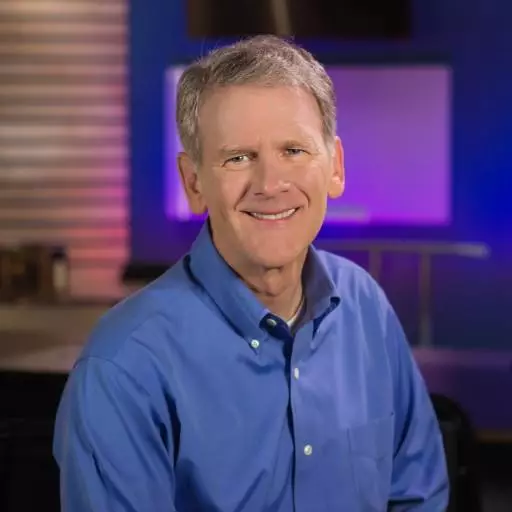
Bryan Chapell, Ph.D. is the Stated Clerk Pro Tempore of the Presbyterian Church in America (PCA), based in Lawrenceville, GA.
Dr. Chapell is an internationally renowned preacher, teacher, and speaker, and the author of many books, including Each for the Other, Holiness by Grace, Praying Backwards, The Gospel According to Daniel, The Hardest Sermons You’ll Ever Have to Preach, and Christ-Centered Preaching, a preaching textbook now in multiple editions and many languages that has established him as one of this generation’s foremost teachers of homiletics.
Dr. Chapell is passionate about sharing the truth of God's grace with others, because it provides the freedom and fuel for transformed lives of joy and peace.
He and his wife, Kathy, have four adult children, a growing number of grandchildren, and lives rich with friends, fishing and faith.
Contact Unlimited Grace with Bryan Chapell
info@unlimitedgrace.com