

Eyes of Joy - Part 1


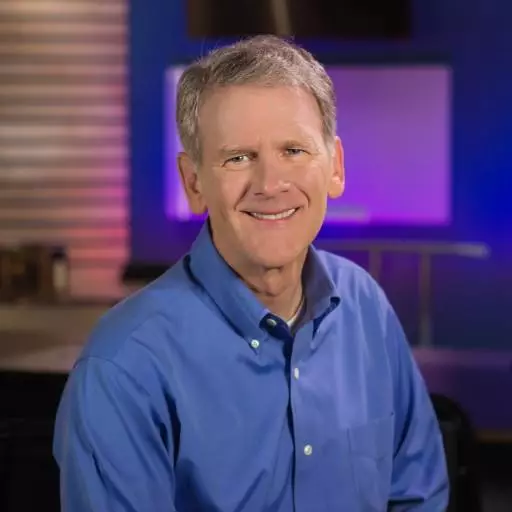
Pastor Bryan shares a lesson from Philippians 3. Dr. Chapell shares a message focused on the gratitude that is found in knowing Christ has made us His own.
Bryan Chapell: It is so easy for each one of us to look over our own lives and our own path and somehow say, we are deserving of the grace of God. But the Christian life that is in the reality of the resurrection power of Jesus Christ is saying, I am not able to live by my strength, my power, my goodness, but by what Jesus Christ has done. I depend upon him, his renewal.
Guest (Male): So glad you joined us for today's Unlimited Grace, the audio broadcast ministry of pastor and author Brian Chapel. In today's episode, Pastor Brian shares a lesson from Philippians chapter 3. Dr. Chapel shares a message focused on the gratitude that is found in knowing Christ has made us his own. You can find this lesson and many others when you visit unlimitedgrace.com. And while you're there, look for the children's book Anyway and Always written by Pastor Brian and his wife Kathy. Through this book, the Chapels present the promise of the covenants fulfilled by Christ in a personal and meaningful way for young children to understand.
Let's hear now from Dr. Brian Chapel as he shares the lesson Eyes of Joy.
Bryan Chapell: In the year that I was born, Roger Bannister was the first recorded human to break the 4-minute mile. A lot of you in this room will remember that fact, but what almost nobody recalls is that only two months later, John Landy broke Roger Bannister's record, decimating that record by almost two seconds, shattering the record that it had only been two months old. Well, that set up the head-to-head match of Landy and Bannister. In that same year, in a race that was making world headlines, Bannister and Landy went head-to-head against each other in the mile. It was clear through most of the race that Landy was going to win.
He was ahead, doing great within yards of finishing the race in the lead. However, one thought began to plague John Landy. Where's Roger? And within yards of the finish line, John Landy looked back and Bannister passed him. Landy later said in an interview with Time magazine, if I had not looked back, I would have won. The Apostle Paul is saying something much similar in this very passage. Press on toward the upward calling of God in Christ Jesus. But before any of that, forgetting what is behind, press on toward the upward calling of God in Christ Jesus.
Now, when the Apostle Paul says that, you and I are inspired that the Apostle Paul could say, I'm forgetting what is behind and I am pressing forward for the purpose of God's calling in Christ Jesus. But we have to think just a little bit and then recall, is Paul asking me to do that? I mean, it's a lot easier to be spectator on Paul's life than to be a participant in the race. After all, if you ask me to press on into an upward calling, I immediately begin to think of my lack of focus on that calling, my faults, my stumbles, my frailties.
How in the world can I, like the Apostle Paul, press on into an upward calling in Christ Jesus? Well, the Apostle Paul's instructions are actually pretty plain. What do we do to press on into the reality of the resurrected life of Christ Jesus in which sin is forgiven, Christ's power is filling in us, and we are living for him with reward and fulfillment in ways that we never knew before Christ was in our lives. How do we press on? Well, number one, don't claim that you've already arrived. I mean, after all, that's verse 12. Paul himself says, not that I have already obtained this, the reality of the resurrected life in Christ Jesus and all its fullness, not that I've already obtained this or am already perfect.
Now, don't you just love it that an Apostle says that? That an Apostle says, I haven't arrived yet. I'm not perfect. I mean, because after all, what you recognize is the essence of the Christian life is just starting out by saying, I'm not perfect. I recognize there are flaws and faults in my life that require God to do something in my behalf. It's it's the beginning of the Christian walk. It is this gospel humility. I recognize the good news is that God has provided for me, but he had to do that because I'm not perfect.
There are things in my life that are not right. One of the things that Kathy and I give thanks for each of the seasons that we have been with you is that we're elders, leaders in this church as we were coming just to explore who were saying not only these words, but much more. We're not perfect. As a matter of fact, we would recognize that much of the existence of our church in recent decades has been living on pride, prestige. Look at us, our power, our ability, our building. And we recognize the way we want to minister is not by what's true of us, by what's true of the Savior.
And therefore, we have to confess in humility before one another and before the world that we require the work of Jesus Christ. Would you come? Not because of our prestige, would you come because we need somebody to help us know the gospel again? And you have to know that when they said that I said, I need people because I need to know the gospel again. It is so easy for each one of us to look over our own lives and our own path and somehow say, we are deserving of the grace of God. But the Christian life that is in the reality of the resurrection power of Jesus Christ is saying, I am not able to live by my strength, my power, my goodness, but by what Jesus Christ has done.
I depend upon him, his renewal. And having a confessed my life's imperfection, I then begin to affirm my heart's direction. Paul says, I'm not perfect, but I press on to make what Christ is offering my own. And the reason I do that is the affirming of my heart's motivation. Why would I do that? It's the beautiful wording at the end of verse 12 because Christ Jesus has made me his own. I press on. Why do you do that? Because Christ has made me his own. I'm not perfect. I'm not deserving this, but Christ has made me his He's done something beyond me, apart from me, more than I deserve.
He made me his own. I didn't make Christ my own. He made me his own. It's the great statement of humility before one another, before the world, that Christ had to do something in our behalf. But what comes of that is marvelous, wonderful thanksgiving. Why do I press on? Because Christ has made me his own. And Boskamp, the farmer author that I introduced to you last week in her new book called The Broken Way, talks about the power of thanksgiving, not not just as food on a holiday, but as the fuel of the Christian life.
She talks about the thanksgiving as gratitude, reflecting on what it means that Jesus has made me his own. As a teen, she writes that she was bullied in public school to the point of being suicidal. And confesses that about that time she began to cut herself. She wrote, I tried to cut my way through the hurt down to the very core of things. After all, who doesn't know what it's like to smile and say, I'm just fine when you're not. And in fact, you are almost fainting with pain. Then writes the 43-year-old mother of seven, best-selling author now, I sometimes still struggle with wanting to cut.
There are still days I have to preach the gospel to myself so loudly to remind myself about a broken woman touching the intimate communion of the cross, to know Christ and the power of his resurrection, to share in his sufferings, to become like him in his death. And so somehow to attain to the resurrection of the dead, to press into this reality that that my life in the existence of what has happened to me or what I do leave me wanting to know, is there a God? Is there a reality? Is there anything but just my own crippled brokenness?
And to say, but Christ has made me his own. He knew all of that. He knows all of that. And to preach that gospel to our own hearts again and again and say, he knew the worst about me. He knows the brokenness that even continues now. And he has made me his own. She writes, most people seek gratitude as pollyannish. Oh, you're grateful for your life, for your beautiful home, for your farm. But grace to me, she says, is more like an electric shock. You have been given all of this beauty in the light of your brokenness.
If any of you, she says, have ever been moved by the grace of God, you recognize how gratitude is the movement behind the Christian life. It is ultimately our thanksgiving that is not just holiday, not not just a big meal. It is ultimately the driving force of the Christian life. God has made me his own through Jesus Christ. I I knew the hurt. I knew the harm of my own sin, my own weakness. Christ made me his own. This is the great mystery of gospel obedience. Most people think that what what fuels and forces obedience is either fear or gain.
The reason that we will obey is because we fear the ogre in the sky is going to get us and so we'll walk the straight and narrow. Or we desire that the great vending machine in the sky would somehow get our obedience nickels and will do exactly what we want to feed us with the things that we want in life. But instead, the great motivation of the Christian life, Christ himself said when he taught us the first and the greatest commandment, which is what? That you should love the Lord your God with all your heart, soul, mind, and strength.
What what is going to make you press into loving the Lord your God with all heart and soul and mind and strength? The Apostle John taught us, we love because he first loved us. It is it is that desire to respond in gratitude and thanksgiving for the great benefit of God that has been given to us by his son that makes us want to press on in the reality of who God is and what he has done. But how do you do that? I mean, how do you face your faults, your weakness, your sin, the things that you know are part of your life and still press on?
The Apostle is so clear. He says, it's just one thing. Really just one thing required to press on into the reality of the resurrected life that you desire. Verse 13, brothers, I do not consider that I have made it my own, but one thing, one thing I do, forgetting what lies behind and straining forward to what lies ahead, I press on to the goal. What what is the one thing? It is to focus by forgetting. Forgetting what is behind, I press on toward the high calling of the upward call of God.
Guest (Male): You're listening to Unlimited Grace, the audio broadcast ministry of pastor and author Brian Chapel. Raising children to love the Lord can sometimes feel like a daunting task. The physical, mental, and emotional energy needed to engage with the child can also lead to feelings of inadequacy and doubt for parents. How then can you effectively talk with children about Jesus or demonstrate to them his love? Written by Pastor Brian and his wife Kathy, Anyway and Always is a heartwarming children's book designed to help explain the love of Christ to a child. The Chapels present the promise of the covenants fulfilled by Christ in a personal and meaningful way for young children to understand.
Page after page of beautiful illustrations complement Brian and Kathy's captivating storytelling. Whether you read this as a bedtime story or share it around the family dinner table, this book is sure to become a favorite of children and parents alike. You can request your copy of Anyway and Always when you go online to unlimitedgrace.com or by calling 844-41-GRACE. That's 844-414-7223. And now, more from Brian Chapel on today's Unlimited Grace.
Bryan Chapell: Forgetting what is behind and the the the power of that, we witness just in the last World Series if you think about it. I mean, think of David Ross, 39 years old. He's in the seventh game of the World Series. He knows it's going to be the last game of his career. And he is put in in the fifth inning as a catcher for defensive purposes. The first batter behind whom he catches hits a little dribbler over home plate. Ross runs rushes forward, picks it up and throws it away, resulting in that batter getting to first base.
Next batter. Ball bounces from the pitcher in the dirt, hits Ross in the face mask, goes a different direction. The next batter gets on base. By the end of that inning, both of those batters will have scored. It is it is devastation. I mean, if you think about it, Ross, this is the last game of my career. This is the seventh game of the World Series. And and by my own error, two men are on, two men have scored, giving of course the other team the chance back in the game. But you may remember what happened in the next half inning.
Yeah. I'm really on enemy territory here, I can tell. What happened? What did he do?
Guest (Male): Home run.
Bryan Chapell: Home run. Now, you you have to know, he walks to the plate. He is just been guilty of the errors that have left the other team back in the game. But he has to forget that. And forgetting what's behind, he says, this is what I got to do. I got to press into this moment. And of course, there was wonderful reward in that. But you have to know how difficult that must have been to do, to say, I I I I'll just rest on my career laurels and and and you hopefully they'll forget the errors.
I or I'll just let the errors themselves so press in. I can't play. He's got to forget. He's got to move forward. And while the example is fun, you and I know how absolutely hard it is to do. And the Apostle Paul has told us how hard it is in this very passage. Forgetting what is behind, well, what is behind? I mean, after all, there are some pretty great accomplishments of the Apostle Paul back there. If you look at verse 5 of this same chapter, he says of himself, I was circumcised on the eighth day of the people of Israel, of the tribe of Benjamin, a Hebrew of Hebrews, as to the law, a Pharisee, as to zeal, persecuting the church, as to righteousness under the law, blameless.
I was blameless as much as people could observe my religion if that's what we're going to estimate. It But I've got to actually forget my accomplishments as well. I've got to say, I haven't arrived. I actually have to acknowledge my imperfections in order to be able to press into the reality of who Christ is and what he has done on my behalf. What would that look like in our lives to say, I've I've got to forget the past even if it looks good. I'm not going to claim that I'm a believer, that I have reality in the resurrected life of Jesus Christ because of my baptism, because of my great Sunday school record, because of my great giving record, because of anything in me which for most of us in this culture is just kind of saying, my basic being a good personness.
You know, I'm I'm I'm basically a good I'm not perfect. But I'm not like those people over there like those people over there voted as I didn't want or you know, and we define ourselves by our goodness. And the Apostle Paul is saying, no, listen, if you want to press into the reality of Christ, to share in the fellowship of his suffering, becoming like him in his death, dying to self so that you're actually living in the resurrected life of Jesus Christ. It's his life in you now. It's living for and with and in him.
To do that, you have to put behind you even your own good personness as your claim upon God. But that's not all that you have to forget. Right there in verse 6 with that line of commendations was that little phrase, as for zeal, persecuting the church. When Paul wrote those words, do you think he still heard the screams in his dreams? As he talked about what it meant to be a child of God, did he think of the chains he had put on mother's wrists to take them away from their children? Forgetting what is behind means you are also identifying past failures as well as past accomplishments and saying, these do not stop me from the reality of Christ that he has done something, that his blood washed me in my sin.
That would be my judgment. That would be what God would rightly hold against me, my faults and sins, my weaknesses. But I'm forgetting what is behind because Christ Jesus has made me his own. And in that reality, I am now going to live. It is it is, I confess, difficult for us to so enter the reality of Jesus Christ that we really can forget. Last week, we celebrated the veterans of our congregation and nation. But that led to conversations through the week of some veterans who have trouble forgetting. I think in my own family of one who says, I cannot believe what I myself did in uniform.
I cannot forget. But the reality of the gospel is that you have permission to forget. Forgetting what is behind, I press on, recognizing if I can't forget, I'm in essence saying the blood of Jesus is not enough. If I cannot forget, I'm in essence saying the gospel is not real, that part of affirming, the pressing on that is needed is to forget. And that can be awful, but it is a grace. Because I'm thinking about my oldest son this day, I think of a time that he and I were on a mission trip in Mexico.
And when we were on that mission trip, there was a a man traveling with us who began to observe our relationship. And one evening, he just took us aside and said to my son and to me, I I need to understand something about your relationship because I don't have it with my children and I and I don't know how to get it. He said, when I was growing up, my father, in order to have an affair with a neighbor, intentionally drove my mother into insanity. My childhood was so horrible. The only memories I have are an occasional fleeting thought of my parents fighting outside my bedroom door.
I have few memories and the ones that I do are terrible. And he said, because I do not have memory of my childhood, I do not know how to raise my children. He said, some months ago, I talked to my mother and I said to my mother, why is it that I have no memories of my childhood? And he said, my own mother said, remembering is a grace. But forgetting is also a grace. It can be a huge grace. You cannot be a parent without remembering certain things that bring you shame and upset. You cannot be somebody who fights for your nation.
And at times wonder if everything that was done was right. You cannot be successful in a career and sometimes look back over and say, how could I possibly have done that? What is taken to Christ and put down at the foot of the cross is dead to you now. If you have truly confessed it, it is gone, separated as far as the east is from the west. And part of my honoring of my Savior, part of believing in the efficiency and effectiveness of the blood of Christ is to actually believe I have permission to forget.
No, I am commanded to forget. It does not hold me back. I press on because I know my memories are sometimes the German shepherd that is after my heart, grabbing at me, fighting, clawing to get my soul again. And I say, no, I am called to forget. This is what God enables me to do, not by my goodness, not by my being basically a good person. It is actually by saying, God in Christ Jesus has made me his own. And I honor that by saying, forgetting what is behind, I press forward in the reality that he desires of me.
It is my command, but it's my privilege at the very same moment.
Guest (Male): That's Pastor Brian Chapel and you've been listening to Unlimited Grace. Please be sure to join us next time as once again, we endeavor to put Christ at the center of our efforts so that lives might be transformed by his Unlimited Grace. This ministry is brought to you by Unlimited Grace Media and continues to be made possible with your generous financial support.
Featured Offer

In Bryan Chapell's book, you will learn how God's unlimited grace leads us to heartfelt obedience and transforming joy. Explaining why grace is important and giving us tools to discover it in all of Scripture, Unlimited Grace helps us to see how gospel joy transforms our hearts and makes us passionate for Christ's purposes.
Past Episodes

Featured Offer
In Bryan Chapell's book, you will learn how God's unlimited grace leads us to heartfelt obedience and transforming joy. Explaining why grace is important and giving us tools to discover it in all of Scripture, Unlimited Grace helps us to see how gospel joy transforms our hearts and makes us passionate for Christ's purposes.
About Unlimited Grace
About Bryan Chapell
Bryan Chapell, Ph.D. is the Stated Clerk Pro Tempore of the Presbyterian Church in America (PCA), based in Lawrenceville, GA.
Dr. Chapell is an internationally renowned preacher, teacher, and speaker, and the author of many books, including Each for the Other, Holiness by Grace, Praying Backwards, The Gospel According to Daniel, The Hardest Sermons You’ll Ever Have to Preach, and Christ-Centered Preaching, a preaching textbook now in multiple editions and many languages that has established him as one of this generation’s foremost teachers of homiletics.
Dr. Chapell is passionate about sharing the truth of God's grace with others, because it provides the freedom and fuel for transformed lives of joy and peace.
He and his wife, Kathy, have four adult children, a growing number of grandchildren, and lives rich with friends, fishing and faith.
Contact Unlimited Grace with Bryan Chapell
info@unlimitedgrace.com