

Drawn To The Light - Part 2


Bryan Chapell: We are not alone. We are not stuck in the darkness. Is there darkness? Of course. But we're pressing against it with the reality of Christ in our lives, of God, who is our light, being with us. We are not alone. We are united to him. And in union with him, we recognize that our God is doing work through us for the sake of our lives and others' lives and this world. It's the reality as we are not stuck in the darkness.
Life doesn't have to be like it is right now. We're not alone anymore and our God is in our lives. That means real change is possible. This darkness is not my destiny. There really can be change. Not only can there be no condemnation, the reality is I can have the Creator of the universe loving me and leading me and helping me from this time forward.
Guest (Male): So glad you joined us for today's Unlimited Grace, the audio broadcast ministry of pastor and author Bryan Chapell. In today's episode, Pastor Bryan shares the second half of a lesson from John 3. Dr. Chapell investigates the light of Christ and the darkness that we so easily can be entangled by.
You can find this lesson and many others when you visit UnlimitedGrace.com. And while you're there, look for Pastor Bryan's book, The Multi-Generational Church Crisis. This compelling book asks the question of the church: what could be accomplished in the name of Christ if we could better understand each other? Let's hear now from Dr. Bryan Chapell as he shares the second half of the lesson, "Drawn To The Light."
Bryan Chapell: My question for you as we begin today is: when do you most appreciate the light? And the answer has to be: when you've been in darkness. The more absolute the darkness, the more you appreciate any light at all. Today, in John 3:17-21, the way in which the Apostle is going to have us appreciate the light of John 3:16 is by telling us the darkness from which it saves us.
To prepare you, we have to say there will be some light here, but the main intention of the Apostle is to have us appreciate light by truly understanding darkness. Let's stand as we would honor the Lord and his word as I will read to you John 3:17-21.
The Apostle says, "For God did not send his Son into the world to condemn the world, but in order that the world might be saved through him. Whoever believes in him is not condemned, but whoever does not believe is condemned already because he has not believed in the name of the only Son of God. And this is the judgment: the light has come into the world and people loved the darkness rather than the light because their works were evil. For everyone who does wicked things hates the light and does not come to the light, lest his works should be exposed. But whoever does what is true comes to the light, so that it may be clearly seen that his works have been carried out in God."
Let's pray together. Father, the Spirit who gave this word of light coming into darkness is the same Spirit that illumines our hearts so that that light who is Jesus himself might shine there in such a way that we would grasp the wonder of it and appreciate it because the darkness is being dispelled and pushed away by the wonder that is your grace toward us. Help us this day, Father. It's hard to talk about darkness.
But if we don't help one another just to understand what it would mean to be without the light of Christ, we haven't really helped at all. And so we talk about darkness not for any joy in that, but for the respite that you provide when we have turned to the light that is Christ. Help us ultimately to see the joy and the wonder that is in him we pray, in Jesus' name. Amen.
One of those terrible but amazing stories of the World Trade Center on 9/11 has only been told in recent weeks. It's amazing, here we are more than a dozen years after that great crisis, and some people are just now telling their tales because of the pain, because of the scar of the memories, and because of survivor guilt. "I made it when others did not." Only now can some so reckon with the events that they are willing to tell.
And one recent book is by a man who was the last one out alive from the south tower. And he tells how when the first explosion seemed to rock the building, how he and others first went up the stairways in the darkness until the smoke became too much. And then literally he and a group of people went down scores of floors until they got to a place in the darkness where they were blocked and could go no further down.
There was a voice at a distant stairwell across the floor. A man saying, "There may be a way down here." And in this little group, there was a man with a flashlight who was willing to lead them through the maze if they would follow him. The last man out followed the light. The others unsure what was at the other end of the maze decided to go back up into the darkness where they'd been safe at least for a while. And they all perished.
The light can be offered and you can refuse the light. And that is why John is saying here the light has come into the darkness. And the light is this great message: whoever believes in him will not be condemned, is not condemned. But you can choose not to be drawn to the light. And if that is the case, you remain in darkness. And therefore John says, "Whoever does not believe in his name is condemned already."
That's the verdict. What's the sentence? You know, even in our judicial positions now, there's a difference between the verdict and the sentence that comes. The sentence is actually described in verse 19, and it may surprise you. After we have heard that whoever does not respond to the name of Jesus, "This is the judgment: the light has come into the world and people loved the darkness rather than the light because their works were evil."
Now the verse ought to surprise you. Do you understand what's being said? What is the sentence, the judgment of those who will not respond to the name of Jesus? They get what they love. They love the darkness and they get the darkness. There are lots of definitions of hell in the Bible. One of the strongest and hardest for us is one that we'll have to deal with in future weeks. It's the end of this passage where it talks about the wrath of God against unrighteousness.
But here's a dimension of hell that we do not often think about. It is people getting exactly what they love. You do not want the light of the Gospel, and so what you get is the very darkness you love. But what is that darkness like? People love the darkness rather than the light because their works are evil. They don't want to be seen. They don't want their life's pursuits, their engagements, their attitudes, their activities to be observed by the light, and so they live in hiding.
I think one way, you know, lots of commentators will talk about this. It's like walking into the kitchen at night and turning on the light and the roaches go for cover. They don't like the light, they run to the darkness. But the human reality is far more poignant and in a certain sense, far more respectful where the Apostle is willing to say there are those people who prefer darkness because they do not want what they are pursuing to be exposed by the light.
As they would somehow, if having to face the Gospel of saying the path I've been on, the darkness I'm in, is not where I'm going to go now, but I'm going to come to a different light and to a different existence, then I've got to admit that what I was pursuing was unfulfilling. The reason I don't want it really to be exposed, the reason that I have to put on a mask, the reason I have to cover up the darkness of what I think about my own opinion, is that it has not been the very thing I would hope it would be.
I pursued what I thought would bring me happiness, what I thought would bring me satisfaction, but the reality is it's just emptiness and void and darkness. It's I suppose somewhat compared to a person that is having an affair with someone who's married and thinking all the time that person will leave their spouse and love me. And so we love that person. And the love for that person becomes an addiction. And it creates guilt and shame and ultimately we are spent in it. But the other person never loves us back.
It's the nature of darkness. The reason it's the condemnation, the sentence of sin itself, is that we love the darkness but it doesn't love us back. The things that we thought would provide the satisfaction, whether it's the pattern of life or the career that we pursued or the patterns that we pursued or the relationships that we pursued, all this that we felt would bring this light of life into our lives, but the reality is we're now there and we can't face the fact it's not at all what we hoped it would be.
And to confess that, to acknowledge there might be a different path, is to follow light into the Gospel that we don't want to follow because we've learned to love the darkness and we don't want the darkness of our lives to be exposed. That's why the Apostle speaks with such wonder and grandeur of the goodness of the light. Do you recognize even if you have pursued the darkness, even if there is much there that you are not proud of, even if there is much there that does not satisfy you, you've given your life to things that have not been what you wanted them to be, nonetheless, there is no condemnation in Christ Jesus.
But only the beginning of a life of goodness and eternity with him. And it's that beginning of that eternal life with him that now is being unfolded in front of us to say: here is light in the life of God. And as you pursue that, there is such wonder there that you don't have to pursue anything else. You don't have to fear the exposure. There's no condemnation in him.
Guest (Male): You're listening to Unlimited Grace, the audio broadcast ministry of Pastor and Author Bryan Chapell. It may seem hard for younger Christians to believe, but people over 50 were raised during an era when 90% of Americans identified as Christian. These older believers were once part of a majority group that understood the mission of the church was to take control of our culture, to halt its evils.
At the same time, Christians under 50 have lived their entire lives perceiving themselves as a minority that needs to make credible their faith to a secular, pluralistic culture. These distinct experiences and perceptions have a profound impact on the priorities different generations have for church ministry. It's no wonder that younger and older believers don't always see eye-to-eye.
In his new book, The Multi-Generational Church Crisis, Dr. Bryan Chapell asks the question: what could be accomplished in the name of Christ if we could better understand each other? This practical and hopeful book is backed by thorough research, revealing how to open the lines of communication, appreciate the experiences that shaped each generation in your church, and unite in one mission to impact your community and the world.
You can request your copy of The Multi-Generational Church Crisis when you donate online at UnlimitedGrace.com or by calling 844-41-GRACE. That's 844-414-7223. And now, more from Bryan Chapell on today's Unlimited Grace.
Bryan Chapell: We turn away because we truly do not want to be exposed, not just to the shame of it, but to our own dissatisfaction with what we have been doing. I thought of it sometime recently when I got an email from a friend of mine who is a pastor in India. He wrote these words: "In September, we and some other church leaders were confronted by rebels who demanded the church Jeep. My friend Leon said, 'We are not going to give you our Jeep, for it's to be used in the service of the Lord and not to help people who are killing others.'
But on October 1st at night, we were having a meeting in the village church and I was preaching. At about 8:30, three gunmen in combat dress entered the house where I was staying, led me to an open field about 100 yards away. The men ordered me to kneel down and I did. And then just as they were about to carry out their evil plan, God used a small solar light which was about 200 meters away."
Now I don't know exactly what he's describing. I think of the solar lights that are along our garden pathways, not very bright, just kind of dim light. And he says it's 200 meters away. But even that little bit of light was going to expose the murder that these rebels were about to commit. And because of that exposure, he writes this: "Since they could not find the switch to turn it off, they started stoning the lightbulb.
But they were drunk and under the kick of some drug, so they kept missing their target. And the sound brought the area commander of police and they ran again into the dark." They could do it. They could have killed him right there. But somehow even the exposure of any light at all upon their intent and their purpose and their lives scared them away.
I don't know where you are. So much of what John is doing is forcing us to some self-examination. Is just a little bit of the light of the Gospel in your life, maybe just this service itself where you are hearing that there is another path than the one that you are pursuing, the one that you thought would bring notice and finance and security and satisfaction? Is even just a little bit of the light of saying, "Did it really?"
If you are walking apart from the light of Christ, did it really bring you what you hoped it would bring? Would you be so brave then as to let the light of the Gospel shine a little wider and longer and more intensely into your life so that you could say if the darkness that you have loved has not loved you back, would you be drawn to the light of the one who has loved you eternally and says to you: there is no condemnation in me?
If it's a long way, if it is a long way from your darkness to that light, you may need the final air of the Gospel that is in this passage. It's verse 21. Having described those who would flee the light, the contrast John says is, "Whoever does what is true comes to the light, so that it may be clearly seen that his works have been carried out in God." Here's the contrast. There are those who are doing what is contrary to God and they're constantly hiding from others or from themselves the reality of the darkness that they are in.
But those who do what is true, we kind of wonder what does that mean, doing what is true? It's what is true to the nature and character of God. If you are doing what is true to God, you don't fear coming into the light. In fact, you're willing to come into the light because what it exposes is the God who has given you the light. Did you see the end of that verse, end of verse 21?
The reason that we do not fear coming into the light is so that it may be clearly seen that our works have been carried out in God. Here's the air. It's the very last two words: "in God." Jesus said in the Sermon on the Mount that the reason that we are willing to do our works before men is sometimes that we'll be noticed by them. But the reason that we as believers are willing to do our works is so others will not notice us, but they will see the God who enabled us and give praise to him.
Now John is saying for those of us who do what is true to God enabled by him, what we are showing to the world is the light of him in us. We say to the world: yes, look what I did, in Christ, through God. It's that wonderful statement of union with Christ that God is saying: listen, if you're with me, if you have been drawn to the light, if you're walking with me now, you are not alone and you are not stuck in the dark.
I think of some friends who called our family just recently and they were rejoicing. They said, "We were praying for our child who's not been walking with the Lord. He lives in another city now. And we were praying for the light of the Gospel to come into his life. And he was in a bookstore one day and we don't know how it happened, but some friends of ours who are believers, their son who is walking with the Lord came across his path in the bookstore. And as they just in conversation began to talk about where you from and who do you know and so forth, they struck up an acquaintance and the other friend has invited our son to go to church."
Why were they telling me that? They were saying: isn't God great? He's in our lives. We are not alone. We are not stuck in the darkness. Is there darkness? Of course. But we're pressing against it with the reality of Christ in our lives, of God who is our light being with us. We are not alone. We are united to him. And in union with him, we recognize that our God is doing work through us for the sake of our lives and others' lives and this world.
It's the reality as we are not stuck in the darkness. Life doesn't have to be like it is right now. We're not alone anymore and our God is in our lives. That means real change is possible. This darkness is not my destiny. There really can be change. Not only can there be no condemnation, the reality is I can have the Creator of the universe loving me and leading me and helping me from this time forward.
Listen, I don't know when that begins to penetrate into different people's hearts and lives. I recognize that sometimes the light of the Gospel is just like this blinding light that comes almost as a miracle as it did to the Apostle Paul as he was on the road to Tarsus. And you may remember that there are times when Zacchaeus just suddenly got the lightning bolt, "This is the Jesus."
But for other people, you recognize there can be this slow growing awareness. I was on this path and I thought it was good, but my life is so empty. And just over time, the wonder and the goodness of the mercy of God in Christ, the promise to be with his people and promise to help his people, that that promise of mercy just begins to grow and things we've heard for years finally make sense like John Wesley, remember, when he talked at Aldersgate how his heart suddenly began to have this strange warmth as the Gospel finally penetrated.
But maybe neither of those describes you. Maybe you're more like the person this chapter is oriented around, this Nicodemus. This man who knows all the religious answers, he's heard all the religious truths, and his life is such that sometimes he believes and sometimes he doesn't quite believe in this Jesus. And sometimes he's full of joy and fights back against sorrow, and sometimes he's courageous and sometimes he's a coward and he's kind of back and forth and back and forth until finally over time he says, "What am I doing? What has the back and forth gained me at all? I'm just going to give it all to Christ."
And it's that great last step of his life in which he simply says, "I'm going to believe in his name. I'm just going to commit to him." Because all these people, whether there is this blinding light of conversion or there's this slow growth of the wonder of the Gospel that creeps into your heart or there's this back and forth that kind of goes back and forth until you come to the resolve that this Christ is really where my only hope is, regardless of which person you are, the common denominator of all of these people is that all of them ultimately say: Christ is my life.
The other things are darkness. I need to turn another direction, another way. The things that I thought would satisfy, would bring fulfillment, have not. Christ is my life. And that common denominator is the light of the Gospel that dispels the darkness and brings us into the wonder of the life that he intends. As we in union with Christ know we're no longer alone and we're not stuck in the darkness because Christ has entered in and he's our life now.
Guest (Male): That's Pastor Bryan Chapell, and you've been listening to Unlimited Grace. Please be sure to join us next time as once again we endeavor to put Christ at the center of our efforts so that lives might be transformed by his unlimited grace. This ministry is brought to you by Unlimited Grace Media and continues to be made possible with your generous financial support.
Featured Offer
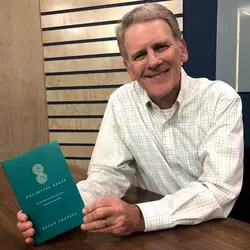
In Bryan Chapell's book, you will learn how God's unlimited grace leads us to heartfelt obedience and transforming joy. Explaining why grace is important and giving us tools to discover it in all of Scripture, Unlimited Grace helps us to see how gospel joy transforms our hearts and makes us passionate for Christ's purposes.
Past Episodes

Featured Offer
In Bryan Chapell's book, you will learn how God's unlimited grace leads us to heartfelt obedience and transforming joy. Explaining why grace is important and giving us tools to discover it in all of Scripture, Unlimited Grace helps us to see how gospel joy transforms our hearts and makes us passionate for Christ's purposes.
About Unlimited Grace
About Bryan Chapell
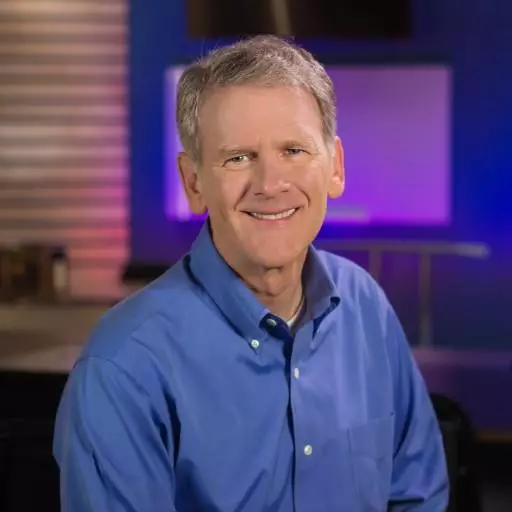
Bryan Chapell, Ph.D. is the Stated Clerk Pro Tempore of the Presbyterian Church in America (PCA), based in Lawrenceville, GA.
Dr. Chapell is an internationally renowned preacher, teacher, and speaker, and the author of many books, including Each for the Other, Holiness by Grace, Praying Backwards, The Gospel According to Daniel, The Hardest Sermons You’ll Ever Have to Preach, and Christ-Centered Preaching, a preaching textbook now in multiple editions and many languages that has established him as one of this generation’s foremost teachers of homiletics.
Dr. Chapell is passionate about sharing the truth of God's grace with others, because it provides the freedom and fuel for transformed lives of joy and peace.
He and his wife, Kathy, have four adult children, a growing number of grandchildren, and lives rich with friends, fishing and faith.
Contact Unlimited Grace with Bryan Chapell
info@unlimitedgrace.com