

Drawn To The Light - Part 1


Bryan Chapell: He knows everything.
Bryan Chapell: What is obvious, what is hidden, what's been revealed, what is still secret. He knows everything and says, and yet if your heart condemns you about that.
Bryan Chapell: If you have put your faith in him.
Bryan Chapell: He is greater than your heart.
Guest (Male): So glad you joined us for today's Unlimited Grace, the audio broadcast ministry of Pastor and author Bryan Chapell.
Guest (Male): In today's episode, Pastor Brian shares a lesson from John chapter 3.
Guest (Male): Dr. Chapell investigates the darkness of this world that is described in the Gospel of John and the hope that we have in the light of Christ.
Guest (Male): You can find this lesson and many others when you visit unlimitedgrace.com.
Guest (Male): And while you're there, look for Pastor Bryan's book, The Multi-Generational Church Crisis.
Guest (Male): This compelling book asks the question of the church, what could be accomplished in the name of Christ if we could better understand each other?
Guest (Male): Let's hear now from Dr. Bryan Chapell as he shares the lesson Drawn to the Light.
Bryan Chapell: This time, he would not take my air.
Bryan Chapell: The words of a young pastor speaking at the funeral of his younger brother.
Bryan Chapell: The younger brother had pursued a life apart from God, and in many ways had sought satisfaction, happiness in the things of the world, but things had not turned out as he had expected. His children were disabled and struggled greatly. After some years of that struggle, his marriage began to fracture. And the career was not all that he expected it to be nor as satisfying as he had wanted. So financial pressures increased as well.
Bryan Chapell: And for a while he fought it all off, the darkness that seemed to come closer and closer by first career immersion, and then unwise relationships, and finally with drugs. But the darkness did not dispel, it just got deeper and deeper.
Bryan Chapell: The pastor brother, of course, recognized what was trying to go on and spoke to him over time in this long path into darkness, but it did not seem to make any difference. And at the funeral of this young man who had taken his life, the brother pastor compared their experience to a time long ago when they were younger.
Bryan Chapell: He said, there was a time that we were scuba diving together, and we got down deep into the darkness below the surface. And when we were down so very deep, my brother's regulator failed and he could not get air out of his tanks. The light at the surface was far, too far away for him to swim to the surface and survive. And so I shared my air with him. He took my regulator, and we shared air and made it to the light.
Bryan Chapell: But this time, said the pastor, "He would not take my air."
Bryan Chapell: The Gospel has already revealed to us the light that is in Jesus Christ. But there is a recognition that in order to get to that light from the darkness of many lives' existence, it is a long journey. And what the apostle wants to do this day is to say, you need the air of Jesus as well to make it to the light of your hope.
Bryan Chapell: And just to make us recognize the seriousness of that, the importance of seizing his words, his air to make it to the light. The apostle will describe for us in detail the nature of the darkness that instead may grab us. So that we will not fear the darkness too much, the apostle starts with the light.
Bryan Chapell: You recognize it, it's verse 17, the explanation of the wonderful John 3:16 that preceded. Explaining what it would mean that God so loved the world that he gave his only son. The Apostle John says in verse 17, "For God did not send his son into the world to condemn the world, but in order that the world might be saved through him."
Bryan Chapell: Here is the great statement of the purpose of God and the provision that is for us. The purpose that God has for his son is first stated in a wonderful negative.
Bryan Chapell: God did not send his son into the world to condemn the world. The word send there is the word apostella, which is the word we get apostle from. There was his son. God sent on a mission as an apostle to the world itself. And this mission, surprisingly enough, was not to condemn.
Bryan Chapell: I mean, it might be our very expectation if you just get a little background of this son coming into the world. Do you remember from the very first chapter we read what happened? In this Jesus, we are told in John chapter 1 and verse 4, "In him was life and the life was the light of men, and the light shines in darkness."
Bryan Chapell: But the darkness has not overcome it. Some of your Bibles will say, would not comprehend it. The language is of darkness trying to seize the light, try to grasp it as in an attack mode. It's a word of hostility and antagonism that here was the light of God coming into the darkness, but the darkness would have no part of that.
Bryan Chapell: In fact, you may remember a little bit later in that chapter would say even of Jesus, "He came into his own and his own received him not." And yet out of this context of the light of God coming into the world, into this darkness, and the darkness reacting against it and not receiving, is this wonderful statement, "But he did not condemn the world even yet."
Bryan Chapell: You could expect it. You would expect it. Particularly in light of what John 3:14 reminds us. John 3:14 says, "When he came into the world, it came on this mission," Jesus himself speaks in John 3:14, "as Moses lifted up the serpent in the wilderness, so must the Son of Man be lifted up."
Bryan Chapell: He was not just rejected. Ultimately, he was lifted up. A phrase used three times in the Gospel of John and the very last time given the greatest explanation. When Jesus said to those who were antagonistic to him, "The Son of Man must be lifted up." And there John comments, "in this way he revealed the manner in which he would die."
Bryan Chapell: He will be crucified. The light would come into the world and the world would crucify him. And yet the great statement of the Gospel is, God did not send him to condemn the world. The world that would not receive him, but rejected him and crucified him. God knowing it all did not send his son to condemn, but exactly the opposite. What?
Bryan Chapell: In order that the world might be saved through him. He did not come to condemn, but to save. Listen, it is the totally unexpected response. If the principal comes into the classroom and it's dark and there's a riot going on, you expect a few detentions.
Bryan Chapell: But here is the son of God coming into the world, rejected of men, who would then crucify him, and his purpose is not to condemn but to save. It's the great statement of both sacrifice and righteousness and goodness which we so deeply appreciate whenever we see it expressed even in humanity.
Bryan Chapell: I think of the tragedies of our own culture. We think about Don Hawks Spring, the the principal at the school in Connecticut. where a gunman broke in.
Bryan Chapell: And she, having worked two years according to those who knew her to establish security in the school, hearing the early shots, sprang from the conference room that she was in. Hit the intercom to warn other teachers. Saved most of the 700 children. But then ran right at the gunman to try to stop him.
Bryan Chapell: She could have said, "Wait a second, I I've given so much to establish security. I I've given so much to save. And and now it it just seemed like for anything. I I mean, I could just save myself in exasperation and walk away."
Bryan Chapell: But her great sacrifice and great courage was to walk into the face of death. And the reality is she did not know what she was walking into, but our savior did. And knowing it all, he did not come to condemn but to save.
Guest (Male): You're listening to Unlimited Grace, the audio broadcast ministry of Pastor and author Bryan Chapell.
Guest (Male): It may seem hard for younger Christians to believe, but people over 50 were raised during an era when 90% of Americans identified as Christian. These older believers were once part of a majority group that understood the mission of the church was to take control of our culture, to halt its evils. At the same time, Christians under 50 have lived their entire lives perceiving themselves as a minority that needs to make credible their faith to a secular pluralistic culture.
Guest (Male): These distinct experiences and perceptions have a profound impact on the priorities different generations have for church ministry. It's no wonder that younger and older believers don't always see eye to eye. In his new book, The Multi-Generational Church Crisis, Dr. Bryan Chapell asks the question, what could be accomplished in the name of Christ if we could better understand each other?
Guest (Male): This practical and hopeful book is backed by thorough research, revealing how to open the lines of communication, appreciate the experiences that shaped each generation in your church and unite in one mission to impact your community and the world. You can request your copy of The Multi-Generational Church Crisis when you donate online at unlimitedgrace.com or by calling 844-41-GRACE. That's 844-414-7223. And now, more from Bryan Chapell on today's Unlimited Grace.
Bryan Chapell: Knowing it all, he did not come to condemn but to save.
Bryan Chapell: And the consequence of that is John 3:18. Look at it with me if you will in your Bibles. John 3:18, "Whoever believes in him is not condemned." He did not come to condemn. He came to save, and whoever believes in him is not condemned. It is so important that you hear that. I want you to read it with me. Do you have your Bibles open?
Bryan Chapell: I want you just to read that first phrase of John 3:18. Would you read it with me? "Whoever believes in him is not condemned." Would you read that again? "Whoever believes in him is not condemned." Let it sink in. "Whoever believes in him is not condemned."
Bryan Chapell: Why do you have to believe that? Because our hearts war against the notion. We say, "Is it really true that that just by faith in him, that that what is not right in my life could be put away, removed as far as the East is from the West, that my sin could rest upon Jesus upon the cross, the penalty be paid, and I would not be condemned because I believe in him?"
Bryan Chapell: I mean, you recognize our our heart say it, it can't possibly be this true, this good. And so you almost have to take the verse in every one of its parts and say, what wonder is here that the apostle wants to sink into our hearts. Just if you take the very end of that phrase at the beginning of Romans 18. Whoever believes in him is not condemned.
Bryan Chapell: Paul takes it and and makes so much of it. Remember at the beginning of Romans 8, "There is therefore now no condemnation to those who are in Christ Jesus." And we hear those words and we think, "but but if you knew my life, my failures, my secrets, you would not be so ready to say these words."
Bryan Chapell: And that's why it's so important that this this same Apostle John, as he later in his life, writes to the church, says these very words. "Whenever our hearts condemn us, God is greater than our heart and he knows everything."
Bryan Chapell: And he knows everything. What is obvious, what is hidden, what's been revealed, what is still secret. He knows everything and says, and yet if your heart condemns you about that. If you have put your faith in him, he is greater than your heart.
Bryan Chapell: So many of us, even though we believe in the work of Jesus Christ, we we keep that record book in our hearts so that somehow when there is new sin, new shame, new guilt, we pull out the record book and we say, "Look, there it is again."
Bryan Chapell: And our hearts condemn us as though the work of the cross is insufficient. And what the apostle is saying is, "You must hear me. There is no condemnation."
Bryan Chapell: It is put away, and he knows everything, and still says, "There is no condemnation." And the wonder of this John 3:18 is not just the end of that first clause, no condemnation. But the wonderful is that precedes it. Whoever believes in him is not condemned. It's it's the beauty of the present tense.
Bryan Chapell: The wonder of heaven that's beginning right now. It is it is not pie in the sky, by and by. Someday you'll stand before the throne of God, and if you believe at that time, you'll not be condemned. It's right now. Whoever believes in him is not condemned.
Bryan Chapell: That that our gain of the beauty of God's approval starts right now. God is not just saying, "Listen, I will forgive the sin of the past. I will forgive the sin of the present." He's even saying the sin of the future, all the sin of those who believe in Christ Jesus was put upon him at the cross. And what that means is, there is no time in your life in which you stand condemned before God.
Bryan Chapell: To believe in him is not to be condemned. It's it's the wonder of recognizing how good it is to to be right before God right now and every step forward.
Bryan Chapell: We try to claim different aspects of our existence to to make it clear. I think of Joni Eareckson Tada, a name some of you will know. Joni in her teen years, because of a diving accident, became a paraplegic, a quadriplegic. And as a consequence was at first embittered toward God.
Bryan Chapell: Until the reality that that heaven could begin right now. That an eternal relationship with God, free of guilt and shame, that an understanding that he could enter your life and whatever the difficulty of the moment would be working all things together for a greater good, regardless if your heart condemned you or not, that that heavenly reality could start right now. She came to faith in Jesus Christ, and yet would wrestle at times.
Bryan Chapell: "What about my continuing anger? What about my depression at times? What what about the the discontent of my situation? Am I still okay with God?"
Bryan Chapell: She wrote in terms of her wedding what she came to understand. She wrote these words: "I felt awkward as my girlfriends strained to shift my paralyzed body into a cumbersome wedding gown. No amount of corseting and binding my body gave me a perfect shape."
Bryan Chapell: "And as I was wheeling into the church, I noticed that I accidentally run over the hem of my dress, leaving a greasy mark. My paralyzed hands could not hold the bouquet of flowers that lay off center in my lap. And my chair, though decorated for the wedding, was still a big, clunky, gray machine with belts, gears, and ball bearings. I certainly did not look like the picture-perfect bride in all the bridal magazines."
Bryan Chapell: "But as I inched my chair closer to the last pew at the aisle, to look down and catch a glimpse of my groom, Ken, in front, I saw him looking for me, craning his neck to look up the aisle."
Bryan Chapell: "The love in Ken's face washed all my feelings of unworthiness away. I was his pure, perfect bride." When? "From that moment and all forward. The the grease still on the dress, the incapacity of the body, and yet washed clean, made right, adored by the love of another."
Bryan Chapell: And here is God saying to us that when we believe, there is now no more condemnation. That this reality of the love of God for us is made right now and forever.
Bryan Chapell: On what basis? The beginning of verse 18 again, so important. "Whoever believes in him is not condemned."
Bryan Chapell: Doesn't just say the the tall or the short people, the white or the black people, the good or the bad people. "Whoever." "Whoever believes in him."
Bryan Chapell: That by faith alone in what he has done, not not climbing the mountain, not achieving the goodness, not getting my life straightened out. If I will believe in him that he has provided the way for me, that his death upon the cross was the penalty of my sin. In that moment, I am made right with God and there is therefore now no condemnation for those who are in Christ Jesus. It's it's right now and forever.
Bryan Chapell: That's the wonderful purpose and provision of the God who was sent. For you, for me. It's the light of the Gospel.
Bryan Chapell: And still we may not appreciate it without understanding the darkness. The darkness follows the statement of life so that we will understand from what we are rescued.
Bryan Chapell: Do you remember the end of verse 18 after the wonderful statement, "Whoever believes in him is not condemned," this: "But whoever does not believe is condemned already because he has not believed in the name of the only Son of God."
Bryan Chapell: And this is the judgment. The light has come into the world and people loved the darkness rather than the light because their works were evil.
Bryan Chapell: The middle of verse 18 is the verdict. "Whoever does not believe is condemned already because he has not believed in the name of the only Son of God."
Bryan Chapell: It's not language we use much anymore to believe in the name of somebody. We we do know what it means to believe in somebody. You know, the the coach says to his passing quarterback, "It's the last play of the game. I believe in you." You know, get in there, you know. In which saying, you know, "I believe in your character, I believe in your ability."
Bryan Chapell: And is not so unlike what it means in the Old Testament and in many parts of the New to believe in the name of somebody. You may remember that that the name of somebody in biblical times was often to identify their character as well as their purpose. So the angel, when he spoke to Mary, said, "You shall name this child who's coming. You shall name his name Jesus," which means deliverer because he will save his people from their sins.
Bryan Chapell: "Name him deliverer because he will be a deliverer." His name indicates his purpose. And now says John, "For those who believe in his name, who believe that his purpose is to save them, that he will do that. There is no condemnation."
Bryan Chapell: But against that great statement of light is the darkness. "But if you do not believe in his name, you are condemned already." "How could that be?" "Because if you do not follow the light, you simply remain in the darkness."
Guest (Male): That's Pastor Bryan Chapell, and you've been listening to Unlimited Grace. If you would like to hear more from Dr. Chapell, you can find a collection of valuable resources at unlimitedgrace.com. When you visit, you will find today's message and many others from Pastor Brian. Once again, go to unlimitedgrace.com or you can give by calling 844-41-GRACE. That's 844-414-7223. Please be sure to join us next time, as once again, we endeavor to put Christ at the center of our efforts so that lives might be transformed by his Unlimited Grace. This ministry is brought to you by Unlimited Grace Media and continues to be made possible with your generous financial support.
Featured Offer
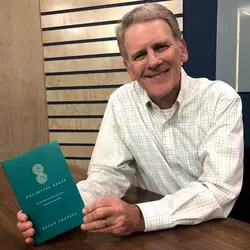
In Bryan Chapell's book, you will learn how God's unlimited grace leads us to heartfelt obedience and transforming joy. Explaining why grace is important and giving us tools to discover it in all of Scripture, Unlimited Grace helps us to see how gospel joy transforms our hearts and makes us passionate for Christ's purposes.
Past Episodes

Featured Offer
In Bryan Chapell's book, you will learn how God's unlimited grace leads us to heartfelt obedience and transforming joy. Explaining why grace is important and giving us tools to discover it in all of Scripture, Unlimited Grace helps us to see how gospel joy transforms our hearts and makes us passionate for Christ's purposes.
About Unlimited Grace
About Bryan Chapell
Bryan Chapell, Ph.D. is the Stated Clerk Pro Tempore of the Presbyterian Church in America (PCA), based in Lawrenceville, GA.
Dr. Chapell is an internationally renowned preacher, teacher, and speaker, and the author of many books, including Each for the Other, Holiness by Grace, Praying Backwards, The Gospel According to Daniel, The Hardest Sermons You’ll Ever Have to Preach, and Christ-Centered Preaching, a preaching textbook now in multiple editions and many languages that has established him as one of this generation’s foremost teachers of homiletics.
Dr. Chapell is passionate about sharing the truth of God's grace with others, because it provides the freedom and fuel for transformed lives of joy and peace.
He and his wife, Kathy, have four adult children, a growing number of grandchildren, and lives rich with friends, fishing and faith.
Contact Unlimited Grace with Bryan Chapell
info@unlimitedgrace.com