


Dignity - Part 2


Pastor Bryan shares the second half of a lesson from Genesis 2. In this first sermon from the series, ‘Mission at Work,’ Dr. Chapell points us to the dignity in our work, as we seek to honor God in the workplace.
Guest (Male): So glad you joined us for today's Unlimited Grace, the audio broadcast ministry of pastor and author Bryan Chapell. In today's episode, Pastor Bryan shares the second half of a lesson from Genesis 2. In this first sermon from the series "Mission at Work," Dr. Chapell points us to the dignity in our work as we seek to honor God in the workplace.
You can find this lesson and many others when you visit unlimitedgrace.com. While you're there, check out the new daily devotional podcast called Daily Grace. Pastor Bryan will guide you through a devotion each day to help focus your attention on God's grace as you study His word. Watch and listen to each episode when you visit unlimitedgrace.com today. Let's hear now from Dr. Bryan Chapell as he shares the second half of the lesson entitled "Dignity."
Bryan Chapell: You and I sometimes live in the unreal world that we say to ourselves, "If I just didn't have to work, life would be so pleasant," right? I can remember that when I was in college, one of the jobs I had to pay for tuition was I bused tables in the student cafeteria. And you get dirty and messy, and people come and go, and you're just working along hard there and you think, "This is no fun."
At some point in my experience of busing tables, the food service changed hands and new management came in and said, "We've got a new rule. One price, all the food you want to eat every day to all students. Just one price, you get all the food you want to eat." Well, that sounded good until people began to recognize, "Not only could I come in and eat, I could bring my friends in to eat. Not only can I bring my friends in to eat, I could take food out of the cafeteria and keep it for the weekend."
Well, somebody had to guard the door. Somebody had to sit and watch for people to steal food. Every one of us wanted that job. You just have to sit by the door. No more busing tables, no more washing dishes. You just get to sit there. Isn't that a great job? It was awful! You couldn't do your homework because you were supposed to be vigilant for people stealing food. But they very quickly learned if they put it in their knapsack, you couldn't stop them, right?
So they're walking out the door with the food and you're just sitting there. You can't do your homework, you can't study, you're not working. The hours crawl by. It is so miserable. And some of you know that at a different stage of life, right? You think, "Man, when I retire, I will just get to play golf all day, every day." It's going to be so wonderful for about three weeks. And you think, "I've got to do something," right? There's got to be some meaning.
And so even in those retirement years, you begin to say, "I need to find something to volunteer for. I need to help out the grandkids. I need to take a second job." Why? Because you are made to flourish things, to make things work. That's how God has designed us. And when we begin to recognize that work is not evil, it's actually something that brings us reward, we begin to observe different things in our culture in very different ways.
I don't have to convince you that work is dignifying. When you have a story making national news of a young teen, remember, who was excused of awful crimes because his parents had never taught him responsibility because he had too much money coming his way? Do you remember? And he gets off because of affluenza. Heard that story? Now, we can all just shake our heads and say, "Well, that's crazy." But don't you grieve for a young man who doesn't even know right and wrong, doesn't know how to be productive, doesn't know how to make a way in the world, because he doesn't understand work at all?
He doesn't understand responsibility at all. And to recognize that story in some version is spreading across our culture. Just bare statistics: 30 percent of all men in this country of working age are not working. 30 percent. Lots of reasons. Some cannot find jobs, some are discouraged, some are not able, some just have found a welfare system that enables them not to have to.
But other things are happening, and part of it's in our own educational system where you recognize more and more it's possible just to dive into the educational system and to avoid long-term responsibility. One of the signals of that is the growth of the gaming culture in our society right now. And some of the young people here are going to know this so much better than I do. But you have particularly young men, increasingly young women, who are spending so much time of every day and many hours of the night just gaming away.
Why? Well, you can get speed and sex and money, get your aggressions, get your skills down, all on things that produce nothing at all. You're actually just giving money to the gamers and giving yourself to do it. If we had any other definition for what's going on, I spend all my time, all my money, all my resources, spend my future pursuing those things that are not real, that never will benefit me or my family long-term—we would call that slavery.
And yet people become enslaved by that which costs them nothing in terms of personal risk or responsibility. And over time, they just begin to feel no investment in the world and ultimately no respect for themselves. Work gives us dignity because the work itself is dignified. When we begin to understand that God has said that, we see it's not just because the work is meant to produce stuff in the world.
Work is actually worship. That's why it's bringing dignity to the people who do it. It's one way that we worship God. Again, just important order of verses. Genesis 2:15 follows Genesis 2:2. Genesis 2:2 you'll know if I just cite it back to you. This is the place that God says He rested from His work. It was the seventh day, it was the Sabbath, and He rested from His work. Now, it's not because He's tired. He's simply withdrawing from His working of creation.
And as God stops His work, then comes Genesis 2:15. He gives us our work. All right, I've worked to establish the creation. Now, your turn to make things flourish, to work the land, and also to keep it, to produce and to conserve. It's now your job. Which means actually we are continuing God's work in the world by our work. What He meant to bring glory to Himself, what He meant to actually create goodness in our world, we are continuing by our work.
So we know, of course, that the weeds start to grow, that corruption enters in, but the work of humanity never stops. Which means that we are meant to continue to push back the weeds, to push back the corruption. That our job is actually extending the glory and goodness of God in the world even against the corruption that's here. This is the mission of God for each of us: that we are turning back the undoing of our world that sin caused.
And that's in every profession that we have. We need to start seeing it that way, that the work itself is carrying forward the work of God because there are many good ways in which Christians think about their work honoring God. Some of the traditional ways are very, very good and important, but not a complete thought. If you take the ordinary Christian and say, "Why am I working?" one reason I'm working is to provide for my family.
Listen, that's a very good and appropriate motivation. Another motivation is so that I can witness to my colleagues, right? There are people around me, I can be a Christian witness. Do I say this to you kindly? Your boss did not hire you to be a Christian witness, though. And if that's the primary thing that you think you're there for, that's going to be frustrating to you and to your boss. And so you think, "Well, maybe I'm here so that I can make money to be generous to the church and to the mission of God in the world."
All those are appropriate motivations. Whether it's providing for your family, witness to colleagues, or provision for the ministry of the church—all very appropriate. But there are other things that Genesis is giving you as the dignity of your work. I just want you to think carefully with me about what has been said happening in these early chapters of Genesis. In Chapters 1 and 2, you have the garden made to provide for a couple.
They make and keep the garden just so the couple can be provided for. By Genesis 3, the fields are being plowed in order to undo the effect of the weeds, fields plowed and families being taken care of. By Genesis 4, cities begin to form and societies begin to function. By the latter half of Genesis 4, not only do cities form, but the artisans and the musicians and the metalworkers, the different trades begin to take over as you see not only society but beauty now begin to prosper.
There's a great fall that's going to happen again in the flood. But after the flood, the gospel then begins to spread through Abraham and Genesis 12. What you begin seeing in these opening chapters of Genesis is that the work that humanity is given is beginning to spread the kingdom of God ever more fully, ever more dramatically as it moves forward from individuals to families to cities to societies to ultimately a gospel that's meant to encompass the world.
What we are seeing happening by work is the kingdom of God is spreading. The shalom, the peace of God that was lost by the fall—that shalom of God is being spread again. And it's happening through people who are image-bearers working responsibly in the world.
Guest (Male): You're listening to Unlimited Grace, the audio broadcast ministry of pastor and author Bryan Chapell. This is Chris Obak, executive director of Unlimited Grace Media. I hope you have been enjoying this encouraging message from Pastor Bryan. If this program has been a blessing to you, I want to share with you a new way in which you can receive daily encouragement from Dr. Chapell.
We've recently launched a daily devotional podcast entitled Daily Grace. If you've already signed up to receive daily devotions by email, this podcast is a great companion piece. You can watch and listen to Pastor Bryan share these devotions daily when you visit unlimitedgrace.com. You can also find this podcast on all major podcast platforms or watch it on YouTube.
This is just another way that we want to serve you with Christ-centered content and help focus your attention on the grace of God that pervades all of scripture. Let us know what you think of this new podcast. We're always encouraged to hear from you. And now, more from Bryan Chapell on today's Unlimited Grace.
Bryan Chapell: Listen, so many of you in this congregation from engineering backgrounds, and because I was just working on this message, I came across some statistics from the National Bureau for Economic Research. And they recorded this: that even though we often think about technology and industry as coarsening or hardening our culture, nonetheless this has happened.
From 1970 to 2006, the portion of the world living on one dollar a day or less has dropped by 80 percent. Over a billion people lifted from that direness of poverty by the contribution of men and women with engineering technologies that have turned back the darkness. Thank you, engineers! So much of what we're able to see and do in our world changing for good isn't just on the spiritual level, but as people are employing their gifts for God's purposes, their world is changing.
And the world is changing as God intends. Listen, not everybody sees it that way, that their job—not just what comes out of their job, but their job itself—is part of God's divine calling. A few years ago, I was speaking at the Urbana conference. Remember what that is? Every couple of years, there's this national mission conference for young college people that occurs. Used to be at Urbana every couple of years, now it's in St. Louis.
And I was speaking at the Urbana conference on the role of Christian journalism because my background and training is in journalism. And so I was talking about how Christian journalists can have such an influence upon culture, to take the values of their faith—not just in writing Christian articles, but whether they're dealing with politics or war or economics—to begin to bring a Christian perspective to the world in their calling.
Afterwards, there's a young woman that came up to me and she said, "Your talk just made me feel guilty." She said, "Because the kind of journalism I want to do is I want to write articles for fashion magazines. I mean, I have a love of fashion, but I know it's vacuous and vain and doesn't honor God at all." Now, what I said to her you may or may not find easy, but what I said was this.
"Listen, if you think what you're going to be doing is vacuous and vain, please do not give your life to that. But if what you are able to do as a fashion writer is express the creativity and beauty of God with purity and true Christian beauty, you could be a wonderful Christian influence on an industry that needs to talk about beauty without vulgarity. And God could be calling you to do that as a Christian in that era." So that your work itself is honoring God.
Listen, God is calling us to lots of different things. And when we recognize the work itself is part of the glory that God is giving us, that gives me a whole another way of assessing my glory—that I'm not just glorifying God with the byproduct of my labor; the labor itself is dignified. Is doing the work of God in the world if it is done with His priorities and purposes.
What I need to say, if you begin to recognize that—that my work itself can honor God, can be part of the dignity that I have in the world—then I begin to say, then you need to know that all kinds of work carry that dignity. Not just preachers and not just presidents and not just CEOs and not just surgeons, but the cop and the carpenter and the concrete layer and the nurse. All kinds of jobs God is calling us to so that our world will work as He intends.
Listen, we don't hardly ever go there, but in Genesis 4 at verse 19, in this amazing set of verses where Lamech is being introduced, who will say some difficult things in a little bit, but before Lamech says difficult things, we just get this descriptor of how society is unfolding in the early chapters of Genesis. Genesis 4:19: "And Lamech took two wives. The name of one was Adah, the name of the other was Zillah. Adah bore Jabal; he was the father of those who dwell in tents and have livestock.
His brother's name was Jubal; he was the father of all those who play the lyre and the pipe. Zillah also bore Tubal-cain; he was the forger of all instruments of bronze and iron." Here we are in the very early stages of human history, and we find these different professions—which by the way means how you profess your faith. We find these different professions in the vocations of the early people. There are those who are kind of the Marlboro men; they're raising livestock.
And then, of course, there are the artisans, and there are the craftsmen, and there are the metalworkers. And all these different professions are being established as the means by which society is moving forward and spreading out now as God is honoring every single one. And we need to hear that, so that we don't sometimes just look down on ourselves. "I'm just a carpenter." What? You mean like Jesus?
No, you have the ability to take the image of God into the work that you do, and in doing so, actually make people understand the goodness of what God is, the care that He has, the industry that He has for our sake. We sometimes are so hard on ourselves because we let other people's gifts make us think ours are not worthy. I love the words of 1 Peter 4: "As each has received a gift, use it to serve one another as stewards of God's varied grace."
Don't you love that? Stewards of God's varied grace. Parents, sometimes you know we don't give our children the opportunity for varied grace. Plain talk: lots of gender confusion in our culture right now, and sometimes we increase it by narrowing the definition of what it means to be a man or a woman. And we say to a man who's artistic, "Well, that's not manly." No, no, in the Bible early on there were men who were artists.
We say to a woman who is mechanical, "You know, that's not very womanly." No, no, wait a second. We see even in the Bible there are those who work from all kinds of purposes for all kinds of reasons. And that is to be honored. What we don't do is we say, "Listen, I'm just not doing something very important." If you are honoring the gift of God in your life, you are fulfilling the grace that He intends for your life.
There are different phases of life, different aspects of our health, different ways in which we can express those abilities. But true to the purpose of the moment, God is gracing us to give glory to His own name. I think of that at different phases. Like when some people have to be a stay-at-home mom. I tell this story on Kathy only because she tells it on herself. She talks about a time that she was changing a particularly yucky diaper and said to a friend standing beside her, "These hands have played Mozart."
And the friend said, "Maybe these hands are diapering Mozart." Undeniably, what those hands were doing was nurturing an eternal soul. There is glory and honor and dignity in whatever God has called us to do. As we are fulfilling His purposes, He is giving us great dignity in what we do. One of the most telling articles that I have read recently was written in the 1980s by Lester DeKoster in a book called "Work: The Meaning of Your Life."
And what he was trying to do was to express to plant workers in menial jobs that they believed both demoralized and degraded them, why they could see their jobs with dignity again, thinking of God's priorities. And to just help people think, he wrote these words. "That chair that you're lounging in. Could you have made it yourself? Well, I suppose you could have assembled the parts. But could you have made the chair yourself?
Could you have gotten the wood by yourself? And by that, not just go down to the store. Could you have gone to the forest and cut the timber and transported it and planed it and produced it as it needed to be? And what about the truck that transported it? Could you have driven it? Could you have got the rubber for the tires? Could you have made the metal for the wheels? Could you have built the road by yourself? What about the machines that built the road?
What about the workers who ran the machines? What about the food that was fed to the workers? What about the farmers who provided the food? What about the fields that were plowed by the machines that the farmers needed? What about the metal in those machines?" Ultimately, said, "You begin to recognize if you had to make a chair, it would actually take you many lifetimes. We work so that God's world works."
And when I begin to see that, that there's dignity in what I do to serve others, to serve God's purpose, then every job has a purpose, has a glory to it. It's what the Bible itself says: the eye cannot say to the hand, "I have no need of you." On the contrary, the parts of the body that seem to be weaker are indispensable. Every person, in the image of God, for the purpose of God, in the place of His calling, it is a calling.
And for that reason, it has the dignity that God is giving to it as we are living for Him in that place for that purpose. Not just the byproduct; the work itself has dignity. And for that reason, we do. If we are using God's gifts in the calling He gives us, we live life well. And there's dignity in that. Praise God that you are made in His image for His profession in the work that He has called you to do.
Bryan Chapell: My friend, this is Pastor Bryan. I'm glad you decided to tune in and listen, and I would consider it a privilege to pray over you today. Let's pray together. Heavenly Father, what a privilege we have to come to You in prayer. Your word says that we can come to You about anything, not just the big things and not just the things that we think we have figured out.
Instead, You love us so much that You say, "Do not be anxious for anything, but in everything by prayer and petition with thanksgiving for Your certain care, we can offer our requests to You." And then because we know that the God who controls all the outcomes of things on earth and for eternity cares this much for us, the peace of God, which surpasses all understanding, will guard our hearts and minds for whatever we face with Jesus.
We do not expect our prayers to end all our trials before Jesus comes, but we know that You will use our prayers, Father, to make all things work together for good until Jesus returns. Thank you for this promise and assurance. Give us the peace and the strength we need through these promises and assurances we pray in Jesus' name. Amen.
Guest (Male): That's Pastor Bryan Chapell, and you've been listening to Unlimited Grace. If you've missed anything that you'd like to hear once again, just visit unlimitedgrace.com. And when you do so, you can sign up for Pastor Bryan's daily devotional sent right to your inbox. Please be sure to join us next time as once again we endeavor to put Christ at the center of our efforts so that lives might be transformed by His unlimited grace.
This ministry is brought to you by Unlimited Grace Media and continues to be made possible with your generous financial support.
Featured Offer
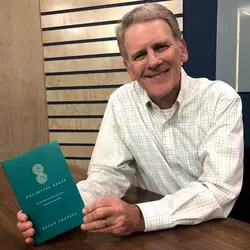
In Bryan Chapell's book, you will learn how God's unlimited grace leads us to heartfelt obedience and transforming joy. Explaining why grace is important and giving us tools to discover it in all of Scripture, Unlimited Grace helps us to see how gospel joy transforms our hearts and makes us passionate for Christ's purposes.
Past Episodes

Featured Offer
In Bryan Chapell's book, you will learn how God's unlimited grace leads us to heartfelt obedience and transforming joy. Explaining why grace is important and giving us tools to discover it in all of Scripture, Unlimited Grace helps us to see how gospel joy transforms our hearts and makes us passionate for Christ's purposes.
About Unlimited Grace
About Bryan Chapell
Bryan Chapell, Ph.D. is the Stated Clerk Pro Tempore of the Presbyterian Church in America (PCA), based in Lawrenceville, GA.
Dr. Chapell is an internationally renowned preacher, teacher, and speaker, and the author of many books, including Each for the Other, Holiness by Grace, Praying Backwards, The Gospel According to Daniel, The Hardest Sermons You’ll Ever Have to Preach, and Christ-Centered Preaching, a preaching textbook now in multiple editions and many languages that has established him as one of this generation’s foremost teachers of homiletics.
Dr. Chapell is passionate about sharing the truth of God's grace with others, because it provides the freedom and fuel for transformed lives of joy and peace.
He and his wife, Kathy, have four adult children, a growing number of grandchildren, and lives rich with friends, fishing and faith.
Contact Unlimited Grace with Bryan Chapell
info@unlimitedgrace.com