

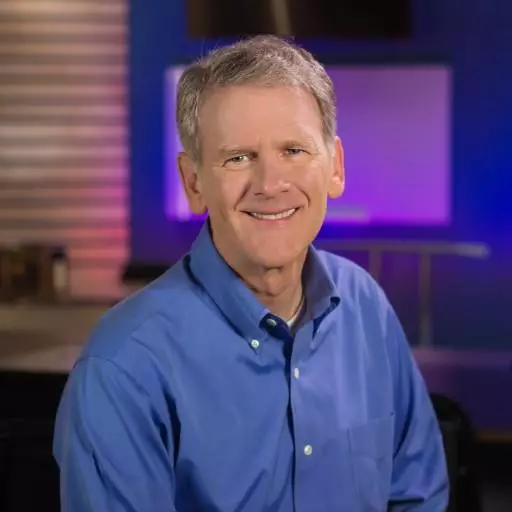
Dignity - Part 1


Pastor Bryan shares a lesson from Genesis 2. This sermon begins the series, ‘Mission at Work.’ Throughout this series Dr. Chapell addresses the many issues and challenges believers face in the workplace. As image bearers of God, we are called to reflect Him in all aspects of life, including the workplace.
Bryan Chapell: When you and I begin to understand that I am valued before God, not because of what I've been able to accomplish, but faith in what Christ has accomplished. I'm beginning to understand his mercy toward me is not based upon what I do, but my faith in what he has provided. It's been that way from the beginning.
Chris Sobak: So glad you joined us for today's Unlimited Grace, the audio broadcast ministry of pastor and author Bryan Chapell. In today's episode, Pastor Bryan shares a lesson from Genesis 2. This sermon begins the series Mission at Work.
Throughout the series, Dr. Chapell addresses the many issues and challenges believers face in the workplace. As image bearers of God, we are called to reflect him in all aspects of life, including the workplace. You can find this lesson and many others when you visit unlimitedgrace.com.
While you're there, check out the new daily devotional podcast called Daily Grace. Pastor Bryan will guide you through a devotion each day to help focus your attention on God's grace as you study his word. Let's hear now from Dr. Bryan Chapell as he shares the first half of the lesson, Dignity.
Bryan Chapell: Author Steve Garber describes a friend of his with these words: "For decades he has labored away in the business world, working hard, taking up increasingly complex tasks involving great numbers of people and ever greater amounts of money. Over the years, he has given himself with honest humility to service in the churches where he has lived.
He is a kind, loyal, and thoughtful man. Yet with some pain, he said to me in a recent conversation: 'I've never had the sense that my pastor thought of someone like me when he was preparing his sermon. It always feels more like he imagines that people live in the church, not in the world where I spend most of my life.'"
Okay, for all preaching professionals, I apologize. I recognize that there is the tendency to see what is said in the scriptures as applying to my life, to the life of the church, and not thinking carefully about what you are called to do. To remember over and over again that Sunday is for Monday, that we're not worshipers here and atheists on Monday morning.
That we are being called by God to do his work, not just in worship, but in the worship that is our job as well. An old word that may help us is the word vocation. In our culture, we many times use the word vocation virtually the same as we use the word occupation. But it's really quite different in the history of the church.
Vocation comes from a word like vocal or voice. Our vocation is actually our calling, what God has called us to do. And that's different from our occupation, which is how we occupy our time. When Christians begin to understand that their occupation actually has a vocation in it, that we are called to use gifts and talents and resources for the extending of the kingdom of God, we begin to see that our jobs have a dignity we may never have understood.
My calling this day is to help us remember just that: that our occupations are vocations. In the church, I and you need to remember it for our jobs in the world. Steve Garber challenges me when he continues writing: "When was the last time that your church prayed for architects and builders, for teachers and librarians, for doctors and nurses, for artists and journalists, for farmers and grocers, for lawyers and judges?"
It's good to pray for the YoungLife staff and for Wycliffe Bible translators. But we need to pray for the butchers, the bakers, and the candlestick makers, too. And I add, we need to not only pray for them but to equip them for their mission in all corners of the world, wherever God calls them to glorify him.
My job is to say your work is your mission field. Because of that, there is dignity in what you do, not just before men, but before God. How do I know that there is dignity in your work? First, I know there's dignity in your work because of the dignity of those who are called to work.
I read to you an important portion of scripture, Genesis 2:15, which is describing our labor. But I want you to understand, as I return to that portion of scripture, Genesis 2:15, that one of the important observations of these early chapters of Genesis is that we get our label before we get our labor.
The labor, yes, 2:15: "The Lord took the man, put him in the garden, and said he was to work it and to keep it." To work it is what happens when we work the soil, right? We make something flourish. And when we keep it, we sustain it. We don't waste it or abuse it. And this first job description of man is just saying, "I'm calling you, Adam, to production and to conservation."
With the resources that I have given, this is your calling. And we're learning much about our job descriptions in the world as both are important aspects of what God calls us to do. We are co-laborers with God in his creation care. Production, conservation, they are all part of what we are called to do in God's world.
So, good farming methods and pollution control and mining and land management and energy production and conservation—all modern concerns—are actually being addressed in these early pages of scripture, where we are called to consider how we use things for the production that is needed but also conserve them so that God's world itself is honored.
That's the job description. That's the labor. But it's important to recognize that before the labor is given, we have been identified. We've gotten our label before that labor has been identified. I'm going to ask that you look in your Bibles, back up a little bit to Genesis chapter 1 and verse 26.
There we are described before our labor is described. God said, "Let us make man in our own image, after our likeness, and let them have dominion over the fish of the sea, and over the birds of the heavens, over the livestock, over all the earth, and over every creeping thing that creeps on the earth." So God created man in his own image; in the image of God he created him; male and female he created them.
To be created in the image of God is to reflect his character and care, to be the one who mirrors him. Here we're being told that even though our genders may vary, God's intent for men and women does not vary. Both have the intention before God of reflecting him in the world.
We see him imaged, mirrored. It doesn't mean that we're God, but just as though we talk about somebody being the spitting image of their father, they're not the same as their father, but when you see them, you're reminded of their father. So when we are observed in our work in the world, we are to be reminding people of our Father. His character and care are being observed.
Important for us as we begin to say that we have been labeled as image bearers of God, before we've ever been described as workers for God, is the reality that that label is given to no other aspect of the creation of God. Just think about it a little bit. God has created the world.
You think of the most amazing sunset you've ever seen, the grandeur of mountain and canyon. Think of the images from the Hubble telescope of the exploding galaxies and to just kind of in awe and wonder kind of say "amazing," and yet not one of those things is identified as bearing the image of God.
Human beings as image bearers are actually given a dignity above all of those things. It's actually what the Psalmist says in Psalm 8: "When I consider the heavens, the moon and the stars which you have made and put in their places, what is man that you are mindful of him, the son of man that you consider him? You have gifted him with glory and honor and made him a little lower than the angels. I am fearfully and wonderfully made."
I know it sounds a little bit odd, but I'm awesome. And you are, too. To recognize that what God is saying to you and me, you have a particular privilege in every place that you're called, including your work, to be an image bearer of God. That has particular applications for first, how we treat ourselves.
Self-hatred is ruled out. All the concerns that we have because of our sin, our backgrounds, our lack of performance, our body image not being what we think it should be, the ways in which we would hate ourselves are ruled out because God is saying, "I want you to remember, you're the spitting image of me."
And as that spitting image of me, the person that's meant to remind people of God, we are concerned about issues of diet and exercise and self-control, yes, because we are the temple of the Holy Spirit. All that is true. But beyond that, it means that we in considering how God has made us are to be honoring him in how we conduct ourselves.
I travel a lot for my job and you send me out to lots of places in the world. This last week I've been in Florida teaching pastors there from lots of different parts of the world. In doing that, I run across people, and some of you who travel you know this, you almost get this vibe with other Christians in the world when you come across them: the bus driver, the hotel clerk, who just kind of looks up and says, "God bless you." And you're kind of going, "Whoa, you're one of me. I get you. We get each other."
There's this person that has the sense of "In my job, I'm an image bearer. I have that understanding of my place in the world. I treat myself as one who bears the image of the character and the care of my Father."
Chris Sobak: You're listening to Unlimited Grace, the audio broadcast ministry of pastor and author Bryan Chapell. I hope you have benefited from this encouraging message from Pastor Bryan. If this program has been a blessing to you, I want to share with you a new way in which you can receive daily encouragement from Dr. Chapell.
We've recently launched a daily devotional podcast entitled Daily Grace. If you've already signed up to receive daily devotions by email, this podcast is a great companion piece. You can watch and listen to Pastor Bryan share these devotions daily when you visit unlimitedgrace.com.
You can also find this podcast on all major podcast platforms or watch it on YouTube. This is just another way that we want to serve you with Christ-centered content and help focus your attention on the grace of God that pervades all of scripture. Let us know what you think of this new podcast. We're always encouraged to hear from you. And now, more from Bryan Chapell on today's Unlimited Grace.
Bryan Chapell: I treat myself as one who bears the image of the character and the care of my Father. It's not just how we treat ourselves. It's beginning to understand how we're treating others as well. If people are made in the image of God, it's so important that you recognize that that image-bearing was assigned before the work was assigned.
So that God is saying, "I'm not determining whether or not you're an image bearer based upon what you do. You have that innate character, you have that inherent quality of being one who is reflecting God, and so we treat each other accordingly." Now our tendency is when we've got a hard boss or a mean peer that we start to treat people the way they're treating us.
But the calling before God is actually to see, no, their image-bearing is not based upon what they do, it's based upon who they are, who they're made to be. They might not be a very good image, but that's who they are. And so I, as a co-worker, as an employer, treat people according to their image. They are people made in God's image.
We're told in the scriptures that we are not to murder because people are made in the image of God. We're told not to curse other people because they are made in the image of God. And so if we have employees, we see: do they have careers that we can enable, that we can help, that we can further? If they're made in the image of God and their goal is, as our goal all is, is to help things flourish and to conserve things in God's world, to maintain them for his glory, how can I help you do that?
The public school systems in this country were established early on by churches, where people began to recognize that the sweatshops in which many children were working were inappropriate to guard the image-bearing of children. And therefore public schools that would give people advancement and knowledge that could lift them out from the hovelled life that they were in, that the goal of the church...
Now I'm not saying that Christian schooling's not still our goal, but we cannot forget the rest of society. We still have image-bearing responsibilities. We look at our employees and we say: how is their healthcare? Are there appropriate benefits? Is there a fair wage for their work being given?
All that for us as Christians is part of our responsibility, not just to be nice, but to actually say, "I am called to see you as an image bearer of God and as one who is tasked with making and keeping the creation—making flourish and at the same time preserving what God has put in the world—I have that obligation of treating you accordingly."
I have the obligation of treating the world accordingly as well. If I am put in the world, I'm not just a raw consumer, saying it doesn't matter what I do to the world, I can waste it and ruin it. No, you can't. If you are an image bearer, then what God is giving you is a responsibility to continue his work in the world.
Now, all this is maybe just fairly abstract, but you may begin to recognize this is actually distinguishing us in important ways from actually other faiths in the world. When God said to you and me, "Not only are you my image bearer, I'm giving you dominion over the creatures and you are to be, if you will, cultivating them for my purposes," he has said there's a certain hierarchy here.
And humanity is higher on the hierarchy than the animals. Why is that important? It's actually separating us from a faith like Hinduism that says you're not any more valued than a cow. Now, if you're just going to argue that on the basis of your opinion, you have no basis. You say, "Well, I'd like to be more than a cow," but I can't prove that I am. There's a whole other culture that says I'm just like a cow in value.
But Christianity and in particular the scriptures are saying, "No, humanity, while it must flourish, help flourish and also protect, is actually of greater value than the animals." It's not just dealing with something like Hinduism, it's dealing with something like materialistic evolution.
Which is saying not only that you have no more value than a cow, you have no more value than an amoeba. There's just this conglomeration of elements and particles and proteins, and that's just all you are. And the scripture's saying, "No, that's not all I am."
It's true that these aspects of material things make me up, but I have a promise and a vocation provided by God which is that I am to be an image bearer in his world. Now just so that you recognize it, it's so careful the way scriptures are saying things. This notion that we get our label before we get our labor is one of the very early statements of the gospel.
You have value and dignity because you are an image bearer of God before you're ever given a job assignment. Which is saying that God is not going to say you are good in terms of your value, sacred in terms of your life, based upon what you do. The reason we value the unborn and the infirm is because they are still image bearers of God, regardless of what they do. Their doing is not the basis of their value.
When we now come and approach the gospel itself, very early stages here in Genesis, but all preparation. When you and I begin to understand that I am valued before God, not because of what I've been able to accomplish, but faith in what Christ has accomplished.
I'm beginning to understand his mercy toward me is not based upon what I do, but my faith in what he has provided. It's been that way from the beginning. Our value, our image-bearing character is based upon God's mercy toward us rather than what we accomplish. The label—you are valuable to me, you have dignity, you're my image bearer—comes before we ever get the job descriptions.
And that's not just an early statement of what grace is. It's actually beginning to distinguish us from other religions in other ways. Do you remember a few weeks ago in the Middle East, a bus was held up? ISIS terrorists got on the bus and asked people on the bus to recite portions of the Quran. And if they were not able to recite portions of the Quran, they were either abused or murdered.
Now, for those who were there, their understanding is: the reason I can abuse you or murder you with impunity is you're not human. You can't affirm the things of my faith, so you're not fully human. Christianity says, "Look, listen, every person is an image bearer of God. Imperfect in different ways, but we are all image bearers. Therefore I am obligated to treat you with dignity and respect as I am obligated to be treated with dignity and respect."
Think of what we know about our own culture and times. The reason that we forgave as a culture for so long American chattel slavery is because we were willing to define people as less than human who didn't perform or look like we did. And if that's what we were doing, what we are saying is your performance is now devaluing you. But that's not what the gospel is doing. It is saying no, value comes before performance.
What happened in World War II, the worst of the atrocities that we can identify? Sometime by forces that said if you're not willing to stand for the Emperor, perform in some way, you have no value as a human. Or those saying if you are not Aryan in your background, you do not have the dignity of a person and I can abuse or murder or mass murder you.
Christianity is saying something different entirely. It is saying from the very beginning, those who are human have essential dignity because they are made in the image of God. God is intending to reflect his glory and his goodness, not just by the stars of the heavens, but by the individuals who were before him reflecting his glory in the world. And that comes ever before the job assignment is given.
We have intrinsic dignity because we are made in the image of God. And knowing that makes me want to live for him, makes me desire to live for him in the world. And the question I have, of course, is if I begin to want to live for God in the world, is there dignity in the labor that I do? Now I've said the labor has dignity because we do, but that's not the full message of what's happening here in Genesis.
Genesis is saying our work has dignity because the labor itself has dignity. How do I know that? Well, not only because our label comes before our labor, but again in a very precise order of the scriptures, our labor comes before the fall. Do you know what I mean when I talk about the fall? When sin and corruption entered the world.
And that's described in Genesis 3:15. Once Adam and Eve had fallen and sinned against God and corruption entered the world with all the horrible things that we now experience, we recognize that Genesis 3:15, I know this sounds simple, comes after Genesis 2:15. The labor comes before the fall. Why is that important to say? It means the labor's not bad. The labor is not evil. Now, after the fall it gets hard, but it's not bad.
Bryan Chapell: Hello, my friend. This is Pastor Bryan. I'm so thankful that you've taken the time to study through the Bible with me today. We go through this together, knowing that the Lord will use his word to stir our hearts to bring us hope, transform our desires, and grant us the strength we need for the challenges we face.
If today's messages have touched you and you find yourself wanting to experience more of God's grace, I'd like to pray for you right now. Heavenly Father, thank you for allowing us to address you that way, as a father. Thank you for granting us access to your throne room by the provision of your Son.
As we unite our hearts to his in faith, trusting that he paid the penalty for all our sins on the cross, you take all our guilt away. In ways almost too incredible for human minds to fathom, you make us as holy as Jesus, and you even love us as much as you do Jesus.
So now we come to you as trusting children, not asking that you would do as we think is wise or good or pleasing, but asking that you would love us as an infinitely wise and good and strong Father. We trust that even when we don't know how to pray, the Holy Spirit will make our prayers better than we can ask and Jesus will ask better than we deserve.
So do as you know is best, for then we will be most blessed. This we ask with complete faith in your wisdom, power, and love. In Jesus' name, Amen.
Chris Sobak: That's Pastor Bryan Chapell, and you've been listening to Unlimited Grace. If you've missed anything that you'd like to hear once again, just visit unlimitedgrace.com. And when you do so, you can sign up for Pastor Bryan's daily devotion sent right to your inbox.
Please be sure to join us next time as once again we endeavor to put Christ at the center of our efforts so that lives might be transformed by his unlimited grace. This ministry is brought to you by Unlimited Grace Media and continues to be made possible with your generous financial support.
Featured Offer

In Bryan Chapell's book, you will learn how God's unlimited grace leads us to heartfelt obedience and transforming joy. Explaining why grace is important and giving us tools to discover it in all of Scripture, Unlimited Grace helps us to see how gospel joy transforms our hearts and makes us passionate for Christ's purposes.
Past Episodes

Featured Offer
In Bryan Chapell's book, you will learn how God's unlimited grace leads us to heartfelt obedience and transforming joy. Explaining why grace is important and giving us tools to discover it in all of Scripture, Unlimited Grace helps us to see how gospel joy transforms our hearts and makes us passionate for Christ's purposes.
About Unlimited Grace
About Bryan Chapell
Bryan Chapell, Ph.D. is the Stated Clerk Pro Tempore of the Presbyterian Church in America (PCA), based in Lawrenceville, GA.
Dr. Chapell is an internationally renowned preacher, teacher, and speaker, and the author of many books, including Each for the Other, Holiness by Grace, Praying Backwards, The Gospel According to Daniel, The Hardest Sermons You’ll Ever Have to Preach, and Christ-Centered Preaching, a preaching textbook now in multiple editions and many languages that has established him as one of this generation’s foremost teachers of homiletics.
Dr. Chapell is passionate about sharing the truth of God's grace with others, because it provides the freedom and fuel for transformed lives of joy and peace.
He and his wife, Kathy, have four adult children, a growing number of grandchildren, and lives rich with friends, fishing and faith.
Contact Unlimited Grace with Bryan Chapell
info@unlimitedgrace.com