

Declare His Glory - Part 2


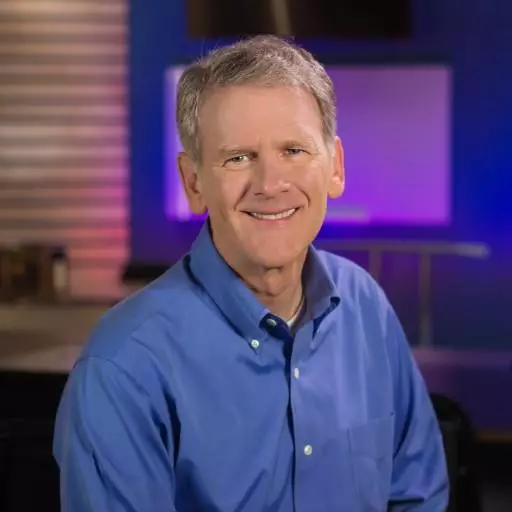
Pastor Bryan offers the second part of the lesson from Psalm 19. Dr. Chapell points us to the scriptures, which reveal the reality of God’s greatness and His care through the observable truth of His creation.
Bryan Chapell: But I will be with you. I will never leave you or forsake you. And when we recognize God is working all things together for good, that He is making promises to His people of the glory that will come for those who even grow through hard things with faithfulness to Him, that we can know joy everlasting.
Guest (Male): So glad you joined us for today's Unlimited Grace, the audio broadcast ministry of Pastor and Author Bryan Chapell. In today's episode, Pastor Brian offers the second part of the lesson from Psalm 19.
Dr. Chapell points us to the scriptures which reveal the reality of God's greatness and His care through the observable truth of His creation. You can find this lesson and many others when you visit unlimitedgrace.com. And while you're there, look for Pastor Brian's book, The Multigenerational Church Crisis.
This compelling book asks the question of the church, what could be accomplished in the name of Christ if we could better understand each other. Let's hear now from Dr. Bryan Chapell as he shares the second part of the lesson from Psalm 19.
Bryan Chapell: We were beginning in the 19th Psalm. And so I'm going to ask that you look in your Bibles there as well. Psalm 19, page 456 in your Grace Bibles. And just to remind you a bit of what we covered, we looked just at the first half of Psalm 19.
There the Psalmist was rejoicing in the glory of God that is revealed in general revelation, that is in nature itself. And we recognize that if science is honest and faith is honest, that the scriptures tell us what we can observe in creation is true, and all truth is God's truth, making known the reality of His greatness and His care.
Somebody shared with me afterwards that that's not just something I have to guess at. A recent study done at Rice University surveyed this nation's scientists, 12 million. And recognized that 2 million self-identify as evangelical Bible-believing Christians. 2 million. That means if you're pursuing a science profession, believing the truth of the Word of God, you're not alone, 2 million people.
There's another, that's by the way, 17% of the nation's scientists are Bible-believing Christians. Then you should recognize another 19% are Roman Catholic, another 20% are mainline Protestant, which means if you total all those together, over 70% of the nation's scientists in some way affirm the reality of the God of creation.
We sometimes think of science as being so opposed to faith, and recognize those who study deeply into matters of creation, recognize a creator. The reality is, only about 20% of the nation's scientists actually claim to be atheist or agnostic. Far more actually recognize that in creation there's a hand of a creator that is seen.
And that's what the Psalmist was making clear in the first half of the Psalm. But the second half is about something else that is declaring the greatness of our God. And I'll ask that you stand as we read this portion of God's Word and consider what else is there that is declaring the greatness of the glory of God.
Psalm 19, beginning at verse 7. The law of the Lord is perfect, reviving the soul. The testimony of the Lord is sure, making wise the simple. The precepts of the Lord are right, rejoicing the heart. The commandment of the Lord is pure, enlightening the eyes. The fear of the Lord is clean, enduring forever. The rules of the Lord are true and righteous altogether. More to be desired are they than gold, even much fine gold, sweeter also than honey, and drippings of the honeycomb.
Moreover, by them is your servant warned. In keeping them there is great reward. Who can discern his errors? Declare me innocent from hidden faults. Keep back your servant also from presumptuous sins. Let them not have dominion over me. Then shall I be blameless and innocent of great transgression. Let the words of my mouth and the meditation of my heart be acceptable in your sight, oh Lord, my rock and my redeemer. Let's pray together.
Heavenly Father, our prayer this day is simple. Already supplied by the Psalmist. May the words of our mouths and the meditations of our hearts be acceptable in your sight, oh Lord, our rock and our redeemer. We pray in Jesus' name. Amen.
The Bible is just a bunch of rules for scared goody two shoes who are trying to stay on the right side of their God. We don't say it, but sometimes we think it. And as a consequence, when other people say it, we are not sure exactly how to respond.
The Bible is just a bunch of rules for some scared goody two shoes, trying to stay on the right side of their God. How would you answer that? How does the Psalmist answer that? In order to understand, it may be helpful to recognize, though we're somewhat into our series of Psalms, I haven't taken time to tell you the structure of all the Psalms that you will read in the Bible.
You may not have recognized it, but a Psalm is actually a poem for Hebrew writers, and that means it follows the rules of poetry. There are images and symbols that don't work the same as in other parts of biblical literature. But something else that's happening is that a poem has a particular structure that we in English recognize is held together by rhyme. Right?
Come, my children, and you shall hear of the midnight ride of Paul Revere. It rhymes. The gingham dog and the calico cat, side by side on the table sat. Twas half past 12 and what do you think? Not one or the other had slept a wink. You can read the rest in the children's book when you get home. They rhyme.
But as you read Hebrew poems, they don't rhyme. The technique of making the poem progress is not rhyme, but reflection. Whatever line is paired with another line is actually meant to reflect what was said previously. And that reflection can be seen in this Psalm itself. If you just look at verse one of chapter 19, you'll recognize the reflection in the first two paired sentences.
The heavens declare the glory of God, and the sky proclaims His handiwork. There's just a different color, but it's really the same thought that's repeated again. Sometimes the thought in the pairing is put in contrast to make the point. That's in verse two. Day to day pours out speech, and night to night reveals knowledge. As the heavens are declaring the glory of God, some of it's in the daytime and some of it's in the nighttime. But still, the heavenly bodies are declaring whether day or night the glory of God. A same thought in some contrast.
And sometimes the thought is stated to clarify what's been said earlier. That's verses three and four. There is no speech, nor are there words whose voice is not heard. Now, I don't know about you, but that's not entirely clear to me what that means. And so I have to read the paired verse four to see what actually is being said. Their voice, that is the heavenly bodies, their voice goes out through all the earth, and their words to the end of the world.
There is no language, says the Psalmist, whereby the heavenly bodies, the stars, and the greatness of the creator can't be seen and understood by the things that are created. There's no earthly boundary. The heavens are pouring forth speech, and we see them. And that clarification comes as you use one paired line to compare to the other. Now what that means is something really kind of neat.
If you're reading through the Psalms and you say, I didn't get that, what did that mean? Well, read the line that's paired, and you're going to get the same idea with some development that will help you understand. That's not just true of lines that are put together, but sometimes whole concepts that are put together. The first half of this Psalm was saying, the works of God declare His glory. The creation, the heavenly bodies, they declare the greatness and the glory of God.
But now you get the second half of the poem, which seems to be about something very different. It starts talking about the law of the Lord, the testimony of the Lord, the precepts of the Lord, the commandment of the Lord. Why did we suddenly switch subjects? Well, we didn't switch subjects. The first half of the Psalm is saying, the works of God declare His glory. What do you think the second half is talking about when it talks about the commandments, the precepts, the rules? What is all that about? It is not about the works of God, but the Word of God. The works of God declare His glory, and the Word of God declares His glory.
There are complementary thoughts here that we're supposed to understand so that we will be able to say, why do we think this word is declaring the glory of God as much as the stars and the sun and the planets and the galaxies are declaring His glory as well? This, this also is supposed to be declaring God's glory. How does it do that?
Well, you see it as you think of verses 7, 8, and 9 in what they are saying. You recognize that as they are describing various aspects of the Word of God, that is, look at verse 7, the law, the end of verse 7, the testimony. Verse 8, the precepts of the Lord. The end of verse 8, the commandments of the Lord. Beginning of verse 9, the fear of the Lord, and the end of verse 9, the rules of the Lord. All these different aspects of the Lord are doing something, they are revealing God's character.
After all, if you see those various aspects of the Word of God and see how they are described here, something very special is happening. If you just look at the descriptors that are at the ends of the lines. If you did not know they were describing the Word of God, you have to ask yourself, what would you think they were describing? Just look at them. The law of the Lord is perfect, sure, right, pure, clean, true, righteous altogether.
If you didn't know that those particular adjectives were describing the Word of God, what would you think they were describing? Perfect, sure, right, pure, clean, true, altogether righteous. What would you think was being described? God Himself. He is the one who is perfect, sure, true, altogether righteous. And that's the point that's being made, that this Word of God reflects the character of God. In fact, the Psalmist is careful to say at every point, it is the law of the Lord. It is the testimony of the Lord, the precepts of the Lord, the commandment of the Lord. This is His Word to us.
Our human response is, no, no, this was just written by men long ago. But in the New Testament, the apostolic writers actually look back and they began to say, how could it be that those mere men who wrote were nonetheless writing the Word of God? You take a passage like 2 Peter 1:21. No prophecy of scripture is of human will, but holy men of God spake as they were carried along by the Holy Spirit.
The claim of the scriptures is, yes, that mere human people wrote, but in a very special way by the inspiration of the Holy Spirit, they were carried along in such a way that what they wrote was the actual law of God, testimony of the Lord, precepts of the Lord, commandment of the Lord, the fear of the Lord, which by the way is just a technical way of referring to the Bible in the Old Testament, the fear of the Lord, and the rules of the Lord. It's all of Him, so it reflects His character.
Now, that in itself is a good thing, but I would have to be honest to tell you, it doesn't actually help me very much. If what I have in front of me is a book that tells me how holy, righteous, and perfect God is, then all I do is feel guilty. I mean, I can't measure up, I can't meet the requirements. And so we begin to recognize that the Psalmist is not just telling us that this Word of God reflects the character of God, it also reflects the care of God.
What is the Word supposed to do in us? What is its purpose as it is given in all its purity and truth and righteousness? Well, look again, verses 7 through 9, and see what is the response that is expected. Verse 7, the law of the Lord is perfect to what end? Reviving the soul.
Lord, I'm just out of gas. I just don't have resources to go on. I can't make sense of this. I don't know what to do. And the Word of God, if you actually heard it as it is, it is the Word of the Lord to you, is meant to revive your soul. To say you could face anything if you actually had God with you. And when you have His voice, His Word with you, you are to understand you don't just have a reflection of His character, you have the presentation of His care. He's explaining to you, I'm still with you. I'm here with you by my Word.
Guest (Male): You're listening to Unlimited Grace, the audio broadcast ministry of Pastor and Author Bryan Chapell. It may seem hard for younger Christians to believe, but people over 50 were raised during an era when 90% of Americans identified as Christian. These older believers were once part of a majority group that understood the mission of the church was to take control of our culture, to halt its evils.
At the same time, Christians under 50 have lived their entire lives perceiving themselves as a minority that needs to make credible their faith to a secular pluralistic culture. These distinct experiences and perceptions have a profound impact on the priorities different generations have for church ministry. It's no wonder that younger and older believers don't always see eye to eye.
In his new book, The Multigenerational Church Crisis, Dr. Bryan Chapell asks the question, what could be accomplished in the name of Christ, if we could better understand each other? This practical and hopeful book is backed by thorough research, revealing how to open the lines of communication, appreciate the experiences that shaped each generation in your church, and unite in one mission to impact your community and the world. You can request your copy of The Multigenerational Church Crisis when you donate online at unlimitedgrace.com, or by calling 844-41GRACE. That's 844-414-7223. And now, more from Bryan Chapell on today's Unlimited Grace.
Bryan Chapell: So the testimony of the Lord is sure to what end? Making wise the simple. Lord, I don't know what to do. Everybody's pressing me to do this. I feel like I could do it. What should I do? Do what God says. Because even when we don't know outcomes, we don't know results, we are not sure where this may lead, we are told, this is the Word of God. The wisest creator of the universe has given the directions. And so he says, do as I say, and as simple as you may be, you will be wise.
Just before I left for Australia, a news article in our local paper reported that our county is the third highest ranked for a particular type of sexually transmitted disease. And there's part of us, you know, that can just kind of go, how sad or tis-tis or shame on them. Instead of grieving, saying in our hearts, how sad. That in our society these days, young people seem to have to get together sexually in order to prove their attractiveness to one another, that there is the not just the loss of modesty, but the loss of a covenantal relationship of marriage, whereby families are secured, whereby children are made safe, whereby there's a generation that would know that somehow I am treasured for who I am, not what I look like or how much I can satisfy another person.
How do I know that? I mean, everybody else. I'm told the population even among Christians doesn't seem to object so much anymore to sexual activity outside of marriage because God says this is something special and beautiful and wonderful for those who are in marriage. And if you don't believe it, just recognize this. God said so, and to believe and act upon what he says is to be wiser than everyone else.
How can I prove it? Well, it's God who said it, and He makes wise the simple. Even when we can't explain it all, or we can't prove it all, in business, we don't know outcomes. We see things that might not be as we think they are. We recognize we put ourselves. Why would we put ourselves at risk? Because it's absolutely the wisest thing we can do to follow the Word of God. He makes wise the simple as we follow His Word.
Verse 8, the precepts of the Lord are right, rejoicing the heart. Lord, I don't know if I can ever laugh again. I don't know if I will ever know joy again. I have been so crushed by this hurt to myself or my family or whatever. I don't know and, and to believe that what God is saying in His Word is, but I will be with you. I will never leave you or forsake you. And when we recognize God is working all things together for good, that He is making promises to His people of the glory that will come for those who even grow through hard things with faithfulness to Him, that we can know joy everlasting.
Because His Word says so, and we trust it because it's reflection of His character and of His care. The commandment of the Lord is pure, enlightening the eyes. I don't understand why this has happened. I don't understand what I am to do next. I don't know how I should advise my children. But what do we do when we have those difficult and hard decisions? We, we study God's Word, we, we get apart and we read and we have Him minister to us by His Holy Spirit and we pray. Why do we do that? Because we profoundly believe that in this Word, God is communicating His character and care to us so that when we are in need, we would know what He intends, that our eyes would be enlightened to the path that He has for us, that is the right and the good path.
Some of you have teased me a bit because you've started reading in some of the things that I have written and as my son was climbing a mountain recently, you all remembered an account that I gave of a mountain climb some years ago. I and a friend were climbing a mountain in Colorado that was approaching about 14,000 feet. We started out on a clear day, and as we reached the summit, the clouds came in behind and below us on the mountain.
So as we started to descend, we descended into clouds that became the densest fog I have ever been in. All the landmarks that I knew so well, that I'd been through, I could not see a one. I could hardly see my hand in front of my face. Well, you say, well, no big problem. I mean, the way you get down is, you just go down. I mean, it's a mountain after all, just go down. The trouble was when we just went down, we came to a cliff that seemed to be hundreds and hundreds of feet high. So we traversed the other way and we came to a glacier that we could not cross. We were stuck on a side of a mountain, and the only way that we could get down was by going back up to the summit in the thin oxygen.
But now it was raining as we were wearing summer clothes. And as we got close to the summit again, it wasn't raining, it was snowing. Thin oxygen, exhausted, we went back up, back down the other side, hoping it was the other side, because you can't see in that fog. And then after hours of walking, came across the path. And suddenly we say, we so appreciate the character of the people who have laid a safe path. We so appreciate the care of people who long ago made a path for us. This is something that we deeply want to be on, this path to safety.
When you recognize what God is saying in His Word is I am providing for you a representation of my character and care that is the safe path for life. We are not saying, I'm going to stay on this path because I'm a goody two shoes and I don't want God to hurt me. I'm on the path because the God who has loved me enough to out of all creation, give me the law and the way that is glorious and good, is the path that I want to be on.
Guest (Male): That's Pastor Bryan Chapell, and you've been listening to Unlimited Grace. If you've been blessed by this message and would like to hear more from Dr. Chapell, I would encourage you to visit unlimitedgrace.com. Please be sure to join us next time as once again, we endeavor to put Christ at the center of our efforts so that lives might be transformed by His Unlimited Grace. This ministry is brought to you by Unlimited Grace Media and continues to be made possible with your generous financial support.
Featured Offer

In Bryan Chapell's book, you will learn how God's unlimited grace leads us to heartfelt obedience and transforming joy. Explaining why grace is important and giving us tools to discover it in all of Scripture, Unlimited Grace helps us to see how gospel joy transforms our hearts and makes us passionate for Christ's purposes.
Past Episodes

Featured Offer
In Bryan Chapell's book, you will learn how God's unlimited grace leads us to heartfelt obedience and transforming joy. Explaining why grace is important and giving us tools to discover it in all of Scripture, Unlimited Grace helps us to see how gospel joy transforms our hearts and makes us passionate for Christ's purposes.
About Unlimited Grace
About Bryan Chapell
Bryan Chapell, Ph.D. is the Stated Clerk Pro Tempore of the Presbyterian Church in America (PCA), based in Lawrenceville, GA.
Dr. Chapell is an internationally renowned preacher, teacher, and speaker, and the author of many books, including Each for the Other, Holiness by Grace, Praying Backwards, The Gospel According to Daniel, The Hardest Sermons You’ll Ever Have to Preach, and Christ-Centered Preaching, a preaching textbook now in multiple editions and many languages that has established him as one of this generation’s foremost teachers of homiletics.
Dr. Chapell is passionate about sharing the truth of God's grace with others, because it provides the freedom and fuel for transformed lives of joy and peace.
He and his wife, Kathy, have four adult children, a growing number of grandchildren, and lives rich with friends, fishing and faith.
Contact Unlimited Grace with Bryan Chapell
info@unlimitedgrace.com