

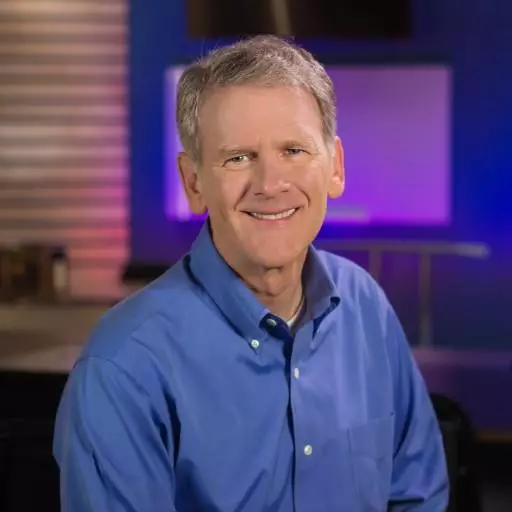
Declare His Glory - Part 1


Pastor Bryan offers a lesson from Psalm 19. Dr. Chapell shares how the vast expanse and beauty of all of creation declares the glory of God.
Bryan Chapell: What we could not know, what we could not claim in ourselves, God is providing. This notion of the heavens themselves gushing the knowledge of God is an expression of the graciousness of God of making himself known to us.
Guest (Male): So glad you joined us for today’s Unlimited Grace, the audio broadcast ministry of pastor and author Bryan Chapell. In today’s episode, Pastor Bryan offers a lesson from Psalm 19. Dr. Chapell shares how the vast expanse and beauty of all of creation declares the glory of God.
You can find this lesson and many others when you visit unlimitedgrace.com. And while you’re there, look for Pastor Bryan’s book, The Multigenerational Church Crisis. This compelling book asks the question of the church: what could be accomplished in the name of Christ if we could better understand each other? Let’s hear now from Dr. Bryan Chapell as he shares the lesson, Declare His Glory.
Bryan Chapell: Can you see any stars? The question from a new friend that I had met in rural Mexico. We were discovering a little bit about each other and he wanted to know the size of my town. He didn't ask me the dimensions, what was its diameter or circumference. He didn't ask me how many people, how many houses, how many cars. He had heard, though he had never been there, that in Mexico City, the city of 20 million people, that in Mexico City there are so many lights that if you're in Mexico City you cannot see the stars.
And for this rural Mexican farmer, that was just unfathomable. He uses the stars at night for direction and for time and for seasons and planting. He uses the stars all the time. To be in a world without being able to see the stars to him would just be to be lost. Well, the Psalmist understands some of that, telling us that the stars are not something for us only to see but to hear. That the heavens are declaring something of God, declaring his glory. Now, if you haven't heard the star language recently, the purpose of the Psalmist is to translate for us.
What are the stars saying? Among the things they are saying is that the hand that made us is great. Verse one: "The heavens declare the glory of God and the sky above proclaims his handiwork." If you just take in what we know about our earth and the stars above us, the magnitude as well as the mystery of the heavens are declaring the glory of God. I put this little globe up here, you've been wondering what it was about. If we just go by proportion, if we were to say that this globe in its proportion were to represent our earth, the nearest star, our sun, would be three miles away.
The next nearest star, Alpha Centauri, 150 miles away, Chicago. The magnitude of the universe that our God has made is declaring his glory. And if you think of that, that's just two stars in number, our sun and Alpha Centauri. How many actual stars would there be? Well, if you just take the Milky Way galaxy in which we exist, estimates are 400 billion, with a B, 400 billion stars in our galaxy alone. Well, how many galaxies are there? Well, the scientific estimates are 200 billion galaxies.
Now, if you do the math, and my calculator burned out at this point, that means the stars that are actually there, though we see in a night sky maybe 3,000 or so in a wonderful night, that the actual number of stars is something like 10 to the power of 24, a septillion more than we can see. I don't actually know how much a septillion is, but it was in the article that I read. The magnitude of what we can fathom just by the science that is becoming available to us is saying so much about the glory of God.
If you consider the fact that we in seeing some of those stars with the Hubble telescope that was launched in the mid-90s, recognize now that there are stars that we can see whose diameter, whose circumference exactly, is so big that our entire solar system could fit inside a single star. From the sun to Pluto, that that solar system could fit inside a single star. That Eta Carinae, the star that we have measured by magnitude by its brilliance, is five million times the brightness and size of our sun. The God who made such things is truly great.
But even as we measure those things, we recognize that what we're saying is that what our eyes are able to see, that what we can measure is not only declaring the magnitude of God but the mystery at the same time. We sometimes want to put science and faith at odds and people want to do that. And yet, what you recognize is that when science is humble about its own limitations, that it is actually affirming the glory of God. Let me go back to the Hubble telescope. A number of us have heard the Big Bang Theory, the idea that the earth, the universe began with an explosion of energy and matter that was the big bang.
And the assumption was until the lifetime of most of you in this room, until the 1990s, that what that would mean was there would be an expanding universe. But an expansion that would be limited simply by the forces of gravity. And then when the Hubble telescope was launched in the 1990s, what we began to discover was the slowing of expansion that was anticipated, theorized, could not be measured. In fact, the expansion was accelerating far beyond what anybody recognized it could be. And the conclusion was there is matter and energy in the universe far beyond what anybody had previously observed or could conceive.
So that now the assumption is that the universe that we can observe is only 5% of the universe, that dark energy is 68% of the universe, and dark matter 27% of the universe. That the universe on which we base our sight and our theories and our science is only 5% of the universe that scientists now estimate has to be there in order for the expansion to be countering the forces of gravity as we know them. Now, that's actually a wonderful thought because it means that there's a certain humility, a certain limitation of what now we know by science.
And when the Bible comes and says the God who did this is great, we have to say we don't understand it all. After all, even the scientists can't explain dark energy and dark matter. But God did that. There is a humility that affirms the glory in the wonder of God. Now, the reason I say that is it's important for young people, for those who are in college, for those who are in scientific and engineering careers, to recognize that we don't put science and faith in antithesis. But rather we say that when science is honestly done, it is affirming the truth of scripture, affirming the truth of God.
That became so important for me just a few months ago, June a year ago. I was in Orlando speaking at the Gospel Coalition meeting in which people from around the country had come to talk about various issues and I was assigned to a faith and science panel. And talked about Christians don't put faith and science in antipathy with one another. They understand that if God made all things, then all truth is God's truth. Honest observations, science that is honest inquiry is going to be affirming the truth that God wants us to know.
And that seemed to be so shocking to some people, including a scientist who was there. You never know how your words will affect people. And the man came up to me after the meeting and he said, "I have been a scientist assigned to NASA on the Mars project. And I was coming to the conclusion that I had to leave my church and leave my faith because so often I've been taught that science and faith are opposed to one another. I had not considered that if God made all things, then all truth is God's truth. And what that means is I can do scientific inquiry and do it according to scripture and still discern what God wants me to know."
It's what I want us to know, that what God is doing is he is declaring and helping us to see the magnitude of our universe. He is actually helping us declare his own glory. And if all the discussion about dark matter and dark energy is too much, I know it can be, what we simply need to do is do what our family does on some nights. We go to a place that we call Starry Dam, which is near our cabin in Missouri. And it's a place where the trees are back from the lake and we simply park our car in the dark on top of the dam. And the kids can lie on the roof or the hood of the car and we just look up until there's a shooting star and I hear one of my kids say, "Dad, did you see that?" And I know they just saw the glory.
Guest (Male): You’re listening to Unlimited Grace, the audio broadcast ministry of pastor and author Bryan Chapell. It may seem hard for younger Christians to believe, but people over 50 were raised during an era when 90% of Americans identified as Christian. These older believers were once part of a majority group that understood the mission of the church was to take control of our culture, to halt its evils. At the same time, Christians under 50 have lived their entire lives perceiving themselves as a minority that needs to make credible their faith to a secular pluralistic culture.
These distinct experiences and perceptions have a profound impact on the priorities different generations have for church ministry. It’s no wonder that younger and older believers don’t always see eye to eye. In his new book, The Multigenerational Church Crisis, Dr. Bryan Chapell asks the question: what could be accomplished in the name of Christ if we could better understand each other? This practical and hopeful book is backed by thorough research, revealing how to open the lines of communication, appreciate the experiences that shaped each generation in your church, and unite in one mission to impact your community and the world.
You can request your copy of The Multigenerational Church Crisis when you donate online at unlimitedgrace.com or by calling 844-4-GRACE. That’s 844-414-7223. And now, more from Bryan Chapell on today’s Unlimited Grace.
Bryan Chapell: What else are the stars saying beyond the fact that the hand that made them is great? Verse two: "Day to day pours out speech and night to night reveals knowledge." The stars are not only declaring that our God is great, but that he is gracious. Night to night pours out speech. The language there is actually of a stream that is gushing water. That there is this gushing provision of knowledge that is being revealed. What we could not know, what we could not claim in ourselves, God is providing.
This notion of the heavens themselves gushing the knowledge of God is an expression of the graciousness of God of making himself known to us. And it's happening day after day and night after night with a regularity that is absolutely astounding as it is talking about the steadfastness and faithfulness of God in making himself known to his people. We talk about it this way: as sure as day follows night, as sure as dawn, like clockwork. We talk about the work of creation about us, and the Psalmist is saying that is a mark of the steadfastness of the faithfulness of God.
The prophet Jeremiah says it this way: "The steadfast love of the Lord never ceases. His mercies never come to an end. They are new every morning." Great is your faithfulness. The Good News Translation says, "God's mercies are as fresh as the morning, as sure as the sunrise." It's the sign of the grace of God that the sun comes up and that we have a fresh day to start again. It's the grace of God. In Annie Get Your Gun, she simply said it this way: "Got no diamond, got no pearl, still I think I'm a lucky girl, 'cause I got the sun in the morning and the moon at night."
Now that's going to be stuck in your head, isn't it? "I got the sun in the morning and the moon at night." The Psalmist says it this way: "Therefore, we will not fear though the earth shake and the mountains be cast into the midst of the sea because God will help us when the morning dawns." This is not about luck. This is about the certainty of a gracious God who makes known his power, his hand, and his care day after day. And some of you know precisely what I'm talking about. When there's been the loss of a loved one, when there's been the loss of career, when there's been the loss of hope and the darkness comes around and you've got nothing else, but the sun rises again.
And you say, "Thank you, God, for another day. Thank you for another start. Thank you that the sun came up and reminds me that you are faithful." So the earth gives way, my God is faithful. The sun came up again and I give praise because of that. What do the stars say? Our God is great, our God is gracious. And they say it in such a way that the song they sing is unstoppable. Verse three: "There is no speech, nor are there words whose voice is not heard." As though there are no language barriers for the song of the stars.
That regardless of what language you speak, you don't have to speak my language or some special language. That God is speaking to people in all places in all language of the greatness and the grace that is his so that they will have his glory declared to them by the creation around them. And not only are there no language barriers, there are no land barriers either. Verse four: "The voice of the stars goes out through all the earth and their words to the end of the earth." You can't put a fence around the sky.
The message of the creation, the song of the stars, is able to reach to all people regardless of geography. The glory is penetrating. And that message is supposed to bring people hope, the hope that they need because they see that God is beyond all the things that they consider the barriers and the hurts in their own lives. These things that God is saying to his people are reminding us what Paul himself would say in Romans 1. That we are so concerned at times that there are those people who do not hear or cannot hear the message of salvation that God provides.
But Paul says in Romans 1, taking these concepts out of the Psalms: "What can be known about God is plain to people because God has shown it to them. For his invisible attributes, namely his eternal power," that is, that he is great, "and his divine nature," that he is gracious, "have been clearly perceived ever since the creation of the world in the things that have been made. So that they are without excuse." When a heart is humbled and ears are open, the song of the stars is there. The hand that made us is great and the hand that holds us is gracious.
Creation is singing that song over and over again. And even a child can understand it. I can remember the very first time that we as a family took a trip to the Rockies through Colorado. And at that point we had just one child, our oldest son, Colin. And he was in a car seat sitting in the back of our vintage Ford Pinto as we started chugging up the first mountain pass beyond Pueblo, Colorado. And as we started chugging up that first mountain pass, Colin, who had been passed out because he'd seen the mountains for hours by that point, had kept wondering when we were going to get there.
He'd fallen asleep. But the Pinto began to struggle in the mountain pass. And as it chugged along and trucks began to pass us, he woke up. "Where are we?" We said, "Colin, we are in the Rocky Mountains." His eyes grew wide, he looked around and he said, "Where's God?" Because majesty means the glory can't be far away. Even a child knows that. Of course, he was looking for God in a childlike way. But we who know so much more about the majesty and the mystery of creation ourselves ought to be able to say: God is disclosing his hand.
John Piper talked about putting on different glasses at some point. You know, we put on sunglasses this time of year as we're going on vacation. I have an assignment for you. The assignment is as you're looking at the mountains, as you're taking the hike, as you're going down the river this season, don't just put on your sunglasses. Put on your glory glasses. What is God meaning for you to see in the creation? John Piper described what a teacher of his taught these seven things or so. He says first: if you put on your glory glasses, at least once every day, look steadily up at the sky and remember that you are on a planet traveling in space with wonderfully mysterious things above you and all around you.
Will your glory glasses show you that there are wonderful things all about me? Two: pray that this perspective will keep you from the cynicism expressed by Bertrand Russell before his death when he said: "There is darkness without, and when I die there will be darkness within. There is no splendor, no vastness anywhere, only triviality for a moment and then nothing." If you put on your glory glasses, you will not see nothing. Three: open your eyes and ears once every day. Simply stare at a tree, a flower, a cloud, or a person. And with the freshness of vision that you had in childhood, at least for a little while, try to look with the way that Lewis Carroll described as a child looks with a pure unclouded brow and dreaming eyes of wonder.
Wouldn't that be wonderful? Remember when you thought the world was full of wonder? If for just a moment you could look at a flower or a tree or a mountain or a stream and say: "Glory. Look at the glory there." If you could do it just for a few seconds a day, wouldn't it change your perspective on things? It would mean this: do not demean your own uniqueness by envy of others, but believe actually that God has created you for a purpose. That will mean number five: that you should not be foolish enough to suppose that the trouble and pain that you do experience are evil parentheses in your existence.
But are very likely ladders to moral and spiritual glory. If the world is God's world, if he not only made it but holds it, then the things that are happening, though it's in a fallen creation, are the ladders by which we experience a greater understanding of our need of grace and his greatness. And these hard things that we face are not just parentheses that have no purpose, but rather the ladders by which we discern the glory of God in the grace that he provides. Six: he writes if for nothing more than the sake of a change of view, assume that your ancestry is from the heavens rather than from caves.
And seven: even if you turn out to be wrong, bet your life on the assumption that this world is not idiotic. It is not run by an absentee landlord. But that today, this very day, some stroke is being added to the cosmic canvas of your life by the one who calls himself Alpha and Omega whereby one day with joy you will say, "Thank you, Lord, for painting that stroke on my life."
Guest (Male): That’s Pastor Bryan Chapell, and you’ve been listening to Unlimited Grace. If you’ve been blessed by this message and would like to hear more from Dr. Chapell, I would encourage you to visit unlimitedgrace.com. Please be sure to join us next time as once again we endeavor to put Christ at the center of our efforts so that lives might be transformed by his unlimited grace. This ministry is brought to you by Unlimited Grace Media and continues to be made possible with your generous financial support.
Featured Offer

In Bryan Chapell's book, you will learn how God's unlimited grace leads us to heartfelt obedience and transforming joy. Explaining why grace is important and giving us tools to discover it in all of Scripture, Unlimited Grace helps us to see how gospel joy transforms our hearts and makes us passionate for Christ's purposes.
Past Episodes

Featured Offer
In Bryan Chapell's book, you will learn how God's unlimited grace leads us to heartfelt obedience and transforming joy. Explaining why grace is important and giving us tools to discover it in all of Scripture, Unlimited Grace helps us to see how gospel joy transforms our hearts and makes us passionate for Christ's purposes.
About Unlimited Grace
About Bryan Chapell
Bryan Chapell, Ph.D. is the Stated Clerk Pro Tempore of the Presbyterian Church in America (PCA), based in Lawrenceville, GA.
Dr. Chapell is an internationally renowned preacher, teacher, and speaker, and the author of many books, including Each for the Other, Holiness by Grace, Praying Backwards, The Gospel According to Daniel, The Hardest Sermons You’ll Ever Have to Preach, and Christ-Centered Preaching, a preaching textbook now in multiple editions and many languages that has established him as one of this generation’s foremost teachers of homiletics.
Dr. Chapell is passionate about sharing the truth of God's grace with others, because it provides the freedom and fuel for transformed lives of joy and peace.
He and his wife, Kathy, have four adult children, a growing number of grandchildren, and lives rich with friends, fishing and faith.
Contact Unlimited Grace with Bryan Chapell
info@unlimitedgrace.com