

But If Not - Part 2


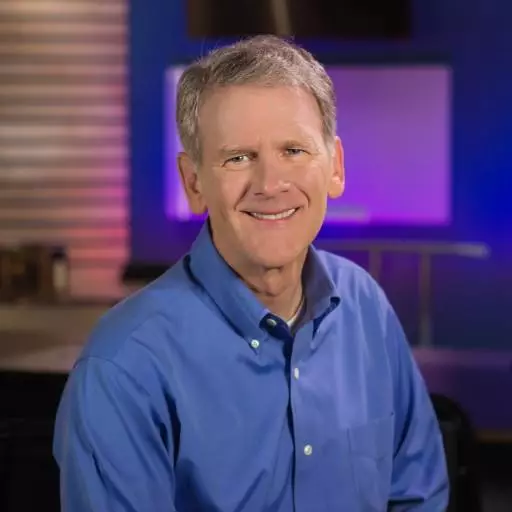
Pastor Bryan shares the second half of a lesson from Daniel, Chapter 3. In this story that highlights great faith, Dr. Chapell reminds us that the faith of Shadrach, Meshach, and Abednego was not in expected God to save them, but in trusting God, no matter the outcome.
Bryan Chapell: He is the eternal, sovereign God. He is not a genie in a lamp, that we somehow rub to make him do our will. God is not on our leash. We are not able to make him perform in our behalf. He will do what is best for us and his eternal purposes. And when we say that, we are actually lifting people's eyes beyond their earthly comforts and sometimes beyond their earthly priorities to the eternal things they must trust forever.
Guest (Male): So glad you joined us for today's Unlimited Grace, the audio broadcast ministry of pastor and author Brian Chapel. In today's episode, pastor Brian shares the second half of a lesson from Daniel chapter 3. In this story that highlights great faith, Dr. Chapel reminds us that the faith of Shadrach, Meshach and Abednego was not in expecting God to save them, but in trusting God no matter the outcome. You can find this lesson and many others when you visit unlimitedgrace.com. And while you're there, look for pastor Brian's book, The Multi-generational Church Crisis. This compelling book asks the question of the church, what could be accomplished in the name of Christ if we could better understand each other?
Let's hear now from Dr. Brian Chapel as he shares the second half of the lesson, but if not.
Bryan Chapell: You ask that you would look in your Bibles this morning at Daniel chapter 3. Daniel chapter 3. As we continue to look at the life of Daniel and more particularly this day, his three friends. I introduced them to you last week as Shadrach, Meshach and into bed we go, which caused a lot of you then in the lobby after to tell me your favorite references to Daniel's three friends. One of my favorites is my shack, your shack and a billy goat. No, that's that just won't do. These truly are heroes of the faith for reasons that may surprise us as we go through the book of Daniel.
Right now as I said, the spotlight actually shifts off of Daniel to the three friends, Shadrach, Meshach and Abednego. For reasons that aren't quite clear to us, they are now separate. Daniel apparently having responsibilities in the royal court of King Nebuchadnezzar and his three friends called to minister in the outer province. They are doing separate jobs now. Daniels not around with his three friends. For reasons still not clear to us, Nebuchadnezzar seems to have forgotten the lesson that he previously learned from Daniel when Daniel interpreted his dream. At that point, Nebuchadnezzar declared Daniel's God, the God of God and the Lord of Kings.
But by the time you get to Daniel 3, Nebuchadnezzar has erected to himself a statue of gold, 90 ft tall. Think of that, floor to ceiling of this building, multiply it three times. A statue of gold, 90 ft tall and says to the people of the kingdom, whenever you hear my band play, everybody bow down and worship my statue. They all do except for three, Shadrach, Meshach and Abednego. Let's stand, read God's word and see what happens next. Daniel 3 and verse 13. Then Nebuchadnezzar in furious rage commanded that Shadrach, Meshach and Abednego be brought.
So they brought these men before the king. Nebuchadnezzar answered and said to them, is it true, oh Shadrach, Meshach and Abednego, that you do not serve my gods or worship the golden image that I have set up? Now if you are ready, when you hear the sound of the horn, pipe, lyre, trigon, harp, bagpipe and every kind of music to fall down and worship the image I have made, well and good. But if you do not worship, you shall immediately be cast into a burning, fiery furnace. And who is the God who that will deliver you out of my hands?
Shadrach, Meshach and Abednego answered and said to the king, oh Nebuchadnezzar, we have no need to answer you in this matter. If this be so, our God whom we serve is able to deliver us from the burning fiery furnace and he will deliver us out of your hand, oh king. But if not, be it known to you, oh king, that we will not serve your gods or worship the golden image that you have set up. That response makes Nebuchadnezzar all the more angry. He orders the furnace heated seven times hotter than usual and carries through with the command.
Verse 24. Then King Nebuchadnezzar, having thrown them into the furnace, was astonished and rose up in haste. He declared to his counselors, did we not cast three men into the fire? They answered and said to the king, true, oh king. He answered and said, but I see four men unbound, walking in the midst of the fire and they are not hurt. And the appearance of the fourth is like a son of the gods. Then Nebuchadnezzar came near to the door of the burning fiery furnace. He declared, Shadrach, Meshach and Abednego, servants of the most high God, come out and come here.
Then Shadrach, Meshach and Abednego came out from the fire. And the satraps, the prefects, the governors and the king's counselors gathered together and saw that the fire had not had any power over the bodies of those men. The hair of their heads was not singed. Their cloaks were not harmed. And no smell of fire had come upon them. For Christians, there are worse things than death. Betrayal, wandering. There are worse things. Our comfort is not God's only means to bless or build the kingdom. God may use us in hard circumstances as a witness to the world, as a way of speaking to generations to come.
If faith means something in the furnace and not just in your times of ease and comfort and luxury, then maybe you have something worth trusting for eternity and not just on the basis of material earthly blessings. Once they said, we will declare who God is and we will trust his plan, what do they do next? They do his will. We will not serve your gods or worship the golden image that you have set up. Though we don't know where it's going, we will do what God calls us to do, even if it gets worse before it gets better.
You remember the account. They do not do what Nebuchadnezzar says. And so Nebuchadnezzar heats the furnace how many times hotter? Seven times hotter, so hot that even the guards who are going to throw the young men into the furnace are burned up in the fire. It is incredibly hot. It gets worse. You know, until they declared their faith, they were at least safe. Now when they declare their faith, they're in greater danger. Sometimes it may seem that way for us. And so we have to remember the words of Edith Schaeffer. We have to learn to let God be God, to do what God requires and leave the results to him, believing that he is the eternal, sovereign God.
He is not a genie in a lamp that we somehow rub to make him do our will. God is not on our leash. We are not able to make him perform in our behalf. He will do what is best for us and his eternal purposes. And when we say that, we are actually lifting people's eyes beyond their earthly comforts and sometimes beyond their earthly priorities to the eternal things they must trust forever. So much damage has been done to the cause of the church of Jesus Christ by charlatans and the naive who simply say you plug in a faith nickels or actual nickels into whatever church machine that you need and you will get exactly what you want.
I mean, it's not just a John Oliver comedy rant that 's running rapid on YouTube. I mean, recognize that this understanding, you give enough, you do enough, you have enough faith and you can get what you want sometimes is pushing world missions among the poor and the desperate of the majority world in such a way it is just tragic. So much of the prosperity gospel went across Latin America through the 90s and the early part of the 2010s that what began to happen was we saw mass conversions take place and now a half generation later, millions of people are leaving the church in Latin America because they have seen how false is that gospel.
In Africa, in Asia, it's something very different. In Africa, people have learned the falseness and they're actually turning toward greater maturity. In Asia, it's up for grabs right now. China, one of the great nations in which Christianity is spreading like wildfire, Orthodox Christianity spreading and cultic Christianity spreading almost as fast. As this notion of you can make God do what you think is best, do you recognize how that hurts? Just just think about your own lives and people you know who have been affected by that type of teaching. My landlady when I was in school who during a snow storm one time when her son was late coming home said, I have faith, so I know he's going to be okay.
Well, he wasn't okay. And that led to a crisis of her faith. My own brother when he was in the military trying to get back to camp on a holiday weekend when lots of gas stations were closed, traveling with a friend who was not a Christian said to the friend to be a witness, we're going to make it. I've prayed in faith. God will get us there. They didn't get there. And it may sound silly to you. It was a crisis of faith in my brother's life that lasted for years. Another town in which I ministered previously, some of you will know the story.
There was a ministry established by some well-meaning farm families that began to teach if you just have enough faith, you can have health and you can have wealth that you want. And that sounded so good when these families were affluent and lives were doing great until a child had a child who was special needs. And then the families began to blame their own son for not having enough faith that caused the special needs child. And once the son and his family were ostracized, they began to teach, continued to teach of the health and wealth gospel until in the farm economy of the 1980s, their own farm went into bankruptcy and they lost it all.
And we should not chide or chortle in any way, but we should grieve for a faith that is misrepresented. In the Bible, there were people who were faithful, who saw miracles and there were people who were faithful, who faced the sword. And do you remember the cross? What does that teach us? Maybe we just have to bring it closer to home. I think of the account of Jim Conway, who you may know, a pastor in Urbana, Illinois for a number of years. When his daughter Becky was diagnosed with a bone cancer that was going to require the amputation of her leg, the church and Jim and Sally, his wife, began to pray that the amputation would not go away, that God would take away the cancer.
Moody Monthly picked up the story. A crowd of friends from the church came to wait with the family. As on the day of the surgery, they required the doctors to retest the leg, presuming God would have answered and taken the cancer away. Jim Conway's words. When the surgeon came out with the test results, I could tell from his face what he was going to say. I couldn't face it. I couldn't face all those people. I ran to the hospital basement where no one would find me. I cried, I yelled, I pounded my fists against the wall.
I felt like the God whom I'd served all of my life had abandoned me at the hour of my deepest need. Was he so busy answering prayers for parking places that he could not help my Becky? The problem with a faith that insists that God do as we in our human wisdom think is best is that it just cannot be found in the Bible. The idea that we with our limited human wisdom and strength and understanding can somehow sidle up to the throne of an eternal God in heaven who made all things and continues to control all of them by the word of his power, that we can go up to God and say, God, I I know you're running things, but I got a plan.
I know what you ought to do. No, we don't. We really do not.
Guest (Male): You're listening to Unlimited Grace, the audio broadcast ministry of pastor and author Brian Chapel. It may seem hard for younger Christians to believe, but people over 50 were raised during an era when 90% of Americans identified as Christian. These older believers were once part of a majority group that understood the mission of the church was to take control of our culture, to halt its evils. At the same time, Christians under 50 have lived their entire lives perceiving themselves as a minority that needs to make credible their faith to a secular pluralistic culture. These distinct experiences and perceptions have a profound impact on the priorities different generations have for church ministry.
It's no wonder that younger and older believers don't always see eye to eye. In his new book, The Multi-generational Church Crisis, Dr. Brian Chapel asks the question, what could be accomplished in the name of Christ if we could better understand each other? This practical and hopeful book is backed by thorough research revealing how to open the lines of communication. Appreciate the experiences that shaped each generation in your church and unite in one mission to impact your community and the world. You can request your copy of the multi-generational Church Crisis when you donate online at unlimitedgrace.com or by calling 844-41-grace.
That's 844-414-7223. And now more from Brian Chapel on today's Unlimited Grace.
Bryan Chapell: Of course, we are to offer our desires to God, but always with the understanding that Jesus himself did, yet Lord not my will, but your will be done. You know what's right. You know what is best. I I honor you by praying to you, by asking of you, but I do it with the the honor of a sovereign God before my heart and eyes. I bow before you. That is my faith. Not not what I think ought to happen. My faith is actually in what you think ought to happen as Jesus himself prayed. Think of just what you know about the scriptures.
If we will look not not just in one little segmented place, but think of the scope of the scripture's witness. Second Corinthians 12, the apostle Paul prayed how many times for the removal of his thorn in the flesh? Three times an apostle prayed for the removal of his thorn in the flesh. Now we don't know what the thorn was and probably that's part of God's providence that we can't say it's this or that. That we have to think there was something that was oppressive and hurtful in his life. And he prayed three times for it to be removed.
Did God take it away? No. Why? God said to Paul, so that you would know my grace is sufficient for you. My strength made perfect in weakness. The evidence of that in Galatians 4 where Paul the apostle actually praises God at that point for a sickness that he experienced in Galatia that kept him from moving on. He was forced to stay and preach and as a consequence of staying to preach, the church in Galatia was established. Not Paul's plan, not what he would have prayed for. Now wait a second. This is Paul who even has claws that touch his body able to heal at certain points of his ministry.
And at other times, he will write, Timothy, take a little wine for your stomach's sake because you're got an upset stomach. Well, if you can get over the wine stuff, will you at least think why why medicinal anything? Or you not just pray that it go away? Paul writes, I left Trophimus sick at Miletus. Wait, Paul, you left Trophimus sick at Miletus. Why did you do that? Why didn't you just pray for us? He I don't know. God had a plan. God had a purpose. And ultimately faith is not faith in what we think is best, not in our wisdom.
It is faith in God. Maybe no better place to look than second Corinthians 11 where Paul talks about his own life. I have been imprisoned, beaten, near death five times the 40 lashes minus one. Three times beaten with rods, one time stone, three times shipwrecked. I have been sleepless, hungry, thirsty, cold. Well, Paul, if you just had a little more faith, no. We recognize the path of faithfulness in the life of Paul. He did what he knew was best and trusted God with the rest. What about Hebrews 11, that great faith chapter? What does it mean to express faith?
I mean, verse 33 reflects on our passage of today, right? By faith, the saints of old stopped the mouths of lions and quenched the power of the flame. Whoa, that's Daniel being referenced there. That's great faith. What else happened? Verse 35 of Hebrews 11. Women received back their dead by resurrection. Wow. The dead were raised to life by faith. Keep reading. And some were tortured so that they might rise to a better life. Others suffered mocking, flogging, chains, prison. They were stoned, sawn in two, killed with the sword, destitute, afflicted, mistreated. Is that because they didn't have enough faith?
No, the writer of Hebrews says in verse 39, all of these were commended for their faith. They lived faithfully, though did not know what the results would be. You just know the scriptures. You know the answers. Elisha, who was able to raise people from the dead, Elisha got sick and died of the sickness. Jesus, you know, was crucified and taught us all. In this world, you will face afflictions. You will be reviled and persecuted for so they treated me and so they treated the prophets before you. And the reminder of the prophets takes us back to the prophecy where we see Shadrach, Meshach and Abednego, great men of faith.
And what exemplified their faith? What did they do in the trial? They said, my God is able to deliver us. That that's the first step always. We turn to God and we say, my God is able. We tell the world, my God is able. And the second thing, they did God's will not knowing where it would go. We believe God is able. We know he's able to deliver us. He says his best and we will do his will. And then we will trust the results to God. That's the faith. We know, we believe he's able to do absolutely beyond whatever we could think or even imagine.
But we trust him to do as he knows is right. And so we will do his will and trust him to take care of the rest. What happened next to these faithful men? Well, they declared who God was and trusted him to do what was best. And then they got thrown in the furnace. What happened next? The Lord showed up in the furnace. Nebuchadnezzar said, look, didn't we put three in the fire? Yes, king, we did. I see four. And the fourth looks like a son of the gods. Well, he was almost right. I don't know whether this is the appearance of Jesus himself or a messenger that Jesus sent, but here is the presence of God in the furnace and the consequence of God being with his people in the furnace, in the hard thing, in the hot place.
What happened next? They did not burn up. They were saved alive. And if you think of what that means biblically, what does it mean they were saved alive? They learned to see all of life in view of eternity. All of life in view of eternity. They were alive. And what that means is they lived happily ever after and there was never another problem in their life anymore. Is that right? You know it's not right. The lion's den is still ahead. Daniel will prophesy for himself and for his people like Shadrach, Meshach and Abednego, generations of suffering to come.
He will look at the millennia of God's great coming and provision and at the same time will fall to his knees in grief for weeks at what God tells him will be the suffering of his people for generations to come. And still they trusted because what did they learn? They learn that God is not a missing person in the furnace. He is there. And when he calls us into the fire, he will be there too to do what is absolutely best for us. And he has shown us that when he sent Jesus into the furnace of this world to give himself for your sin and for mine.
Why do I trust him even in the furnace? Because he came down into it with me and for us.
Guest (Male): That's pastor Brian Chapel and you've been listening to Unlimited Grace. Please be sure to join us next time as once again we endeavor to put Christ at the center of our efforts so that lives might be transformed by his Unlimited Grace. This ministry is brought to you by Unlimited Grace media and continues to be made possible with your generous financial support.
Featured Offer

In Bryan Chapell's book, you will learn how God's unlimited grace leads us to heartfelt obedience and transforming joy. Explaining why grace is important and giving us tools to discover it in all of Scripture, Unlimited Grace helps us to see how gospel joy transforms our hearts and makes us passionate for Christ's purposes.
Past Episodes

Featured Offer
In Bryan Chapell's book, you will learn how God's unlimited grace leads us to heartfelt obedience and transforming joy. Explaining why grace is important and giving us tools to discover it in all of Scripture, Unlimited Grace helps us to see how gospel joy transforms our hearts and makes us passionate for Christ's purposes.
About Unlimited Grace
About Bryan Chapell
Bryan Chapell, Ph.D. is the Stated Clerk Pro Tempore of the Presbyterian Church in America (PCA), based in Lawrenceville, GA.
Dr. Chapell is an internationally renowned preacher, teacher, and speaker, and the author of many books, including Each for the Other, Holiness by Grace, Praying Backwards, The Gospel According to Daniel, The Hardest Sermons You’ll Ever Have to Preach, and Christ-Centered Preaching, a preaching textbook now in multiple editions and many languages that has established him as one of this generation’s foremost teachers of homiletics.
Dr. Chapell is passionate about sharing the truth of God's grace with others, because it provides the freedom and fuel for transformed lives of joy and peace.
He and his wife, Kathy, have four adult children, a growing number of grandchildren, and lives rich with friends, fishing and faith.
Contact Unlimited Grace with Bryan Chapell
info@unlimitedgrace.com