

Bricks Without Straw - Part 2


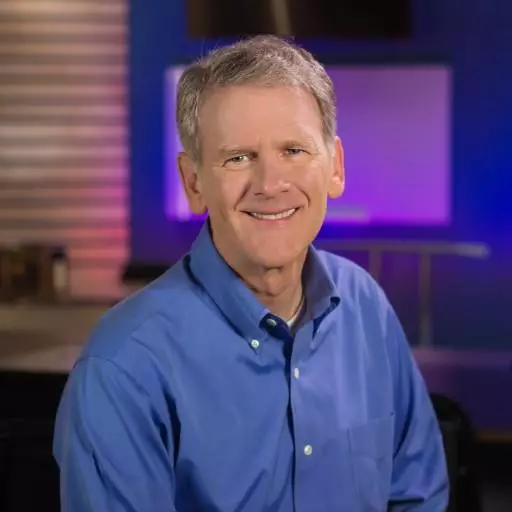
Pastor Bryan shares the second half of a message from Exodus 5-6. Dr. Chapell Highlights God’s fatherly love toward Israel, as He cares for His children.
Bryan Chapell: Moses is saying what God's people expect is, "If I do what God wants me to do, life will be easy. There will be no problems. Everything bad will go away in this world. God will just fix it all because I've met the standards of perfection." How do we get past people believing that? Because you recognize no one meets the standards of perfection.
Guest (Male): So glad you joined us for today's Unlimited Grace, the audio broadcast ministry of pastor and author Bryan Chapell. In today's lesson, Pastor Bryan shares the second half of a message from Exodus chapters five through six. Dr. Chapell highlights God's fatherly love toward Israel, as he cares for his children.
You can find this lesson and many others when you visit UnlimitedGrace.com. And while you're there, look for this wonderful resource from Dr. Chapell, Holiness by Grace. In this book, Pastor Bryan will guide you through reassuring scripture passages to discover how works and obedience are not a means of establishing or maintaining salvation, but a grateful response to God's mercy. Let's hear now from Dr. Bryan Chapell as he shares the second half of the lesson, Bricks Without Straw.
Bryan Chapell: Let me ask that you would look in your Bibles at Exodus chapters five and six. In the songs and stories that we tell out of this chapter in Israel's history, there is a familiar phrase. Moses said to Pharaoh, "Let my people go," declares the Lord. That's what Moses said to Pharaoh, but it is not what God said to Moses the first time the phrase was introduced.
The first time God is instructing Moses on what he should do with Pharaoh, he says, "Tell Pharaoh, 'Let my son go.'" The nation of Israel is being treated as a child. This is fatherly love on display as God demonstrates to us in Exodus five and six how he cares for his children as a father should care for his children. Let's stand as we honor God's word. I'm going to take you through portions of these two chapters. We can't read all of it.
Exodus 5:1. Afterward, Moses and Aaron went and said to Pharaoh, "Thus says the Lord, the God of Israel, 'Let my people go that they may hold a feast to me in the wilderness.'" But Pharaoh said, "Who is the Lord that I should obey his voice and let Israel go? I do not know the Lord, and moreover, I will not let Israel go." Then they said, "The God of the Hebrews has met with us. Please let us go a three days journey into the wilderness that we may sacrifice to the Lord our God, lest he fall upon us with pestilence or with the sword."
But the King of Egypt said to them, "Moses and Aaron, why do you take the people away from their work? Get back to your burdens." And Pharaoh said, "Behold, the people of the land are now many and you make them rest from their burdens." The same day, Pharaoh commanded the taskmasters of the people and their foremen, "You shall no longer give the people straw to make bricks as in the past. Let them go and gather straw for themselves.
But the number of bricks that they made in the past, you shall impose on them. You shall by no means reduce it for they are idle. Therefore they cry, 'Let us go and offer sacrifices to our God.' Let heavier work be laid on the men that they may labor at it and pay no regard to lying words." Well, that word gets back to the taskmasters and the foremen, and verse 19 picks up the story.
The foremen of the people of Israel saw that they were in trouble when they said, "You shall by no means reduce your number of bricks, your daily task each day." They met Moses and Aaron who were waiting for them as they came out from Pharaoh, and they, that is the foremen, said to Moses and Aaron, "The Lord look on you and judge because you have made us stink in the sight of Pharaoh and his servants and have put a sword in their hand to kill us."
Then Moses turned to the Lord and said, "O Lord, why have you done evil to this people? Why did you ever send me? For since I came to Pharaoh to speak in your name, he has done evil to this people, and you have not delivered your people at all." God responds, chapter 6, verse 2. God spoke to Moses and said to him, "I am the Lord. I appeared to Abraham, to Isaac, and to Jacob as God Almighty, but by my name, the Lord, I did not make myself known to them.
I also established my covenant with them to give them the land of Canaan, the land in which they lived as sojourners. Moreover, I have heard the groaning of the people of Israel whom the Egyptians hold as slaves, and I have remembered my covenant. Say therefore to the people of Israel, 'I am the Lord. I will bring you out from under the burdens of the Egyptians. I will deliver you from slavery to them. I will redeem you with an outstretched arm and with great acts of judgment.
I will take you to be my people. I will be your God and you shall know that I am the Lord your God who has brought you out from under the burdens of the Egyptians.'" We'll stop there. Let's pray together. Father, teach us your people even now. You are the Lord. You see, and you hear, and you know, and you remember your covenant to your children.
Help us as those children who gather in your name by the work of Jesus Christ to recognize in all of our failings, in all of our burdens, you are the God of covenant keeping who has promised that you will redeem us as we turn to you. We do. We seek you now in your word. Bless us for Christ's sake, for we pray in Jesus' name. Amen. Please be seated.
It amazes me sometimes, just honestly, still new in this town, to go to different places where I meet people once associated with this church. Maybe in Vacation Bible School, maybe members, maybe officers, whose perception is that during their time in this church, they were only judged. And my startled response at times is facing the degree of anger that they still feel. It may be at the church, it may be at their own parents.
The way in which they are so angry because their parents were representing a God they could not possibly love. He burdens us and then blames us. And so we'll blame him right back. And in particular, we will blame the people who represent him. That may be a pastor. It may be you. It may just be the church in general. We feel bad, and that's not the worst problem.
The worst problem is not the people blaming the representative of God. It's that the representative of God blamed God. After all, it's Moses who speaks in verse 22. Moses turned to the Lord and said, "O Lord, why have you done evil to this people?" Do you recognize the impact of those words? This is the "I Am" who said, "Take off your shoes. You are on holy ground."
This is the three times Holy, Holy, Holy God who has revealed himself without sin, without evil, but rather the antidote to it all. And Moses, the one who is supposed to be speaking for God, looks to God and says, "You have done evil to this people. And beyond that, you said you would deliver us, and you have not delivered us at all." Even the representative of God speaks in such a way as to curse and blame God.
How do we avoid going there? Something in us should recognize that every person who has been created feels most fulfilled, most alive, when they are doing what they were made to do. And so much of the error in the presentation of what Moses is saying and what God's people expect is what they are expecting is, "If I do what God wants me to do, life will be easy. There will be no problems. Everything bad will go away in this world. God will just fix it all because I've met the standards of perfection."
How do we get past people believing that? Because you recognize no one meets the standards of perfection. Bruce Barton, Christian writer, says, "It will help if we learn to say to our own children, 'This Christian life is not easy.' Say, 'It is not easy, but it is important.'" Jesus called forth the greatest human effort by promising obstacles and persecution. In this world, you will be persecuted.
You must take up your cross daily to follow me. This is going to be tough sledding. This is going to be hard. But as you go against this hard world in which God is asking you to serve him, you do so with the assurance that he has eternal purpose for the very things that you do.
Guest (Male): You're listening to Unlimited Grace, the audio broadcast ministry of pastor and author Bryan Chapell.
Guest (Female): God instructs us in his word to be holy as he is holy. How can God expect us to be as holy as he is? Such a standard seems either to ignore our frailty or to impose certain failure. That is, until we understand how God views us.
Guest (Male): In this challenging yet heartwarming book, Holiness by Grace, Dr. Bryan Chapell illustrates the principles of grace, the practices of faith, and the motives of love in living a life of holiness. Pastor Bryan will guide you through reassuring scripture passages to discover how works and obedience are not a means of establishing or maintaining salvation, but a grateful response to God's mercy.
Holiness by Grace draws straight from the heart of God, as Pastor Bryan's encouraging words will help you understand that your holiness is not so much a matter of what you achieve as it is the grace that God provides, a grace so rich as to make the pursuit of his holiness your soul's deepest delight. You can request your copy of Holiness by Grace when you go online to UnlimitedGrace.com or by calling 844-41-GRACE. That's 844-414-7223. And now, more from Bryan Chapell on today's Unlimited Grace.
Bryan Chapell: We are not called to do something easy. We are called to do something important. This church answered the call last week. I mean, at this very time, I said to you, we have more kids registered for Vacation Bible School than ever at this time, and we don't have enough volunteers. And I asked you, would you please help? For the eternal consequence in the lives of children.
I know some of you changed your schedules, changed your vacation, changed what was in your convenient life in order to say, "We have something important to do. We are not serving us, we are serving others now." And it's just right in the line of this legacy of this church that we are saying, "For the sake of the children, we will do what is not pleasurable to us for the souls of them." That is our calling. We are doing something important, not necessarily pleasurable.
Because we believe that God will give eternal consequence to what is even earthly suffering if it is done to fulfill his purpose in this world. Why would you do that? Why would you serve a God who knows your burdens and because he doesn't fix them all right away, it's so easy to blame him? Why would we still serve him? Because of his blessings. Even in the face of our burdens and our blame, he blesses. Because he reveals himself to be a God of a covenant without conditions.
If you go into chapter 6, just recognize what has happened. The people are blaming Moses. Moses is blaming God. And what does God say? Verse 6 of chapter 6. "I will bring you out. I will deliver you. I will redeem you with an outstretched arm and mighty acts of judgment." Verse 7. "I will take you to be my people. I will be your God." Verse 8. "I will bring you into the land I promised to your forefathers. I will give it to you."
You don't earn it. You don't qualify for it. You're yelling at me right now, and here it is. It's an amazing statement of what a covenant is, that God is saying, "I will love you. I will go ahead of you. I will provide for you, even when you don't want me to, even when you're blaming me, even when you're cursing me, I will provide for my people, not because they have met the conditions, because I am a covenant keeping God." It's what he's actually declaring about himself.
Why is God being so faithful? Verse 2. God spoke to Moses and said to him, "I am the Lord." I am the great I am. I'm not from anybody. I don't owe anybody. I am not leveraged by today's circumstances. I'm not changed by today's events. I am. And because I am has said he would fulfill his promises, he's not waiting for us to fulfill the conditions. He is maintaining his covenant because he is the great I am.
Verses 3 and 4. "I appeared to Abraham, to Isaac, and to Jacob as God Almighty, but by my name, the Lord, I did not make myself known to them. They don't even know my name. They can't even honor me the right way." But what did God do? Verse 4. "I established my covenant with them to give them the land of Canaan, the land in which they lived as sojourners. They don't even know my name. They don't honor me correctly. They're not doing all the right stuff. They haven't met all the qualifications.
But I made a covenant with them. And because I love them, I will maintain my promise." This is not a contract. So many Christians, because of their fathering, are living a contract. "If I'm good, he'll be good. If I do the right stuff, then he'll love me. If I mess up, then I break my end of the contract and it's done with him." Listen, the best example we have of what a covenant is, a promise that is made and kept on the basis of a prior commitment, not on the basis of conditions being met, is the marriage covenant that we still repeat in wedding ceremonies in the church.
"I promise to love you for richer, for poorer, in sickness and in health. Regardless of what happens, for better, for worse, I will love you. I'm not waiting for you to keep up your end. I'm not saying the contract has to be... this is a covenant. It is not based on conditions being met. It is based upon a prior commitment to love before anybody met any condition." And God is showing us it's even the nature of a family covenant.
He now, speaking as a father, says to his children, "You blame me, you are angry at me, you are stubborn and stiff-necked, but I will fulfill my covenant. What do fathers do?" Before my child was ever born, I love him. I will care for him. Will he ever fail to meet my expectations? Ever embarrass me, ever disappoint me, ever curse me? Perhaps and almost definitely. But that is my child. And in the covenant of the family of God, I will love my child.
My son may turn against me. My son may hurt me. My son may embarrass me. That's my son. Because we are bound together by covenant, not by contract. When that begins to affect us, it means we begin to recognize it is the love that God has exemplified as a father so that we will echo it as the fathers he calls us to be. I need that fathering. You need that fathering. When we know that the expectations have not been met, we need to know, "God, thank you, it's not a contract, the way that you love me. It is a covenant, and it's based upon your nature, not mine."
What will happen when we begin to recognize that God's fathering love is a covenant, not a contract? Meg Meeker again, as she advises us to learn to take advantage of our children's failures. Oh, they expect you to praise them and show affection in their successes. But how do you show God's covenant love? To look for the failures, to take advantage of them, and to say even in the failure, in the anger, in the cursing, in the blaming, in all the hurt, "I will love you because that is how God has treated me."
Meeker says one of my most telling counseling experiences with was with a young woman named Concetta. She was angry at her family, angry at life, angry at herself. She chopped her hair off, pierced body parts, got tattoos, all to get back at her dad, who disapproved it all. She wrote, "I'll never forget the look on my dad's face when he saw my tongue bar. He was sadder than he was angry.
He looked right in my eyes that day. He told me to hand over my phone because those were the rules. He was angry, but he was more hurt than he was mad. His eyes filled with tears. I had really hurt him. The hurt was not over. At 14, I found a 20 year old man who worked at a local garage. I snuck out at night to meet him. Twice I thought I was pregnant. I thought my dad did not know.
But one morning I came down to breakfast with a black eye. My father had never yelled at me. But this time he screamed in shock or agony. He literally jumped up from the table and came over to me and put out his arms and hugged me. I thought he would do more. I thought I had screwed up too much for him ever to love me anymore. But he just kept hugging me. I began to cry uncontrollably. The longer he hugged, the longer I cried.
Then he looked me in the eye and he said, 'Concetta, you are my precious daughter. You will never again put my daughter in the way of a cruel man. Do you hear me? You are so much more precious to me and to God to put yourself in the hands of a jerk like that.'" She wrote after that, "I felt like a curse had been lifted from me. A light went on in me and my life turned around." Do you recognize that that's what covenant love is supposed to do?
When we recognize there is a love that's greater than a sin, a mercy that works beyond all of our weakness and brokenness and cursing and blame and failure, and God is saying, "I will love you," then it's the very thing that turns us around and brings us back. I know there are some of you parents right now saying, "If only a hug would have turned around my child. If only my hug would turn around a child."
Listen, I don't mean to be simplistic about it. Do you recognize Moses himself has walked with the Lord for 80 years now and he still blames God? And God still keeps coming at him. "You have to know who I am. Do you know who I am? What I'm like? I'm the covenant keeping God." And God worked for decades in Moses' life. He worked for centuries in the life of Israel, just to say, "I am the covenant keeping God. I will love you. Turn back to me. After all, what is your alternative? Blame them back? Yell at them back? Isolate from them? What else is going to turn them around?" But a father or a mother who says, "I will love you anyway and always. I will love you." It is the love of God the Father.
Guest (Male): That's Pastor Bryan Chapell, and you've been listening to Unlimited Grace. Please be sure to join us next time as once again we endeavor to put Christ at the center of our efforts so that lives might be transformed by his unlimited grace.
This ministry is brought to you by Unlimited Grace Media and continues to be made possible with your generous financial support.
Featured Offer
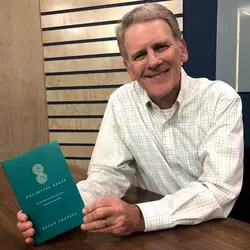
In Bryan Chapell's book, you will learn how God's unlimited grace leads us to heartfelt obedience and transforming joy. Explaining why grace is important and giving us tools to discover it in all of Scripture, Unlimited Grace helps us to see how gospel joy transforms our hearts and makes us passionate for Christ's purposes.
Past Episodes

Featured Offer
In Bryan Chapell's book, you will learn how God's unlimited grace leads us to heartfelt obedience and transforming joy. Explaining why grace is important and giving us tools to discover it in all of Scripture, Unlimited Grace helps us to see how gospel joy transforms our hearts and makes us passionate for Christ's purposes.
About Unlimited Grace
About Bryan Chapell
Bryan Chapell, Ph.D. is the Stated Clerk Pro Tempore of the Presbyterian Church in America (PCA), based in Lawrenceville, GA.
Dr. Chapell is an internationally renowned preacher, teacher, and speaker, and the author of many books, including Each for the Other, Holiness by Grace, Praying Backwards, The Gospel According to Daniel, The Hardest Sermons You’ll Ever Have to Preach, and Christ-Centered Preaching, a preaching textbook now in multiple editions and many languages that has established him as one of this generation’s foremost teachers of homiletics.
Dr. Chapell is passionate about sharing the truth of God's grace with others, because it provides the freedom and fuel for transformed lives of joy and peace.
He and his wife, Kathy, have four adult children, a growing number of grandchildren, and lives rich with friends, fishing and faith.
Contact Unlimited Grace with Bryan Chapell
info@unlimitedgrace.com