


Bread From Heaven - Part 2


Pastor Bryan shares the second half of a lesson from Exodus 16. Dr. Chapell shares of the manna that God provided to His people in the wilderness. It is a reminder that His provision is precisely what we need.
Bryan Chapell: We believe it has been displayed, not just on a desert in Moses' time, but on that hill called Calvary. My heart, when it resonates with that and I believe he has pardoned my past and he has prepared my future, and it has nothing to do with the work of my hands or my own deserving, then I face the challenges and the difficulties and the hurts of this world and I still say, "Glory be to God."
Guest (Male): So glad you joined us for today's Unlimited Grace, the audio broadcast ministry of pastor and author Bryan Chapell. In today's episode, Pastor Bryan shares the second half of a lesson from Exodus chapter 16. Dr. Chapell shares of the manna that God provided to his people in the wilderness. It is a reminder that his provision is precisely what we need.
You can find this lesson and many others when you visit UnlimitedGrace.com. While you're there, look for this wonderful resource from Dr. Chapell, Holiness by Grace. In this book, Pastor Bryan will guide you through reassuring scripture passages to discover how works and obedience are not a means of establishing or maintaining salvation, but a grateful response to God's mercy. Let's hear now from Dr. Bryan Chapell as he shares the second half of the lesson, Bread From Heaven.
Bryan Chapell: Would you look in your Bibles at Exodus chapter 16 as we will understand how and why the Lord provided bread from heaven for a people who did not deserve it, but to whom he was wonderfully merciful? Let's stand as we honor God's word, Exodus 16. I'll read verses one to 15, though we'll look at a bit more as we go.
They set out from Elim and all the congregation of the people of Israel came to the wilderness of Sin, which is between Elim and Sinai on the 15th day of the second month after they had departed from the land of Egypt. And the whole congregation of the people of Israel grumbled against Moses and Aaron in the wilderness. And the people of Israel said to them, "Would that we had died by the hand of the Lord in the land of Egypt, when we sat by the meat pots and ate bread to the full, for you have brought us out into this wilderness to kill this whole assembly with hunger."
Then the Lord said to Moses, "Behold, I am about to rain bread from heaven for you, and the people shall go out and gather a day's portion every day that I may test them, whether they will walk in my law or not. On the sixth day when they prepare what they bring in, it will be twice as much as they gather daily." So Moses and Aaron said to all the people of Israel, "At evening you shall know that it was the Lord who brought you out of the land of Egypt, and in the morning you shall see the glory of the Lord, because he has heard your grumbling against the Lord. For what are we that you grumble against us?"
And Moses said, "When the Lord gives you in the evening meat to eat and in the morning bread to the full, because the Lord has heard your grumbling that you grumble against him, what are we? Your grumbling is not against us but against the Lord." Then Moses said to Aaron, "Say to the whole congregation of the people of Israel, 'Come near before the Lord, for he has heard your grumbling.'" And as soon as Aaron spoke to the whole congregation of the people of Israel, they looked toward the wilderness and behold, the glory of the Lord appeared in a cloud.
And the Lord said to Moses, "I have heard the grumbling of the people of Israel. Say to them, 'At twilight you shall eat meat, and in the morning you shall be filled with bread. Then you shall know that I am the Lord your God.'" In the evening quail came up and covered the camp, and in the morning dew lay around the camp. And when the dew had gone up, there was on the face of the wilderness a fine flake-like thing, fine as frost on the ground. When the people of Israel saw it, they said to one another, "What is it?" For they did not know what it was. And Moses said to them, "It is the bread that the Lord has given you to eat."
Let's pray together. Heavenly Father, break thou the bread of life to us by word and spirit and the ministry of your own son, who told us he was the bread of life. Remind us of what it is to worship a God who provides for those who cannot provide for themselves and is merciful to those who do not deserve it, but have a God who gives. Grant us understanding of the grace that fills our hearts with love and worship for you, we pray. In Jesus' name, amen. Please be seated.
Worship leader Zach Hicks, in his book on worship, writes about the impact of a song on his wife. They just had their first baby, had the joy of that. But soon after the baby, in part of the post-baby exams, Abby discovered that there was some problem with her sight. And as the doctors continued to press, a cancerous tumor was diagnosed that not only threatened her sight, but her life. And as they as a family struggle with that, the joy, the Lord has given us new life.
But now here is this presenting problem, huge problem that's eclipsing all sense of God's goodness and mercy, not just of the new baby, but of salvation, of life itself that they had had. Zach writes of that struggle that was particularly profound when ultimately Abby's life was saved, but not her sight in one of her eyes. And it was her first Sunday back in church. And they were singing, and Zach is the worship leader and he's feeling in some measure the hypocrisy of this in his own heart.
"Be thou my vision, oh Lord of my heart. Naught be all else to me save that thou art." And feeling the wrestling in his soul, can I really experience the glory, can I really sing with honesty of the glory of God with what our family is struggling with? Until Abby came up at the end of the service and said, "Zach, I don't need my vision as long as God can be vision for me. As long as God provides what he knows is right and best. As long as he is providing out of promise, not out of past, not out of my deserving."
We're even wrestling trying to figure out, is he really deserving of glory at all with what we're experiencing? But if I recognize he is providing precisely what we need for spirit and soul and children and family and future, we don't know the path ahead but God knows the path ahead. And here is, by too much or too little, what he is doing to give us precisely what it means for our hearts to be set on him. Daily bread is nothing more and nothing less than being delivered from ourselves so that we will turn to the deliverer.
And that I don't just tell you about other people. I think of my son Jordan. When he came here and stood right about here and played his guitar with what became the theme song of his life, again, "Be Thou My Vision." And I looked at my son, and you all would not have known him from earlier years when he was here and when he sang. But as he was singing with such vigor and passion, "Be thou my vision."
I have to think, there is my son, who in his high school years was musclebound and fast as lightning in sports until the diagnosis of Crohn's disease. And then how it withered him, and his body became so weak, and we wept so much as a family at what had been and what the future might hold. And then to see Jordan, not just with you all but with so many people, play with such profound joy and strength and commitment.
"Be thou my battle shield, Lord. Sword for my fight. Be thou my dignity, thou my delight. Thou my soul's shelter, thou my high tower. Raise thou me heavenward, power of my power." God, my heart turns to you and what you have done in my life and in my heart is you have kept me on you because in this passing world, in these fleeting moments and the challenges that will be inevitable, what you are doing is you are providing, I believe by faith, daily bread.
Not too much and not too little, but what keeps glory before me. You substitute for me what I cannot provide for myself. I, without trying to embarrass Rachel and Scott, watch them sing with such passion and glory and wonder. And I recognize there are challenges in their life, people who are on the road, people who care for others. And yet as I see their hearts riveted on the Lord and leading other people to see glory, glory, glory, glory.
Why do they do that? Because they believe that daily bread is God's provision of what is precisely right for their life and your life and my life and the people of God, because God has demonstrated that he is our deliverer. He is the one who's provided far more than we would understand or could provide for ourselves. How do we know that? The crowds were coming to Jesus and they understand his claim. "I am the one sent by God."
And you may remember in John 6, the people say, "How do we know that this is true? Our fathers ate manna in the wilderness, bread from heaven. Prove it that you're sent from God." Jesus said, "The bread of God is he who comes down from heaven and gives life to the world. I am the bread of life. Whoever comes to me will not hunger. Whoever believes in me will not thirst."
If you believe that without your deserving or without your accomplishing, God has provided the bread of heaven for you, and to believe that that bread of heaven has come and is for you, is life in a broken world. It is confidence for eternity. It is security now that allows me to face the hard things, the difficult things, the things that cause us to wither and believe that God is still for us.
We believe his glory. We believe it has been displayed, not just on a desert in Moses' time, but on that hill called Calvary. My heart, when it resonates with that and I believe he has pardoned my past and he has prepared my future, and it has nothing to do with the work of my hands or my own deserving, then I face the challenges and the difficulties and the hurts of this world and I still say, "Glory be to God." Not too much, not too little, but precisely what is right for my life that keeps my family on its knees, that keeps my vision fixed on Christ, that keeps my heart dedicated, because my eternity is far more than any momentary things on this earth. And so by faith, I claim the manna. How do I do that? By responding to this great message of grace.
Guest (Male): You're listening to Unlimited Grace, the audio broadcast ministry of pastor and author Bryan Chapell. God instructs us in his word to be holy as he is holy. How can God expect us to be as holy as he is? Such a standard seems either to ignore our frailty or to impose certain failure. That is, until we understand how God views us. In this challenging yet heartwarming book, Holiness by Grace, Dr. Bryan Chapell illustrates the principles of grace, the practices of faith, and the motives of love in living a life of holiness.
Pastor Bryan will guide you through reassuring scripture passages to discover how works and obedience are not a means of establishing or maintaining salvation, but a grateful response to God's mercy. Holiness by Grace draws straight from the heart of God, as Pastor Bryan's encouraging words will help you understand that your holiness is not so much a matter of what you achieve as it is the grace that God provides, a grace so rich as to make the pursuit of his holiness your soul's deepest delight.
You can request your copy of Holiness by Grace when you go online to UnlimitedGrace.com or by calling 844-41-GRACE. That's 844-414-7223. And now, more from Bryan Chapell on today's Unlimited Grace.
Bryan Chapell: He's providing, he's providing over and over again what we need daily for keeps our eyes riveted on Christ and Christ, which keeps our souls secure in him. How do we respond to that great grace? We worship him. We say, "Praise be to God for his faithfulness. His faithfulness is to the clouds. Be exalted, oh Lord, above the heavens." Yeah, the bread rained down from the clouds, but Christ came from above the clouds. And he comes for me and he comes for you.
When I recognize that, I recognize my heart should respond in worship. And curiously enough, God even provides for that in the manna. Did you catch it? It was verse five at first. "On the sixth day when they prepare what they bring in, it will be twice as much as they gather daily." Why twice as much on the sixth day? Verse 29, "See the Lord has given you the Sabbath. Therefore on the sixth day he gives you bread for two days. Remain each of you in his place. Let no one go out of his place on the seventh day."
God is going to do more for you in six days than you can do for yourself in seven days. God is going to provide for you and he's actually going to give you this day of rest, this worship that allows you to turn your eyes back to Christ, that in the hardness and the striving and the working and the sweat and the labor and the blood and the hurt, God is going to build this margin into your life so that you can worship without worry. Let that happen the rest of the week. This week, this day, let God worry.
He's going to take care of you, and he's going to provide what you need on this worship margin of your life so that you can think about him and rest in him. And what do these wonderful people of Israel do therefore? Verse 27, on the seventh day some of them went out to gather. He's given them rest. He's given them the grace of resting in him. And what do they do? Well, I got to, there might not be enough. It might not come tomorrow. Better go again.
He's like, "I'm the God who brought you out of the land of Egypt, out of the house of bondage. I'm the one who protected every one of your homes when the plagues came upon the rest. I'm the one who has given you the path through the Red Sea. I have protected you, watched over you, cared for you. Just take this time to worship me, to turn your heart to me." Now, a number of you are good enough Bible scholars that you're already debating me.
"Well, you know that Sabbath, that's part of the Mosaic law and so that doesn't apply in our age." The Mosaic law has not been given yet. That's coming in future weeks. This is before where God is saying, "I'm giving you a Sabbath." This is a principle that goes all the way back to creation itself when God did what on the seventh day? He rested. And he said to us, and I recognize that we will have all kinds of debate in our society, what are works of mercy and worship and necessity that are still needed on the seventh day?
Jesus actually addresses that in the New Testament. But you know what he's never taken out of the Bible? You need some margin. You need the time to think of me, to focus on me, because if you just get above your, you just get wound up in all your occupations and your recreations and your heart never turns back to glory, then the earth's going to crush you at some point. And you've got no defense, because all the worry and all the fun has been eclipsed by the moment and you've got no backup because there's been no margin of grace built into your life.
It's really the grace the Lord wants you to see. It's why he wants you here. I know what an awful Sunday to be preaching on this Labor Day weekend when everybody's getting their last, except for you good people. No, I get it. I get it. The point is not to motivate by guilt or shame. It's to say, what has God done? He's saying, "I can provide for you. Work the margin in for the worship that your heart needs, that your soul needs."
I think from my own experience some years ago at the church in which we worshiped, the pastor gave this wonderful, pastoral, shepherding, grace-filled sermon on building a Sabbath into your life. And as we got up to sing the final song, the family in front of us got up and the teenage son leaned over to his dad and he said, "Now don't you feel guilty?" No, that's not the goal. The goal is to recognize here has God provided, the provision of not too much and not too little, so that our hearts stay on him.
And knowing that in a broken world, in a fallen world, it will still be so hard. And so God is saying to us, it's not just good for you, it's good for your families. It's good for your example to others. It's so interesting the last verse, verse 32, Moses said, "This is what the Lord commanded. Let an omer be kept throughout your generations so that they may see the bread with which I fed you in the wilderness when I brought you out of the land of Egypt."
Despite all the superstition that we put on the ark of the covenant in this day and age, what happened in the ark of the covenant in Moses' day? What did Aaron put in the ark of the covenant? An omer of what? Manna. Remember in the Holy of Holies where God is showing what he will provide through the covenant of blood with his people is this not too much, not too little, always preserved right amount of God's provision for which you didn't make and you don't deserve, and here's the manna.
And in that way, God is reminding his people you need this worship for your heart and your children need it. Think of the teenage years when they're just off to sports and off to work and the very time that most people come to claim Christ as their savior in their teenage years, it becomes our pattern to diminish their time of worship and glory. Well, it's not something we're going to enforce. Our society is beyond that. So what will draw you here?
Amazing words in verse nine. Moses said to Aaron, "Say to the whole congregation of the people of Israel, 'Come near before the Lord, for he's heard your grumbling.'" How sweet. He's heard your grumbling, so come near so you'll see the glory. You'll need it. The wilderness is ahead. Promised land's ahead. You'll need the glory. So come near. It will be salve for your soul, strength for your days, as God works in your heart what amazing grace that he has provided daily for everyone just precisely what is needed so that your soul will be with him regardless of where your steps lead.
Guest (Male): That's Pastor Bryan Chapell, and you've been listening to Unlimited Grace. Please be sure to join us next time as once again we endeavor to put Christ at the center of our efforts so that lives might be transformed by his unlimited grace. This ministry is brought to you by Unlimited Grace Media and continues to be made possible with your generous financial support.
Featured Offer
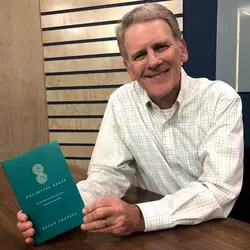
In Bryan Chapell's book, you will learn how God's unlimited grace leads us to heartfelt obedience and transforming joy. Explaining why grace is important and giving us tools to discover it in all of Scripture, Unlimited Grace helps us to see how gospel joy transforms our hearts and makes us passionate for Christ's purposes.
Past Episodes

Featured Offer
In Bryan Chapell's book, you will learn how God's unlimited grace leads us to heartfelt obedience and transforming joy. Explaining why grace is important and giving us tools to discover it in all of Scripture, Unlimited Grace helps us to see how gospel joy transforms our hearts and makes us passionate for Christ's purposes.
About Unlimited Grace
About Bryan Chapell
Bryan Chapell, Ph.D. is the Stated Clerk Pro Tempore of the Presbyterian Church in America (PCA), based in Lawrenceville, GA.
Dr. Chapell is an internationally renowned preacher, teacher, and speaker, and the author of many books, including Each for the Other, Holiness by Grace, Praying Backwards, The Gospel According to Daniel, The Hardest Sermons You’ll Ever Have to Preach, and Christ-Centered Preaching, a preaching textbook now in multiple editions and many languages that has established him as one of this generation’s foremost teachers of homiletics.
Dr. Chapell is passionate about sharing the truth of God's grace with others, because it provides the freedom and fuel for transformed lives of joy and peace.
He and his wife, Kathy, have four adult children, a growing number of grandchildren, and lives rich with friends, fishing and faith.
Contact Unlimited Grace with Bryan Chapell
info@unlimitedgrace.com