

Bread From Heaven - Part 1


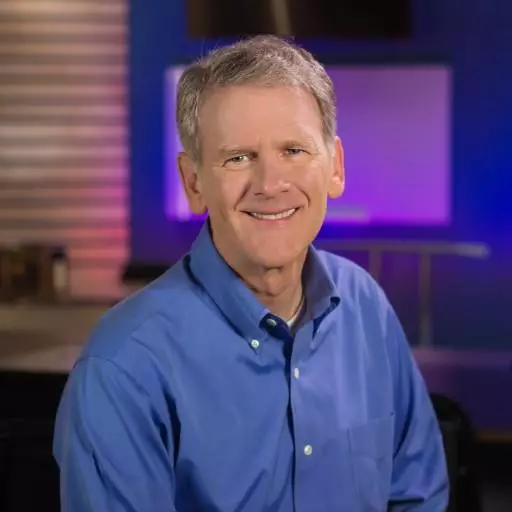
Pastor Bryan shares a message from Exodus 16. Dr. Chapell shares of a God’s provision. That no matter our shortcomings, He provide’s exactly what we need.
Bryan Chapell: You do what helps me see your glory. You help me begin to understand who you are, that you are my deliverer. Because you are my deliverer and you are doing just what is right to keep my spiritual compass on you, to keep my heart devoted to you, to help me see the wonder and the love of your grace in precisely what is right for this family, and my heart, and this household, and this community, and this world. Lord, I believe you are giving me my daily bread.
Guest (Male): So glad you joined us for today's Unlimited Grace, the audio broadcast ministry of pastor and author Bryan Chapell. In today's lesson, Pastor Bryan shares a message from Exodus Chapter 16. Dr. Chapell shares of God's provision, that no matter our shortcomings, he provides exactly what we need.
You can find this lesson and many others when you visit UnlimitedGrace.com. While you are there, look for this wonderful resource from Dr. Chapell, Holiness by Grace. In this book, Pastor Bryan will guide you through reassuring scripture passages to discover how works and obedience are not a means of establishing or maintaining salvation, but a grateful response to God's mercy. Let's hear now from Dr. Bryan Chapell as he shares the lesson, Bread From Heaven.
Bryan Chapell: Museum of the Bible opened last year, a number of you may know, in Washington D.C., supposedly one of the great wonders of museums around the world. Even though it is honoring an ancient book with 40,000 different artifacts, it nonetheless brings to bear some of the most up-to-date technology that museums anywhere can employ.
There are laser displays that highlight certain explanations. There are 3D exhibits in hologram form. There are recreated towns and cities. There is Dolby Sound, floods, and earthquakes. It is just amazing what they have done to bring to life the message and the reality of the Bible. But despite all the research and the resources that have gone into the Museum of the Bible, there is one particular matter that they have had trouble apparently discovering and honoring. There is a restaurant in the Museum of the Bible, and Chef Todd Gray says, "I have struggled to find the recipe for manna."
If you look at the Bible, what is manna? Verse 14 says a fine, flakelike thing, fine as frost on the ground. If you go later in the chapter to verse 31, it is like coriander seed—whatever that is—white, and the taste of it was like wafers made with honey. I do not know if that is supposed to be Honey Nut Cheerios or Kellogg's Honey Smacks. I do not know which would come closer.
There is another theory. There is a monastery in the Sinai region that has a recipe that is over 1,500 years old that describes manna—you won't like this—as a resin that is secreted by insects that feed on camel thorn bushes. It looks almost exactly like Grape-Nuts cereal and tastes like molasses. I still do not want it.
Other sources claim that manna is mushrooms found under rocks in the desert. Some say it is lichen found on top of rocks found in the desert. But no one really knows. After all, says Professor Lytton Musselman of Old Dominion University, "It's difficult to research things that fall from heaven." I doubt if anybody is going to discover the recipe, and it really does not concern me.
My concern is not that we discover the recipe for manna, but that God has not forgotten it. Because what is God doing with manna? He actually makes it very clear in verses six and seven what the nourishment is that he is providing for his people. Moses and Aaron said to all the people, verse six: "At evening you shall know that it was the Lord who brought you out of the land of Egypt. And in the morning you shall see the glory of the Lord." What was the purpose of God's provision in the desert? That they would know that God was their deliverer, and second, that they would give him glory.
The purpose of God's provision was that we would receive what we require, but that he would also receive the glory that he deserves. The purpose in the manna of course eludes us at times, and for that reason, we understand that God is teaching us through this account what we really need and what he really deserves. We need a witness to the glory of God because our lives, and difficulties, and challenges, and rebellion so much eclipse to our thinking and to our ideas what the glory of God actually is—how strong it is, how powerful it is, how compelling it is.
These people of Israel were hardly acknowledging the glory of God. We know because of the grumbling that is referenced over and over again. Verse two, the people grumble against Moses and Aaron, saying in verse three: "Would that we had died by the hand of the Lord in the land of Egypt when we sat by the meat pots and ate bread to the full." Oh, the good old days when we were in Egypt and they killed our children, and enslaved our people, and prohibited our worship.
The present crisis eclipses their understanding and remembrance of God's great deliverance. It sounds like just people of long ago, but we recognize it's not just people of long ago. When our present crisis comes and we forget the glory of the Lord, the Lord is saying over and over again, "Remember me. Remember my provision." They do not remember. They grumble. They call God their murderer. They begin to attack the wisdom and the integrity of his leader among them.
How does God respond? You know how he responds. Verse four: "Then the Lord said to Moses, 'Behold, I am about to rain...'" What words do you expect there? Lightning, wrath, anger. But what does he say he will rain to the grumbling people? "I will rain bread. I will rain bread from heaven." So they will know I am the God who delivered them from Egypt. I am the one who brought them out of the land of bondage.
To make it clear that he is the one who is doing what they need, verse 10 says amazing words to us. As soon as Aaron spoke to the whole congregation of the people of Israel, they looked toward the wilderness and behold, the glory of the Lord appeared in the cloud. This is just a not-so-subtle way of saying: from where does their deliverance come? It comes out of nowhere. It is not out of their past, anything they have done, their preparation, or their qualification.
The deliverance is coming out of their promise, out of their future, out of the wilderness what is in front of them. God is not saying, "What have you accomplished? What have you prepared? What have you done?" He knows what they have done. He knows their idolatry. He knows their betrayal. He knows all the preparations that they have made that are not sufficient for their care in the desert.
God is saying your understanding of the glory of God is not due to anything in your preparation or your past. But God brings it. He brings it out of the cloud of his own glory. For those who have eyes to see, we are beginning to see this developing message of the grace of God on display. I will provide for those who cannot provide for themselves. I will do it, not because of what they have done or has been done to them in the past, but because of my promise.
Where does rain come from? It comes from a cloud. Where does bread from heaven come from? It comes from the cloud of God's glory. Where does that come from? It comes out of his great mercy, the wilderness of promise that is the way to the promised land. God is not just providing a witness to his glory. The more we begin to see and go into the account and not just think of whether it is molasses or Honey Nut Cheerios, we are actually saying: what is God teaching?
He is providing this amazing witness not just to his glory, but to his grace. Over and over again, it is made plain. There is plentiful food. Verse 12: "Lord said to Moses, 'I have heard the grumbling of the people of Israel. Say to them, at twilight you shall eat meat, in the morning you shall be filled with bread, then you shall know that I am the Lord.'" At twilight, do you remember what came in the evening? It wasn't manna. Quail came in the evening. Manna came in the morning. Protein at night, carbs in the morning.
It was a well-balanced meal and plentiful in supply. Not only was it plentiful in supply, it was perfect in supply. Verse 16 says words that are still strange to us. "This is what the Lord has commanded: gather of it, each one of you as much as he can eat. You shall take an omer according to the number of persons that each of you has in his tent." The people of Israel did so. They gathered some more, some less, but when they measured it with an omer, whoever gathered much had nothing left over, and whoever gathered little had no lack.
Each of them gathered as much as he could eat. Not too much, not too little. Just right. Now it's not Goldilocks. It is remarkable grace. Those who are hoarding, even if you gathered more than you needed, overnight it filled with worms and it stank, and you could not use it the next day. If you were lazy and you did not do all you should to gather enough, somehow the half-gallon still filled up.
If you sin by doing too much, or if you sin by doing too little, it was still enough. It is strange if you think about it. If you are making coffee and you add too much water, then God provides more grounds. If you add too little water, he fills the pot to the right amount. It was like this daily miracle of God saying, "I'm going to provide what you cannot provide, and I'm going to do it so perfectly that it is just exactly what is best, and right, and good for you to see my glory. I'm not dependent upon your action or your inaction. It's my glory on display in this incredible grace."
Strangely enough, it is this understanding of not too much or too little would deny the glory of God that becomes a key to us, first to unlocking the Lord's Prayer, and then to unlocking our own hearts to the grace of God.
Guest (Male): You're listening to Unlimited Grace, the audio broadcast ministry of pastor and author Bryan Chapell. God instructs us in his word to be holy as he is holy. How can God expect us to be as holy as he is? Such a standard seems either to ignore our frailty or to impose certain failure. That is, until we understand how God views us.
In this challenging yet heartwarming book, Holiness by Grace, Dr. Bryan Chapell illustrates the principles of grace, the practices of faith, and the motives of love in living a life of holiness. Pastor Bryan will guide you through reassuring scripture passages to discover how works and obedience are not a means of establishing or maintaining salvation, but a grateful response to God's mercy.
Holiness by Grace draws straight from the heart of God as Pastor Bryan's encouraging words will help you understand that your holiness is not so much a matter of what you achieve as it is the grace that God provides, a grace so rich as to make the pursuit of his holiness your soul's deepest delight. You can request your copy of Holiness by Grace when you go online to UnlimitedGrace.com or by calling 844-41-GRACE. That is 844-414-7223. Now, more from Bryan Chapell on today's Unlimited Grace.
Bryan Chapell: In the Lord's Prayer, some of you were aware that about the turn of the year, there was a worldwide controversy that began to circulate as supposedly Pope Francis made a proposal to change the wording of the Lord's Prayer. Many world leaders, Catholic and non-Catholic, took up the cry that we should change the Lord's Prayer. After all, it says: lead us not into temptation. Why do we pray that? If we don't pray that, will God lead us into temptation?
Actually the Bible clearly says no. Let no man say when he is tempted that he is tempted of God. God cannot be tempted and he tempts no man. But we are tempted when we are drawn away by our own lust and desires. Recognizing that it is we who are responding to the temptation, it is our desires who are taking us elsewhere that God is responding to.
Jesus is actually quoting when he teaches us the Lord's Prayer, a proverb that is based on the account of manna where the people received not too much or too little. If you want to see it, it is in your Grace Bibles on page 551. It is Proverbs Chapter 30, verses eight and nine where Jesus is going to teach us the Lord's Prayer. Jesus is reminding us of the prayer of Proverbs 30, which is looking back at the account of the manna.
Proverbs 30:8-9, right in the middle of verse eight: "Remove far from me falsehood and lying. Give me neither poverty nor riches. Feed me the food that is needful for me." Some of your Bibles do not say food that is needful for me. Some of your Bibles actually say daily bread. Why? Because the word for food there is *lehem*, like Bethlehem. Bethlehem means house of bread.
"Give me the food that is needful for me." Some of your Bibles will say the food that is convenient for me. Well, what is more convenient than bread that falls from heaven? Some of your Bibles, actually recognizing it is the manna account that is being referred to, actually say: "Feed me with food that is my daily bread," which is how Jesus expressed it. "Lord, give us our daily bread."
Lead us not into temptation because if you do not have too much or too little, what are you actually praying for? Verse nine: "Give me daily bread lest I be full and deny you and say, 'Who is the Lord?' Or lest I be poor and steal and profane the name of my God." If I have too much, I tend to think, "Look what I did," and we tend to forget the Lord. If we have too little, we tend to use our means and our ways that may not be the Lord's ways at all—to steal, to act without integrity, not trusting God's daily supply, and we profane the name of the Lord that we wear: Christian.
When you pray, "Lead me not into temptation," you are actually praying: God, take an active role in my life. Don't give me too much so I forget you. Don't give me too little so I steal. Just give me exactly what the prayer says: give me my daily bread. Then I will give you absolute glory. Do what is absolutely right for my spiritual good. Not too much, not too little, but you do with perfection what you know is right for my life.
Think about what was happening with the manna. There were some people in individual tents who were doing too little. There are some people in individual tents who were trying to take too much. No matter where they were among these millions of people, God is doing precisely what is right for each one, knowing their tent, their personality, and their temptations. In essence, when we pray, "Lead me not into temptation," we are praying: God deliver me from me. Do exactly what you know is right so that I will see and glorify you.
It is not just a key to the Lord's Prayer. It is a key to unlocking our own hearts to the grace of God. God, I begin to recognize if manna is what you are still providing because you haven't forgotten the recipe, then the things that you bring into my life—which sometimes might be too little, sometimes might be too much in my opinion—I begin by an act of faith to believe that you are doing what keeps my heart riveted on you.
You do what helps me see your glory. You help me begin to understand who you are, that you are my deliverer. Because you are my deliverer and you are doing just what is right to keep my spiritual compass on you, to keep my heart devoted to you, to help me see the wonder and the love of your grace in precisely what is right for this family, and my heart, and this household, and this community, and this world. Lord, I believe you are giving me my daily bread even when the world and even when my own heart may deny it at times.
Daily bread is evidence of fatherly care, divine wisdom, and an intimate knowledge of my heart. God knows me even better than I know me. He is doing precisely what is right and good out of generous care and gracious care to help me walk with him. No matter what the world throws at me, I walk with gratitude and understanding that God is my God. He is the one who sent Christ for me. He is the one who has delivered me. He is the one who has brought me out of slavery, bondage to sin, the addictions, the selfishness, the guilt, and the shame that I felt. God has delivered me from all of that.
I've got this test tomorrow. I've got this contract that is coming up. I've got this child that is sick, and suddenly that eclipses everything. All I see is the problem, and I forget the deliverer. God says: remember me. I am the one who gives you daily bread. To make it all the more clear this is pure grace coming at us, verse eight: Moses said when the Lord gives you in the evening meat to eat and in the morning bread to the full, it is because the Lord has heard your grumbling.
He heard your grumbling, not your petition or your wonderful words of praise. God heard your grumbling, and so he comes to act on your behalf so that you will know this is the Lord. This is the one who sent Christ for you. It is God saying, "I'm providing for you." When you begin to see that, you begin to interpret life differently as you begin to perceive the too much and the too little is still being made right because it is what your soul needs.
Guest (Male): That's Pastor Bryan Chapell, and you've been listening to Unlimited Grace. If you would like to hear more from Dr. Chapell, you can find a collection of valuable resources at UnlimitedGrace.com. When you visit, you will find today's message and many others from Pastor Bryan. Also, be sure to request a copy of Dr. Chapell's book, Holiness by Grace. We'll send you this book right away as our way of saying thank you for your most generous financial support.
Once again, go to UnlimitedGrace.com or you can give by calling 844-41-GRACE. That's 844-414-7223. Please be sure to join us next time as once again we endeavor to put Christ at the center of our efforts so that lives might be transformed by his unlimited grace. This ministry is brought to you by Unlimited Grace Media and continues to be made possible with your generous financial support.
Featured Offer

In Bryan Chapell's book, you will learn how God's unlimited grace leads us to heartfelt obedience and transforming joy. Explaining why grace is important and giving us tools to discover it in all of Scripture, Unlimited Grace helps us to see how gospel joy transforms our hearts and makes us passionate for Christ's purposes.
Past Episodes

Featured Offer
In Bryan Chapell's book, you will learn how God's unlimited grace leads us to heartfelt obedience and transforming joy. Explaining why grace is important and giving us tools to discover it in all of Scripture, Unlimited Grace helps us to see how gospel joy transforms our hearts and makes us passionate for Christ's purposes.
About Unlimited Grace
About Bryan Chapell
Bryan Chapell, Ph.D. is the Stated Clerk Pro Tempore of the Presbyterian Church in America (PCA), based in Lawrenceville, GA.
Dr. Chapell is an internationally renowned preacher, teacher, and speaker, and the author of many books, including Each for the Other, Holiness by Grace, Praying Backwards, The Gospel According to Daniel, The Hardest Sermons You’ll Ever Have to Preach, and Christ-Centered Preaching, a preaching textbook now in multiple editions and many languages that has established him as one of this generation’s foremost teachers of homiletics.
Dr. Chapell is passionate about sharing the truth of God's grace with others, because it provides the freedom and fuel for transformed lives of joy and peace.
He and his wife, Kathy, have four adult children, a growing number of grandchildren, and lives rich with friends, fishing and faith.
Contact Unlimited Grace with Bryan Chapell
info@unlimitedgrace.com