

Blind Belief - Part 2


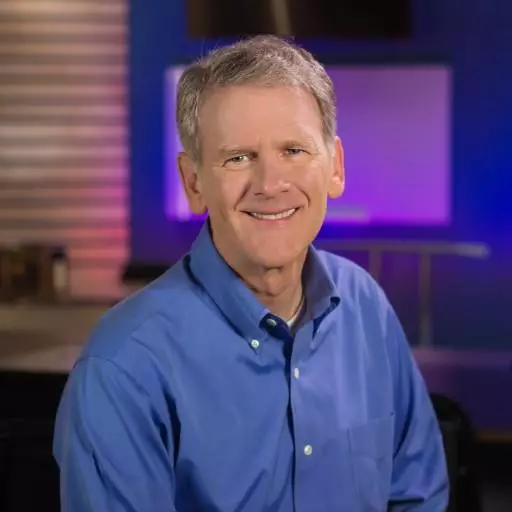
Pastor Bryan shares the second half of a lesson from Mark 10. Dr. Chapell investigates the story of blind Bartimaeus and his belief in the power of Jesus.
Bryan Chapell: I hope you recognize that it isn't our brokenness, in our confession of our need, that we actually point people to say, "Please don't think that being like me is your hope. Trusting in Christ beyond me is my hope." If you follow me, I'm just the blind going to lead you into a pit. It's my brokenness, my hurt. But listen, I've seen something beyond my blindness. And if you will look and see my hope, then it can be your hope too.
Guest (Male): So glad you joined us for today's Unlimited Grace, the audio broadcast ministry of pastor and author Bryan Chapell. In today's episode, Pastor Bryan shares the second half of a lesson from Mark 10. Dr. Chapell investigates the story of blind Bartimaeus and his belief in the power of Jesus.
You can find this lesson and many others when you visit unlimitedgrace.com. And while you're there, look for this wonderful resource from Dr. Chapell, Holiness by Grace. In this book, Pastor Bryan will guide you through reassuring scripture passages to discover how works and obedience are not a means of establishing or maintaining salvation, but a grateful response to God's mercy. Let's hear now from Dr. Bryan Chapell as he shares the second half of the lesson, Blind Belief.
Let's stand and read the account of blind Bartimaeus in Mark 10, verses 46 and following. And they came to Jericho. And as he, that is Jesus, was leaving Jericho with his disciples and a great crowd, Bartimaeus, a blind beggar, the son of Timaeus, was sitting by the roadside. And when he heard that it was Jesus of Nazareth, he began to cry out and say, "Jesus, Son of David, have mercy on me!"
And many rebuked him, telling him to be silent. But he cried out all the more, "Son of David, have mercy on me!" And Jesus stopped and said, "Call him." And they called the blind man, saying to him, "Take heart. Get up. He's calling to you." And throwing off his cloak, he sprang up and came to Jesus. And Jesus said to him, "What do you want me to do for you?" And the blind man said to him, "Rabbi, let me recover my sight." And Jesus said to him, "Go your way. Your faith has made you well." And immediately he recovered his sight and followed him on the way.
Bryan Chapell: Heavenly Father, thank you for telling us of how sight is not always through the eyes. That you grant spiritual vision, sometimes in the most unlikely places and to the most unlikely persons. So that we who wonder, should we see? Is it right that we be allowed to see? We'd recognize that part of your great grace is putting spiritual vision in the eyes of the most unlikely people. Grant us that we might be led on the way of Christ this day by a blind man whose name is Bartimaeus and whose message is mercy. Grant it we pray in Jesus' name. Amen. Please be seated.
He had nothing. And for Bartimaeus to keep talking when he depends upon the goodwill of people to give him whatever few coins or bread crusts that he needs to survive, when he's willing to keep declaring Jesus the Son of God, you recognize he is willing to risk everything. Maybe more so when you recognize what happened a bit later. Do you remember when the crowd says, "Hey, Jesus says you can come"? Verse 50, "And throwing off his cloak, he sprang up to come to Jesus."
He throws off his cloak. Now, again, we just read right past it. But for a beggar on the road, his cloak is coat and cover and bed and shelter. It is his everything. He survives by having a cloak that keeps him both warm and sheltered. And he throws it off to say, "I got to see Jesus now." I don't know the degree of risk that is. I do recognize when you've got almost nothing, to give that away is to give your everything.
And he does it. He puts himself at this great risk because it's Jesus, because it's the Son of David, because he's near. And he's reminding us, if God himself has come, if he is here, then we cannot be more secure. That's what allows us to take such great risk is because we actually believe that the God who knows our need and has supplied for it is here with us. It's what we as believers understand that because God has come near to those who are in such great need, we know we are secure.
And so we can risk for the sake of the Lord. I think of the beauty of this message this week where we have just had the missions conference and we recognize there are missionaries, 85% of them out of this congregation, out of this congregation, people who have made decisions to move away from home and family and security and to say, "We're in our Father's world. And we know we are held. And because we know that, we are willing to risk for him."
I think of the parents who are willing to take amazing steps to adopt children who are deeply in need because they are saying, "Why wouldn't we risk when we know we are secure for the sake of others who are in need?" I think of the educators and the business people in our ranks who are willing to declare that their ethics and their compassion and their integrity in their business practices result from believing in Christ Jesus.
That they have a vision beyond the ordinary. That they believe that the God of the universe is with them and holding them and helping them. So that even when they may be bypassed for promotions or may put themselves at risk by saying, "I have to do things that honor God," they do it. They live the extraordinary life of risk, saying, "My God is here. I live for him." And I do it because I believe that the one who came for my need is my God, my Savior, and he's present. And I live in his world. Why wouldn't I risk for him?
And the willingness to live that extraordinary life comes because we recognize who Christ is and what he has done for us. It's actually putting us on an extraordinary path, a path such as the world almost cannot imagine. When I know that my need and my confession of Christ makes me secure so that I can take risk for him, I begin to have hope where the world has no hope. I begin to see things the world cannot possibly see. My vision is expanded beyond what the world has the possibility to see.
And we understand that just in the way that Jesus and Bartimaeus interact in verse 52. Do you remember what happens? After Bartimaeus has said, "Rabbi, let me recover my sight," Jesus said to him, "Go your way. Your faith has made you well." And immediately he recovered his sight and followed him on the way. Now, think of what just happened. Jesus said, "You're well. Go your way." Which way does he go? He follows Jesus on Jesus' way.
Why would he do that? The hint may be in those words, "Rabbi, let me recover my sight." When Jesus said, "What do you want me to do for you?" You go, "Well, that's kind of obvious." No, what do you want me to do for you? Bartimaeus says, "Let me recover my sight." He doesn't say, "I wish I could have my sight." It's a declaration of permission. "Lord, let me recover." As though he believes Jesus has the power. "You give permission. You have it." It's almost as though, you know, he's the catcher speaking to the pitcher saying, "Burn it in here. Let her go. I know you can do this."
And because he knows Jesus has that power, Jesus said, "Not only has your faith made you well, but now Bartimaeus, believing that he has been made well, is willing to follow Jesus wherever he goes." Where is he going? We know. If you back into the same chapter to verses 33 and 34, Jesus himself will describe it. In Mark 10, verse 33, Jesus is speaking to his own disciples and he says, "See, we are going up to Jerusalem. And the Son of Man will be delivered over to the chief priests and scribes. And they will condemn him to death and deliver him over to the Gentiles. And they will mock him and spit on him and flog him and kill him." If Bartimaeus follows Jesus with new sight, what will he see?
Guest (Male): You're listening to Unlimited Grace, the audio broadcast ministry of pastor and author Bryan Chapell.
God instructs us in his word to be holy as he is holy. How can God expect us to be as holy as he is? Such a standard seems either to ignore our frailty or to impose certain failure. That is, until we understand how God views us.
In this challenging yet heartwarming book, Holiness by Grace, Dr. Bryan Chapell illustrates the principles of grace, the practices of faith, and the motives of love in living a life of holiness. Pastor Bryan will guide you through reassuring scripture passages to discover how works and obedience are not a means of establishing or maintaining salvation, but a grateful response to God's mercy.
Holiness by Grace draws straight from the heart of God, as Pastor Bryan's encouraging words will help you understand that your holiness is not so much a matter of what you achieve as it is the grace that God provides, a grace so rich as to make the pursuit of his holiness your soul's deepest delight. You can request your copy of Holiness by Grace when you go online to unlimitedgrace.com or by calling 844-41-GRACE. That's 844-414-7223. And now, more from Bryan Chapell on today's Unlimited Grace.
Bryan Chapell: If Bartimaeus follows Jesus with new sight, what will he see? He will see Jesus mocked, spit upon, flogged, and killed. He will follow Jesus right into the depth of human darkness and despair. He will see great suffering, great pain. And that's not the end of it. We learn more of the story if you'll turn just a page or two over to chapter 14 as Mark continues to tell us more of what happens in Jesus' life. You may remember that there's a final meal and a final kiss where Judas betrays Jesus with a kiss. And there in the garden as the soldiers come, all the other disciples fade into the darkness. What happens then? Verse 50 of Mark 14.
Guest (Male): And they all left him and fled. But then this, verse 51 of Mark 14. And a young man followed him with nothing but a linen cloth about his body. And they seized him. But he left the linen cloth and ran away naked.
Bryan Chapell: Isn't that strange? I mean, right in this great account of Passion Week, right in this great account of the crowds that then turned to betrayers, right in the great account of the crucifixion and the resurrection, here's this little account that there was a young man with no cloak who's still following Jesus when all the other disciples have disappeared. And when they tried to seize him, he ran away naked. He has really nothing now.
Now, I cannot assure you this is Bartimaeus. It sure sounds like it. Something else sounds like it too. This description in Mark 14 where it says, verse 51, "a young man followed him." That phrase, "a young man," is very rare in the New Testament. That description, "a young man" of this Greek term, actually occurs only one other time in the whole book of Mark. You want to see it? Go a few more chapters. Go to Mark 16. Mark 16, and now you may recall what has happened. Jesus has been put in a grave, and a stone has been rolled over the grave. And the women are going that next morning to now say, "We want to anoint his body so it doesn't stink, prepare it for this proper burial." Who is going to roll the stone away?
Guest (Male): Verse 4. And looking up, they saw that the stone had been rolled back. It was very large. And entering the tomb, they saw a young man sitting on the right side, dressed in a white robe, and they were alarmed.
Bryan Chapell: Who was sitting on the right side? A what? A young man. Same word. Only other place in the book of Mark. Now, listen, you and I know that most of the time we think of that young man as being the description of an angel dressed in white. But it doesn't say that exactly. I'm not going to tell you that I have with any certainty knowledge that this is Bartimaeus. But I kind of like to think it might be.
Just imagine, a few days before he was blind. And even though he could not see, he says Jesus is the Son of David. And apparently he's willing to follow after Jesus where he sees the most heinous acts of spiritual betrayal the world has known as the Son of God is betrayed by others. He sees it all. He sees with his new vision absolute horror and destitution of spirit. And then who knows? Is he the one who keeps following Jesus so that he's the first in the tomb? And when they come, he says, "He's not here. The grave is empty."
Wouldn't it be neat if that were Bartimaeus? That he'd seen it all. That he'd really lived that extraordinary life to recognize in the midst of great deprivation and great suffering and great betrayal and great hurt that there was hope. He had a sense of seeing before others could see. What if he actually saw the greatest hope the world could know and was the first to see it? Wouldn't that be special?
I cannot tell you that that's what happened. I can tell you this. There is no question that Bartimaeus, when the rest of the crowd did not see it, said, "This is the Son of God." And by that, I recognize that Bartimaeus is being used in the scriptures as a blind man to lead the blind to see Jesus. In 1658, Peter Bruegel the Elder painted one of the most amazing paintings of the Renaissance. It was a sad theme. It was a line of blind men, one holding to another, holding to another, holding to another, the way it happened in the ancient world. The painting is so precise in detail that doctors can look at the painting even today and diagnose the different diseases that were causing blindness in the different men.
But more amazing is that Bruegel, when he paints the painting, paints the parable. Can the blind lead the blind? Or if one falls into a pit, do not the others fall into the pit? The very first ones in the line in that painting of the blind leading the blind are falling into a pit. What a terrible thing. But because they are falling, the line is broken. And because the line is broken, you can see through the line of blind men, and Bruegel has painted beyond the steeple of a church. As if to say, even now, the blind in their brokenness are revealing their hope.
Why are you here? I hope we are not saying to the world because we've got it all put together, because we understand more than other people, because somehow we've got our lives straightened. I hope you recognize that it is in our brokenness, in our confession of our need, that we actually point people to say, "Please don't think that being like me is your hope. Trusting in Christ beyond me is my hope." If you follow me, I'm just the blind going to lead you into a pit. It's my brokenness, my hurt. But listen, I've seen something beyond my blindness. And if you will look and see my hope, then it can be your hope too. In that sense, the blind can lead the blind.
And it's not just in a painting. Some of you will know the name James Stewart Bell, Christian writer. His works just have the ability to touch the heart. And he tells the reason. What pulled him out of drugs and disbelief was the testimony of a high school friend who, coming down from an LSD high, was somehow ministered to by the Spirit and began to believe that his hope was in Jesus Christ.
The friend, the Jesus freak, was not credible to Bell in many ways, but he writes this. In following weeks, I fell into a dark hole. I questioned my self-worth. I felt that life was meaningless, that relationships were shallow. I despaired of kicking drugs and worried about my future. I sat alone in the darkness of 2:00 AM on the library steps of my university. The dose of LSD that I had taken hours before was wearing off, and I crashed into a deep, dark emptiness, feeling alone in the cosmos.
And then I remembered what my Jesus freak friend had told me, that the Holy Spirit had entered him, given him vision of the forgiveness that was in Jesus Christ, and told him that he could have a new life. Well, that was the blind leading the blind. One drug-induced haze going to another drug-induced haze. But somehow that ordinary being penetrated by an extraordinary work of the Spirit, so that ultimately what happened was that Bell began to believe that God was in fact able to meet his need.
He wrote this: "I asked Jesus to lift the weight of my sinful, self-absorbed life and enter my heart forever." And you think, "Well, he wasn't worthy of that. He didn't deserve that." Drugs and disbelief, why should he be allowed to ask Jesus to help him? Because you're qualified by knowing you're unqualified. Because it's your need that is your declaration of Christ. "I've got to have you because nothing else here's working." Of course we don't have it all straight. How could we have it all straight when we're asking for God to come and straighten it up?
And so he's crying out and say, "God, enter my heart." It was as he said, "A fountain of living water rose up from deep inside, pushing out all the junk that had built up within." Here's what he was saying. "I was blind, but now I see. I was deprived, but Christ came and met my need. I acknowledged I needed mercy, and the Messiah, the King of the universe, the Son of David, had mercy on me."
I want you to have a very special prayer this next week. Would you do this? You and I know that people we love will be here next Sunday in large numbers. And we want to pray something. Lord, through us, through our blindness and brokenness, help them see that salvation is not in who we are, but in who Christ is. Break us and through the brokenness, show the hope. Let them know it's not in us, but in the God we trust. Say to somebody this week, "Jesus had mercy on me," and invite them here. Invite them here that the blind might lead the blind to the hope that is in Jesus.
Friend, will you allow me to pray with you that the work God is doing in your life through the teaching of his word would take hold and help you? Heavenly Father, thank you for the fact that you pardon and give purpose to messed-up people like me, like us. Today, help us so to believe in your grace that we rejoice to receive it and live to reflect it. This we pray in Jesus' name. Amen.
Guest (Male): That's Pastor Bryan Chapell, and you've been listening to Unlimited Grace. If you would like to hear more from Dr. Chapell, you can find a collection of valuable resources at unlimitedgrace.com. When you visit, you will find today's message and many others from Pastor Bryan. Also, be sure to request a copy of Dr. Chapell's book, Holiness by Grace. We'll send you this book right away as our way of saying thank you for your most generous financial support. Please be sure to join us next time as once again we endeavor to put Christ at the center of our efforts so that lives might be transformed by his unlimited grace. This ministry is brought to you by Unlimited Grace Media and continues to be made possible with your generous financial support.
Featured Offer
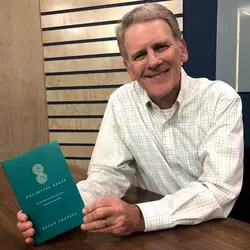
In Bryan Chapell's book, you will learn how God's unlimited grace leads us to heartfelt obedience and transforming joy. Explaining why grace is important and giving us tools to discover it in all of Scripture, Unlimited Grace helps us to see how gospel joy transforms our hearts and makes us passionate for Christ's purposes.
Past Episodes

Featured Offer
In Bryan Chapell's book, you will learn how God's unlimited grace leads us to heartfelt obedience and transforming joy. Explaining why grace is important and giving us tools to discover it in all of Scripture, Unlimited Grace helps us to see how gospel joy transforms our hearts and makes us passionate for Christ's purposes.
About Unlimited Grace
About Bryan Chapell
Bryan Chapell, Ph.D. is the Stated Clerk Pro Tempore of the Presbyterian Church in America (PCA), based in Lawrenceville, GA.
Dr. Chapell is an internationally renowned preacher, teacher, and speaker, and the author of many books, including Each for the Other, Holiness by Grace, Praying Backwards, The Gospel According to Daniel, The Hardest Sermons You’ll Ever Have to Preach, and Christ-Centered Preaching, a preaching textbook now in multiple editions and many languages that has established him as one of this generation’s foremost teachers of homiletics.
Dr. Chapell is passionate about sharing the truth of God's grace with others, because it provides the freedom and fuel for transformed lives of joy and peace.
He and his wife, Kathy, have four adult children, a growing number of grandchildren, and lives rich with friends, fishing and faith.
Contact Unlimited Grace with Bryan Chapell
info@unlimitedgrace.com