

Blind Belief - Part 1


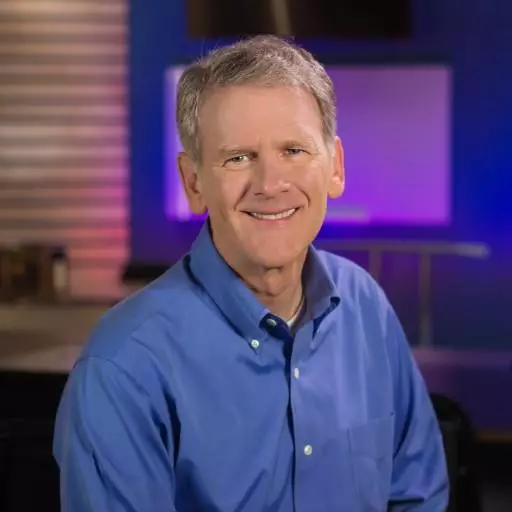
Pastor Bryan shares a lesson from Mark 10. Dr. Chapell highlights, through the life of Bartimaeus, how our limitations and suffering can sometimes be the path by which we see extraordinary things.
Bryan Chapell: If you don't think you are qualified to be here, it's the very reason you ought to be here. If you think you're qualified, please go home. The people who should be here are the ones who say, "I have a need that Jesus can supply." If I don't have that need, then you don't need to be here.
We all stand before one another, we sing, we say, "This is the mercy of God in my behalf because I desperately need mercy."
Guest (Male): So glad you joined us for today's Unlimited Grace, the audio broadcast ministry of pastor and author Bryan Chapell. In today's episode, Pastor Bryan shares a lesson from Mark 10. Dr. Chapell highlights through the life of Bartimaeus how our limitations and suffering can sometimes be the path by which we see extraordinary things.
You can find this lesson and many others when you visit unlimitedgrace.com. And while you're there, look for this wonderful resource from Dr. Chapell, Holiness by Grace. In this book, Pastor Bryan will guide you through reassuring scripture passages to discover how works and obedience are not a means of establishing or maintaining salvation, but a grateful response to God's mercy. Let's hear now from Dr. Bryan Chapell as he shares the lesson, Blind Belief.
Bryan Chapell: Gary Smith, in a book on great baseball writing, gives an unlikely account of the daughter of the owner of a minor league ball stadium. The story goes this way. The young girl was named Rebecca. Her father owns a minor league ballpark, and Rebecca is slowly going blind. The black holes in the center of her vision grow larger and begin to devour the periphery of her eyesight as well.
The TV monitor that magnifies her school text ten times their size is no longer enough. The diagnosis of retinitis pigmentosa is certain as sad as is her future. One day, her resilient spirit is exhausted. She storms upstairs, she slams the door, looks at the ceiling and screams, "Why are you doing this to me?"
She collapses onto her bed and tries to comfort herself by thinking of children who have it worse than she. All the kids who've had limbs blown off in Iraq. But somehow that doesn't help. It doesn't work. She feels no better. She gets up and cranks up the music on her iPod and dances and sings and weeps.
Facts are facts. The days will only grow cloudier. Santa Claus will not walk through her bedroom door and pull up the blinds. She cues another recording on her player and listens away the rest of the day, knowing that her mind is her treasure and that blind men like Ray Charles, her favorite singer, have seen something beyond and have somehow dragged the whole world with them into the extraordinary world of the unseen.
The eclipse of her sight, even before it began, was announced by a little girl in a dream to her. The little girl who looked like her but wasn't quite her, came up to her in the dream and touched her eyes and said, "I'm sorry, but you have a path to take." It is the reminder that our limitations and deprivations and suffering can sometimes be the path by which we see extraordinary things beyond the ordinary world that causes others to despair, that causes others to believe that there is only darkness, that somehow you can grant, by the spirit, vision into an unseen world.
For Christians, it's not a mystery, though sometimes we long for that vision. For we recognize it's often in the darkness when the shadows are the longest and the deepest that the things of God are the most dear and near and clear. It is, after all, through the testimony of blind Bartimaeus that we learn something about the extraordinary life of faith that God reveals even beyond sight.
After all, this blind Bartimaeus that we're introduced to is introducing us to an extraordinary sight that he shares. We know what should fill his perceptions. It's verse 46. The crowd and disciples come to Jericho, and as Jesus is leaving Jericho with his disciples, a great crowd is with him and Bartimaeus, a blind beggar, the son of Timaeus, was sitting by the roadside.
He should be full of a feeling of his poverty. He is a blind beggar. He has little or nothing. He depends on the mercy of others. It's not just that he lives in poverty, but in loss. The writer tells us carefully he is the son of Timaeus, as though the readers of that era and we perhaps should recognize that's somebody of significance.
His father was important. People would recognize him, but here is the son of Timaeus, and he's nothing. He sits by the roadside begging for the goodwill of others. He's not just insignificant, he apparently is just alone. It's the crowd that gathers around Jesus, but he's just sitting on the outskirts of Jericho, and he doesn't even greet Jesus as Jesus comes in.
It's as Jesus is going out, like the job is done, like the celebration is over, that Bartimaeus is there. It's hopeless. In so many ways, it is only hopeless. Despite what should fill his perceptions, what he does see is something extraordinary. It's revealed to us in verse 47. When he heard that it was Jesus of Nazareth, he began to cry out saying, "Jesus, son of David."
Did you catch it? He heard that the man Jesus of Nazareth, the carpenter's son, is in Jericho. But he says, "Jesus, son of David," declaring to everyone he is the long-prophesied Messiah. David was promised through his seed an eternal and universal kingdom. There would be a king who would come to rule over all and Bartimaeus, somehow in his blindness, sees who Jesus really is.
Why he sees it, we don't know. Is there something about the blindness itself that helps him understand with greater acuity? This is somebody special, more than a man. I think of the account of Fanny Crosby, whose hymns we still sing, the most prolific hymn writer in English history. She wrote over 8,000 hymns, many of which we still sing, like "To God be the Glory."
Her situation was that she was blind from a few days after birth. And when people would question her even far into her adulthood saying, "Was God fair? Is this good? Is this God being kind to you?" Her response was, "The Lord could have done nothing better for me because through my blindness, he shut me in with himself."
Somehow she believed that by her blindness, she saw Christ more clearly. Her songs said that there was something that resonated in her heart with greater depth and understanding that the sighted people of that era or era since have seen, that somehow the deprivation made the beauty and the treasure and the goodness of Christ all the more clear and precious to her.
Here is Bartimaeus who has all the deprivation and yet says, "But Christ is here. The Lord, the one we've been waiting for, he is here." And beyond that, he has a gift to give. Remember? "Jesus, son of David, have mercy on me." Two things are immediately happening when Bartimaeus says those words. He is declaring his need: "I need somebody to help me, I need somebody's mercy."
Right at the same moment with it, he is saying, "And Jesus has the supply. I have a need, he's got the supply." And as obvious as that may be, it is always the beginning of the extraordinary life of faith that we begin to see beyond the ordinary deep into our hearts to recognize there is spiritual deprivation there. We are deeply in need, and it's a need that we can't fix. Christ has to be the supply.
I hope you recognize that. What happens when we see so many wonderful people coming up declaring their testimony is they are not declaring simply that they have arrived. They are declaring to friend and family and to world, "We had a need that Christ alone could supply." Sin and shame we recognize would characterize us. We know our hearts, and so we declare to the world our need is met by Jesus Christ. It is always the beginning of the walk of faith, the journey that Christ would put us on.
Guest (Male): You're listening to Unlimited Grace, the audio broadcast ministry of pastor and author Bryan Chapell. God instructs us in his word to be holy as he is holy. How can God expect us to be as holy as he is? Such a standard seems either to ignore our frail or to impose certain failure. That is until we understand how God views us.
In this challenging yet heartwarming book, Holiness by Grace, Dr. Bryan Chapell illustrates the principles of grace, the practices of faith, and the motives of love in living a life of holiness. Pastor Bryan will guide you through reassuring scripture passages to discover how works and obedience are not a means of establishing or maintaining salvation, but a grateful response to God's mercy.
Holiness by Grace draws straight from the heart of God as Pastor Bryan's encouraging words will help you understand that your holiness is not so much a matter of what you achieve as it is the grace that God provides, a grace so rich as to make the pursuit of his holiness your soul's deepest delight.
You can request your copy of Holiness by Grace when you go online to unlimitedgrace.com or by calling 844-41-GRACE. That's 844-414-7223. And now more from Bryan Chapell on today's Unlimited Grace.
Bryan Chapell: Many of you will know the name John Stott, one of the most amazing Christian leaders of the last century. Even now, when I travel to different parts of the world, particularly when I go to Africa, I will meet hundreds, no, I will meet thousands of people who have been touched by the ministry of John Stott.
How did he begin that journey of being used so greatly of God? He expresses what happened in his own conversion. He says, "I was defeated. I knew the kind of person I was and the kind of person I longed to be. Between the reality and the ideal, there was this great gulf. And what brought me to Christ was this sense of defeat combined with the astonishing news that the historic Christ, the son of David, offered to meet the very needs of which I was conscious."
I had a need and Christ is able to meet it. He is the son of God come to rescue. He will take my sins upon the cross, he will put his righteousness in my unrighteousness' place. He is the one who will make it right, and I need that deeply. It didn't solve everything. Enough of you will know the life of John Stott to know he struggled with loneliness, he was single all of his life.
He struggled with criticism, he didn't say everything right. He struggled at times just to wonder had he preached well enough because he became responsible for so many. He always felt like the responsibility was going to crush him. What happened in that need stayed so present in his awareness was Christ stayed so special in his heart.
"My need is still here, my savior is still here." That reality of being able to recognize when God comes near, he is willing to meet our needs is the great blessing of the gospel. It's what we will celebrate this week and what we will celebrate next week is saying to people, "We don't have it all straight. We don't have it all fixed up."
I hope you recognize if you don't think you are qualified to be here, it's the very reason you ought to be here. If you think you're qualified, please go home. The people who should be here are the ones who say, "I have a need that Jesus can supply." If I don't have that need, then you don't need to be here.
We all stand before one another, we sing, we say, "This is the mercy of God in my behalf because I desperately need mercy." And if God blesses us with people who will be here next weekend on an Easter Sunday, hopefully there will be people who don't come and say, "I can't be like these people," because our constant refrain and testimony will be "We shouldn't be here either."
Our need is too great, but our savior is greater. That extraordinary vision to see beyond what people expect to see—just the ones who've got it all put together, the people who've got it all straight—but to recognize the people who are here are those who desperately need to be here because their need will only be supplied by Jesus Christ and they have seen that.
If you see that, then something begins to happen in you that's part of the extraordinary life of faith, not just that you have this vision beyond the ordinary to need being supplied by a supernatural God, but you begin to recognize the God came. "Jesus, son of David, you're here." He came for us.
What Bartimaeus knows is if he has a great need but Christ is near, then he is extremely secure. You know what that means? Not only can he have an extraordinary vision, he can take extraordinary risks. The risks are apparent in what happens in verse 47, though it may elude you.
In verse 47, when he heard that it was Jesus of Nazareth, just the ordinary man, he began to cry out and said, "Jesus, son of David, have mercy on me." What happened next? People began to rebuke him. Don't say that. So what does he say again? "Son of David, have mercy on me." He's doing more than exposing his need. He is putting himself at great risk.
Remember, this is the week before Easter. Good Friday is going to happen in here. There are people who are waiting in Jerusalem to kill because Jesus, they think, claims to be the son of David. For Bartimaeus to claim that Jesus is the son of David and not be shushed is to put the whole town, the whole crowd at risk.
He puts himself at risk, even for those whose goodwill he depends upon in order to proclaim Jesus the son of God. Where's the risk? Maybe it's obvious to you, but it's in two obvious things to a Jew that you may not see anymore. The risk that's exposed that Bartimaeus is willing to take is evident in the shush and the cloak.
"Bartimaeus, be quiet." No, I will speak, "Jesus, son of David, have mercy on me." The only parallel experience I can think of in my life is being in Western Kenya in deep jungles. We were three hours by dirt road beyond the last rail station establishing a school for pastors in Western Kenya and Northern Nigeria.
Northern Nigeria right now is where Boko Haram is exhibiting such terror. We were establishing a school for preachers in that area in a time even then that it was quite dangerous. The Vice President of Kenya, as we were establishing that school, decided on the day of dedication that he would come.
I can remember that we were excited, that sense of terror that begins to happen as five minutes before the Vice President arrives, suddenly the troop trucks begin to rumble through the jungle and soldiers unload with automatic weapons ready to go. Once they have secured the perimeter, then we hear through the jungle as the Vice President's helicopter is coming.
Finally when he lands and all the automatic weapons are there, you think, "This is nice, but it is really scary." The Vice President begins to give his speech. As he was beginning to give his speech, there was a deranged young man who was in the crowd who would not be silent. The crowd says, "Shush."
He would not shush until finally the troops with the butts of their guns beat him into the jungle to make him go away. He had nothing. For Bartimaeus to keep talking when he depends upon the goodwill of people to give him whatever few coins or bread crust that he needs to survive, when he's willing to keep declaring Jesus the son of God, you recognize he is willing to risk everything.
He puts himself at this great risk because it's Jesus, because it's the son of David, because he's near. He's reminding us, if God himself has come, if he is here, then we cannot be more secure. That's what allows us to take such great risk is because we actually believe that the God who knows our need and has supplied for it is here with us.
When you know that, even when you're blind, you can take great risk. Gary Smith's story of the young Rebecca continues. The one place she can see, the one place where Rebecca knows every stairway and door so well that it's as if she were not blind, is her father's ballpark.
When the River Dogs are at home, she sells programs. She keeps the kids smiling while they wait in line by playing with them. She escorts Charlie, the River Dog mascot, who can barely see through his costume's headpiece. It really is the blind leading the blind.
She loves being the last human being who still yells "Charge!" when she hears the tape-recorded bugle. "My real job," she says, "is to keep everyone in the ballpark happy, to keep everyone alive, especially when my dad is away. He tells me I am his secret eyes. When he's not here, I got stuff to do, big stuff."
That's why on Big Splash Day, she climbs onto a platform over a water tank, baiting bystanders to pay a buck to get three shots at a bullseye. She taunts them more. "Ah, you throw like a girl! What's the matter with you? You blind?" And her father looking on says he never sees her more alive.
Because in his ballpark, she is secure. She sees beyond the ordinary. She knows she is taken care of, and she can live life to the fullest. It's what we as believers understand, that because God has come near to those who are in such great need, we know we are secure and so we can risk for the sake of the Lord.
Guest (Male): That's Pastor Bryan Chapell, and you've been listening to Unlimited Grace. If you'd like to hear more from Dr. Chapell, you can find a collection of valuable resources at unlimitedgrace.com. When you visit, you will find today's message and many others from Pastor Bryan.
Also, be sure to request a copy of Dr. Chapell's book, Holiness by Grace. We'll send you this book right away as our way of saying thank you for your most generous financial support. Please be sure to join us next time as once again we endeavor to put Christ at the center of our efforts so that lives might be transformed by his unlimited grace. This ministry is brought to you by Unlimited Grace Media and continues to be made possible with your generous financial support.
Featured Offer
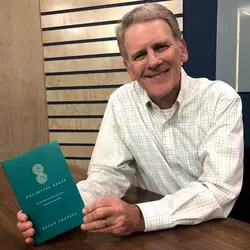
In Bryan Chapell's book, you will learn how God's unlimited grace leads us to heartfelt obedience and transforming joy. Explaining why grace is important and giving us tools to discover it in all of Scripture, Unlimited Grace helps us to see how gospel joy transforms our hearts and makes us passionate for Christ's purposes.
Past Episodes

Featured Offer
In Bryan Chapell's book, you will learn how God's unlimited grace leads us to heartfelt obedience and transforming joy. Explaining why grace is important and giving us tools to discover it in all of Scripture, Unlimited Grace helps us to see how gospel joy transforms our hearts and makes us passionate for Christ's purposes.
About Unlimited Grace
About Bryan Chapell
Bryan Chapell, Ph.D. is the Stated Clerk Pro Tempore of the Presbyterian Church in America (PCA), based in Lawrenceville, GA.
Dr. Chapell is an internationally renowned preacher, teacher, and speaker, and the author of many books, including Each for the Other, Holiness by Grace, Praying Backwards, The Gospel According to Daniel, The Hardest Sermons You’ll Ever Have to Preach, and Christ-Centered Preaching, a preaching textbook now in multiple editions and many languages that has established him as one of this generation’s foremost teachers of homiletics.
Dr. Chapell is passionate about sharing the truth of God's grace with others, because it provides the freedom and fuel for transformed lives of joy and peace.
He and his wife, Kathy, have four adult children, a growing number of grandchildren, and lives rich with friends, fishing and faith.
Contact Unlimited Grace with Bryan Chapell
info@unlimitedgrace.com