

Beyond all Doubt - Part 2


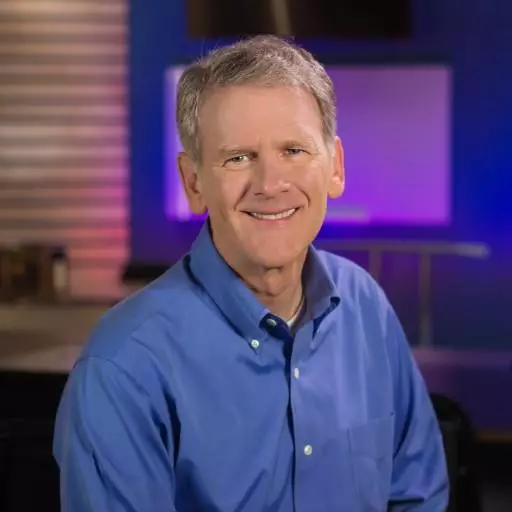
Pastor Bryan shares the second half of an Easter message from John 20. As we explore the scriptures, we see how God meets us in our brokenness, just as He met Thomas - with love and understanding.
Bryan Chapell: I will have questions, you will have questions, we're united in understanding life is too complicated and difficult at times never to have a question. But Jesus isn't running away and he's not laughing. Instead, he's convincing us by his resurrection that he has power and goodness and the willingness to cover our sin and to make things right if not on this earth, in eternity. And I will choose to believe that rather than hopelessness.
Guest (Male): So glad you joined us for today's Unlimited Grace, the audio broadcast ministry of pastor and author Bryan Chapell. In today's lesson, Pastor Bryan shares the second half of an Easter message from John chapter 20. As we explore the scriptures, we see how God meets us in our brokenness, just as he met Thomas, with love and understanding.
You can find this lesson and many others when you visit unlimitedgrace.com. And while you're there, look for this wonderful resource from Dr. Chapell, Holiness by Grace. In this book, Pastor Bryan will guide you through reassuring scripture passages to discover how works and obedience are not a means of establishing or maintaining salvation, but a grateful response to God's mercy. Let's hear now from Dr. Bryan Chapell as he shares the second half of the lesson, Beyond All Doubt.
Bryan Chapell: Now Thomas, one of the 12 called the Twin, was not with them when Jesus came. So the other disciples told him, "We have seen the Lord." But he said to them, "Unless I see in his hands the mark of the nails, and place my finger into the mark of the nails, and place my hand into his side, I will never believe."
Eight days later, his disciples were inside again and Thomas was with them. Although the doors were locked, Jesus came and stood among them and said, "Peace be with you." Then he said to Thomas, "Put your finger here and see my hands and put out your hand and place it in my side. Do not disbelieve, but believe." Thomas answered him, "My Lord and my God." Jesus said to him, "Have you believed because you have seen me? Blessed are those who have not seen and yet have believed."
Joni Eareckson Tada, close to home, from our own denomination, from our own church, the amazing Christian woman who has written so many books about faithfulness despite the fact that in a diving accident in her teens she was made a quadriplegic and has lived in a wheelchair all of her adult life. In 2004, interviewed by Larry King on Larry King Live, she talked about her faith. She talked about faith in crisis, and he asked the awful question, "Ever doubt your faith, Joni?" She said, "I have questioned God. I have wondered why. Thinking people wonder why."
Just for the moment, we need the comfort of Thomas, who knew that when he questioned by what Jesus did next, Jesus would not turn away from the questioning. In the face of doubt, Jesus would still come near. How do I know he's not laughing? How do I know he's not turning away? How do I know he still cares? Because he did not just come near. Remarkably, he kept the wounds of his suffering. Did you note that? I mean, have you ever scratched your head about it? That Jesus says there, remember, "Put your fingers here." Verse 27, "See my hands. Put out your hand. Place it in my side."
Why did Jesus keep the wounds? He didn't have to, you know. I mean, just think of what you know about these accounts. Eight days earlier, John makes it very clear, the disciples are in the upper room and the door is locked. And suddenly Jesus appears in body. The real Jesus, wounds showing. It's really him. Then he's gone. Eight days later, knowing what Thomas has said, he comes back. John says again, the door is locked and Jesus appears again.
Now, this is better than Star Trek transporters, folks. This is not "Beam me down, Scotty." He just comes and goes at will. Flesh is knit and re-knit and comes apart. This is the same Jesus who says now that when we are put in our glorified body, no more disease, no more brokenness. All that's wrong is made right. This same Jesus is already displaying his control over the universe and the body and flesh. He doesn't need to keep the scars or the bleeding wounds. Whatever the case, he doesn't need to do that. And yet he kept the wounds when he comes to Thomas.
Why? Well, surely it's to convince Thomas. Same wounds, same body, same Jesus. It's true what they said. "I am alive. You watched me die. You watched me suffer. But I rose again. I'm here. See?" And it's more than that. While you recognize that he's convincing Thomas, he's convincing the same Thomas who has doubted him. And so the wounds are not just convincing. In a remarkable spiritual expression, they are also covering the doubt of Thomas. His doubt is sinful. His doubt is wrong. It shouldn't be there. But what are the wounds all about? But to show that he was crushed for us.
Do you remember the words of Isaiah? "He was pierced for our transgressions. He was crushed for our iniquities. The chastisement that brought us peace was put upon him. By his wounds, we are healed." As he shows the wounds to Thomas, he is saying, "Even your doubt is covered. You are made right with me. Not by what you have done, but what I have done. I have suffered for you. I have taken the penalty. I have paid the price in my suffering of your sinfulness. I even come here to cover your doubt."
In an ancient woodcut from the ancient church, again, this moment is depicted. And because it's an ancient woodcut, there are some of the conventions of the age that are not quite proper. You know, all the disciples have halos and there are sunbursts and all kinds of things. Not quite appropriate. But there is this wonderful thing that happens. It's the only place I have seen the image of this moment shown this way. As Jesus is saying to Thomas, "Look at my hands. Put your hand in my side." By raising his hands like this, he is not only demonstrating who he is, he is covering Thomas with the cross. He convinces and covers at exactly the same moment.
It is, of course, the point that we need to know. That this resurrection morning that we celebrate is meant to convince us again. Lots of people apparently believe. But more than that, it is to say when I struggle, when my brokenness, when my questioning, when my sin makes me wonder, "Am I still okay with him?" He is saying, "Look at the wounds. These are not meant merely to convince you. They are meant to cover you. To recognize the guilt of your sin has been paid for. Put your faith in what the wounds mean."
Because they weren't just something for an old time. Do you remember that this same John who wrote this Gospel writes in the book of Revelation what will happen at the end of the ages? He says, "I looked and behold, there was a lamb standing as though he had been slain." To recognize that though Christ did not have to have wounds at all, he not only had them but keeps them to show us. "I want you to know I died for you and I want you to know the wounds are for you. They cover your questions. They cover your sin. They cover your brokenness."
The Psalm writer says it right. "Five bleeding wounds he bears, received on Calvary. They pour effectual prayers. They ever plead for me. Forgive him, oh forgive, they cry. Forgive him, oh forgive, they cry. Nor let that ransomed sinner die." Why? Because I died for him. Because I have paid the price. You know, one of the amazing hymns that Christians of all generations seem to love to sing is that hymn "There is a Fountain Filled with Blood". Drawn from Immanuel's veins and sinners plunged beneath that flood lose all their guilty stains. Now, if you just think about it, that is a horrible image. But the graphicness of that image seemed to be needed by William Cowper, the writer of the hymn.
William Cowper, one of England's greatest poets, and yet came to a deep understanding of human life and faith through great suffering. When he was six months old, his mother died, and so he was put in boarding schools all of his school life. Wrote deeply and longingly of a need for a father relationship the rest of his life. When he was a young adult, he courted a young woman for seven years. Only on the eve of the wedding to have the wedding canceled by her father, who did not want her to marry someone like him. Into that stage of his life, Cowper's father re-entered and tried to get him a prestigious job as an officer in Parliament. But on the eve of the exam that would have been necessary to qualify him for that position, so filled with questioning and self-doubt was he that in depression and fear, he sought to take his own life.
First he went to a river to throw himself off a bridge, but the water was too low. So he went home to take poison, but he couldn't get the lid off the bottle. So he tried to hang himself with a piece of fabric, which broke three times. And that broke his mind. He was put into an insane asylum. And in the insane asylum, read John 11 from this same Gospel. Do you remember what's there? John 11 is the account of Lazarus being raised from the grave. Even when others thought it could not be done, did not want to go to Bethany to see Jesus help his friend who was suffering. Jesus still showed his power.
But Lazarus and Jesus are not the only ones mentioned in John 11. There is a particular disciple pointed out. The disciple was Thomas. Remember the other disciples are saying to Jesus, "You can't go to Bethany. It's just a mile or two from Jerusalem and the Jews are waiting to stone you at Jerusalem. Don't go there, Jesus." And Jesus said, "I'm going to go to help my friend." And Thomas finally speaks up. "Well, let's just go and die with him." I mean, it's just kind of this fatalistic, resigned pouting.
And of all things that reached into the heart of William Cowper, because what he said he saw when he read John 11 was the mercy and sympathy of Jesus for miserable man. Like him. Like Thomas. Like you and me sometimes, right? When the tragedies come, when we can't make sense of it, and we are wondering, "What now? Why this, Lord?" And in the midst of all my questions, I learn that God is merciful and sympathetic to miserable people. I need Thomas. I give thanks for Thomas because he shows me so much of what I need to know about the nature of God in the midst of my wrestling with my God.
Because ultimately what I learn from Thomas is not just that Jesus came near, nor that he kept the wounds for our sake to convince us and to cover our sin, but ultimately I understand from Thomas that Jesus claims doubters. I mean, amazing sequence in these verses. Do you remember how it works? Jesus comes and at the end of verse 26, before there's been any proclamation, before any touching of the wounds, Jesus says to those in the room, "Peace be with you." Now, I recognize just a couple of verses later there's going to be that great proclamation of Thomas, "My Lord and my God." But he hasn't said that yet.
All that he's in the place of being right now is the place of questioning and doubt and challenging God. And still Jesus comes and says, "Peace to you, Thomas. I've said it to everyone else eight days ago. I came back to say it to you. And you haven't said anything to me yet that's good. But to you I offer my peace." Why is it important that you and we recognize that Jesus is claiming the doubter? Because we see the movement in the life of Thomas. He goes from pouter to doubter to shouter. "Let's just go die with him." Pouts. Doubts. "Unless I see the wounds in his hands and his side, I'm not going to believe." And then he shouts. He's here. "My Lord and my God."
What do you recognize in that? But that Jesus is saying to you and me, the reason that I would claim a doubter like Thomas is because I know there may be a few more. In fact, I think the reason that Thomas is at the end of this Gospel is clear just because of its placement in this very chapter. If you're still in John 20, you know that I ended verse 29, but the end of the chapter goes two more verses. At the end of John 20, the apostle writes, "Now Jesus did many other signs in the presence of the disciples which are not written in this book. But these are written so that you may believe that Jesus is the Christ, the Son of God, and that by believing you may have life in his name."
Many other signs and wonders, but the last wonder that has just happened is Thomas believes. Thomas believes. I mean, that's the miracle. You know, the last to believe, the hardest to convince, believes. And that's the message for us. That if Thomas can believe, then maybe the resurrection's real. I mean, it's why I think Jesus saved him till the last so that others of us would say if even Thomas believed, maybe there's something to this.
Guest (Male): You're listening to Unlimited Grace, the audio broadcast ministry of pastor and author Bryan Chapell. God instructs us in his word to be holy as he is holy. How can God expect us to be as holy as he is? Such a standard seems either to ignore our frailty or to impose certain failure. That is, until we understand how God views us.
In this challenging yet heartwarming book, Holiness by Grace, Dr. Bryan Chapell illustrates the principles of grace, the practices of faith, and the motives of love in living a life of holiness. Pastor Bryan will guide you through reassuring scripture passages to discover how works and obedience are not a means of establishing or maintaining salvation, but a grateful response to God's mercy.
Holiness by Grace draws straight from the heart of God, as Pastor Bryan's encouraging words will help you understand that your holiness is not so much a matter of what you achieve as it is the grace that God provides. A grace so rich as to make the pursuit of his holiness your soul's deepest delight. You can request your copy of Holiness by Grace when you go online to unlimitedgrace.com or by calling 844-41-GRACE. That's 844-414-7223. And now, more from Bryan Chapell on today's Unlimited Grace.
Bryan Chapell: Now, I haven't answered all the questions that can come. All the doubts, all the struggles that you and I have and will have. But the reason that I have put this before you is to recognize that when we have the questions, we also have a decision to make. I think of it in terms of the American author Sheldon Vanauken, who wrote, in case you haven't read it, A Severe Mercy, one of the great love stories of our era. How he and his wife united in this shining bond where all other things would be cut out of their lives as they focused on one another, which they did until her cancer came.
And Sheldon Vanauken writes of his journey to faith as his wife journeyed toward death. He wrote about his doubts and he wrote these words, "To move forward in faith, I had to cross a gap between the probable and the proved. If I were to step across that gap and stake my life on the risen Christ, I wanted proof. I wanted certainty. I wanted to see Jesus eat fish or declare himself in letters in the sky or something. I got none of those. And then I recognized that there was another gap of faith. It was the one behind me. I recognized that I did not have absolute certainty that there was a God, that Jesus had risen from the dead."
But to reject Christ was to cross the gap behind me to a belief that there was no God. That there was no guide for life, no judgment, no hope after death, no reunion with loved ones, no making things right. If I did not accept Christ, then that was the thing that I did accept. But there was no certainty that those things were true either. And so I, recognizing I could not accept hopelessness, accepted Christ instead. That's what we're called to do. To recognize, I will have questions, you will have questions. We're united in understanding life is too complicated and difficult at times never to have a question.
But Jesus isn't running away and he's not laughing. Instead, he's convincing us by his resurrection that he has power and goodness and the willingness to cover our sin and to make things right if not on this earth, in eternity. And I will choose to believe that rather than hopelessness. It is my privilege because of the Christ who came to be with me and to tell me and you that through the life of Thomas.
You see it every week, this church and many churches, we have that cross that's up there. Do you know that particular cross is actually known as a Thomas cross, not because it's shaped like a T, but because there's no effigy on it. No body of Christ. As the great faith of Thomas was proclaimed, he's not here. Not on the cross, not in the grave. He rose. I believe that now. And that's the message there and through Thomas. And I pray in your heart that you would know new life in him because he rose for you.
Guest (Male): That's Pastor Bryan Chapell, and you've been listening to Unlimited Grace. If you would like to hear more from Dr. Chapell, you can find a collection of valuable resources at unlimitedgrace.com. When you visit, you will find today's message and many others from Pastor Bryan. Also, be sure to request a copy of Dr. Chapell's book, Holiness by Grace. We'll send you this book right away as our way of saying thank you for your most generous financial support.
Once again, go to unlimitedgrace.com or you can give by calling 844-41-GRACE. That's 844-414-7223. Please be sure to join us next time as once again we endeavor to put Christ at the center of our efforts so that lives might be transformed by his unlimited grace. This ministry is brought to you by Unlimited Grace Media and continues to be made possible with your generous financial support.
Featured Offer
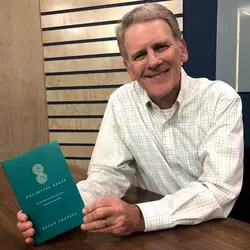
In Bryan Chapell's book, you will learn how God's unlimited grace leads us to heartfelt obedience and transforming joy. Explaining why grace is important and giving us tools to discover it in all of Scripture, Unlimited Grace helps us to see how gospel joy transforms our hearts and makes us passionate for Christ's purposes.
Past Episodes

Featured Offer
In Bryan Chapell's book, you will learn how God's unlimited grace leads us to heartfelt obedience and transforming joy. Explaining why grace is important and giving us tools to discover it in all of Scripture, Unlimited Grace helps us to see how gospel joy transforms our hearts and makes us passionate for Christ's purposes.
About Unlimited Grace
About Bryan Chapell
Bryan Chapell, Ph.D. is the Stated Clerk Pro Tempore of the Presbyterian Church in America (PCA), based in Lawrenceville, GA.
Dr. Chapell is an internationally renowned preacher, teacher, and speaker, and the author of many books, including Each for the Other, Holiness by Grace, Praying Backwards, The Gospel According to Daniel, The Hardest Sermons You’ll Ever Have to Preach, and Christ-Centered Preaching, a preaching textbook now in multiple editions and many languages that has established him as one of this generation’s foremost teachers of homiletics.
Dr. Chapell is passionate about sharing the truth of God's grace with others, because it provides the freedom and fuel for transformed lives of joy and peace.
He and his wife, Kathy, have four adult children, a growing number of grandchildren, and lives rich with friends, fishing and faith.
Contact Unlimited Grace with Bryan Chapell
info@unlimitedgrace.com