

Beyond all Doubt - Part 1


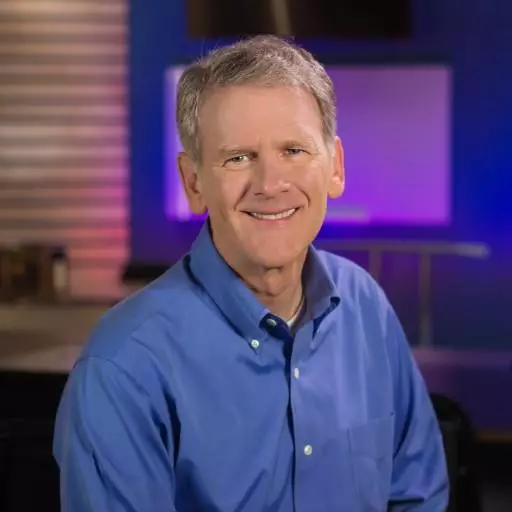
Pastor Bryan shares an Easter message from John 20. Just as we read of Thomas doubting the resurrection of Jesus, we can be reminded of our own doubts. As we explore the scriptures, we see how God meets us with love and understanding in our brokenness and His presence relieves our doubts.
Bryan Chapell: Thomas, when we see him, he's just the last in a long list of people whom God is saying, "You can tell me that you question, you can tell me that you doubt, that you wonder, even in the midst of the great things I'm promising you, and I'm not going to laugh and I'm not going to run away. I just keep coming near."
Guest (Male): So glad you joined us for today's Unlimited Grace, the audio broadcast ministry of pastor and author Bryan Chapell. In today's lesson, Pastor Bryan shares an Easter message from John 20. Just as we read of Thomas doubting the resurrection of Jesus, we can be reminded of our own doubts. As we explore the scriptures, we see how God meets us with love and understanding in our brokenness, and his presence relieves our doubts.
You can find this lesson and many others when you visit unlimitedgrace.com. And while you're there, look for this wonderful resource from Dr. Chapell: *Holiness by Grace*. Let's hear now from Dr. Bryan Chapell as he shares the first half of the lesson, "Beyond all Doubt."
Bryan Chapell: John 20 and verse 24. As we stand together, let's read: "Now Thomas, one of the twelve called the twin, was not with them when Jesus came. So the other disciples told him, 'We have seen the Lord.' But he said to them, 'Unless I see in his hands the mark of the nails and place my finger into the mark of the nails and place my hand into his side, I will never believe.'"
Eight days later, his disciples were inside again and Thomas was with them. Although the doors were locked, Jesus came and stood among them and said, "Peace be with you." Then he said to Thomas, "Put your finger here and see my hands and put out your hand and place it in my side. Do not disbelieve, but believe." Thomas answered him, "My Lord and my God." Jesus said to him, "Have you believed because you have seen me? Blessed are those who have not seen and yet have believed."
Please be seated. And as you're being seated, aren't you glad you're not like him? I mean, can you believe it? He's been in the company of Jesus for three years. He's seen the miracles. He's heard the parables. He has heard the report that Jesus is risen, and he does not believe. He's a disciple he calls himself. What a dweeb. There was so much evidence, he would not believe.
Do you think that's why Thomas is in the scriptures? So that we would be glad that we're not like him? No, why is Thomas in the scriptures? Because there's no temptation taken you but such as is common to man. And if I had been there, I probably would have doubted. Wouldn't you? Don't we?
After all, think of all that we know that would have been the very same thing that Thomas faced. Jesus said, "I am the bread of life," and then they took his life. He said, "The truth will set you free," and then they nailed him to a tree. He said he was the good shepherd, but he was led like a lamb to be slaughtered. He said, "I will never leave you or forsake you," but he is gone.
Thomas had good reason to doubt. And of course, not just Thomas alone. When our lives take the twists and the turns that we do not expect, when friends betray, when spouses leave, when employers discard, when our bodies disappoint us, we have some questions, too.
Claire Davis, the historian looking back over the history of his own life, wrote, "When I went to my counselor, Diane, and told her my life was not turning out the way that I thought it should, she laughed and laughed and said, 'Nobody's does.'"
We can laugh at the novelty of the plaques in the stores that say, "Life is not a journey to the grave with the intention of arriving safely. But rather a skid in broadside, totally worn out, proclaiming, 'Wow, what a ride!'" But if it's really that harrowing, if it is really that disheveling, if it is really that disappointing and unpredictable, we are going to have a few questions. And even the best of us, the holiest of us, will have a few doubts.
And that's why it is so important that we recognize Jesus is not the one laughing nor the one turning away. After all, why is Thomas in the Bible? So that we will give thanks for the knowledge that when we have some questions about what we cannot explain, cannot make sense of, Jesus does not laugh or turn away. He is not repulsed by our doubts.
How do I know that? Well, first just because Jesus came near. He came near to Thomas. He doesn't run away. You know just the sequence of these verses how things unfold. Verse 25: the other disciples, because Thomas was not with them at the first appearance of Jesus in the upper room, because Thomas was not with them, they said, verse 25, "We have seen the Lord." But he said to them, "Unless I see in his hands the mark of the nails and place my finger into the mark of the nails and place my hand into his side, I will never believe."
And then eight days later, after that expression of doubt, Jesus comes. And you know what happens. Verse 27, he said to Thomas, "Put your finger here, see my hands, put out your hand, place it in my side, do not disbelieve." Do you notice the exact words that Thomas was saying when Jesus was not present?
Jesus is gone, and yet he is quoting Thomas back to himself. There's no listening devices, no bugs, no malware. But somehow the sovereign Lord, separate, crucified, dead, knows. And says the exact words as if to say to Thomas, "I've been here all along and I'm here again. Even though I know your questions, I have not run away. I'm coming right back at you."
And that glory and that wonder of a God who's not going away but keeps coming near is the consistent message of scripture, right? I mean, even when Jesus came into this world, at the announcement of his birth, the angels said that he should be called Emmanuel, which means God with us.
It's the great expression of scripture. Not that somehow we have to rise above all our questions and doubts, that we have to work our way to him, but that God comes to be with us in our brokenness, in our doubts, in our questions. Here he comes.
It's the message from the beginning. When he had created the universe with galaxies that had the quasars and the quarks, things so much greater than we and so much smaller than we, he would still walk in the cool of the garden with Adam and Eve, come that close.
When he was establishing a people from whom he would come in his earthly manifestation as Jesus, he would show his great power by leading them not only out of slavery but through the desert with a pillar of fire at night and cloud by day. Wow, what great power! And yet he said, "And yet I will tabernacle with you. I'm going to put my tent with yours. I'm going to be with you."
So much so that when Jesus himself would come to the earth to be that God present with us, incarnate, in the flesh, the Gospel writer of John, the same book that we just read, would say Jesus came to tabernacle with us, to be with us, to be present with us, so close that ultimately we recognize that he would be present inside of us, indwelling us by his spirit.
We think of the Bible so often as this great parade of pageantry, right? Armies and kings and choruses. And yet what you have is you have this great march of intimacy as Jesus just keeps coming closer and closer and closer to people with questions and doubts and all kinds of brokenness. It's the wonder, it's the goodness of the Bible that we celebrate this day. Not just that he rose, but that he rose to keep coming closer and closer and closer, even when we think our doubts should isolate us and push him away.
Guest (Male): You're listening to Unlimited Grace, the audio broadcast ministry of pastor and author Bryan Chapell. God instructs us in his word to be holy as he is holy. How can God expect us to be as holy as he is? Such a standard seems either to ignore our frailty or to impose certain failure. That is, until we understand how God views us.
In this challenging yet heartwarming book, *Holiness by Grace*, Dr. Bryan Chapell illustrates the principles of grace, the practices of faith, and the motives of love in living a life of holiness. Pastor Bryan will guide you through reassuring scripture passages to discover how works and obedience are not a means of establishing or maintaining salvation, but a grateful response to God's mercy.
*Holiness by Grace* draws straight from the heart of God, as Pastor Bryan's encouraging words will help you understand that your holiness is not so much a matter of what you achieve as it is the grace that God provides, a grace so rich as to make the pursuit of his holiness your soul's deepest delight.
You can request your copy of *Holiness by Grace* when you go online to unlimitedgrace.com or by calling 844-41-GRACE. That's 844-414-7223. And now, more from Bryan Chapell on today's Unlimited Grace.
Bryan Chapell: In one of the oldest churches of Western culture in the north of Spain, there is a relief statue showing this moment that Thomas is meeting Jesus. All the other disciples are lined up to one side of Jesus, kind of almost hidden behind him, as if to say, "We got the news. We're on this good side over here." And Thomas alone stands isolated on the other side of Jesus. He hasn't got it yet.
But the beauty of the image is that though the other disciples are moving away, Jesus is moving toward. I know your questions, I know your doubts. But I'm not moving away because you feel isolated even away from me. It's not just a picture in statuary somewhere, it's the consistent message of scripture.
Think of what you know. If you went to what many people think is the oldest book in the Bible, the book of Job, how does God introduce himself to the realities of our lives? He talks to Job, a man who has lost possessions and stature and family and health. And what does Job say to God in God's own word?
Job says, "In the midst of my suffering I called and God answered me, but I could not believe that he was listening to my voice, for he bruises me with a tempest and multiplies my wounds without cause." God allows himself to be addressed that way in his own word, asking the question from the very beginning, "Why is this? Why is this happening? If you're here, why am I going through this?"
Jeremiah, the great prophet of the Old Testament, who's actually telling the rest of the church that the Messiah is coming to rescue them from their great disasters and sin. What does Jeremiah himself feel as he is persecuted for his message? He writes it, "O Lord, you have deceived me. You have overcome me and prevailed against me. I have become a laughingstock all day, everyone mocks me."
A father in the time of Jesus himself comes and says, "Jesus, my boy falls into convulsions, he falls into fits, he wants to throw himself into the fire because we can't control him. Jesus, will you help him?" And Jesus said, "Do you believe?" And what does the father say? "I believe, help my unbelief." And Jesus helps him even in his unbelief.
Thomas, when we see him, he's just the last in a long list of people whom God is saying, "You can tell me that you question, you can tell me that you doubt, that you wonder, even in the midst of the great things I'm promising you, and I'm not going to laugh and I'm not going to run away. I just keep coming near." And if it's true in Bible times, you know it has to be true in our times.
Sometimes people who don't really square with the honesty of their own hearts have trouble recognizing how great people of faith so wrestle at moments when calamity comes, when life is not working out the way you predicted that it would, how questions just can't be kept down, how rational thinking people necessarily have some questions.
So disturbed the world after Mother Teresa's death that we read her journals and found words in it like this: "Such deep longing for God, but I am repulsed. Empty, no faith, no love, no zeal. Heaven means nothing. Pray for me that I will keep smiling." Oh, we might say that's just from a different faith tradition.
But then we look to our own faith traditions. C.S. Lewis in the famous Christmas Eve letter, the day getting ready to celebrate the birth of Christ, wrote to a friend, "I think the trouble with me is lack of faith. My old skeptical habits, the spirit of the age, the cares of the day, they steal away my truth. And often when I pray, I wonder if I'm posting letters to nowhere."
Joni Eareckson Tada, close to home from our own denomination, from our own church, the amazing Christian woman who has written so many books about faithfulness, despite the fact that in a diving accident in her teens, she was made a quadriplegic and has lived in a wheelchair all of her adult life.
In 2004, interviewed by Larry King on Larry King Live, she talked about her faith, she talked about faith and crisis. And he asked the awful question, "Ever doubt your faith, Joni?" She said, "I have questioned God. I have wondered why." Thinking people wonder why.
And just for the moment, just for the moment, we need the comfort of Thomas who knew that when he questioned, by what Jesus did next, Jesus would not turn away from the questioning. That in the face of doubt, Jesus would still come near. How do I know he's not laughing? How do I know he's not turning away? How do I know he still cares? Because he did not just come near.
Remarkably, he kept the wounds of his suffering. Did you note that? I mean, have you ever scratched your head about it, that Jesus says there, remember, "Put your fingers here," verse 27, "see my hands, put out your hand, place it in my side." Why did Jesus keep the wounds? He didn't have to, you know.
I mean, just think of what you know about these accounts. Eight days earlier, John makes it very clear the disciples are in the upper room and the door is locked. And suddenly Jesus appears in body, the real Jesus, wounds showing, it's really him. Then he's gone.
Eight days later, knowing what Thomas has said, he comes back. John says again, the door is locked and Jesus appears again. Now, this is better than Star Trek transporters, folks. This is not beam me down, Scotty. He just kind of comes and goes at will. Flesh is kind of knit and re-knit and come apart.
And this is the same Jesus who says now that when we are put in our glorified body, no more disease, no more brokenness, all that's wrong is made right. This same Jesus is already displaying his control over the universe and the body and flesh. He doesn't need to keep the scars or the bleeding wounds. He doesn't need to do that. And yet he kept the wounds when he comes to Thomas. Why?
Well, surely it's to convince Thomas. Same wounds, same body, same Jesus. It's true what they said. I am alive, you watched me die, you watched me suffer, but I rose again. I'm here. See?
And it's more than that while you recognize that he's convincing Thomas, he's convincing the same Thomas who has doubted him. And so the wounds are not just convincing in a remarkable spiritual expression, they are also covering the doubt of Thomas.
His doubt is sinful, his doubt is wrong, it shouldn't be there. But what are the wounds all about but to show that he was crushed for us? Do you remember the words of Isaiah? He was pierced for our transgressions. He was crushed for our iniquities. The chastisement that brought us peace was put upon him. By his wounds, we are healed.
As he shows the wounds to Thomas, he is saying even your doubt is covered. You are made right with me not by what you have done, by what I have done. I have suffered for you, I have taken the penalty, I have paid the price in my suffering of your sinfulness. I even come here to cover your doubt.
Lord, thank you for delivering us from slavery to sin. Help us really to believe in that deliverance so that we continue through this day, presenting ourselves to you as ones who have been brought from death to life in Christ. May the privileges of grace grant us the power of love to live for you. We pray in Jesus' name, Amen.
Guest (Male): That's Pastor Bryan Chapell, and you've been listening to Unlimited Grace. If you've missed anything that you'd like to hear once again, just visit unlimitedgrace.com. And when you do so, you can sign up for Pastor Bryan's daily devotional, sent right to your inbox.
Also be sure to request a copy of Dr. Chapell's book, *Holiness by Grace*. We'll send you this book right away as our way of saying thank you for your most generous financial support. Once again, go to unlimitedgrace.com or you can give by calling 844-41-GRACE. That's 844-414-7223.
Please be sure to join us next time as once again we endeavor to put Christ at the center of our efforts so that lives might be transformed by his unlimited grace. This ministry is brought to you by Unlimited Grace Media and continues to be made possible with your generous financial support.
Featured Offer

In Bryan Chapell's book, you will learn how God's unlimited grace leads us to heartfelt obedience and transforming joy. Explaining why grace is important and giving us tools to discover it in all of Scripture, Unlimited Grace helps us to see how gospel joy transforms our hearts and makes us passionate for Christ's purposes.
Past Episodes

Featured Offer
In Bryan Chapell's book, you will learn how God's unlimited grace leads us to heartfelt obedience and transforming joy. Explaining why grace is important and giving us tools to discover it in all of Scripture, Unlimited Grace helps us to see how gospel joy transforms our hearts and makes us passionate for Christ's purposes.
About Unlimited Grace
About Bryan Chapell
Bryan Chapell, Ph.D. is the Stated Clerk Pro Tempore of the Presbyterian Church in America (PCA), based in Lawrenceville, GA.
Dr. Chapell is an internationally renowned preacher, teacher, and speaker, and the author of many books, including Each for the Other, Holiness by Grace, Praying Backwards, The Gospel According to Daniel, The Hardest Sermons You’ll Ever Have to Preach, and Christ-Centered Preaching, a preaching textbook now in multiple editions and many languages that has established him as one of this generation’s foremost teachers of homiletics.
Dr. Chapell is passionate about sharing the truth of God's grace with others, because it provides the freedom and fuel for transformed lives of joy and peace.
He and his wife, Kathy, have four adult children, a growing number of grandchildren, and lives rich with friends, fishing and faith.
Contact Unlimited Grace with Bryan Chapell
info@unlimitedgrace.com