


Balance - Part 1


Pastor Bryan shares a lesson from Psalm 127. As we seek to honor God with our work, we must also investigate God’s intention for bringing balance to our lives?
Guest (Male): He shouldn't care about me. I wouldn't think he would care; he’s got a universe to run. And yet the one who is Lord loves me and has made a way for me. And when I begin to treasure that, that's when I begin to involve him for reasons more than guilt in my workplace, in my work decisions, in my work conversations. I say, “He's got my best interests in mind. Why wouldn't I involve the Lord of creation in my best interests?”
Chris Sobak: So glad you joined us for today's Unlimited Grace, the audio broadcast ministry of pastor and author Bryan Chapell. In today's episode, Pastor Bryan shares a lesson from Psalm 127. As we seek to honor God with our work, we must also investigate God's intention for bringing balance to our lives. You can find this lesson and many others when you visit unlimitedgrace.com. And while you're there, check out the new daily devotional podcast called Daily Grace.
Pastor Bryan will guide you through a devotion each day to help focus your attention on God's grace as you study his word. Watch and listen to each episode when you visit unlimitedgrace.com. Let's hear now from Dr. Bryan Chapell as he shares the lesson, “Balance.”
Bryan Chapell: The child's drawing revealed his heart and at the same time cut his father to the heart. The child was drawing at the instruction of an elementary school teacher. The elementary school teacher had said, “Draw a picture of something that your father does every day.” This must have been a new teacher; she did not know how dangerous a question that was to answer in a drawing. “Draw something your father does every day.”
What this child drew—stick figures, but still discernible—was a family seated around a breakfast table, a door, and the father heading out the door. There was a balloon caption over the heads of all the children seated at the kitchen table, and the balloon captions all had the same set of words: “Hurry, Daddy, hurry” as the father was going out the door. The child who drew the picture was my son. The father heading out the door in such a hurry that he apparently did every day was me.
The reason it cut me to the heart is I had to ask myself the question: Why is it that the most present image in my son's mind of his father every day is of his father rushing away from him and the rest of the family? Now, I could have all kinds of good explanations for why that was. I could say, “Well, I was doing important work,” and the job was important as a senior administrator of a seminary. And it was important because I was providing for my family, and it was my calling—we were training people for the ministry.
There were all kinds of good reasons to be in a hurry to do my work. And yet, I knew deep down in my heart that if my son's primary image was me running away from him, something was out of balance in my life. I think as I say that, some of you nodded even as I told the story, recognizing you have some of the same struggles. I mean, I may have actually added to your pressure in the last few weeks.
As I have talked about our mission at work and reminded all of us again and again, all honest work is holy work. Applying God's gift to that work—whatever gifts he has given us—actually makes our work our vocation, our calling, whereby we are making profession, professing Christ. If we are Christians, we bear on us the name of the Lord Christ. So whatever we do, whether we eat or drink or whatever we do, whether it's the phone conversation or the memo or the meeting or the contract, we bear on us the name of Christ.
We have obligations before him. Now suddenly, I feel even more pressure. I mean, if everything I do is supposed to honor the Lord, how can you ever let up? Pressure, not balance. I think of the words of a friend of mine who perceived his Christian calling. He said, “What that means is when I sit down, I feel guilty.” That's not what God intends.
But what does he intend to bring balance into our lives as we consider his priorities, assess our own personalities, and then consider the seasons of our lives as we are seeking to fulfill our calling for the sake of him? Obviously, what the Psalmist is saying here is pretty clear. If you would say what is the theme of this Psalm, verse one: “Unless the Lord builds the house, those who build it labor in vain.” What's the basic theme? Without God's blessing, your work is a bust.
I mean, you can think, “I can just kind of gather my talents, gather my energies enough, and I will take care of things.” But you know what? Just a little hiccup in the economy, just a little change of circumstances, a car crosses a center line for a fraction of a second, you breathe in a minuscule virus, and without your ever intending, without your ever knowing or planning, life as you know it comes undone. It comes unraveled more quickly and deeply than you ever believed was possible.
The Lord is simply saying in this Psalm, listen, you can dedicate yourself to the work that needs to be done or to the God who gets the job done. There are priorities that we need to be aware of as we consider who is even giving us this message. God's priorities are being made clear even in the opening words: “Unless the Lord builds the house, those who build it labor in vain.” It's reminding us of God's priorities, just reminding us first of who God is.
He is the Lord. In most of your Bibles, the word Lord has every letter capitalized, which is the translation of the Hebrew, Jehovah. He is the Lord Almighty. He is the creator of the heavens and the earth. The heavens are his throne, the earth is his footstool. In him all things hold together. Jehovah is his name. And Jesus is the manifestation of his glory—that one whom one day every knee will bow and every tongue confess that he is Lord.
This is this Lord. And when we recognize that he is Lord, we give him crown and coverage. It's the priorities of our faith as we move forward. We crown him Lord. We have sung his praises today already, saying he is worthy to receive our praise, he who gave himself for us. And if he is really Lord over all things because he made them all and holds them all together, then the words of Abraham Kuyper certainly hold. That means there is not one square inch of this world over which Jesus does not stand and say, “This is mine. This is mine.”
Which means we do not just give him crown, we give him coverage. We say, “If you are truly Jehovah over all things, I don't say, ‘Well, Lord, you can have that area of my life in church, in the worship singing.’ But this area over here, this is mine. I’ve got to make things happen over here.” No, he is Lord over all or he is not Lord at all. We give him coverage because he is to be crowned Jehovah.
But what that means is as we go about our jobs, he's got a place there, too. And as we begin to understand that, it is giving us some sense of the balance to which we are being called. Yes, because all work is to honor him and all places are to honor him, there is a genuine busyness to which we are called, a devotion to his purposes. But it is not a devotion to his purposes that excludes him. Biblical balance is busyness that keeps us available to God.
Hellish hurriedness is busyness that makes us unavailable to God. “I’m too busy, I can't be involved in worship, I can't think about him before this decision.” No, if it's biblically balanced busyness, then I have time for a spoken prayer to God, maybe just an arrow thought to God before I pick up the phone for this phone conversation. I have opportunity to think before I sign this contract: Is this truly going to honor my God?
Is this going to provide for the people who I work for or work for me? Is this an appropriate expression of his character in care in the way in which I’m doing things? The words that I say, the work that I do, am I available to God in the way in which this work is being done? Because you and I know what can happen to us so easily is we get so occupied in the work that we are too preoccupied to make ourselves available to God at all. It's not even what we want. And so we're being challenged here by just remembering unless God builds the house, unless God's in the work, then you're actually working in vain even as you bring all of your efforts to the table.
Chris Sobak: You're listening to Unlimited Grace, the audio broadcast ministry of pastor and author Bryan Chapell. This is Chris Sobak, executive director of Unlimited Grace Media. I hope you have been enjoying this encouraging message from Pastor Bryan. If this program has been a blessing to you, I want to share with you a new way in which you can receive daily encouragement from Dr. Chapell.
We've recently launched a daily devotional podcast entitled Daily Grace. If you've already signed up to receive daily devotions by email, this podcast is a great companion piece. You can watch and listen to Pastor Bryan share these devotions daily when you visit unlimitedgrace.com. You can also find this podcast on all major podcast platforms or watch it on YouTube.
This is just another way that we want to serve you with Christ-centered content and help focus your attention on the grace of God that pervades all of scripture. Let us know what you think of this new podcast. We're always encouraged to hear from you. And now, more from Bryan Chapell on today's Unlimited Grace.
Bryan Chapell: So what makes us actually involve God in our work other than just feeling guilty if we don't? We're not just to prioritize our faith; we're actually being called upon in this Psalm to treasure it. Yes, the first verse says, “Unless the Lord builds the house,” and we're remembering he is the Lord King Almighty. But even before that, we hardly ever even read it. As we're reading through the Psalms, there is a superscription. It goes right where it says in your Bibles, Psalm 127.
And it's reminding us of the source and purpose of this Psalm. Do you see that in your Bibles? It says, “A song of ascents, a song of Solomon.” This is a Psalm written by Solomon for a very specific worship purpose as pilgrims would come into Jerusalem, as they would begin to ascend Mount Zion, the holy mountain to go up to the temple to praise God. This is one of the songs that they would sing.
And we're being reminded that the same one who is the Lord has made himself available to us. We can approach him. It is actually his intention that we worship him and that we come near. And that's even more precious as you consider the ending words of verse two. His intent of it all is that he would give to his beloved sleep. He's not just an approachable Lord; he is extending his love to us.
He is telling us he is the Lord who loves and has made a way to himself. Those Old Testament images, which were object lessons for the Old Testament people, are saying, “Yes, he is Jehovah God.” And he's approachable, you can come to him, you can ascend the holy mountain. And what you are learning there in the sacrifices, in the praises, in the priests who are there, is he's made a way for you to unite your heart to him because you are his beloved.
It's really the gospel in nutshell form. He's the Lord who has made a way for you to know his love. And when that begins to hit you, that he's the Lord and yet he loves me and is concerned for me and has made a way to himself, there's a certain awe that's supposed to come into your heart. He shouldn't care about me; I wouldn't think he would care. He's got a universe to run. And yet the one who is Lord loves me and has made a way for me.
And when I begin to treasure that, that's when I begin to involve him for reasons more than guilt in my workplace, in my work decisions, in my work conversations. I say, “He's got my best interests in mind. Why wouldn't I involve the Lord of creation in my best interests?” And so I pray to him and put my heart on him and read the scriptures and meditate on him even when the hard things come.
Kathy and I have friends who are missionaries in the Philippines. They're in the Muslim portions of the Philippines, and at times their work is not only difficult, it is dangerous. And I occasionally read to you their mission letters. This is Rene Kembo. Rene writes so movingly of the work of the Lord, and it reminds me often of my own need of awe as I go through my work and as you go through yours. He writes of his awe:
“We heard gunshots the other day and the sounds of running feet as people rushed by our ministry center. The coffee and the rubber farms were on fire. We were in shock because we were told it was mostly likely intentionally done. We were upset. But we lifted everything to God who holds everything together. Many tears were shed, but we prayed that what people intended for evil, God would work for good. We don't know how, but because God is good, it should work out so. So we could sleep.”
I love the words. It's reminding me that awe is the antidote to anxiety. If I’m awed by the fact that he is God and yet loves me, that he's working in my interest, then I not only approach him, I recognize he's my peace. He's my means of turning off the thoughts that won't turn off, of settling in when I need to be freed of anxiety. And that's actually what this Psalmist is talking about. He begins to talk about what happens if you don't have awe.
What happens if you're not truly impressed with the fact that he is Lord and yet he loves you and has made a way to himself? If you have no awe, you cannot process verse two. You see what that says: “It is in vain that you rise up early and go late to rest, eating the bread of anxious toil; for he gives to his beloved sleep.” You know that? God puts him in perfect peace, says Isaiah, whose heart is stayed on thee.
Isn't that wonderful? If our heart is stayed on the Lord Jehovah, then they're at peace. If we forget him, if we're not thinking about him, then we're totally focused on our abilities, our energies, the pressures, the circumstances. But if our mind is stayed on the Lord who loves us, we find anxiety at least diminished. What keeps it from actually going away? Our personalities. Not his personality, our personality.
Our personality is what keeps the anxiety in place. Verse two is actually describing a couple of different personalities, right? One is addicted to activity, one is addicted to anxiety. There are the workaholics, right? They're described at the beginning: “It is in vain that you rise up early.” There are the early birds getting a jump on things. “And go late to rest.” There are the night owls who can't turn it off.
And of course some of us are the ones who burn the candle at both ends, right? That's our personality. And by the way, it's not a new factor in history that there are people who are just workaholics that can't turn it off and believe they're going to change the day just by never stopping working. I love the story of the ancient Greek named Demosthenes. He was a statesman and was working against corruption in ancient Greece.
And he could never turn it off. He had to keep working and he knew if he ever stopped the world would crumble. And so what he did was he shaved half of his head so he would be too embarrassed to go out in public and would just keep working. I’m looking to see if anybody's done that. Not everybody's a workaholic. Some people are anxiety addicts. They actually feed off the—they get energy to face the world, to face their tasks just by doing more and more worry inside.
Again, that's just some personalities. I can think of one particular daughter that we have, and some years ago we went to a ministry conference. And as we went to that ministry conference, they gave us a condo on the seashore. I mean, if you walked in the front door, you looked out through picture windows to the seascape. It was beautiful. And we had one daughter—as soon as she walked in the door and saw the beautiful seascape, she said, “Oh no, Mom and Dad, now the hurricane can get us!”
We say, “There is no hurricane! Enjoy the ocean.” By the end of the week, there was a hurricane. Which is why anxiety sometimes works. Sometimes it pays off, right? The same as workaholism. Some people just work and work and work because they can see the results. If I work harder, longer—it can pay off. And if I’m anxious, if I worry or plan about the right things, sometimes there's a payoff to that. You know, we don't just automatically say that hard work and even legitimate concern is what's wrong.
It's what is driving workaholism and what is driving addictive anxiety that the scriptures are actually addressing. What are the personality drivers? So often for the workaholic or for the anxiety addict, it is first fear of the loss of stuff. I’ve got to keep working. I’ve got to build this house. I’ve got to build this business. I’ve got to build my reputation. I’ve got to build, I’ve got to build, I’ve got to build. I’ve got to do all this.
And if I don't keep going, then God cannot keep it going because God is off the table. Because our faith is not really in his accomplishment; our faith is entirely in us. And the pressure builds and the burden mounts because it all depends upon us. And what is driving us is the fear of the loss of stuff because we only got us to depend upon.
Instead of believing that our God is the God of the universe—he owns the cattle of a thousand hills, he provides for our family, he loves my children more than I do, he loves me more than I do—and because he is the provider, he provides what is most needful, including respect and love and significance. The importance of the end of verse two just can't be overemphasized: “He gives to his beloved sleep.”
So often what is driving people is not the fear of the loss of stuff, it's the fear of the loss of love. If I don't keep going, I won't be significant, I won't get the promotion, I won't get the position, I won't be thought enough about other people, my parents will not respect me, my spouse will not respect me, I won't have the regard of the community. And so we are driven, driven by trying to maintain our significance before others.
Not recognizing the great blessing of the Lord is that we are loved eternally by the King of creation. The eternal God has called us his children. He has said we are as precious to him as his own son, Jesus Christ. And because we know that identity in Christ, we have the ability to work hard, yes, to please and honor him in gratitude, but at the same time to rest in the reality that it doesn't all fall apart because I’ve not satisfied other people or even haven't satisfied myself.
Heavenly Father, the Holy Spirit inspire those who wrote these scriptures so that we would know your divine nature and your heart of compassion. You wanted people like us in every situation and generation to know your heart and your power to help us. So we pray for that power and that love right now. Assure us of grace that is greater than all our sin and of Christ's power to rescue us from circumstances we can't figure out or control.
We ask you to forgive us so that we can live for you. And we ask you to change our hearts so that fear and anger, anxiety and resentment fade into the distance because we are so close to you. Assure us that whatever is troubling us is no surprise to you. We know you now, and we know you've got this. And you've got us in the palm of your hand. We are loved and secure forever. So now we rest our hearts in your heart, in Jesus' name. Amen.
Chris Sobak: That's Pastor Bryan Chapell, and you've been listening to Unlimited Grace. If this message has been an encouragement to you, you can find a collection of more valuable resources at unlimitedgrace.com. When you visit, you will find today's message and many others from Pastor Bryan. While you're there, you can sign up for Pastor Bryan's daily devotion sent right to your inbox.
Please be sure to join us next time as once again we endeavor to put Christ at the center of our efforts so that lives might be transformed by his unlimited grace. This ministry is brought to you by Unlimited Grace Media and continues to be made possible with your generous financial support.
Featured Offer
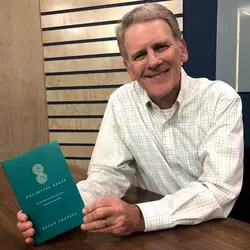
In Bryan Chapell's book, you will learn how God's unlimited grace leads us to heartfelt obedience and transforming joy. Explaining why grace is important and giving us tools to discover it in all of Scripture, Unlimited Grace helps us to see how gospel joy transforms our hearts and makes us passionate for Christ's purposes.
Past Episodes

Featured Offer
In Bryan Chapell's book, you will learn how God's unlimited grace leads us to heartfelt obedience and transforming joy. Explaining why grace is important and giving us tools to discover it in all of Scripture, Unlimited Grace helps us to see how gospel joy transforms our hearts and makes us passionate for Christ's purposes.
About Unlimited Grace
About Bryan Chapell
Bryan Chapell, Ph.D. is the Stated Clerk Pro Tempore of the Presbyterian Church in America (PCA), based in Lawrenceville, GA.
Dr. Chapell is an internationally renowned preacher, teacher, and speaker, and the author of many books, including Each for the Other, Holiness by Grace, Praying Backwards, The Gospel According to Daniel, The Hardest Sermons You’ll Ever Have to Preach, and Christ-Centered Preaching, a preaching textbook now in multiple editions and many languages that has established him as one of this generation’s foremost teachers of homiletics.
Dr. Chapell is passionate about sharing the truth of God's grace with others, because it provides the freedom and fuel for transformed lives of joy and peace.
He and his wife, Kathy, have four adult children, a growing number of grandchildren, and lives rich with friends, fishing and faith.
Contact Unlimited Grace with Bryan Chapell
info@unlimitedgrace.com