

At The End of Worry


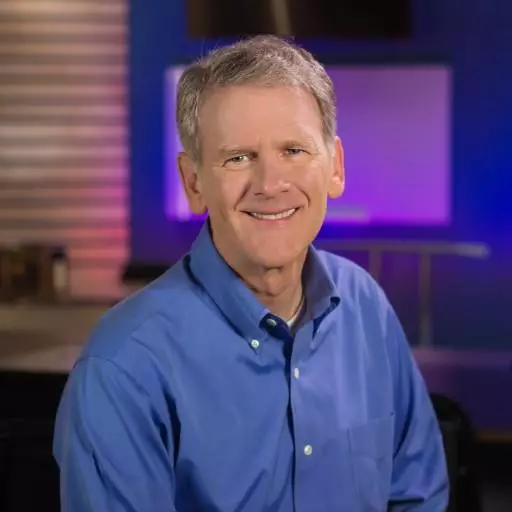
Pastor Bryan shares a lesson from Mattew 6. Dr. Chapell highlights the words of Jesus, who in His sermon on the mount tells us to not worry. In a world full of anxieties, we must turn to our Father in Heaven to find comfort and contentment.
Bryan Chapell: We are not being pointed to the circumstances of the earth, but to the character of God. And when we begin to look at the character of God and focus on that, His fatherly nature, His gracious nature of providing for those who cannot provide for themselves, if that's our focus, then we have some chance at peace even in a world of trouble.
Guest (Male): So glad you joined us for today's Unlimited Grace, the audio broadcast ministry of pastor and author Bryan Chapell. In today's episode, Pastor Bryan shares a lesson from Matthew chapter 6. Dr. Chapell highlights the words of Jesus, who in His sermon on the mount, tells us to not worry.
In a world full of anxieties, we must turn to our Father in heaven to find comfort and contentment. You can find this lesson and many others when you visit unlimitedgrace.com. And while you're there, check out the new daily devotional from Pastor Bryan. Throughout this year, Dr. Chapell will take you through the entire Bible with a new devotional each day as we discover the ways that God's redeeming grace unfolds throughout all of scripture. Let's hear now from Dr. Bryan Chapell as he shares the lesson, At The End of Worry.
Bryan Chapell: So, don't worry, be happy. Now, if a Caribbean singer with a big smile and a catchy tune includes those words, I smile. But if the creator God, who examines my heart and will judge my soul, says to me, don't worry, then I worry. I mean, I can't help it. How do you not worry? If you're told not to worry, don't you now start to worry about not worrying?
And there's plenty to worry about. I mean, I just kind of go over the events of my life in this last week. When Katie has car trouble going from St. Louis to Peoria, then I worry for my daughter. And when I recognize that I'm seeking to serve a church that's in the midst of a campaign to pay off a large debt at the same time that we are in a very tight budget trying to maintain ministry, I worry.
And when I'm told that because of my great preaching, I'm expected now to grow the church so we have no more worries, I really worry. And I have a feeling I'm not alone. My concerns pale compared to the parents who have seriously ill children, or to the children who have increasingly dependent parents. To the business leader who is struggling to maintain a company responsible for dozens, maybe hundreds of families in a time of economic stress. Or just an independent contractor who's trying to feed his family in a time of economic depression where there are not contracts to be had.
Not worry? Really? Just saying "don't" doesn't make it so. In fact, if you tell me "don't worry", I worry. The Savior helps us. He helps us in this very passage where three times He gives this sweet but awful command, do not be anxious, don't worry. By using those commands to bracket three key words that are meant to help us in a world full of anxieties. Those three key words are: Father, Faith, and Tomorrow.
The need of a heavenly Father's care occurs as you just consider what this passage is and its placement in the word of God. Yes, Jesus clearly says, verse 25, do not be anxious about your life. But that command in itself is in the midst of another set of commands that we may forget about in the sermon on the mount. Do you know why?
Because most of us know or we've seen in Sunday school literature, if not actual pictures of having been taken in our day's age, this setting for the sermon on the mount is an absolutely beautiful setting. Have some of you been to Israel and actually been to the Temple of the Beatitudes? Some of you have been and you know this is one of the most beautiful places in the world.
I mean, you're on this gentle sloping hillside above the Sea of Galilee, which on a sunny day is just like this blue azure jewel of water. And then on this hillside, there really are wonderful wildflowers growing in abundance. And even now, there is one of the world's most beautiful churches on top of this hillside. It is an absolutely lovely place and can make us think of how sweet and lovely is the sermon on the mount until we actually read the words.
Do you recognize that in this sermon on the mount, what Jesus is doing is He is elevating the law of God to such a high level that it is meant to actually crush the hearts of God's people? When you feel the burden of "do not worry", you have just felt, as it were, the apex of the number of worries that Jesus has actually put in progress that should be happening in your heart.
After all, remember what this sermon on the mount is. Jesus is taking the Old Testament law. Remember the refrain He uses? You have heard it said, but I say to you, and He's actually heightening the expectation of what God says is required for holiness. Because He says the religious leaders of His time had taken the law and just put it in legalistic terms.
And He's saying, I'm not ultimately concerned for just your legalistic observance for the law, I'm concerned for what your heart actually needs to observe in order to follow the law of God. You want to see? Just back up a little into the sermon on the mount and look at words that you already know. This part about not being anxious is toward the end of chapter 6.
But if you will go to verse 12 of chapter 6, you're right in the midst of the Lord's prayer, where one of the phrases that worries us the most appears. Father, forgive us our debts as what? As we forgive those who sin against us. Oh my, really? Is that the standard? And of course, that's not all that we have learned in the sermon on the mount. If you will go back into the fifth chapter and look at the 44th verse.
Jesus says, after saying you have heard you shall love your neighbor and hate your enemy, verse 44, but I say to you, love your enemy and pray for those who persecute you. Do you feel the crush? Do you feel the weight? There is more. If you back up a little bit further, you can go to verse 38. You have heard it said, an eye for an eye and a tooth for a tooth, but I say to you, verse 39 of chapter 5, do not resist the one who is evil.
But if anyone slaps you on the right cheek, turn to him the other also. People hurt you, insult you, hurt your family, turn the other cheek that they may feel the weight of what they're doing. But this is what you are to do for their sake. But don't worry. Really?
Go back even further, verse 27 of chapter 5. You have heard that it was said, you shall not commit adultery, but I say to you that everyone who looks at a woman with lustful intent has already committed adultery in his heart. Don't even look in a way that is not honoring the purity that the Lord intends for your marriage and your relationships.
You can back up further, verse 21 of chapter 5. You have heard that it was said to those of old, you shall not murder, and whoever murders shall be liable to judgment. Well, I'm not very worried, I haven't murdered anybody. But then there comes verse 22, but I say to you that everyone who is angry with his brother will be liable to judgment. Whoever insults his brother will be liable to the council, and whoever says, "you fool", will be liable to the hell of fire.
Did you ever call someone foolish? Did you ever call them a bad name? Danger. Eternal danger. And if you haven't felt it by those words, you would certainly feel it by chapter 5 and verse 20. Jesus says, for I tell you, unless your righteousness exceeds that of the scribes and the Pharisees, you will never enter the kingdom of God.
He doesn't say if your righteousness meets the standards of the Pharisees, if you will legalistically observe the law and not murder and not kill and not commit. He says unless your righteousness exceeds that of the Pharisees and you actually have no anger toward your brother, and do not identify other people as foolish, and do not have lust in your heart, and actually have forgiven people as you have been forgiven, then you qualify for heaven. Now you're not worried, are you?
No, suddenly all of us feel the amazing crush of the requirements of God. And that is actually what is meant to happen because we are meant to understand we cannot take care of this problem. Someone else has to. And that is why Jesus begins to turn our eyes, not to our accomplishments, but to our Father.
Guest (Male): It may seem hard for younger Christians to believe, but people over 50 were raised during an era when 90% of Americans identified as Christian. These older believers were once part of a majority group that understood the mission of the church was to take control of our culture, to halt its evils.
At the same time, Christians under 50 have lived their entire lives perceiving themselves as a minority that needs to make credible their faith to a secular, pluralistic culture. These distinct experiences and perceptions have a profound impact on the priorities different generations have for church ministry. It's no wonder that younger and older believers don't always see eye to eye.
In his new book, The Multigenerational Church Crisis, Dr. Bryan Chapell asks the question, "What could be accomplished in the name of Christ if we could better understand each other?" This practical and hopeful book is backed by thorough research, revealing how to open the lines of communication, appreciate the experiences that shaped each generation in your church, and unite in one mission to impact your community and the world.
You can request your copy of The Multigenerational Church Crisis when you donate online at unlimitedgrace.com or by calling 844-41-GRACE. That's 844-414-7223. And now, more from Bryan Chapell on today's Unlimited Grace.
Bryan Chapell: If you let your eyes go back to chapter 6 and verse 24, you may remember that Jesus begins by saying no one can serve two masters. He will hate the one and love the other, he'll be devoted to the one and despise the other. You cannot serve God and money. Now, the translators of that word "money" have actually taken the Greek word for "mammon", which means earthly priorities. It's really a larger concept than money itself.
And He's simply saying, if you're depending on the things of earth to rescue, to get you out of worry, that's not going to work. Why won't it work? Because you've already recognized how high are the requirements of God that you cannot meet. You're going to need someone to take care of this for you. Who takes care of things that cannot take care of themselves? Well, you know the answer to that. Verse 26, look at the birds of the air.
They neither sow nor reap nor gather into barns, and yet your heavenly Father feeds them. Are you not of more value than they? What's Jesus telling us? Not just the need of a Father, but ultimately the nature of a Father. He is the one who has already provided for you. That was what the end of verse 25 was about. Is not life more than food, and body more than clothing?
If you're worried about food and clothing, that means you already have life and a body. And if God's already provided you life and a body, He's already given you the more important things. Now, I confess to you while that's the argument, it doesn't comfort me a lot. And so Jesus expands the argument. He hasn't just given you life and a body. Look at the things He takes care of. The birds. They can't take care of themselves.
They don't sow or gather into barns, yet your Father takes care of them. And then a less animate set of objects is chosen next, remember, verse 28? And why are you anxious about clothing? Consider the lilies of the field, how they grow. They neither toil nor spin, yet I tell you, even Solomon in all of his glory was not arrayed like one of these.
What is the common denominator of birds and flowers? They can't take care of themselves. But they are taken care of by God. What we're being told of here is simply the nature of the grace of the heavenly Father. He provides for those who cannot provide for themselves. Who are those people? We're those people. Really? Never lust, never be angry, never worry. Is that really who you are?
If you cannot provide that for yourself, someone else is going to have to provide it. And that notion of a heavenly Father who would be willing to provide what you cannot provide for yourself is the beginning of the comfort. It's not the end of trial, but it is the beginning of comfort.
Listen, some of us parents are in the position now of getting ready for the next few weeks for our children to go off to college. And I've told each of my children, including this last one who will be going to college for the first time, my own experience of going to college for the first time. I was going to a college that I had never visited in a town I had never been in. And I was excited.
And I can remember putting all my worldly possessions into the back seat and the trunk of our family car. By the way, a lot of my worldly possessions take more space than that now. But I got all my worldly possessions into the car and my dad drove me, going up Highway 55 from St. Louis to Chicago. And I was so excited. I can remember the beginning of that journey, just talking and laughing and being happy.
And then as we got further and further from home and closer and closer to the place I did not know, I got quieter and quieter until my dad finally looked at me and he said, "You're scared, aren't you?" And I said, "I am. I'm scared." And then my father did something that I have told each of my children. Driving up Highway 55, he pulled out of the main highway onto the median, stopped the car, turned the engine off, and turned toward me.
He said, "Now, you look at me. I don't know what's going to happen at that school. I don't know if you'll do well or if you'll do poorly. But you are my son and nothing is going to change that. And if you do well or if you do poorly, you always have a place in my home. I am your father. You are mine. And nothing will ever change that."
Did it make all my trials go away? No. But it gave me a peace to know of my father's care regardless of what came. It's what Jesus is sweetly and wonderfully doing in this place. He over and over again is making us aware of the trials that we do face and will face. And yet saying at the same time, remember the nature of your Father. He provides for people who cannot provide for themselves.
You are such people, even as the birds and the lilies are such things. If God so takes care of them, do not doubt that He, your Father, will take care of you too, even if there may be trials that come. If that is what is being promised to us, how do we claim that Father nature for our own heart's peace?
Well, Jesus tells us that too. It's really the end of verse 30. Jesus concludes talking about the birds and the flowers by saying, verse 30, if God so clothes the grass of the field, which today is alive and tomorrow is thrown into the oven, will He not much more clothe you, O you of little faith?
What Jesus is asking us to do is to put our faith in the character of the Father rather than the character of our circumstances. He hasn't pointed to the birds and to the lilies to simply say, listen, there won't be another trial. He actually says, remember the lilies go into the oven at some point. And we're going to learn a little bit later in the passage, tomorrow has its own share of trouble.
We are not being pointed to the circumstances of the earth, but to the character of God. And when we begin to look at the character of God and focus on that, His fatherly nature, His gracious nature of providing for those who cannot provide for themselves, if that's our focus, then we have some chance at peace even in a world of trouble.
Let me just confess to you this week how I rediscovered it. Some of you now that we're here have seen me out on the road. So my morning activity is to exercise by running. I know it looks more like walking, but going down the roads at a quick pace. And I listen to scripture verses, that's my form of doing devotions. So it's listening to scripture and often what can happen when I'm going down the roads and focusing on scripture is my mind loves to think on the things of God.
But I would have to confess to you that's not always where my mind goes. When I'm just out by myself and not forced to think about other things, sometimes my mind begins to wind about the difficulties and the challenges of my week or days or upcoming days. That's where I was this week. Now listen, moving you all have made very sweet for us.
But there's not a person in the room who doesn't know moving has its own trials and traumas, right? I mean, there are just things that happen. And as I was going down my exercise path this past week, there was a particular morning in which I don't know how to tell you I was just winding down and down and down. Yesterday's challenges, tomorrow's challenges, I was going into a deeper and darker place with virtually every step.
And then, as I was working on this sermon, which is what I was supposed to be thinking about, I passed this little patch of wildflowers. I mean, this wonderful quilt of Queen Anne's lace with blue appliqué morning glories coming up. And I suddenly thought, if God so takes care of the flowers, and I'm thinking, that's what I'm supposed to be believing.
But what I have to remember is why did God do this and how did God do this? I mean, think of it. I'm now kind of down at the bottom of this pit of worry. And at this very moment, I have passed this patch of wildflowers, which is not in most of my other path. So somehow the Lord had to time my pace and make these flowers bloom right in this place.
And I begin to think now, when did the seeds actually have to fall from these flowers and their parents before them? So they would be blooming right at this point that I'm right in this step that I see them right now when I need them. And by the way, when did those parent flowers have to have parent flowers that would? And you begin to go through this infinite regress.
And you begin to say God had this wonderful convergence of His providences to give me the opportunity just to be reminded of the beauty of the flowers that He takes care of at this very moment that I'm wondering about His care for me. And suddenly I have to think, God planned this not just hours ago or days ago, but who knows, maybe millennia ago, just to comfort my heart in this moment that I need it. I love thinking not just about the character of my circumstances, but the character of my God.
Guest (Male): That's Pastor Bryan Chapell, and you've been listening to Unlimited Grace. If this message has been an encouragement to you, you can find a collection of more valuable resources at unlimitedgrace.com. When you visit, you will find today's message and many others from Pastor Bryan. While you're there, make sure to sign up for Pastor Bryan's daily devotional, sent right to your inbox.
Once again, go to unlimitedgrace.com or you can give by calling 844-41-GRACE. That's 844-414-7223. Please be sure to join us next time as once again, we endeavor to put Christ at the center of our efforts so that lives might be transformed by His unlimited grace. This ministry is brought to you by Unlimited Grace Media and continues to be made possible with your generous financial support.
Featured Offer

In Bryan Chapell's book, you will learn how God's unlimited grace leads us to heartfelt obedience and transforming joy. Explaining why grace is important and giving us tools to discover it in all of Scripture, Unlimited Grace helps us to see how gospel joy transforms our hearts and makes us passionate for Christ's purposes.
Past Episodes

Featured Offer
In Bryan Chapell's book, you will learn how God's unlimited grace leads us to heartfelt obedience and transforming joy. Explaining why grace is important and giving us tools to discover it in all of Scripture, Unlimited Grace helps us to see how gospel joy transforms our hearts and makes us passionate for Christ's purposes.
About Unlimited Grace
About Bryan Chapell
Bryan Chapell, Ph.D. is the Stated Clerk Pro Tempore of the Presbyterian Church in America (PCA), based in Lawrenceville, GA.
Dr. Chapell is an internationally renowned preacher, teacher, and speaker, and the author of many books, including Each for the Other, Holiness by Grace, Praying Backwards, The Gospel According to Daniel, The Hardest Sermons You’ll Ever Have to Preach, and Christ-Centered Preaching, a preaching textbook now in multiple editions and many languages that has established him as one of this generation’s foremost teachers of homiletics.
Dr. Chapell is passionate about sharing the truth of God's grace with others, because it provides the freedom and fuel for transformed lives of joy and peace.
He and his wife, Kathy, have four adult children, a growing number of grandchildren, and lives rich with friends, fishing and faith.
Contact Unlimited Grace with Bryan Chapell
info@unlimitedgrace.com