

A 7-11 Song - Part 1


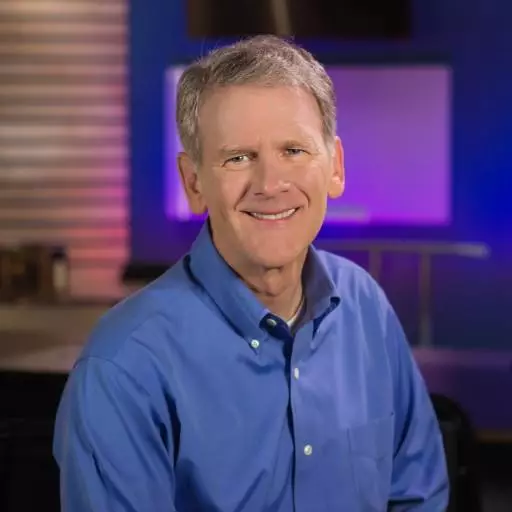
Pastor Bryan shares a lesson from Psalm 118. In this message Dr. Chapell reminds us of the faithfulness of God, even as the Psalmist repeatedly declares the Lord’s steadfast love to His people.
Bryan Chapell: For all its sin that crushes us, for all that is wrong about our circumstances inside and outside of us, God says my love is greater and it doesn't change. Bless the Lord, oh my soul, and all that is within me, bless his holy name and forget not his benefits.
Guest (Male): So glad you joined us for today's Unlimited Grace, the audio broadcast ministry of pastor and author Brian Chapel. In today's episode, pastor Brian shares a lesson from Psalm 118. In this message, Dr. Chapel reminds us of the faithfulness of God even as the psalmist repeatedly declares the Lord's steadfast love to his people. You can find this lesson and many others when you visit unlimitedgrace.com. And while you're there, look for pastor Brian's book, The Multi-Generational Church Crisis. This compelling book asks the question of the church, what could be accomplished in the name of Christ if we could better understand each other?
Let's hear now from Dr. Brian Chapel as he shares the lesson a 7-11 Psalm.
Bryan Chapell: The idea that repetition is part of God's worship hymnal is important for us to remember because of the way that we sometimes tease one another. Here's a cartoon just to remind you what we sometimes do to one another. One man asks another, hey, what do you do for a living? And the other responds, I write modern worship courses. I write modern worship courses. I write modern worship courses. I write modern We all know the 7-11 tease, don't we? That a worship song is just a 7-11 song, seven words 11 times over, right? Now there's a Christian blogger, John Mark Miller, who commented on this cartoon and I want to read you his comments.
He says this, a senior adult shared this cartoon with me a few weeks ago and he thought it was funny. As did a guest speaker at a ministry lunch a few days later and he thought it was funny. But I noticed not everyone laughed. Some grew quiet and withdrawn. Why the icy silence? Because we know this isn't a joke. It's a passive-aggressive attack on worship songs which speak to our hearts in a powerful way. And we've endured this sort of drive-by shooting more times than we can count. So just to be fair, here's the flip side of the worship debate.
You ready? Another cartoon. And this is a a man before an elaborate organ dressed to the hilt, we might note. And he says, for me, electric instruments like the guitar that the young man with the long hair is holding, for me, electric instruments just distract from the true focus of worship. And of course, we recognize he may have more distraction than he recognizes going for him. What are we demonstrating? But that sometimes our personal taste blind us to ourselves. Our unrecognized assumptions, even the contradictions in the principles that we don't recognize that we are projecting.
Yes, it's easy to tease one another for worship songs that have repetition and believe that those of high taste and high class don't do that and not really examine the classic handles Messiah in which the word Hallelujah, remember? Hallelujah, Hallelujah, Hallelujah, Hallelujah, Hallelujah, remember? 167 times. And not many people complain about it being a shallow and vapid worship song. You know, we we somehow give a break if it seems highbrow enough. Now there's no question that the Bible itself condemns vain repetition. The Bible itself does not commend what is shallow and inappropriately repetitious without thought.
But at the same time, the Bible clearly not only praises but exemplifies worship that has repetition in it. Why? Because of what the repetition accomplishes in the hearts of God's people when it is rightly used. What repetition is obvious here? We've already cited it in verse one. Oh, give thanks to the Lord for he is good, for his steadfast love endures forever. And then it's repeated four times. Why do you think? Clearly, one reason is for our memory. We repeat things so that things will be memorized. I mean, what is the obvious takeaway of this Psalm?
The steadfast love of the Lord endures forever. It's the beginning. It's the end. You're supposed to hear it and walk away with it. That's the idea. And it by the way, it not just the takeaway, it's the regular way that this Psalm was used. Yes, this Psalm was celebrated at the Passover of the people of God, particularly from the time that they had returned from being exiles in Babylon. So for 500 years up till the time of Christ, this Psalm would have been repeated every year and the phrase the steadfast love of the Lord endures forever.
If you are a Jewish child, by the time you are 20, you would have at least heard that phrase 100 times. And by the way, there are other Psalms that repeat it. You would have probably heard it at least 500 times, sinking deep into memory. The steadfast love of the Lord endures forever. You cannot forget that. And so we see here various people instructed to remember, right? First the nation, that's verse one. Then in general following the nation, Israel specifically in verse two. The worship leaders in verse three are to remember and say the steadfast love of the Lord endures forever.
Then individuals are themselves to remember the steadfast love of the Lord endures forever. Why do we do that? We do that because there are messages we want to sink deep into people. We do that with one another, right? If you're raising kids, some point early for their own safety, you teach them their address and phone number, right? Now I've had many phone numbers in my life, but I can remember the very first one I was taught when I was I don't know what, three or four, EX8 2048. And people go, what is EX? We used to have exchanges, remember?
EX8 2048. Where did you live? 995 Enfield. I had to remember. I forgot a lot of other things, but I remember those things from my childhood that were to be sticking. And we teach our kids those kinds of things. Remember your lunch money, right? Don't talk to strangers. Put on clean underwear. You might be in an accident. I don't even know what that means. You are precious to us. Drive carefully. Jesus loves you over and over and over again because he wanted to be part of the very fiber of people's being. And the psalmist and the Lord himself who inspired this word wanted to sink into us to memory beyond our forgetting the steadfast love of the Lord endures forever.
After the first service, one of the dear older couples came to me after the service and the wife said to me, her husband now spending lots of time in a hospital because he doesn't remember much of what's happening in life now. And she says he doesn't always even remember me. But when nurses came to help him this week, he sang to them how great thou art. Deeper than memory, deep in the fiber of our being, the steadfast love of the Lord endures forever. So when the fish don't bite and the sun don't shine and the job doesn't come and the relationship comes undone, when health crumbles and age creeps, when life is long and love seems lost, we remember the steadfast love of the Lord never ceases.
His mercies never come to an end. They are new every morning. New every morning. Great is thy faithfulness, oh Lord. Great is thy faithfulness. Just remember that. It's worth repeating. The steadfast love of the Lord endures forever.
Guest (Male): You're listening to Unlimited Grace, the audio broadcast ministry of pastor and author Brian Chapel. It may seem hard for younger Christians to believe, but people over 50 were raised during an era when 90% of Americans identified as Christian. These older believers were once part of a majority group that understood the mission of the church was to take control of our culture, to halt its evils. At the same time, Christians under 50 have lived their entire lives perceiving themselves as a minority that needs to make credible their faith to a secular pluralistic culture. These distinct experiences and perceptions have a profound impact on the priorities different generations have for church ministry.
It's no wonder that younger and older believers don't always see eye to eye. In his new book, The Multi-Generational Church Crisis, Dr. Brian Chapel asks the question, what could be accomplished in the name of Christ if we could better understand each other? This practical and hopeful book is backed by thorough research revealing how to open the lines of communication, appreciate the experiences that shaped each generation in your church, and unite in one mission to impact your community and the world. You can request your copy of the Multi-Generational Church Crisis when you donate online at unlimitedgrace.com or by calling 844-41-Grace.
That's 844-414-7223. And now more from Brian Chapel on today's Unlimited Grace.
Bryan Chapell: We repeat things that we want others to remember and we emphasize the repetition when we believe it will actually save lives. We emphasize to save lives even if we don't always recognize when the information may be used. We say to children, we teach them, if it ever happens to you, if your clothes ever catch on fire, don't run. Stop, drop, and roll. What do you do? Will you ever need I don't know, but if you need it to save your life, stop, drop, and roll. If someone falls in the water, if they 're not swimming and you need to help them, don't make your first effort to jump in after them.
Both of you might drown. Instead, reach, throw, row, go. Reach first. Then what happen, throw. Then row. Then go. Why? Because lives are at stake. And so we teach things that we want to be remembered with emphasis. And the psalmist is doing exactly the same thing. He says in verse five, distress comes. Out of my distress, I called on the Lord and the Lord answered me. I want to emphasize that as much as the steadfast love of the Lord endures forever, we are in a real world and I want you to remember it when the distress may come.
And what are you to remember in that time of distress? But verse six, the Lord is on my side. I will not fear. What can man do to me? The Lord is on my side. There it is again. As my helper, I shall look in triumph on those who hate me. Now as believers who have understanding, we recognize that phrase, the Lord is on my side, has been hijacked by men and movements to justify aggression and selfish gain. And we have to just acknowledge that. But having said that a phrase out of the Scriptures can be misused is not to take away from us that this is one of the core verses expressing what a covenant God does for his people.
I am on your side, particularly to the people of Israel at this time when they are receiving a word after their sin has led them into slavery from what God once released them. Now again in exile, in slavery, trying to build a nation again and to hear God say to a rebellious, sinful, backward people who don't even remember their own history, I'm on your side. I'm for you. I am your advocate. I do not want you to forget that. It's the heart of a covenant-keeping God to say I am yours. I'm for you now. Next week, we'll probably have a lot of young people back here going to college again, a lot of young people starting school even this past week.
I think of a year ago when the president of Wheaton College, Phil Ryken, a friend of some of you in the room and a friend of Kathy and me surprised new students and parents with a shocking sermon. The president of Wheaton College, a Christian school, said to students and to parents that because of the pressures of fundraising which had become so intense, of trying to be a Christian school and increasingly secular culture, trying to maintain accreditation from secular agencies, trying at the same time to maintain peace in the faculty, dealing with all those issues that he was at the same time dealing with personal issues, he said that the previous semester, not years ago, not not not way back in his youth, just the previous semester, he had considered taking his own life.
That the pressures and the intensity had become so great that he could not take it anymore. He talked about his own parents coming and while he lay on the floor putting their hands on him and praying for him of how believers and friends prayed for him, how his wife because he could not sleep at night would stay up and read the Psalms to him just to give some respite to his soul so that he could have enough peace that he could sleep. The steadfast love of the Lord endures forever. I'm on your side. I am your helper.
I will be with you so that he could sleep. Some of you know those those words, those nights. I was hard pressed. The enemy was around me on every side. I couldn't I couldn't stop thinking of those things. The darkness was closing in. And it's in that distress that the Lord says not only remember, but I want you to hear with emphasis, with the repetition that makes it sink into your heart, the steadfast love of the Lord endures forever. I am for you. I am on your side. And the depth of that is in verse seven as the Lord actually uses the word, the Lord is on my side as my helper.
I I know it's simple words in English, but I want some of you to remember when the first time that word is used in the Bible. Genesis 2 in verse 18 as God looks at Adam and says it is not good for a man to be alone. And so I will provide a helper who is fit, who is suited for him, an an intimate, effectual one to be with him, one who becomes one with him, one one who supports and lifts up and is intended to make life good. And what God promised through the marital relationship he is now saying about himself, I am so for you that that closer than a brother, closer than a friend, I come to be your helper with with infinite intimacy and care saying, I'm for you now.
So that you remember with emphasis what he says, it's because when distress comes, we have to remember verses eight and nine. It is better to take refuge therefore in the Lord than to trust in man. It is better to take refuge in the Lord than to trust in in princes. We we hear with such emphasis the Lord is our advocate that the Lord is going to endure in his steadfast love. And the reason we have to hear that is because of the contrast in a real world. Danger will come. Verse 10, all nations surrounded me.
Verse 11, they surrounded me, surrounded me on every side. Verse 12, they surrounded me like bees. Some of you recognize why the repetition is here, the reality of a world in which you are surrounded by opposition, in which in which day and night you can't help thinking about it, in which the thoughts and the opposition and the the worry is like bees stinging you. You can't get out of your hair. You can't get out of your eye. It's just coming at you all the time. And that reality is stated by the psalmist so clearly. We sing similar things.
When I was sinking down, sinking down, sinking down, when I was sinking down, sinking down under God's righteous frown. Christ Jesus gave his crown for my soul, for my soul. We just have to repeat it sometimes. Lord, I'm just surrounded. You can't be in a a position of responsibility or authority without at times knowing what it means just to be surrounded. Think think of the various people who through the ages are singing this Psalm to one another in worship. Surely early on, it was the Israelites who were actually in slavery in Babylon. They have been taken from the promised land because of their rebellion.
Their king has been killed. They have been put in lines, the men with fish hooks in their lips to take them to a foreign land. Now they are entirely surrounded by an enemy who oppresses them, who enslaves them. And they sing, I am surrounded by my enemy. And then finally when they are released a generation later, they go back and remember to rebuild Jerusalem with Nehemiah. But the nations surround them and mock them and laugh at them and will not help them. Why are you building a wall? Do you think that you measly little Israelites can defend yourself against us?
And then later in the upper room, it is the disciples with the Jewish leaders who are threatening to arrest them and to arrest their leader. And they are saying, we are surrounded. We are surrounded. But no less reality is Jesus himself who leads in the worship Psalm, who actually Can you imagine Jesus saying the words, verse 11, they surrounded me on every side, surrounded me. They surrounded me like bees. Verse 13, I was pushed hard so that I was falling. Oh Lord, take this cup from me. But not my will, your will be done. I was pushed hard and all the enemy surrounds me.
Our hearts somehow know the necessity of not just echoing the goodness, but echoing the reality of the distress. And the psalmist actually allows us to do it. It was so hard. It pushed me hard. But the end of 13 is so beautiful. But the Lord helped me. There's the language of helper again. Even in the midst of the struggle, even the midst of the pain, the Lord is there to help. He is my helper. He's not waiting for me to get it fixed. He's not waiting for the enemy entirely to But he's here to help.
And that we may need to remember many times present and future. Heavenly Father, the Holy Spirit, inspire those who wrote these Scriptures so that we would know your divine nature and your heart of compassion. You wanted people like us in every situation and generation to know your heart and your power to help us. So we pray for that power and that love right now. Assure us of grace that is greater than all our sin and of Christ's power to rescue us from circumstances we can't figure out or control. We ask you to forgive us so that we can live for you.
And we ask you to change our hearts so that fear and anger, anxiety and resentment fade into the distance because we are so close to you. Assure us that whatever is troubling us is no surprise to you. We know you now and we know you've got this and you've got us in the palm of your hand. We are loved and secure forever. So now we rest our hearts in your heart in Jesus' name. Amen.
Guest (Male): That's pastor Brian Chapel and you've been listening to Unlimited Grace. If you've been blessed by this message and would like to hear more from Dr. Chapel, I would encourage you to visit unlimitedgrace.com. In addition to messages from pastor Brian, you can explore the many sermons, podcasts, seminars, and more available to you. Please be sure to join us next time as once again we endeavor to put Christ at the center of our efforts so that lives might be transformed by his Unlimited Grace. This ministry is brought to you by Unlimited Grace Media and continues to be made possible with your generous financial support.
Featured Offer

In Bryan Chapell's book, you will learn how God's unlimited grace leads us to heartfelt obedience and transforming joy. Explaining why grace is important and giving us tools to discover it in all of Scripture, Unlimited Grace helps us to see how gospel joy transforms our hearts and makes us passionate for Christ's purposes.
Past Episodes

Featured Offer
In Bryan Chapell's book, you will learn how God's unlimited grace leads us to heartfelt obedience and transforming joy. Explaining why grace is important and giving us tools to discover it in all of Scripture, Unlimited Grace helps us to see how gospel joy transforms our hearts and makes us passionate for Christ's purposes.
About Unlimited Grace
About Bryan Chapell
Bryan Chapell, Ph.D. is the Stated Clerk Pro Tempore of the Presbyterian Church in America (PCA), based in Lawrenceville, GA.
Dr. Chapell is an internationally renowned preacher, teacher, and speaker, and the author of many books, including Each for the Other, Holiness by Grace, Praying Backwards, The Gospel According to Daniel, The Hardest Sermons You’ll Ever Have to Preach, and Christ-Centered Preaching, a preaching textbook now in multiple editions and many languages that has established him as one of this generation’s foremost teachers of homiletics.
Dr. Chapell is passionate about sharing the truth of God's grace with others, because it provides the freedom and fuel for transformed lives of joy and peace.
He and his wife, Kathy, have four adult children, a growing number of grandchildren, and lives rich with friends, fishing and faith.
Contact Unlimited Grace with Bryan Chapell
info@unlimitedgrace.com