

When Your Marriage Is Struggling, Part 2


The bottom line is this; where do you turn when you have a marriage struggle? You turn to Jesus Christ, the truth of his word and to the help and encouragement of God's people.
JP Jones: The bottom line is this: Where do you turn when you have a marriage struggle? You turn to Jesus Christ, you turn to the truth of His Word, and you turn to the help and encouragement of God's people.
Greg: Thank you for joining us on Truth That Changes Lives. Pastor JP Jones is the senior pastor of Crossline Community Church in Laguna Hills, California, and a professor in biblical studies at Biola University. Today on Truth That Changes Lives, Pastor JP will be giving us a message from a series entitled, "Where Do You Turn?" Let's listen in as JP gives part two of "When Your Marriage Is Struggling."
JP Jones: In Ephesians chapter 5 and 6—we're in Ephesians 5—it talks about marriage and how it represents Christ and the church. It covers how a husband ought to love his wife and how a wife ought to submit to her husband, and that both of those sacrificial acts are a reflection of Christ's love for us. This marriage relationship is so powerful. It's not surprising that right after that, it says, "Finally, be strong in the Lord and the strength of His might. Put on the full armor of God, that you stand firm against the schemes of the devil. For our struggle is not against flesh and blood, but against powers and authorities and spiritual forces in dark places."
Well, why would we think our struggle is against flesh and blood? Because that's where we feel it. And what's the flesh and blood context where we feel it the most? Marriage. There's a cosmic spiritual battle that creates the context for the struggles we all face.
Here's a second observation: Sin had an immediate effect on the human race. As soon as they rebelled, they recognized they were naked, they hid from God, and they hid from each other. It had an immediate effect. That hiding precipitated the next effect of sin, and that was blaming. God knew what went on. God saw what happened, but wanted to engage them in a dialogue to bring them back to restoration, back to relationship. So, He asked them what happened. Rather than owning up, what did they do? They blamed. Adam blamed Eve, and Eve blamed Satan.
In effect, they both were blaming God because Eve was provided for Adam by God, and Satan had been created by God. She said, "The serpent that You created." Some of us are more sophisticated in our spiritual cover-up, so we just get mad at our spouse, or we get mad at our boss, or we get mad at circumstances, or we get mad at the government. Some of us are actually a little more honest; we just get mad at God.
What happened as a result of sin was an immediate feeling of shame. Not just "I did something wrong," but "There's something wrong with me." So, I've got to cover myself up. Then when God started probing a little bit and asking about it, that shame caused a defensiveness, which was demonstrated in blaming. Shame and blame—that's what plagues all of us in our life and in our marriage. It's what takes us down.
Several years ago, I was pastoring a church up in Thousand Oaks. It was my first job as a senior pastor. I was a young guy, and I had been working in parachurch ministry, working with Campus Crusade for Christ, and had seen a lot of great success and fruit working with young people. Now I'm pastoring a church, and it was a church in a lot of change. All of a sudden, I had become the change manager.
There were some people in the church who didn't like some of the decisions I was making, and they vocalized and expressed it. I internalized that, and it made me mad. In a conversation with my wife at one point in time, she said, "You know, you've got a lot of anger." I wasn't a person who normally had a lot of anger, and I wasn't a person who had a lot of skills knowing how to deal with my anger.
There was a guy in our church who was a Christian counselor. On numerous occasions, I had encouraged people to go see him. So, I gave him a call and said, "We need to get together." He said, "Yeah, where do you want to have lunch?" I said, "No, we need to get together." He said, "Oh, okay." So, I met with him and started unpacking what I thought was maybe going on. He knew about the church, so he was very much aware of some of the expectations and communication styles that people had. I didn't have to convince him of that.
Then he said, "What I want to know is—you don't have to convince me of this stuff—what I want to know is why is that triggering in you whatever it's triggering in you?" So, he started asking me about my background and how I was raised and stuff like that. He said, "Well, tell me. Can you remember a time when you felt bad?" Right away, something came to my mind. I said, "Yeah." He said, "Well, tell me about it."
I started talking to him about a time I was maybe about eight years old, and my dad had been diagnosed with cancer. He had had a surgery where they removed one of his lungs, and he was home. We were kind of a lower-middle-class family to begin with, and he'd been out of work. There was no means to provide for us, so we were really hurting as a family.
I had come home from school, and my mom and my dad were having a fight. My dad was making this statement that he was going to take care of our family, and he was doing it with a really angry tone of voice and with a real forcefulness. I was explaining this, remembering this story, and I was telling the counselor about it. I said, "I remember I looked at my dad, and I said, 'Daddy, if you're going to get a job, how come you're always home?'"
Then he got really mad and said, "I'm going to take care of this family, and nobody needs to worry!" All of a sudden, I'm telling the story—I'm just telling the story—and then the counselor says, "Do you hear yourself?" I said, "What?" He said, "Well, are you hearing yourself?" And I said, "What?" It's funny, but that is actually how I said it. I said, "What?" He said, "Listen to how you're talking." I said, "What?" He said, "You're talking like an eight-year-old boy."
As I began to tell the story, somewhere in telling it, I was that eight-year-old boy. He said, "You know what, JP? You don't have an anger problem. You have a shame problem because somewhere along the line, as a little eight-year-old boy, you felt like you were responsible for your dad's feelings. You've grown up to be a person feeling like it's up to you to make other people feel good."
"You're in a church where people don't feel good. It has nothing to do with you, but when they project that they don't feel good, you feel like it's your responsibility to make them feel good. So, you feel bad. You feel like you're a bad pastor because there are people who aren't feeling good. If you were a good pastor, everybody would feel good. The way you're processing that is you're getting mad at the people who are making you feel bad about yourself."
"But the problem is not those people; it's that you've got to get over feeling bad about the fact that other people don't like all the things that you're doing." I'm telling this to my buddy here who's a counselor who's helping me. Right? This is good stuff right now. Am I sharing good stuff? Yeah. I'm really vulnerable right now. I just laid it all out, right?
What's the point? That was tremendously insightful for me. I met with him probably about six, seven, eight more times, and he said, "JP, you've got great clarity about what's going on here. I think now you maybe have some tools to do something about it. You'll probably struggle with this for the rest of your life because you're the kind of person who cares about people. You want people to feel good, and you want people to like you. Welcome to the club."
"But you need to recognize what triggers some things. When you start feeling anger, let that be like a trigger. Something is happening that really is making me feel bad about myself, and I'm processing it with this. So, don't necessarily deal with the symptom; get back to what the issue is." What's the issue? Shame. We all have it at some level or another, and then it affects our marriages. The early couple, what they did was deflect their shame by blaming. Why? Because they were sinners.
We do the same thing. Why? Because we're sinners. Every one of us. Everybody who's married is a sinner. Everybody who's single is a sinner. Everybody who's been through divorce is a sinner. Everybody who's lost a spouse is a sinner. Marriage is the union of two sinners. What do sinners do? Sin. That's why we struggle in our marriages. Is there hope? You bet. When we turn to Jesus Christ, the truth of His Word, and the love and encouragement of His people.
Marriage can be mutually satisfying when both partners follow God's plan. 1 Peter chapter 3 is an outline of God's plan. It says this: "Wives, in the same way be submissive to your husbands, so that if any of them do not believe the word, they may be won over without words by the behavior of their wives, when they see the purity and reverence of your lives. Your beauty should not come from outward adornment, such as braided hair and the wearing of gold jewelry and fine clothes. Instead, it should be that of your inner self, the unfading beauty of a gentle and quiet spirit, which is of great worth in God's sight."
"For this is the way the holy women of the past who put their hope in God used to make themselves beautiful. They were submissive to their own husbands, like Sarah, who obeyed Abraham and called him her master. You are her daughters if you do what is right and do not give way to fear. Husbands, in the same way be considerate as you live with your wives. Treat them with respect as the weaker partner, as heirs with you in the gracious gift of life, so that nothing will hinder your prayers."
"Finally, all of you live in harmony with one another. Be sympathetic, love as brothers, be compassionate and humble. Do not repay evil with evil or insult with insult, but with blessing, because to this you were called so that you may inherit a blessing. For whoever would love life and see good days must keep his tongue from evil and his lips from deceitful speech. He must turn from evil and do good; he must seek peace and pursue it. For the eyes of the Lord are on the righteous and his ears are attentive to their prayer, but the face of the Lord is against those who do evil."
Now, this passage makes sense when we observe two key things. First of all, a phrase that's repeated: "In the same way." It's repeated twice: in verse 1 and in verse 7. "Wives, in the same way." Verse 7, "Husbands, in the same way." Well, in what way? You read the last part of 1 Peter chapter 2, and it's all about Jesus and how He was unjustly treated. Yet, He responded with a submission to God's will and with a graciousness to those who were unjustly treating Him. God highly exalted Him as a result.
In the same way, you wives, this is how you ought to act. In the same way, you husbands, this is how you ought to act. In other words, there's going to be times when we feel we're unjustly treated. Wives, there are going to be times you feel like your husbands are unjustly treating you. Husbands, there are going to be times when you feel like your wives are unjustly treating you. So, when that happens, am I justified to do whatever I do? In the same way, you act like Jesus. That's the whole point. Wives, this is how you act like Jesus in a marriage. Husbands, this is how you act like Jesus in a marriage. Then there are some summary words at the end for all of you. Husbands and wives, this is the way you ought to act.
That's the first key to understanding the passage. Here's the second key: It's the promise of verses 9 and 10, where it says, "Because to this you were called so that you may inherit a blessing" and "Whoever would love life and see good days." In other words, the Bible is saying, if you'll do this, you will inherit a blessing and you'll see good days in your life. What is this? It's instructions about marriage.
So, the question is, do you want to have a marriage where you're blessed and you experience fullness of life? If you're married here today, or if you want to get married at some point in the future, if you want to be blessed and you want to experience a full life, raise your hand. Probably every one of us. This tells you how to do it. That's the key to understanding the passage.
Bottom line answer: How do you get blessed in your marriage and how do you experience fullness of life in your marriage? Well, in the same way. Act like Jesus. Specifically, it says some things to wives, specifically says some things to husbands, and says some things to both partners. Wives, submit to your husbands, and it even says don't be afraid.
I can understand why it says don't be afraid, because that's a fearful thing to submit yourself to somebody. Very fearful, because what are they going to do with my life if I submit to them? God is basically saying to wives, "Don't be afraid, because you're really submitting to Me, and I can take care of you."
To husbands, it says live with your wife in a considerate, understanding, fully—the word is *gnosis*; it means to fully, experientially know all the intricacies of your wife and all of what makes up her personality. Live with her in an understanding way. The NIV says "respect her." That's kind of a weak translation of the term in Greek, which is *time*. It means honor her. It's used in 1 Peter to talk about how we ought to treat Jesus—to honor Jesus. We are to honor our wives, men.
This passage is calling us to step out of a cultural expectation to supernatural living. The promise is we'll be blessed and see good life, you see. Then it says both parties, both of you, be considerate, be humble, be sympathetic. Don't return a curse with another curse; give a blessing instead. Seek peace, pursue it, keep your lips from speaking evil.
There's a lot of instruction in this passage. It's worth our reading it, meditating on it, praying about it, and exploring all the ways that we can put it into practice. But the bottom line is this: Where do you turn when you have a marriage struggle? You turn to Jesus Christ, you turn to the truth of His Word, and you turn to the help and encouragement of God's people.
This passage is a game plan for being blessed in your marriage, for seeing good life in your marriage. Don't read each other's mail, husband or wife. If you're a husband, don't read the stuff that's written to the wife. That's not your business; that's hers. You read the stuff that's written to you guys. Live with your wife in a considerate way. Honor her. Wives, don't read the stuff written to your husband. That's written to him. Read the stuff that's written to you. Just like Jesus submitted to some unjust people, maybe you feel like your husband doesn't deserve your respect and submission and commitment, but do it as unto Jesus and He'll take care of you. Both of you, without pointing the finger, be sympathetic and humble and considerate and encouraging and bless, and keep the old pie hole shut.
God's Word is hard, it's tough, and it smacks us upside the head, but it works. So, back to the bottom line: Where do you turn? You turn to Jesus Christ because He loves you, He died for you, He rose again from the dead, He'll forgive your sins, and He has the power to change your life. You turn to His Word because it's true, and it sets you free, and it's really a game plan for life and blessing. You turn to other people who can help you and encourage you and love you and hold you accountable. Whatever our issue in life, we can turn to Christ.
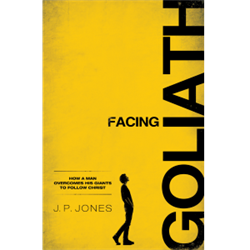
Greg: What a great message for all of us today. Pastor JP provides us with great insight. That is why we'd like to make it available to you on CD. Just get in touch and mention today's date. We'll send it your way for just five dollars. Or, if you'd like to support this ministry, you can write us at Truth That Changes Lives, 23331 Moulton Parkway, Laguna Hills, California, 92653. Or give us a call at 949-916-0250. That's 949-916-0250. For your gift of 25 dollars or more, we will send you a signed copy of JP's new book, "Facing Goliath."
Please join us every Sunday at 9:00 or 11:00 AM at Crossline Church in Laguna Hills. The address is 23331 Moulton Parkway, Laguna Hills, California, 92653. Or check us out on the web at crosslinechurch.com. We're going to get to the address and phone number again in a minute, but before we do that, Pastor JP, do you have any insight from today's message?
JP Jones: Thanks, Greg. Where do you turn when your marriage is struggling? Well, you turn to Christ and His truth and grace, and you turn to the body of Christ for encouragement and accountability. Every one of us needs the truth and grace that comes only through Jesus Christ, and every one of us needs the encouragement and accountability that comes from trusted friends we find in the body of Christ.
Jesus said this: The greatest commandment is to love God with all your heart, soul, mind, and strength, and to love your neighbor as you love yourself. We receive from God, and we receive from our neighbor what we need to be the people God has called us to be. We receive the resources we need to be the husband or the wife God wants us to be in our marriage.
When our marriages are struggling, we need God's game plan. This is what God says in Ephesians chapter 5: "Wives, submit to your husbands as to the Lord. For the husband is the head of the wife as Christ is the head of the church, His body, of which He is the Savior. Now as the church submits to Christ, so also wives should submit to their husbands in everything. Husbands, love your wives, just as Christ loved the church and gave Himself up for her to make her holy, cleansing her by the washing with water through the word, and to present her to Himself as a radiant church, without stain or wrinkle or any other blemish, but holy and blameless."
"In this same way, husbands ought to love their wives as their own bodies. He who loves his wife loves himself. After all, no one ever hated his own body, but he feeds and cares for it, just as Christ does the church—for we are members of His body. 'For this reason a man will leave his father and mother and be united to his wife, and the two will become one flesh.' This is a profound mystery—but I am talking about Christ and the church. However, each one of you must also love his wife as he loves himself, and the wife must respect her husband."
This is God's game plan for marriage. We need the truth of God's Word to set us free. We need the grace of Jesus Christ to cover us in our sin. We need the strength of Christ to support us. We need the encouragement and accountability of the body of Christ to call us to put this Word into practice. Where do you turn when your marriage is struggling?
Men, you need to turn to Jesus Christ so that you love your wife as Christ loved the church. Women, you need to turn to Jesus Christ so that you respect your husband, so that you submit to your husband, as the church submits to Christ. These are high callings. In fact, they're supernatural callings. In and of ourselves, we don't have the resources to live them out.
But in Christ and through the encouragement of the body of Christ, we can be the people God has called us to be. When we're struggling, we shouldn't turn to the world. We shouldn't turn to some self-help book. We shouldn't turn to some thing to help us. We should turn to Jesus, and we should turn to God's people so that with truth and grace, we can see He, and He alone, change our marriage.
Jesus Christ has a game plan for our lives, a game plan for our marriage, and when we turn to Him, He gives us the truth and the grace that will sustain us, support us, and heal us. If you want the kind of marriage that only God can give you, would you ask Him to give it to you? Would you surrender to His will? Would you seek the help of trusted friends to hold you accountable and to encourage you? If that's your desire, I invite you to pray with me right now.
Lord Jesus, be the Lord of my life and be the Lord of my marriage. Help me be the kind of person that with truth and grace moves toward You and moves toward my spouse. And I pray for that in Jesus' name. Amen.
Greg: We want to help you in your relationship with Christ. Please get in touch with us at Truth That Changes Lives, 23331 Moulton Parkway, Laguna Hills, California, 92653. Or call us at 949-916-0250. On the internet, you will find us at crosslinechurch.com. We hope to see you at one of our services every Sunday at our new campus in Laguna Hills. For more information and directions, please go to crosslinechurch.com. Please join us next time on Truth That Changes Lives.
Featured Offer
Past Episodes

Featured Offer
About Truth That Changes Lives
About JP Jones
JP Jones is the founding Senior Pastor of Crossline Church in Laguna Hills, CA. Beginning with 16 people, Crossline has grown to a congregation of over 2,000 in 10 years. This growth has come largely through people receiving Christ and joining the church. JP is a dynamic and articulate Bible teacher with a passion to see people come to Christ and grow into being multiplying disciples for Jesus. JP began his ministry career with Campus Crusade for Christ and continues to have a heart for the Great Commission. Traveling on mission trips all over the world, JP preaches the gospel and trains pastors to be reproducing spiritual leaders.
For the past 25 years, JP has been an Adjunct Professor of Theology and Biblical Studies at Biola University and Talbot School of Theology. A published author, JP has written Facing Goliath by Baker Books and the discipleship curriculums, Transformed and Livin’ Large by Life Together. JP is a popular speaker at Men’s Retreats and Couples Conferences. JP is married to his wife Donna and they have 3 children. JP loves family vacation, the beach, Ultimate Fighting and a good cup of coffee.
Contact Truth That Changes Lives with JP Jones
info@crosslinechurch.com
http://pastorjpjones.com/
23331 Moulton Parkway
Laguna Hills CA 92653
(949) 916-0250