

Transformed By Grace, Part 1


The bible says being a Christ follower means you fundamentally become a new person. Your spiritual identity is totally transformed.
JP Jones: No, the Bible says being a Christ follower means you fundamentally become a new person. Your spiritual identity is totally transformed.
Greg: Thank you for joining us on Truth That Changes Lives. Pastor JP Jones is the senior pastor of Crossline Community Church in Laguna Hills, California, and a professor in biblical studies at Biola University.
Today on Truth That Changes Lives, Pastor JP will be giving us a message from a series entitled Galatians. Let's listen in as JP gives us part one of Transformed by Grace.
JP Jones: If you have your Bible, I invite you to turn to the book of Galatians, Galatians chapter three. We're in a study of this book, which is one of the first letters written by the Apostle Paul, and it is a tremendous statement of God's grace in our lives.
The theme of Galatians is grace plus faith equals salvation. Salvation is all that God offers to us: it's forgiveness, it's hope, it's the presence of God's spirit in our lives. It's the certainty of an abundant life now and of eternal life in the future.
And what the message of Galatians is to us is that this experience of salvation is because of God's grace towards us: his free mercy and love and unconditional offer to us, and our receiving of that on the principle of faith.
In fact, in chapter three that we're going to look at this morning, we're going to see that the Apostle Paul contrasts two paths or two ways in which a person might approach life and approach God. It's either on the principle of human effort and keeping rules and regulations and laws, or it's on the principle of faith, accepting what God has done for us and living in reliance and dependence day by day based upon this principle of what God has done for us.
Really, everybody lives by faith. Even though Paul is contrasting law and faith, you either put your faith in the law or you put your faith in what God has provided and what God has promised. Everybody lives by faith: the pagan lives by faith, the atheist lives by faith, the religious person lives by faith, the good moral person lives by faith. The issue is what we put our faith in.
When I was in college, I took an astronomy class as part of the general education requirements. And the astronomy professor was talking about the Big Bang Theory. He was speaking about it with tremendous passion. The Big Bang Theory is a theory of cosmology, the origin of the universe, and it goes something like billions of years ago there was this near-infinite mass of matter and energy that reached its maximum point and exploded out, and all of the universe came into being as a result of that and everything that it contains.
And as he was explaining this Big Bang Theory, I raised my hand and I asked him a question. I said, "What's the evidence for the Big Bang Theory? On what basis do you believe this theory?" And he paused for a moment and he had one of those kind of gazes off into the horizon that showed he was really thinking deeply about my very insightful question.
And he looked back towards me and the rest of the class and he says, "You know what? I accept it intuitively." And I looked around and it seemed to be totally satisfactory to the rest of the students in the class. But in effect, what he was saying when he said "I accept it intuitively" is, "I believe it by faith."
Here he was explaining a pretty important principle: the origin of the universe, and he says, "I accept it by faith." Everybody lives by faith: the scientist lives by faith, the skeptic lives by faith, the religious person lives by faith, the person experiencing the power of God's spirit through a relationship with Jesus Christ lives by faith. The point is what do we put our faith in and on what faith principle we're living by.
I want you to think about two paths or two roads or two bridges as we're looking at this passage in Galatians chapter three. You come up to a canyon and it's kind of shrouded in mist or fog, so you just can see the beginning of these two bridges that go through the fog onto the other side. You can't really see much beyond their beginning.
One is based on observing laws, rules, rituals, regulations. They may be Jewish laws, Jewish rules, Jewish regulations. They may be Christian rules and laws and regulations. They may be some eastern religious rules or laws or regulations. They may be the seven habits of a highly effective person. I mean, they're personal rules, and the idea is if I live by those rules, I can experience what I want out of life or I can experience a relationship with God. The other bridge is one of faith in what God has said is true.
Paul in Galatians chapter three is saying every person is walking across the canyon of life on one of those bridges. Now, that canyon can represent different things to different people. For some it might represent how do you get to God? How do you earn righteousness with a holy God?
For others it might be how do you experience the good life? For others it might be how do you answer the deep questions of life? But every person is walking on one bridge or one path: either the one of rules and laws and regulations and human effort, or the one of faith in what God says is true, energized and empowered by God's Holy Spirit.
With that kind of thinking and contrast, listen to what the Apostle Paul says: the end of Galatians chapter two on into Galatians chapter three. He says this starting at Galatians 2:20: "I have been crucified with Christ and I no longer live, but Christ lives in me. The life I live in the body, I live by faith in the Son of God, who loved me and gave himself for me. I do not set aside the grace of God, for if righteousness could be gained through the law, Christ died for nothing."
"You foolish Galatians! Who has bewitched you? Before your very eyes Jesus Christ was clearly portrayed as crucified. I would like to learn just one thing from you: Did you receive the Spirit by observing the law, or by believing what you heard? Are you so foolish? After beginning with the Spirit, are you now trying to attain your goal by human effort? Have you suffered so much for nothing—if it really was for nothing? Does God give you his Spirit and work miracles among you because you observe the law, or because you believe what you heard?"
All throughout this passage, Paul is drawing upon a contrast: a contrast of life principle, a contrast of faith. Every person is on one path or another: either the bridge, the path that is based on human effort and law-keeping and rules and regulations and structure, or the path, the bridge that's based on faith in who God is and what God has provided and what is energized by the power of God's spirit.
Three things that I want to share with you this morning. The first is we live out our new identity by faith. The second is that living by the law repudiates the work of Christ. And the third is that faith is the means to experience the work of God's spirit in our lives. This first idea: that we live out our new identity by faith.
Paul says in Galatians 2:20, "I have been crucified with Christ and it's no longer I who live, but it's Christ who lives in me. And the life that I live in the body, I live by faith in the Son of God who loved me and gave himself for me." This is this great statement we began to look at a little bit last week if you were with us: of Paul's expression of the identity of the Christ follower.
He says, "I have been crucified with Christ." Paul is personalizing this. He's representing himself as every believer. We as believers in Christ, if you've crossed the line, if you've put your faith in Jesus Christ, if you've trusted in Jesus Christ, you are identified with Christ.
And this identity, Paul says, is being crucified with Christ and having Christ living in you. And one of the things that I often say here and anytime I'm teaching scripture is that the truest thing about you is what? It's what God says is true.
So what does God say is true? We've been crucified with Christ, and now Christ lives in us. That is our new spiritual identity as believers. In fact, this idea of being in Christ, many theologians, New Testament scholars, have said is the key essential understanding of the Christian message. It is this inseparable connection and union that the believer in Christ has with Christ.
And so you have these passages of scriptures here in Galatians 2:20, Romans chapter six, Ephesians chapter two, Colossians chapter two, that say we've been crucified with Christ, we've been buried with Christ, we've been resurrected with Christ, we've been ascended with Christ, we've been seated with Christ. Our spiritual identity is inseparably connected to Christ. And now Christ is in us.
And Paul says that the way we live this new identity is by faith. Well, it's got to be by faith because that's a hard thing to understand. I mean, it's got to be by faith because we don't have any real models or experiences to help us understand the connection that that is true.
Think back if you saw the movie, The Passion. The scene at the end of that movie after Jesus has gone through such trial and torture in preparation for his death on the cross, and he carries the cross down through the streets of Jerusalem, and he brings it finally to the place of the skull, the place of crucifixion, and he's nailed to that cross, and then it's raised up.
And there's a very vivid scene in the movie of just the face and the body of Jesus that's been brutalized by all the torture that prepared him for the final passion moment. And then he speaks from the cross: "My God, my God, why have you forsaken me? And into your hands I commit my spirit, and it is finished." And then he breathes his last, and there's the scene of the drops of water that come down because it begins to rain, and then the picture goes up from the sky view down upon the cross.
What the Bible is teaching us is that in a very mystical, unseen way, but in a way that's truer than anything we see or feel, we were crucified with Christ. We are identified with Christ. It's a difficult concept to grasp. That's why we have to receive it by faith. We believe it because God says it's true.
It's like if I took these notes and I put them right here in the Bible, we could say that these notes are now identified with the Bible. So if I place the Bible here on this stand, the notes are there on the stand because the notes have been placed into the Bible. If I pick the Bible up, the notes are picked up because I pick up the Bible. What's true of the Bible is also true of the notes because of their connection, right?
So we have been connected to Christ. What's true of Christ is true of us. Christ was crucified, Christ was resurrected. We've been crucified, we've been resurrected. And not only that, but just as these notes are in the Bible, Christ is in us.
Being a Christ follower does not mean you just kind of change your intellectual beliefs about something. You thought one way about Jesus and now you think another way about Jesus. Being a Christ follower is not just a matter of some catechism change where you learn some things about how you ought to live and you used to live this way and now you live this way.
No, the Bible says being a Christ follower means you fundamentally become a new person. Your spiritual identity is totally transformed. You are crucified with Christ, and now Christ lives in you.
And Paul says the only way you can live that life is by faith. "I have been crucified with Christ. It's no longer I who live, but it's Christ who lives in me. And the life that I now live in the flesh, the life I live in my body, I live by faith in the Son of God, who loved me and gave himself up for me."
In other words, we trust what God says is true. We believe that it's true because God says it's true. We intellectually accept it—there has to be an intellectual part of it, you've got to understand it. You accept it as true, you embrace it, and you personally commit yourself to it. That's what faith is. It's the old illustration of the chair. You've seen me do this, but faith involves an intellectual commitment and a personal commitment.
If you were to explain to me that this chair has been handcrafted by the finest plastic and metal and put together with precision with the bolts and everything, and you explain all that to me and you can show me the tests that scientists have done on this chair that it'll hold the weight of a 300-pound person. Well, then I think, "Geez, if this will hold the weight of a 300-pound person, I'm 200 pounds of sinewy steel and sex appeal. I think I can handle that."
And I believe that this chair will hold my weight. But if I don't sit in it, you see, that's not biblical faith. That's just intellectual assent. There's a lot of people who give intellectual assent to Jesus. I've talked to hundreds of people who believe Jesus was an historical man, he really lived.
They believe that he died. They'll even say they believe that he rose from the dead. They'll even say they believe he's the Son of God. But it's just an intellectual acceptance. That's not faith as the Bible describes it.
Faith involves an intellectual acceptance but is also a personal commitment. You sit in the chair. And what Galatians 2:20 is saying is that that's how we live. That's not just how we cross the line. In other words, it's not just how we are saved—that dynamic moment when we become new people in Christ and our sins are forgiven and the Holy Spirit comes into our lives—but it's how we live.
We live out of our new identity by faith. In other words, every day we've got to sit in the chair. Every day you sit in the chair. You take God at his word. You believe what God says is true is true, and you act upon it. You accept it, you receive it, you believe it, and you obey it. That's faith.
Paul says in Galatians 2:20, "I have been crucified with Christ. It's no longer I who live, but it's Christ who lives in me. And the life I now live in the body, I live by faith in the Son of God who loved me and gave himself up for me."
So Paul is telling us this: those of us who know Jesus Christ, we come to that knowledge of Christ by faith and we live in that knowledge by faith. Understanding that we're new people in Christ means we are to live out of that new identity on the same principle that it became true of us: that principle of faith.
So again, think in your mind: there's two paths and two bridges. And one is all about what I do and how much effort I put into it and how I keep certain rules and how religious I am, how good I am, how hard I work. And the other is accepting what God says is true and trusting entirely on what God says is true. What bridge are you walking on? We live out our new identity based upon faith.
Here's the second thing that Paul says in this passage: living by the law repudiates the work of Christ. It repudiates the principle of faith. It repudiates what God says is true. It is in antithesis to what God reveals to be the way of salvation, the way of living life.
It seems right. That's why so many people walk on that path. It appeals to our pride and to our ego. It appeals to our sense of sacrifice. But living by the law, living by rules, living by some ritual code, some steps of structure, it repudiates what Jesus did on the cross.
Because basically what it's saying is, "I can do it myself." So I don't really need Jesus. Or it's saying, "I can finish it myself. Yeah, I kind of needed Jesus to get myself started, but let me take it from here, Jesus, and I'll finish it."
Notice the way Paul comes to this principle in this passage in Galatians 2:21. He says, "I do not set aside the grace of God"—in other words, I don't nullify, I don't make void the grace of God—"for if righteousness could be gained through the law, Christ died for nothing."
In Galatians 3:1, continuing the thought, he says, "You foolish Galatians!" I mean, that's a strong statement. The word that Paul says here that's the term "foolish," it means to have evidence before you to draw a right conclusion, but you just disregard the evidence and think what you want to think anyway. Isn't that the way a lot of people are? Don't confuse me with the facts, my mind is made up. Or like those great theologians, Simon and Garfunkel: "A man believes what he wants to believe and disregards the rest."
"You Galatians, you're foolish!" And he says, "Who has bewitched you?" In other words, who cast a spell on you? Because you understood the truth at one point, so how is it now you're believing something else? Something weird must have happened.
Galatians 3:2, he says, "Did you receive the Spirit by observing the law, or by believing what you heard?" It's a rhetorical question. The obvious answer is it was by believing what you heard, wasn't by observing the law. Verse three: "Are you so foolish?" He says it again. "After beginning with the Spirit, are you now trying to attain your goal by human effort?"
It's almost like he's saying, "Dude, what's the deal?" You came into the Christian life by grace through faith. Do you think now you're going to do it on your own to continue to live the Christian life?
The goal of sanctification, the goal of transformation, the goal of fully experiencing all that God saved you for—since he got you there by grace through faith, you think now all of a sudden, "Oh, I need to do it from here?" How foolish.
But couldn't we just put our names there? Not just foolish Galatians. Oh, foolish JP. Oh, foolish Crossline Church. It's kind of woven in our DNA to want to do that.
But Paul is rebuking that under the inspiration of the Holy Spirit as he writes these words. Verse four: "Have you suffered so much for nothing, if it really was for nothing?" It's like he's bringing them back to their conversion experience and what it was to step out of darkness into light in the first place, what it was to let go of the law and accept grace in the first place. He's saying, "Don't you remember what that cost you? Why are you going back to a system that held you in bondage?"
And verse five: "Does God give you his Spirit and work miracles among you because you observe the law or because you believe what you heard?" Again: two bridges. Observing the law, believing what you hear in the gospel. Everybody's living on one of them.
And what Paul is saying to the Galatians is this is not only true for the person who's yet to make a commitment to Christ. This is not just written to the unbelieving world as a gospel offer. This is written to believers who are reverting back to a false belief system.
Remember, everybody lives by faith. And what he's saying is it's really easy to step out of darkness into the light and really put your faith in Christ alone, but then in the process of living that out, step back into the old system that you got saved from in the first place.
And again, that could be the Jewish law, the laws of the Baptist Church, the laws of what you think it means to be a good person. Any principle of works, human effort, personal attainment, is this bridge that's described as law-keeping. And the alternative is grace through faith, accepting what God has done and what God does do and living by faith in who God is and what God promises.
Greg: What a great message for all of us today. Pastor JP provides us with great insight. That is why we'd like to make it available to you on CD. Just get in touch and mention today's date. We'll send it your way for just five dollars.
Or if you'd like to support this ministry, you can write us at Truth That Changes Lives, 23331 Moulton Parkway, Laguna Hills, California, 92653. Or give us a call at 949-916-0250. That's 949-916-0250.
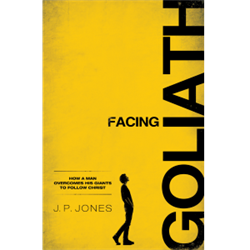
For your gift of $25 or more, we will send you a signed copy of JP's new book, Facing Goliath. Please join us every Sunday at 9:00 or 11:00 AM at Crossline Church in Laguna Hills. The address is 23331 Moulton Parkway, Laguna Hills, California, 92653.
Or check us out on the web at crosslinechurch.com. We're going to get to the address and phone number again in a minute, but before we do that, Pastor JP, do you have any insight from today's message?
JP Jones: Thanks, Greg. In Galatians chapter three, the Apostle Paul is contrasting two paradigms for life. One is to follow the principle of law, the other is to follow the principle of grace.
And every person is following one of these principles. We either live by the law, trusting in self-effort, or we live by grace, trusting in only what God can do through us. You see, the law is energized by the flesh, whereas grace is energized by the life of God's Spirit within us.
That's what Paul introduces here to us in Galatians chapter three. He introduces the concept of living by the Spirit: the power by which grace is released in our lives. Paul says this to the Galatian Church, "I'd like to learn one thing from you: Did you receive the Spirit by observing the law, or by believing what you heard? Are you so foolish? After beginning with the Spirit, that you're now trying to attain your goal by human effort?"
You see, Paul is understanding this spiritual struggle that every believer has. It's the struggle trying to work out on their own what only can be accomplished by God's Spirit within us. It's an interesting dilemma.
We come to Christ by acknowledging we can't do anything to save ourselves and we trust only in God's grace, and then yet many of us try to add to that grace our own effort, our own religious works, our own law-keeping.
Paul says the same principle that saved us is the principle that causes us to grow spiritually. It's the principle of grace. And grace is released and activated in our lives when we live by the Spirit, when we walk by the Spirit.
It's the Spirit of God who regenerates us and causes us to be born again spiritually and comes to indwell us at the moment of salvation. And it's by surrendering to the Spirit, obeying the Spirit, living by faith in the Spirit's power that God's grace transforms us to become more and more like Jesus Christ.
We come to salvation by grace, a work of the Holy Spirit, and we grow in our salvation, we're sanctified by grace, a work of the Holy Spirit. Today, wherever you are in your spiritual journey, it's not going to be by self-effort that you take the next step. It's going to be by surrendering to the Spirit and allowing the Spirit to release God's grace in your life. If that's your desire, then I invite you to do that by prayer right now.
Lord Jesus, we acknowledge we can't do anything on our own. It is only by your grace. And so energize your grace within us through the work of the Holy Spirit. Holy Spirit, make us more like Jesus. We pray in Jesus' name, Amen.
Greg: We want to help you in your relationship with Christ. Please get in touch with us at Truth That Changes Lives, 23331 Moulton Parkway, Laguna Hills, California, 92653 or call us at 949-916-0250.
On the internet, you will find us at crosslinechurch.com. We hope to see you at one of our services every Sunday at our new campus in Laguna Hills. For more information and directions, please go to crosslinechurch.com. Please join us next time on Truth That Changes Lives.
Featured Offer
Past Episodes

Featured Offer
About Truth That Changes Lives
About JP Jones
JP Jones is the founding Senior Pastor of Crossline Church in Laguna Hills, CA. Beginning with 16 people, Crossline has grown to a congregation of over 2,000 in 10 years. This growth has come largely through people receiving Christ and joining the church. JP is a dynamic and articulate Bible teacher with a passion to see people come to Christ and grow into being multiplying disciples for Jesus. JP began his ministry career with Campus Crusade for Christ and continues to have a heart for the Great Commission. Traveling on mission trips all over the world, JP preaches the gospel and trains pastors to be reproducing spiritual leaders.
For the past 25 years, JP has been an Adjunct Professor of Theology and Biblical Studies at Biola University and Talbot School of Theology. A published author, JP has written Facing Goliath by Baker Books and the discipleship curriculums, Transformed and Livin’ Large by Life Together. JP is a popular speaker at Men’s Retreats and Couples Conferences. JP is married to his wife Donna and they have 3 children. JP loves family vacation, the beach, Ultimate Fighting and a good cup of coffee.
Contact Truth That Changes Lives with JP Jones
info@crosslinechurch.com
http://pastorjpjones.com/
23331 Moulton Parkway
Laguna Hills CA 92653
(949) 916-0250