

The Truest Thing About You, Part 3


The ultimate question for the seeker is this. What do I believe about Jesus Christ?
JP Jones: The ultimate question for the seeker is this: what do I believe about Jesus Christ?
Greg: Thank you for joining us on Truth That Changes Lives. Pastor JP Jones is the senior pastor of Crossline Community Church in Laguna Hills, California, and a professor in biblical studies at Biola University. Today on Truth That Changes Lives, Pastor JP will be giving us a message from a series entitled All About Jesus. Let's listen in as JP gives us part three of The Truest Thing About You.
JP Jones: If you have your Bibles, would you open to Colossians chapter one? We have the passage up on the screen. We're working our way through the book of Colossians and the series title is "It’s All About Jesus." Boy, that song said it all. It is all about Jesus Christ. The object of our faith is Jesus. The head of the church is Jesus. The one who saves us is Jesus. The one who meets our needs is Jesus. The one who transforms our lives is Jesus Christ.
We need to be reminded of that over and over again because it's so easy to be just splintered and marginalized into all kinds of areas of our life. It's easy for us as people who are followers of Christ to become involved in all kinds of things religious but not necessarily all about Jesus. So it's important for us to be reminded from God's Word that Jesus Christ is who he says he is.
In Colossians 1:15-19, this is what the Apostle Paul claims about Jesus. He is the image of the invisible God, the firstborn over all creation. For by him all things were created: things in heaven and on earth, visible and invisible, whether thrones or powers or rulers or authorities. All things were created by him and for him. He is before all things, and in him all things hold together. He is the head of the body, the church. He is the beginning and the firstborn from among the dead so that in everything he might have the supremacy. For God was pleased to have all his fullness dwell in him.
Paul positively asserts the supremacy of Jesus Christ and in doing so what he's actually doing is he's correcting the false ideas that were affecting the church at Colossae. The believers at Colossae were relatively young in their faith. They'd come out of the pagan world. They'd come out of a world where they embraced a worldview in opposition to the centrality of Jesus Christ. They were influenced by a secular culture and they were influenced by a religious culture. So they held on to ideas about Jesus that were out of sync with the truth.
Paul writes the book of Colossians to bring everything back to Jesus Christ, and in particular in this passage, he's correcting specific ideas about Jesus because everybody has a view about Jesus. I didn't know if you knew that or not, but everybody thinks something about Jesus.
A couple of months ago, I was in the jacuzzi after working out at the gym, having a conversation with a man sitting across from me. We started talking and somehow it went to spiritual things. Based upon some things that he said, I just asked him a point-blank question. I said, "Tell me what you think about Jesus." And he said, "I think Jesus is the greatest person who ever lived. In fact, I think Jesus is the greatest teacher who ever lived, but I just can't accept that evangelical idea that Jesus is God. The greatest teacher, yes."
I looked back and I said, "Really?" And he said, "Yeah." I said, "You really think Jesus is the greatest teacher who ever lived?" He said, "Yeah." I said, "Well, then you must love what Jesus said about hell." And it was this blank stare. I said, "Of course, you know Jesus had more to say about hell and judgment than any other prophet, any other biblical writer. In fact, the doctrine of hell as we understand it, based upon the judgment of God, that really comes from Jesus himself because he's the one who taught that. Since you believe Jesus is the greatest teacher, you must agree with that teaching." Silence.
I looked at him and said, "I'm kind of just pulling your leg a little bit." He goes, "Oh, good." I said, "But Jesus really did teach more on hell than any other biblical writer or apostle or prophet. But I said that because I want to ask you a question. And it's okay, you can give me the honest answer." He said, "Okay."
I said, "Have you ever really studied personally what Jesus taught? Have you ever read the Gospels and really studied the actual teachings of Jesus?" He said, "Well, no, not really." I said, "I didn't think so." He goes, "Why do you say that?" I said, "I didn't think so because you said you thought Jesus was the greatest teacher, but you didn't believe him to be God because Jesus clearly taught that he was God."
The teaching of Jesus is filled with his own statements that he was God. This was at a time when *The Lion, the Witch and the Wardrobe* and *The Chronicles of Narnia* movies were out. I said, "You know the movie *Narnia*?" He goes, "Yeah." I said, "That was written by a man named C.S. Lewis. He wrote *The Lion, the Witch and the Wardrobe* and *The Chronicles of Narnia*. Very famous, very well-known scholar, and a very outspoken educated Christian."
I said, "In fact, C.S. Lewis said that we could never make the claim that Jesus was just a good teacher because when we study the things that Jesus actually taught and the things that Jesus actually said about himself, no good teacher would ever say those things. In fact, for someone to really say those things, they would either have to be true, or the person who said them would have to be a lunatic or an evil person to say them."
Now I had the guy's interest. He said, "Really?" I said, "Yeah. Jesus actually claimed to be God. He claimed to be the only way to God. Jesus claimed to be able to forgive sins. Jesus claimed that there was an ultimate judgment where there was heaven and hell, and Jesus said that he was the judge. You see, for someone to teach those kinds of things and for them not to be true, the person would have to be crazy or just an out-and-out liar. Of course, there's the other option that they actually are true because Jesus claimed to be God."
In Colossians chapter one, the Apostle Paul is establishing the uniqueness of Jesus Christ, the preeminence of Jesus Christ, the supremacy of Jesus Christ, the deity of Jesus Christ, the perfect humanity of Jesus Christ. He says it all comes down to Jesus. The ultimate question for the seeker is this: what do I believe about Jesus Christ? The ultimate question for the follower of Jesus is: what do I believe about Jesus Christ? The ultimate question for the church is: what do we believe about Jesus Christ?
The Apostle Paul here in Colossians chapter one lays out what is true about Jesus and he does it in responding to some false ideas about Jesus that were held by people in Colossae. Paul says that Jesus is the image of the invisible God, the firstborn over all creation. Now, it's important because of the nature of this passage and not only its truth but in light of its context, I'm going to need to appeal a little bit to the grammar and speak a little bit to some of the specific words that Paul uses because truth matters, and Paul is establishing truth as it relates to Jesus.
When he says here Jesus is the image of the invisible God, that word "image" is the Greek word *eikon*. The *eikon* in Greek, in the culture and understanding of the Greek mindset, the *eikon* was a visible image that was inseparable from the reality it represented. So the *eikon* of something was actually perceived as that something.
When it says that Jesus is the visible image of the invisible God, he's the visible expression of God because he really is God. John says in his Gospel in the prologue, "In the beginning was the Word, and the Word was with God, and the Word was God. He was in the beginning with God." And then he drops down and says, "No one has seen God at any time. The only begotten Son who's in the bosom of the Father, he has revealed him. He has explained him." If you want to see God, look at Jesus Christ. He's the visible image of the invisible God.
The writer of the Hebrews says that the Son is the radiance of God's glory, the exact representation of his being. He sustains all things by the word of his power. Paul wrote to the Corinthians in 2 Corinthians 4 and says, "God who said, 'Let light shine out of the darkness,' has made his light shine in our hearts to give us the light of the knowledge of the glory of God in the face of Christ." Everything that is true of God is represented in Jesus Christ: all of his perfections and attributes, because Jesus is the image of the invisible God. Jesus is God in the flesh. Paul says this in verse 19 and he says it in an even clearer way in Colossians 2:9 when he says, "In Christ dwells all the fullness of God in bodily form."
He is the image of the invisible God. You may have heard this story about the dad who was putting his little girl to bed and read the Bible story with her and said prayers and started to turn off the light and leave. The little girl said, "Daddy, Daddy, don't turn the light off. I'm scared." The father turned back to his daughter and said, "It's okay, sweetheart. God's here with you." He starts to leave and she goes, "Daddy, Daddy, don't leave. I'm scared." He comes back to her bedside and says, "Sweetheart, it's okay. God's here with you." "Daddy, Daddy, please don't leave." "Sweetheart, it's okay. God's here." And she looked up and said, "But Daddy, sometimes God needs skin."
God took on skin. Jesus is the visible image of the invisible God. Paul is making a statement right off the blocks in establishing who Jesus is, and he says that Jesus is God in the flesh. When we look at Jesus, we see God. He is the one who represents to us everything that is true of God. In Jesus are all the attributes, perfections, qualities, characteristics of God.
Paul says in relationship to the created order, he's the firstborn over all creation. He uses the Greek word *protokos*. If Paul meant to say that Jesus was the first created being, he would have used *protokidzos*. But *protokos* is a title. It means ruler, preeminent one, authoritative one. In relationship to the creation, Jesus stands above creation, over creation. He is preeminent in creation.
In fact, Paul explains his meaning here in the very next verse when he says by him all things were created, for him and through him all things were created. Paul's point is to say in reference to his deity, Jesus is the visible image of the invisible God. In reference to creation, he is the *protokos*, the preeminent one, the source, the authority, the ruler.
What do we believe about Jesus? Do we believe that he was just a mere man? Do we believe that he was just a good teacher? Do we believe that he was a religious leader? Or do we see him as the Bible proclaims him to be: the visible image of the invisible God, the *protokos*, the ruler, the authority, the preeminent one over everything else that exists?
In the next verse, Paul says, "For by him all things were created, things in heaven and things on earth, visible and invisible, whether thrones or powers or rulers or authorities; all things were created by him and for him." You see, Jesus is the *protokos*, the firstborn of all creation because of his relationship to creation. That's Paul's argument. Paul establishes this argument by using three prepositions in the Greek language. A preposition is a word that connects ideas and it speaks to relationship. He uses the Greek preposition *en*, the Greek preposition *dia*, and the Greek preposition *eis*.
So Christ is the creator in: everything has been created in the realm of Christ, in the sphere of Christ. *Dia*: everything's been created through Christ, by means of Christ. And *eis*: everything's been created for Christ. He is central to the doctrine of creation. He isn't a created being. He is the Creator. He's the means of creation and he's the purpose of creation. Everything is about Jesus.
This is John's statement as well in his prologue when he says in verse three, John 1:3, "Through him all things were made, and without him nothing was made that has been made, and in him was life, and the life was the light of men." The writer of the Hebrews says, "In these last days, God has spoken to us by his Son, whom he appointed heir of all things and through whom he made the universe." Everything has been created in Christ. Everything has been created by Christ. Everything's been created for Christ. He's the preeminent one in reference to creation.
The Apostle Paul includes everything here. He says things in heaven and earth, visible, invisible, whether thrones or powers or rulers or authorities. All things were created by him and for him. If you think about it, there's God in his eternal being: Father, Son, and Holy Spirit. Everything else is created. Everything other than God has come into being because of Jesus Christ. Jesus Christ stands in position preeminently over it, and it holds together because of him.
That's what Paul is saying here. That's what he's trying to establish: that our view of Jesus has to be one that embraces Jesus as the visible image of the invisible God, as the *protokos*, the preeminent one over creation, the means of creation, the actual creator, and the purpose and object of creation. Any view of Jesus that doesn't have him exalted to that highest central place is a false view of Jesus.
The other day I was up at Lake Santa Margarita. I was having my quiet time. I set at a certain bench. I read the Bible, I pray, then I walk around the lake. In the course of this one day, I had a conversation with a woman who was a Jehovah's Witness and a conversation with two young men who were Mormon missionaries. Now, both of these people, they believe in Jesus, quote-unquote. They talked about Jesus. But their belief about Jesus wasn't that he was the visible image of the invisible God, that he was the *protokos*, the firstborn over all creation. They had a view of Jesus, but it wasn't what the Bible teaches about Jesus, you see.
I'm not trying to say that people by and large don't believe in Jesus. Pretty much everybody believes in Jesus. But what they believe about Jesus isn't necessarily what the Bible teaches about Jesus. If you don't believe what the Bible teaches about Jesus, then the Jesus that you believe in is not the real Jesus. See, you could believe some things about me. You could believe that I'm a six-foot-ten basketball player in the NBA. But I'm not. So what you're believing about me is not true.
As it relates to our beliefs about Jesus, these aren't just concepts. It's life and death. Because the claim of the Bible is that our salvation is based upon who Jesus is and what Jesus did for us. If we don't believe the truth about who Jesus is and the truth about what Jesus did for us, the Bible says we're outside of salvation, you see. So it's critical that we think rightly about Jesus.
Paul is trying to correct some false views that people had at this church in Colossae because they were religious people, but they still had false views. Did you know you can be a religious person and have false views? You can go to church and not believe the truth. Because the ultimate truth is what's true about Jesus.
By him all things were created, things in heaven and on earth, visible and invisible, whether thrones or powers, rulers or authorities. All things were created by him and for him. Paul includes in this list the things of the visible world and the things of the invisible world because the Bible teaches that there is more than just what we see with our eyes. There's an invisible world that oftentimes in the New Testament is described as the heavenlies. In the heavenlies, there is a whole angelic realm.
Paul in this passage and in several other passages describes an angelic hierarchy. When he says rulers and authorities and powers, he repeats this in Colossians 2. He makes reference to it in Ephesians 1 and Ephesians 6 and in Romans chapter eight. Paul's description of the angelic world is that there are spheres of influence and power. There's a hierarchy within the angels, both the good and elect holy angels and in the fallen demonic angels. So they rank up as rulers, authorities, powers, and dominions.
But what he says here in Colossians chapter one is that Jesus Christ is the Creator. He stands in relationship of preeminence and authority over all angels, good and bad. In fact, Paul asserts in Ephesians chapter one with reference to Christ's resurrection, ascension, and seating, that he has been seated to the Father's right hand above all rule and authority and power and dominion, above every name that's named, not only in this age but also in the one to come. Jesus has absolute authority over the angelic world.
In Colossians 2:15, it says that after his resurrection, Jesus disarmed and triumphed over the rulers, the authorities, and the powers. So Jesus has absolute victory over all angelic opposition, demonic opposition that we might have to our faith. In Hebrews 2:15, it says that Jesus had to be made like his brethren to be a perfect mediator. So he had to take on flesh and blood. When he did, he died as an atonement for our sin and it says that he defeated and dethroned him who had the power over death, which is Satan.
Jesus has absolute authority over any spiritual opposition we would ever have as followers of Jesus Christ. He has absolute spiritual authority because of his position as the *protokos*, the creator of all things. He has absolute spiritual authority because of his death on the cross; he defeated the enemy. And he has absolute spiritual authority because he's been resurrected, ascended, and seated at the Father's right hand above all rule, authority, power, and dominion, every name that's named. Here's the impact of all of that. What Paul's saying about Jesus is he's number one and everything else is underneath him.
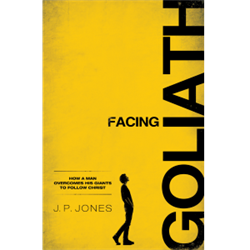
Greg: What a great message for all of us today. Pastor JP provides us with great insight. That is why we'd like to make it available to you on CD. Just get in touch and mention today's date. We'll send it your way for just five dollars. Or if you'd like to support this ministry, you can write us at Truth That Changes Lives: 23331 Moulton Parkway, Laguna Hills, California 92653. Or give us a call at 949-916-0250. That's 949-916-0250. For your gift of 25 dollars or more, we will send you a signed copy of JP's new book, *Facing Goliath*.
Please join us every Sunday at 9:00 or 11:00 AM at Crossline Church in Laguna Hills. The address is 23331 Moulton Parkway, Laguna Hills, California 92653. Or check us out on the web at crosslinechurch.com. We're going to get to the address and phone number again in a minute, but before we do that, Pastor JP, do you have any insight from today's message?
JP Jones: Thanks, Greg. We're in this study of the book of Colossians and the theme of Colossians is "It’s All About Jesus." Because that's true, the most important question for every person is: what do I believe about Jesus Christ? You see, what we believe about Jesus Christ determines everything. It determines heaven and hell. It determines the quality of our life right now. It determines where we are in our relationship with God.
Jesus Christ is the center of everything. He's the exact representation of the Father's glory. He's the unique image of the invisible God. He's the God-man. He's the second person of the Trinity. He's the only mediator between God and man. He's the head of the church. He's the one who died and rose again from the dead. He's the King of Kings, the Lord of Lords. Jesus Christ is God's everything to us and it's all about Jesus.
That's what Colossians says: it's all about Jesus. So what we believe about Jesus is the most important question that we can ask. In Colossians chapter one, Paul launches into a very deep theological discussion of the person of Jesus Christ. He uses some very technical terms and he's appealing to his original audience, trying to move them to understand the truth of Jesus Christ.
Paul says in Colossians 1:15 and following: the Son is the image of the invisible God, the firstborn over all creation. For in him all things were created: things in heaven and on earth, visible and invisible, whether thrones or powers or rulers or authorities. All things have been created through him and for him. He is before all things, and in him all things hold together.
Paul is making a statement that Jesus Christ, the Son of God, is preeminent. He is the center of the universe and he is the fullest expression of God to us. Jesus Christ rules creation. Jesus Christ is the Creator and Jesus Christ is the sustainer of everything. So not only is this a theological reality, it's a truth that holds our worldview together because if we don't understand who Jesus Christ is, then we have a worldview that excludes Jesus and our whole worldview doesn't make sense. It's skewed. It's darkened. It's off-kilter.
The only way to understand reality as it really is is to see Jesus for who he really is. Jesus is preeminent. He's the center of everything. He's the Lord, the King, the Son of God who reveals God to us. Today, the most important thing for you to believe is to believe the truth about Jesus Christ. Wherever you are in your spiritual journey, the most important thing for you to believe is to believe what's true about Jesus Christ.
Would you pray with me? Lord, thank you for your truth. Thank you for the truth of Jesus Christ. Thank you, Jesus, that you are the Son of God. You're the way, the truth, and the life, and no one comes to the Father but through you. Thank you, Jesus. You're the author of salvation. You're the King of Kings, the Lord of Lords. You're the Creator. You hold all things together. We worship and honor you. We believe in you. In Jesus' name, amen.
Greg: We want to help you in your relationship with Christ. Please get in touch with us at Truth That Changes Lives: 23331 Moulton Parkway, Laguna Hills, California 92653. Or call us at 949-916-0250. On the internet, you will find us at crosslinechurch.com. We hope to see you at one of our services every Sunday at our new campus in Laguna Hills. For more information and directions, please go to crosslinechurch.com. Please join us next time on Truth That Changes Lives.
Featured Offer
Past Episodes

Featured Offer
About Truth That Changes Lives
About JP Jones
JP Jones is the founding Senior Pastor of Crossline Church in Laguna Hills, CA. Beginning with 16 people, Crossline has grown to a congregation of over 2,000 in 10 years. This growth has come largely through people receiving Christ and joining the church. JP is a dynamic and articulate Bible teacher with a passion to see people come to Christ and grow into being multiplying disciples for Jesus. JP began his ministry career with Campus Crusade for Christ and continues to have a heart for the Great Commission. Traveling on mission trips all over the world, JP preaches the gospel and trains pastors to be reproducing spiritual leaders.
For the past 25 years, JP has been an Adjunct Professor of Theology and Biblical Studies at Biola University and Talbot School of Theology. A published author, JP has written Facing Goliath by Baker Books and the discipleship curriculums, Transformed and Livin’ Large by Life Together. JP is a popular speaker at Men’s Retreats and Couples Conferences. JP is married to his wife Donna and they have 3 children. JP loves family vacation, the beach, Ultimate Fighting and a good cup of coffee.
Contact Truth That Changes Lives with JP Jones
info@crosslinechurch.com
http://pastorjpjones.com/
23331 Moulton Parkway
Laguna Hills CA 92653
(949) 916-0250