The Power Of Prayer, Part 2
Sometimes persistence in prayer is just a couple of days, sometimes it’s a couple of months, sometimes it’s a couple of years, sometimes it’s thirty five years plus.
JP Jones: Sometimes persistence in prayer is just a couple of days, sometimes it's a couple of months, sometimes it's a couple of years, sometimes it's 35 years plus. But you keep on praying.
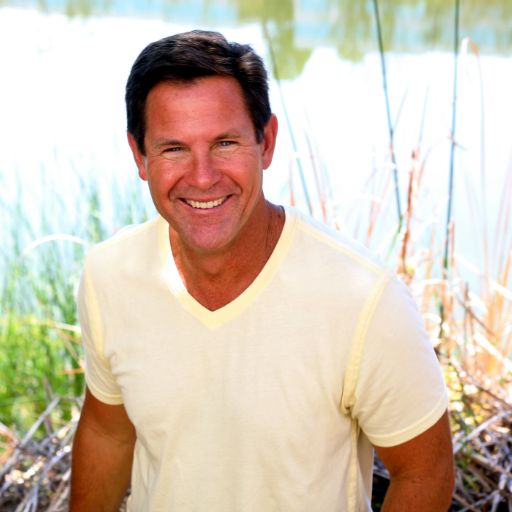
Guest (Male): Thank you for joining us on Truth That Changes Lives. Pastor JP Jones is the senior pastor of Crossline Community Church in Laguna Hills, California, and a professor in biblical studies at Biola University. Today on Truth That Changes Lives, Pastor JP will be giving us a message from a series entitled All About Jesus. Let's listen as JP gives us part two of The Power of Prayer.
JP Jones: Husbands, just take time and thank God for your wife. Parents, thank God for your children. Children, thank God for your parents. Do it by faith. Thank God for your parents. Thank God for your pastors. Thank God for the people in your small group. Thank God for your neighbors. Thank God for the people in our church. Thank God for this church.
Give thanks as an act of obedience following the pattern of Scripture, allowing God to use that to stimulate faith so that your intercessory prayers are flowing out of an attitude of thanksgiving. We need to pray thankfully.
Here's a second observation. We need to pray persistently. Paul says this in verse nine: "For this reason, since the day we heard about you, we have not stopped praying for you and asking God." Since the day we heard, we haven't stopped praying. There's a consistency, a persistence in the way that Paul prayed for people. We need to begin praying and keep on praying.
When you see something like this in the Bible, verse nine says "for this reason," you want to know what the reason is. Generally speaking, you just look in the context and you'll find it out. "For this reason," the "for" is a connective, explanatory term that ties the ideas that were mentioned beforehand to what he's about to say.
What he's about to say is that he prayed consistently. What was the bridge? Well, what he mentions in the previous verses. In verses five to eight, he talks about the fact that they heard the gospel and they believed it. They put their faith in Christ. They experienced the grace of God. They were saved. They demonstrated the reality of that salvation in their love and in their growing faith.
So Paul says, "For this reason, I began praying for you and I continued to pray for you." See, Paul was keenly aware of spiritual reality. That's why he prayed. There is a very important principle here, and I don't want you to miss it. Commitment to prayer and the practice of prayer flows out of the lives of people who are really convinced that prayer is a necessity.
Paul really understood the stakes. He understood that ultimately it's heaven or hell. Ultimately, every person on this planet, the Colossians included, were either going to heaven or going to hell. That drove him to pray that people would get saved and that he'd be bold in sharing the message with them. Paul understood the nature of spiritual battle, that when people become followers of Jesus, it's a battle.
There's a target on their back and the enemy is firing his darts at them. It's hard to walk with the Lord. It's hard to grow spiritually. Jesus said, "Deny yourself, take up your cross, and follow me daily." So Paul knew, I need to pray for these people because they need help to follow the Lord and live out their faith.
I believe that there are a lot of secularized Christians in the church. What I mean by that is people who come to church regularly. If I gave them a theology exam, like I do with students up at Biola, most of them would do pretty good. Yeah, I believe in God: Father, Son, Holy Spirit. Believe the Bible's the word of God. Believe the Gospels: salvation by grace alone through faith alone in Christ alone. I believe in heaven and hell.
But the way they live their lives is separate from that, cut off from that. The way many Christians live their lives is a secularized approach to life. It's all up to me to figure it all out, figure out my career, figure out my marriage, figure out my parenting, figure out my problems. I only call on God when the you-know-what hits the fan. That's the only time. Other than that, I'm working it all out myself.
That's not the way the Apostle Paul lived. Everything was spiritual because God was at the center of everything. So everything was an object of prayer. Paul lived with an understanding that he desperately needed God's intervention in his life and the people he prayed for desperately needed God's intervention in their life. Whether you realize it or not, that's the truth.
Every person here desperately needs God's intervention. Every person here needs the help of the Holy Spirit. Every person here needs the grace of God. That's why every person here needs to be prayed for, yours included. You need to pray for me and I need to pray for you. The Colossians needed prayer. Paul prayed for them. "For this reason," he said, "I began praying and I didn't stop praying. I kept on praying."
There's a persistence that needs to characterize our prayers. Paul affirms that he continued in this prayer, which is really a pattern that the whole of Scripture calls us to. There's an interesting verse in the Old Testament, 1 Samuel 12. Samuel says, "Moreover, as for me, far be it for me that I should sin against the Lord to stop praying for you."
Paul writes to the Philippians, "Every time I think of you, I give thanks to my God, so whenever I pray, I make my requests for you." To the Thessalonians he says, in 2 Thessalonians 1, "To this end also, we pray for you always, that God will count you worthy of your calling and fulfill your desire for every goodness."
In Ephesians 6, there's an interesting passage in this regard because Paul's been talking about spiritual warfare and the reality of spiritual warfare. He exhorts us to be strong in the Lord and the strength of His might, to put on the full armor of God to stand firm against the schemes of the devil.
He lists the pieces of the armor that we have to spiritually defend ourselves. We have the belt of truth and the breastplate of righteousness and the shield of faith. Our feet are shod with the preparation of the gospel of peace. We have the helmet of salvation. Then he says we've got two weapons to fight with. He says, first of all, verse 17, we have the sword of the Spirit, which is the Word of God.
Then he says in Ephesians 6:18, "And pray in the Spirit on all occasions with all kinds of prayers and requests. With this in mind, be alert and always keep on praying for all the saints." Paul's use of hyperbole is obvious here. He uses exaggerated language, but it's exaggerated for effect. Pray on all occasions. Pray with all kinds of prayers. Pray always. Pray for all the saints.
We need to pray for one another. We need to keep on praying for one another. Paul in this verse, Colossians 1:9, when he says, "For this reason, since the day we heard of it, we have not ceased to pray for you and to ask," he uses two words for prayer. He says, "We have not ceased to pray for you." It's the word *proseuchomai*. It's used over 80 times in the New Testament. It is the general word for prayer, talking to God, making our requests and petitions to God.
But then he says, "We have not ceased to pray for you, asking God." That word "asking" is the Greek word *aiteo*, which means to make a very specific request. So in our intercessory prayers, in our praying for one another, we should just be praying and we need to make specific requests. We need to keep on making them and keep on making them and keep on making them.
The whole idea is persistence here. When I was a teenager and I became a Christian, I became a believer in Jesus, my brother was very instrumental in that decision. He was the first one to tell me about Jesus. After he told me about Jesus a couple of times, I had a spiritual interest. I began reading the Bible and thinking about it.
But what really was the trigger for me was because my brother had given me this little booklet called The Four Spiritual Laws that I later read and prayed to receive Jesus as my Lord and Savior based on the presentation that was in that booklet. But what was the trigger for me to do that was I found a journal on my brother's desk.
He was back at college and he'd left it there. He'd been home and then went back to college. I opened up the journal and it was his prayer journal. Inside were listed the people he was praying for, and my name was on the list. Underneath my name, he had written that he was praying that I would receive Christ as my Lord and Savior.
I remember thinking, "This must be really important to my brother if he's praying about this regularly." It was very shortly after that that I picked up The Four Spiritual Laws, read through it, it made sense to me, and I asked Jesus to come into my life and be my Lord and Savior. Not all prayers that we pray persistently are answered within a couple of weeks or a couple of months, are they?
I became a Christian in 1972, and very shortly after that, I began praying for my parents, my mom and my stepdad. Here we are now in 2010, and I am still praying almost every day for my mom and my stepdad to become Christians and to receive Christ as their Savior. Sometimes persistence in prayer is just a couple of days. Sometimes it's a couple of months. Sometimes it's a couple of years. Sometimes it's 35 years plus.
But you keep on praying. Paul says, "Since the day I heard of it, I haven't ceased to pray for you and to ask." Once we begin praying, we need to keep on praying until we either see God answer the prayer or God tells us to stop praying. So here is a way that we can put this into practice. If you have begun praying for someone, keep on praying.
Men, if you've prayed for your wife once or twice, keep on praying for her. Keep on praying for her. Wives, if you've prayed for your husband, keep on praying for him. Parents, keep on praying for your kids. Pray for your pastors and keep on praying for your pastors. Pray for your neighbors and keep on praying for your neighbors.
Secondly, if you haven't prayed for someone in a long, long time that you used to pray for and the answer hasn't come yet, I think you know what I'm going to say. Start praying for them all over again and keep on praying. If you start praying for someone because you hear of a prayer request or someone comes into your life or someone you've never prayed for before, you start praying for them, keep on praying for them until God either answers the prayer or shows you you don't need to pray for that anymore.
We need to pray persistently. Here's a third application. Looking at the Scriptures, we need to pray thankfully, we need to pray persistently, we need to pray spiritually. Because Paul tells us what he prayed for. This is what he was inspired to write as he wrote it to the Colossians. It was a letter to them, it was a prayer to them. But because it's recorded in Holy Scripture, it was an inspired prayer.
"I pray for you and I ask that God would fill you with the knowledge of His will through all spiritual wisdom and understanding, and we pray this in order that you may live a life worthy of the Lord and may please Him in every way, bearing fruit in every good work, growing in the knowledge of God, being strengthened with all power according to His glorious might so that you may have great endurance and patience with joy."
There's a real spiritual focus to this prayer. In fact, if you were to look at the prayers in the New Testament—there are two prayers in Ephesians, there's a prayer in Philippians, there's this prayer in Colossians, there's a prayer in 1 Thessalonians, another prayer in 2 Thessalonians, there's a prayer at the beginning of 1 Corinthians—you see these prayers that are written and recorded, there is an intentional spiritual focus to the prayers.
Now I want to say something and I want you to hear me because this is important as it relates to understanding this passage and applying this aspect to our prayers for one another. I believe we should pray about everything. Pray about parking places, pray for tests if you're a student, pray for your kids' tests if you're a parent, pray for your finances, pray for your marriage, pray for your future, pray for your spiritual life.
Pray that the US wins the gold medal in the hockey competition. Pray about everything. I really believe that. There's no sacred-secular separation. Everything is sacred. God's involved in everything. We need to pray about everything. Now having said that, when you look at the New Testament and the prayers recorded in the New Testament, the lion's share of the emphasis is not on the kind of stuff that makes up our everyday world.
The lion's share of the emphasis is on spiritual transformation: coming to know Christ and being transformed through our relationship with Christ, the fruit of the Holy Spirit being built into our character, knowing God deeply, intimately, personally in a transformational kind of way. That's what we ought to pray about. The way we pray for one another ought to be that we are transformed by the power of Jesus Christ.
We become more and more like Jesus Christ. The character of Jesus Christ gets built within us and through us, and we bear the spiritual fruit of Christ in our lives, in our words, in our thoughts, in our actions. That's what we need to pray for. We need to pray prayers that are filled with these spiritual tracks to run on that are recorded in the prayers of the New Testament.
That's why, if you're not very creative, just pray the prayers that are in the Bible. I don't know how you spend time with the Lord. I've been a follower of Jesus for a long time, been spending time with God most of that time. I study the Bible in different ways and write down my observations. I learned long ago that the palest ink is more powerful than the most retentive mind. Oh, that's good, you can write that one down.
The palest ink is more powerful than the most retentive mind. So I write things down. I don't go to some store and buy a $25 journal. I buy these cheapo-depot things and fill them up. These are my prayers, this is my Bible study, this is my journal, these are all the things that I'm praying for and the people that I'm praying for, and I write it down.
This morning I just grabbed it, picked this up. This is not to say anything about me or you, but I want to illustrate my point. This was what I prayed for my son, he's a senior in college. This is what I prayed for. This is just a couple days ago. Lord, I pray you'll bless Taylor today and make him strong in the Lord and equip Taylor with the whole armor of God.
Protect him from evil and from temptation. Guard his heart. May your peace fill him and may your joy overflow within him. May he know you and the power of your resurrection. I pray that Taylor will discipline himself for godliness and will seek you and find you as he searches for you with all his heart.
I pray that you would protect him with your love. Give him your wisdom, give him your power, give him holy blessings in his life. I pray that Taylor will abide in you, Jesus, and your words will abide in him and that he will bear much fruit for your glory. Virtually everything I prayed was just a scriptural promise that I just incorporated into a prayer for him.
What that illustrates is this emphasis that Paul gives us here in Colossians—he has it in Philippians and he has it in Ephesians—that our prayers ought to be spiritually focused. Husbands, you need to pray for the spiritual transformation of your wives. Men, you need to pray that your wives will be godly and filled with Jesus and filled with love.
Parents, you need to pray for your kids that Christ would be the center of their lives and the fruit of the Holy Spirit would fill their lives and that they'd be transformed in the image of Jesus. Congregation, you need to pray for your pastors to be godly, filled with the Holy Spirit, transformed by the life and power of Jesus.
Pastors, we need to pray for our congregation, that our people would be spiritually transformed to become more and more like Jesus Christ. All of us, we ought to pray for one another, you see, and our prayers need to have this spiritual focus to them because that's the pattern of the Scriptures. This is what Paul prayed for.
Basically, when you break down this prayer in Colossians 1:9-11, it's kind of difficult to analyze, to be quite honest with you, because Paul doesn't use what we would call good grammar, but it's powerful, inspirational truth. But essentially, he prays for three things.
Number one, he asks that God, praying for the Colossians, that they'd be filled with the knowledge of God's will in all spiritual wisdom and understanding. Number two, he prays that they would live a life worthy of the Lord and please Him in every way, bearing fruit in every good work and growing in their knowledge of God. Number three, he prays that they'd be strengthened with all power according to His glorious might so that they may have great endurance and patience with joy.
We need to pray thankfully. We need to pray persistently. We need to pray spiritually. We need to pray these kind of prayers for one another. Think what would happen if you prayed this prayer regularly for yourself, for your spouse, for your kids, for your neighbors, for the people in your small group, for the people that you see here gathered, for our whole church, for our pastors.
In fact, that's a very simple application. Pray this prayer. This prayer. Pray it for yourself. Pray it for your spouse. Pray it for your kids. Pray it for your neighbors. Pray it for your pastors. Pray it for us as a community of believers. If we all would, in the power of the Holy Spirit, persistently with thanksgiving pray this prayer, let me tell you what would happen.
We'd all be filled with the knowledge of God's will and all spiritual wisdom and understanding, live a life worthy of the Lord, pleasing Him in every respect, bearing fruit in every good work. We'd increase in our knowledge of God. God would strengthen us with His power and His glorious might. He'd give us patience and endurance and we'd be filled with joy.
Who wants that for themselves, for their family, for our church? Yeah, I do too. So let's pray this into reality. Lord, thank you so much for the word of God that's true and life-giving because it comes from you, the God of truth, the God of life.
I pray for all of us to seek you and find you and pray to you and become a church of prayer so that you would do your miracles and bless our lives and bless this community and the nations with the gospel of Jesus. We ask for that in Jesus' name. Amen.
Guest (Male): What a great message for all of us today. Pastor JP provides us with great insight. That is why we'd like to make it available to you on CD. Just get in touch and mention today's date. We'll send it your way for just $5. Or if you'd like to support this ministry, you can write us at Truth That Changes Lives, 23331 Moulton Parkway, Laguna Hills, California 92653, or give us a call at 949-916-0250. That's 949-916-0250.
For your gift of $25 or more, we will send you a signed copy of JP's new book, Facing Goliath. Please join us every Sunday at 9 or 11 AM at Crossline Church in Laguna Hills. The address is 23331 Moulton Parkway, Laguna Hills, California 92653, or check us out on the web at crosslinechurch.com. We're going to get to the address and phone number again in a moment, but before we do that, Pastor JP, do you have any insight from today's message?
JP Jones: Thanks, Greg. We're in a new series in the book of Colossians. We're talking about the fact that it's all about Jesus. Colossians reminds us that in Jesus Christ, we have been made complete. In Jesus Christ, we have forgiveness, and we have salvation. So the whole book of Colossians points everything back to Jesus.
Paul begins this book by writing to this church at Colossae, and he thanks God for them and he prays for them. This is a pattern in the letters of the Apostle Paul. He spends time letting the people know that he is serving and shepherding, that he cares for them, that he has a heart for them, and that he's asking God to be at work in their lives.
This is a great example for us as followers of Jesus Christ. We need to be disciples who pray and ask God to bless the people that we're in relationship with. We need to be intercessory prayer warriors. That's a big term, but what it basically means is we pray for others and we pray for others consistently. We pray for others' God's blessing into their lives, and we pray for others that God would be at work within them.
This is the example that the Apostle Paul gives us in the book of Colossians. We also have in this book the model prayer or the way we ought to pray for people. In Colossians 1:3-12, Paul unpacks for us how we're to be praying for our children, how we are to be praying for our spouse, how we're to be praying for our pastors, how we're to be praying for the people that are in our small group.
How do we pray for our missionaries? How do we pray for the people in our church? These are spirit-inspired prayers, and we can take the words of Colossians and use those very words to ask God to be blessing the people that we care about, that we're in relationship with. Prayer begins with thanksgiving because when we give thanks to God, we're aligning our hearts with God, we're aligning our wills with God.
We're surrendering to the sovereignty of God and we're expressing gratefulness. We're expressing gratefulness to God, but we're expressing gratefulness for the people that He's brought into our lives. This leads us to pray personally and with compassion and with real spiritual inclined directives in terms of what we pray for people.
We could be praying for anything and everything, but what God wants us to pray for is the spiritual transformation of people's lives. Colossians 1 reminds us of that and unpacks for us the path we're to follow as we pray for others. I'd like to put that into practice and pray for you as you're hearing this message.
God, I pray for everyone who hears this message, everyone who's listening by radio, everyone who's listening through the internet. I pray, Lord, that you would bless them. Thank you for them. Thank you for their calling. Thank you for what you're doing in their lives. I pray that you would reveal to them the knowledge of your will, that they'd come to know you personally, Jesus, that they'd be filled up with every good work and every good thing, that their lives would be transformed, and that they would literally reflect and radiate the life of Jesus Christ to others. Bless them, I pray, in Jesus' name. Amen.
Guest (Male): We want to help you in your relationship with Christ. Please get in touch with us at Truth That Changes Lives, 23331 Moulton Parkway, Laguna Hills, California 92653, or call us at 949-916-0250. On the internet, you will find us at crosslinechurch.com. We hope to see you at one of our services every Sunday at our new campus in Laguna Hills. For more information and directions, please go to crosslinechurch.com. Please join us next time on Truth That Changes Lives.
Featured Offer
Past Episodes
Featured Offer
About Truth That Changes Lives
About JP Jones
JP Jones is the founding Senior Pastor of Crossline Church in Laguna Hills, CA. Beginning with 16 people, Crossline has grown to a congregation of over 2,000 in 10 years. This growth has come largely through people receiving Christ and joining the church. JP is a dynamic and articulate Bible teacher with a passion to see people come to Christ and grow into being multiplying disciples for Jesus. JP began his ministry career with Campus Crusade for Christ and continues to have a heart for the Great Commission. Traveling on mission trips all over the world, JP preaches the gospel and trains pastors to be reproducing spiritual leaders.
For the past 25 years, JP has been an Adjunct Professor of Theology and Biblical Studies at Biola University and Talbot School of Theology. A published author, JP has written Facing Goliath by Baker Books and the discipleship curriculums, Transformed and Livin’ Large by Life Together. JP is a popular speaker at Men’s Retreats and Couples Conferences. JP is married to his wife Donna and they have 3 children. JP loves family vacation, the beach, Ultimate Fighting and a good cup of coffee.
Contact Truth That Changes Lives with JP Jones
info@crosslinechurch.com
http://pastorjpjones.com/
23331 Moulton Parkway
Laguna Hills CA 92653
(949) 916-0250