The Power Of Prayer, Part 1
The bible says that Jesus is the way, the truth and the life, and that we have been made complete in Christ. Christ truly is the answer to the real spiritual struggles that everyone faces.
JP Jones: The Bible says that Jesus is the way, the truth and the life, and that we've been made complete in Christ and that Christ really is the answer to the real spiritual struggles that everyone faces.
Guest (Male): Thank you for joining us on Truth That Changes Lives. Pastor JP Jones is the senior pastor of Crossline Community Church in Laguna Hills, California, and a professor in biblical studies at Biola University. Today on Truth That Changes Lives, Pastor JP will be giving us a message from a series entitled All About Jesus. Let's listen in as JP gives us part one of The Power of Prayer.
JP Jones: If you have your Bibles, would you open to Colossians chapter one? We're in a study of the book of Colossians, which the Apostle Paul wrote from a Roman prison cell. It's one of the prison letters, and like the other letters, they have a real ring of triumph to them. Paul, in a very difficult life situation, speaks about the transcendent power and joy and victory that we can have in Jesus Christ.
In this letter to the believers at Colossae, Paul writes about how every life question is found in Jesus Christ, whether it's a life struggle, whether it's a temptation, whether it's a spiritual battle, whether it's a philosophical question, whether it's a religious challenge, the answer comes back to Jesus Christ. I have discovered personally and in many relationships with other followers of Jesus that it's possible to focus on a particular truth or a particular doctrine to where it becomes the main focus of our life and we become imbalanced.
On the other hand, when we focus on Jesus Christ, there's a perfect, wholesome balance. Because the Bible says that Jesus is the way, the truth and the life, and we've been made complete in Christ and that Christ really is the answer to the real spiritual struggles that everyone faces. So, in this book of Colossians, the Apostle Paul is calling us back to this central truth that it's all about Jesus. And that's the way we're looking at this book. It's all about Jesus.
You're probably aware of all the debates and discussions that are going on in Washington with respect to the healthcare system. And if the prognosticators are right, we are headed towards more bureaucracy and maybe even more difficulty in receiving healthcare. Certainly more forms to fill out and conversations to be had. I found this response on the internet to someone who was trying to fill out a workman's comp form and receive medical help.
"Dear Sir, I'm writing in response to your request for additional information in block number three of the accident reporting form. I put poor planning as the cause of my accident. You asked for a fuller explanation, and I trust the following details will be sufficient. I'm a bricklayer by trade, and one day I had an accident while I was working on a project. I was alone on the roof of a new six-story building, and when I completed the work, I found that some of the bricks were left over, and when they were later weighed, they totaled up to 240 pounds.
"Rather than carrying the bricks down by hand, I decided to lower them in a barrel by using a pulley, which was attached to the side of the building on the sixth floor. Securing the rope at ground level, I went up to the roof, I swung the barrel out, loaded the bricks onto it, and then I went down and untied the rope, holding it tightly to ensure a slow descent of the 240 pounds of bricks. But you will note on the accident reporting form in section 3A that my weight is 135 pounds.
"Due to my surprise at being jerked off the ground so suddenly, I lost my presence of mind and forgot to let go of the rope. Needless to say, I proceeded at a rapid rate up the side of the building. I think in the vicinity of the third floor, I met the barrel, which was now proceeding downward at an equally impressive speed. This explains the fractured skull, minor abrasions, and the broken collarbone, as listed in section 3 form 1B. Accident reporting is recorded for your reading.
"When I hit the barrel, I began to slow, but only slightly. I continued my rapid ascent, not stopping until the fingers of my right hand were two knuckles deep into the pulley, which I mentioned in paragraph two of this correspondence. Fortunately, by this time I had regained my presence of mind and was able to hold tightly to the rope in spite of the excruciating pain I was now beginning to experience. At approximately the same time, however, the barrel of bricks hit the ground and the bottom fell out of the barrel.
"Now devoid of the weight of the bricks, the barrel weighed only about 50 pounds. I refer you again to my weight, section 3 1A, of 135 pounds. As you might imagine, I began a rapid descent down the side of the building. In the vicinity again of the third floor, I met the barrel coming up, and this accounts for the two fractured ankles, broken tooth, and several lacerations of my legs and lower body. Here my luck began to change slightly. The encounter with the barrel seemed to slow me enough to lessen my injuries when I fell into the pile of bricks and fortunately only received three fractured vertebrae.
"I'm sorry to report to you, however, as I lay there on the pile of bricks in pain, unable to move, that I watched the empty barrel six stories above me let go of the rope, and that's why I received the concussion when the barrel hit me on the head." Hopefully that never happens to you, you don't have to fill out one of those forms and you don't have to have those endless phone calls to get the medical reimbursement that you need.
Let me tell you, I don't care how much bureaucracy we have to have with the healthcare system and with the government and how many forms we have to fill out, we have direct access to God in prayer. No bureaucracy, no intermediaries, no forms to fill out, we just have to talk to God. The Bible says that we have access to God because of Jesus Christ. And not only do we have access to God because of Jesus Christ, but God has put His Spirit within us who intercedes for us so that even when we don't know how to pray like we're supposed to pray, the Holy Spirit helps us.
So we have the Trinity, Father, Son, and Holy Spirit available to us 24/7 in prayer. From Genesis to Revelation, the Bible affirms that God is one who hears and answers our prayers. He's good, He's gracious, He's loving, He's compassionate, He's a good shepherd, and He's powerful and sovereign and in control. God cares about our lives, so He wants to answer our prayers. God is powerful and ruling, so He can answer our prayers, and so the Bible over and over and over again encourages us to pray.
In Colossians chapter one, we see a prayer that the Apostle Paul was inspired to pray for the believers at Colossae. Here as Paul begins to write this letter, he speaks to the fact that he remembers them and he prays for them, reminding us that God hears and answers prayer and we should be praying, and we should be praying for one another. Because the nature of this prayer is Paul's prayer for other believers. So we're looking at this passage not just in a general sense about prayer, but how we're to pray for others. This is intercessory prayer.
Colossians chapter one says this, "We always thank God, the Father of our Lord Jesus Christ, when we pray for you, because we have heard of your faith in Christ Jesus and the love you have for all the saints." Verse nine, "For this reason, since the day we heard about you, we have not stopped praying for you and asking God to fill you with the knowledge of His will through all spiritual wisdom and understanding. And we pray this in order that you may live a life worthy of the Lord, may please Him in every way, bearing fruit in every good work, growing in the knowledge of God, being strengthened with all power according to His glorious might, so that you may have great endurance and patience with joy, giving thanks to the Father, who has qualified you to share in the inheritance of the saints in the kingdom of light."
From this passage, I want to pull out three principles with respect to praying for others. First of all, we need to pray thankfully. Secondly, we need to pray persistently. And thirdly, we need to pray spiritually. Thankfully, persistently, and spiritually. Paul says in verse three, "We always thank God, the Father of our Lord Jesus Christ, when we pray for you, because we have heard of your faith in Christ Jesus and the love you have for all the saints."
Paul gives thanks for the believers at Colossae. Now, we know with respect to the background, he didn't actually know them personally. Epaphras, a coworker of Paul, was the first one to go to Colossae and share the good news of Jesus with the people there. Many believed and a church was started. Epaphras informed Paul about the Colossian church, about these people at Colossae, told them about their faith in response to the gospel, told them about the transformation that God was doing in their lives.
And so Paul, because of his shepherd's heart and belief in prayer and apostolic calling, he writes to them to encourage them, to teach them about the way of Christ and lets them know that he's praying for them. Let me tell you, because I understand the nature of prayer and I understand that prayer is work, when people tell me that they're praying for me, that encourages me. When they tell me they're praying for me and giving thanks for me, that's a double encouragement.
So here's the Apostle Paul not only giving thanks and praying, but with words of encouragement sharing that with the people he's actually praying for. Paul generally gave thanks for the people that he prayed for. In fact, when you look at his prayers in the New Testament, you see that this is a pattern, that he took time to give thanks and to acknowledge God's work in people's lives. In 1 Corinthians 1:4, it says, "I always thank God for you because of His grace that was given to you in Christ Jesus."
Writing to the Ephesians, Ephesians 1:16, "I have not stopped giving thanks for you, remembering you in my prayers." To the church at Thessalonica, 1 Thessalonians 1:2, "We always thank God for all of you, mentioning you in our prayers." Writing to Timothy, 2 Timothy 1:3, "I thank God, whom I serve as my forefathers did with a clear conscience, as night and day I constantly remember you in my prayers." Paul is taking time to acknowledge his relationship with these people, to pray for them and to give thanks for them.
Sometimes our thanksgiving in praying for people is a result of a genuine affection and appreciation for people. Paul is talking about people he knows or knows of, people that he knows intimately, and he's reminded of God's work in their life and he thinks fondly about them and so he says, "I'm praying for you and I thank God for you." There are people in our world that we care about, we love. We're thankful that they're in our lives. We ought to tell God that we're thankful they're in our lives. We ought to tell them that we're thankful they're in our lives. We ought to pray for them and give thanks for them as a genuine expression of appreciation.
There's another piece here though that I think is equally important, and that is that giving thanks is an acknowledgment of God's providence. Providence is the conviction that God's in charge. It's the understanding that God is sovereign, He is the King on His throne, and not just in an abstract sense, but in a very real and personal sense. God is real, moving in history. God is hearing and answering our prayers. God is working out His kingdom plan.
The sovereignty of God gives us great confidence, it gives us great security. It gives us the hope that it's not just a chaotic mess out there, things aren't just happening haphazardly, but God is moving everything, even our lives and our relationships toward the fulfillment of His kingdom plan. It says in Ephesians chapter one that ultimately that fulfillment is going to be the summing up of all things in Jesus Christ. The sovereignty of God gives us hope and confidence.
We give thanks because we acknowledge that God's on the throne. We give thanks because we're obeying God and we believe that He's in charge, and we're letting Him know that we believe that He's in charge. In 1 Thessalonians chapter five, Paul says this writing to the church at Thessalonica, "Be joyful always, pray continually, give thanks in all circumstances, for this is God's will for you in Christ Jesus." Sometimes we are genuinely thankful and so we give thanks, but what about when you're not genuinely thankful? You give thanks by faith because it's a command and it's an acknowledgment that God's in charge.
Here's what happens when we give thanks in our prayers. When we give thanks in our prayers, it leads to, it builds, it helps develop a positive faith because our prayers are coming out of a heart attitude that is being aligned with God's will. When we pray according to God's will, what does the Bible say? In 1 John chapter five, "This is the confidence that we have before Him, that when we ask anything according to His will, He hears us. And if we know that He hears us in the things that we ask, we know that we have the requests that we've asked from Him."
That was the secret behind what Jesus taught us in prayer in Matthew chapter six when Jesus said, "Pray in this way: Our Father who art in heaven, hallowed be Thy name, Thy kingdom come, Thy will be done on earth as it is in heaven." When we pray according to the will of God, there's a confidence that God's going to hear and answer our prayer. Believe me, there's a lot of mystery here on prayer, I certainly don't have the answer to a lot of that mystery, but an observation is pretty clear.
There is a relationship between faith and answered prayer. So when I give thanks because I'm truly thankful and when I give thanks as an act of obedience and faith, faith is generated, faith is increased, faith is developed so that my prayers are being expressed in faith. "Be joyful always, pray continually, give thanks in all circumstances, for this is God's will for you in Christ Jesus." When Paul wrote to the believers at Colossae without having even met them but hearing about them, he said, "I thank God for you."
The application for us is in our prayers and in our prayers for one another, we need to practice the discipline of giving thanks. Thank God for the people that are in your world. Make that a part of your prayer experience to actually thank God that He has placed the people in your life who are in your life. Thank God for your spouse, thank God for your kids, thank God for your neighbors, thank God for the people in your small group, thank God for your pastors, thank God for the people in your church.
Give thanks as an act of obedience following the pattern of scripture, allowing God to use that to stimulate faith so that your intercessory prayers are flowing out of an attitude of thanksgiving. Take some time and allow yourself and allow God to emotionally connect you and identify you with the people that you are praying for so that it's not just an act of obedience of giving thanks, but you're genuinely thankful. Think about the people that you're praying for, think about their life experience, think about their challenges, think about their spiritual journey, think about what's going on in their life so then as you're praying for them, there's a real thanks that you have for them and for the privilege of being able to pray for them.
Here's a third idea for application. Take some time without any other agenda just to thank God for the people you're praying for. Yeah, there's a lot of things to pray for them, and there'll be many opportunities to do that, but have a prayer experience for the people that you're praying for and just give thanks. Husbands, just take time and thank God for your wife. Parents, thank God for your children. Children, thank God for your parents. Do it by faith, thank God for your parents. Thank God for your pastors, thank God for the people in your small group, thank God for your neighbors, thank God for the people in our church, thank God for this church.
Give thanks as an act of obedience following the pattern of scripture, allowing God to use that to stimulate faith so that your intercessory prayers are flowing out of an attitude of thanksgiving. We need to pray thankfully. Here's a second observation. We need to pray persistently. Paul says this in verse nine, "For this reason, since the day we heard about you, we have not stopped praying for you and asking God." Since the day we heard, we haven't stopped praying. There's a consistency, a persistence in the way that Paul prayed for people. We need to begin praying and keep on praying.
When you see something like this in the Bible, verse nine says, "For this reason," you want to know what's the reason. Generally speaking, you just look at in the context and you'll find it out. "For this reason," the 'for' is a connective explanatory term that ties the ideas that were mentioned beforehand to what he's about to say. What he's about to say is that he prayed consistently, and what was the bridge? Well, what he mentions in the previous verses. In the previous verses in verses 5-8, he talks about the fact that they heard the gospel and they believed it, they put their faith in Christ.
They experienced the grace of God, they were saved, and they demonstrated the reality of that salvation in their love and in their growing faith. And so Paul says, "For this reason, I began praying for you and I continue to pray for you." Paul was keenly aware of spiritual reality, and that's why he prayed. There is a very important principle here and I don't want you to miss it. Commitment to prayer and the practice of prayer flows out of the lives of people who are really convinced that prayer is a necessity.
Paul really understood the stakes. He understood that ultimately it's heaven or hell. Ultimately, every person on this planet, the Colossians included, were either going to heaven or going to hell, and that drove him to pray that people would get saved and that he'd be bold in sharing the message with them. Paul understood the nature of spiritual battle, that when people become followers of Jesus, it's a battle. There's a target on their back and the enemy is firing his darts at them, and it's hard to walk with the Lord, it's hard to grow spiritually. Jesus said deny yourself, take up your cross and follow Me daily.
So Paul knew I need to pray for these people because they need help to follow the Lord and live out their faith. I believe that there are a lot of secularized Christians in the church. What I mean by that is people who come to church regularly and if I gave them a theology exam, you know, like I do with students up at Biola, most of them would do pretty good. Yeah, I believe in God, Father, Son, Holy Spirit, believe the Bible is word of God, believe the gospels, salvation by grace alone through faith alone in Christ alone. I believe in heaven and hell.
But the way they live their lives is separate from that, cut off from that. The way many Christians live their lives is a secularized approach to life. It's all up to me to figure it all out, figure out my career, figure out my marriage, figure out my parenting, figure out my problems. And I only call on God when it's really the doodoo hits the fan, that's the only time. Other than that, I'm working it all out myself. That's not the way the Apostle Paul lived. Everything was spiritual because God was at the center of everything.
So everything was an object of prayer. And Paul lived with an understanding that he desperately needed God's intervention in his life, and the people he prayed for desperately needed God's intervention in their life. Whether you realize it or not, that's the truth. Every person here desperately needs God's intervention. Every person here needs the help of the Holy Spirit. Every person here needs the grace of God. That's why every person here needs to be prayed for.
Guest (Male): What a great message for all of us today. Pastor JP provides us with great insight. That is why we'd like to make it available to you on CD. Just get in touch and mention today's date. We'll send it your way for just five dollars. Or if you'd like to support this ministry, you can write us at Truth That Changes Lives, 23331 Moulton Parkway, Laguna Hills, California 92653. Or give us a call at 949-916-0250. That's 949-916-0250. For your gift of 25 dollars or more, we will send you a signed copy of JP's new book, Facing Goliath. Please join us every Sunday at 9:00 or 11:00 AM at Crossline Church in Laguna Hills. The address is 23331 Moulton Parkway, Laguna Hills, California 92653. Or check us out on the web at crosslinechurch.com. We're going to get to the address and phone number again in a minute, but before we do that, Pastor JP, do you have any insight from today's message?
JP Jones: Thanks, Greg. We're beginning a new study in the book of Colossians. It's a book that's all about Jesus. It reminds us that Jesus Christ is the way, the truth, and the life, and no one comes to the Father but through Jesus. And it also reminds us that we've become new people in Jesus Christ, we've been made complete in Jesus Christ, and that Jesus is the answer to every spiritual question that we have, every deep longing of our hearts. Wherever you may be in your spiritual journey, the real answer for you today is Jesus Christ.
It's about knowing Christ and experiencing Christ and being filled up with Jesus Christ. You know, that begins when we cross the line into a personal relationship with Christ. It begins when we open up our heart to Christ and invite Jesus to be our Lord and Savior. It may be that you have questions, it may be that you've been in church, it may be that you have been a skeptic, or it may be that you've been extremely religious, but you know in your heart you don't have a life-defining relationship with Christ.
Jesus Christ is God's answer for you. He's the God-man, He's the one who lived and died, paid the penalty for your sins, rose again from the dead. He's the only hope of salvation. And the Bible gives us this great promise: whoever calls upon the name of the Lord will be saved. As we begin this study in the book of Colossians, the most important realization is that we have a personal relationship with Jesus Christ, that we've asked Jesus to forgive our sins, to be our Lord, we've surrendered our lives to Him, and we know Jesus as our Savior.
He lives in us and we've been made complete in Him. If you've never come to that realization, I want to give you that great opportunity to say, Jesus, save me and be the center of my life. It's as simple as calling upon Him. If you'd like to do that, I invite you to pray with me right now wherever you are and ask Jesus to come into your life and be your Lord and Savior. Lord Jesus, I believe that You died on the cross for my sins. I believe You rose from the dead. I believe that You're the God-man, that You are the only Savior. Forgive me of my sins. Come into my life, be the Lord of my life, and be the center of my life. Jesus, fill me up with Your grace and with Your love. And I ask for that in Jesus' name. Amen.
Guest (Male): We want to help you in your relationship with Christ. Please get in touch with us at Truth That Changes Lives, 23331 Moulton Parkway, Laguna Hills, California 92653, or call us at 949-916-0250. On the internet, you will find us at crosslinechurch.com. We hope to see you at one of our services every Sunday at our new campus in Laguna Hills. For more information and directions, please go to crosslinechurch.com. Please join us next time on Truth That Changes Lives.
Featured Offer
Past Episodes
Featured Offer
About Truth That Changes Lives
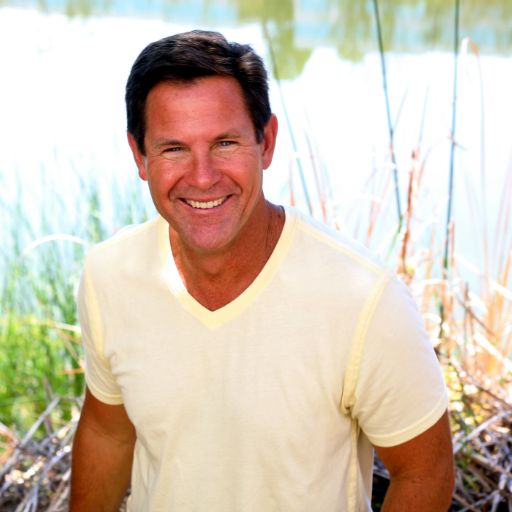
About JP Jones
JP Jones is the founding Senior Pastor of Crossline Church in Laguna Hills, CA. Beginning with 16 people, Crossline has grown to a congregation of over 2,000 in 10 years. This growth has come largely through people receiving Christ and joining the church. JP is a dynamic and articulate Bible teacher with a passion to see people come to Christ and grow into being multiplying disciples for Jesus. JP began his ministry career with Campus Crusade for Christ and continues to have a heart for the Great Commission. Traveling on mission trips all over the world, JP preaches the gospel and trains pastors to be reproducing spiritual leaders.
For the past 25 years, JP has been an Adjunct Professor of Theology and Biblical Studies at Biola University and Talbot School of Theology. A published author, JP has written Facing Goliath by Baker Books and the discipleship curriculums, Transformed and Livin’ Large by Life Together. JP is a popular speaker at Men’s Retreats and Couples Conferences. JP is married to his wife Donna and they have 3 children. JP loves family vacation, the beach, Ultimate Fighting and a good cup of coffee.
Contact Truth That Changes Lives with JP Jones
info@crosslinechurch.com
http://pastorjpjones.com/
23331 Moulton Parkway
Laguna Hills CA 92653
(949) 916-0250