

The Golden Rule, Part 2


There is a residual goodness in every person, but we are all sinners by nature and by choices. Even when we cross the line and come into new life in Jesus Christ there is still this internal struggle.
JP Jones: So there is a residual goodness in every person, but we're all sinners by nature and by choices. And so we're sinners. And even when we cross the line we come into new life in Jesus Christ, there's still this internal struggle.
Greg: Thank you for joining us on Truth That Changes Lives. Pastor JP Jones is the senior pastor of Crossline Community Church in Laguna Hills, California, and a professor in biblical studies at Biola University. Today on Truth That Changes Lives, Pastor JP will be giving us a message from a series entitled The Religion of Jesus. Let's listen in as JP gives part two of the Golden Rule.
JP Jones: A couple years ago, I was struggling through an issue where I felt like I'd been wronged and I was having a hard time forgiving someone. And I was in a conversation with a friend and telling her about it, and he looked at me and said, "Well, be careful. You better not pray that God judges them."
And I said, "Well, why?" And they said, "Well, if you pray that God judges them, you're basically giving God permission to judge you the same way. So do you want God to treat you with judgment or do you want God to treat you with grace?" And I said, "Grace." And they said, "Well, you better ask that God would give them grace too."
You see, that's in effect that's what Jesus says in the previous chapter, in Matthew chapter 6, when he talks about the Lord's Prayer or the disciples' prayer, and he says if you want God to forgive your sins, you need to be able to forgive the sins of others, forgive those who've sinned against you. Here in Matthew 7, he states it in the negative and says, "Don't judge, or you'll be judged."
In fact, this is a teaching that's consistent with all of what the New Testament reveals about the way we are to respond in behavior with one another. In Romans chapter 2, the Apostle Paul is painting a picture about how all of us are in need of God's grace in our lives. Nobody's life measures up to the holy standard of God.
In Romans chapter 1, he's just talked about the person whose behavior has spiraled away from God, whose behavior obviously is a violation of God's commandments. They're obviously a sinner. Romans chapter 2, he turns the corner and says, "Well, what about the person who really lives a moral life and they think they have moral superiority over the sinner?"
Here is what Romans 2 says about that person: "You, therefore, have no excuse, you who pass judgment on someone else, for at whatever point you judge the other, you're condemning yourself, because you who pass judgment do the same things. Now we know that God's judgment against those who do such things is based on truth. So when you, a mere man, pass judgment on them, and yet you do the same things, do you think you'll escape God's judgment?
"Or do you show contempt for the riches of God's kindness and tolerance and patience, not realizing that God's kindness is so that you will be led to repentance? But because of your stubbornness and your unrepentant heart, you are storing up wrath against yourself for the day of God's wrath when his righteous judgment will be revealed."
James chapter 4 says this: "Brothers, don't slander one another. Anyone who speaks against his brother or judges him speaks against the law and judges it. When you judge the law, you are not keeping it but sitting in judgment on it. There's only one lawgiver and judge, the one who's able to save and to destroy. But you, who are you to judge your neighbor?"
These are penetrating passages of Scripture, and there are many more basically saying the same thing, echoing the words of Jesus not to judge or we will be judged ourselves. When we judge others, we are making false assumptions about God, false assumptions about ourselves, and false assumptions about others.
When we judge, in effect we're saying, "God, you don't know what you're doing because you're letting this behavior slide, so let me help you out." When we judge, we're saying, "My stuff doesn't stink, therefore I am in the position to be able to look down on you." When we judge, we are kind of categorizing people with one stroke. We look at one particular behavior, but we want to paint their whole life with that.
When we judge, we're not thinking rightly about God, about ourselves, or about others. And it's not the way of kingdom disciples. So Jesus says don't judge. Here's the second don't: he says don't be a hypocrite. Verses 3 to 5: "Why do you look at the speck of sawdust in your brother's eye and pay no attention to the plank in your own eye? How can you say to your brother, 'Let me take the speck out of your eye,' when all the time there is a plank in your own eye? You hypocrite, first take the plank out of your own eye, and then you'll see clearly to remove the speck from your brother's eye."
Jesus is speaking in exaggerated terms and he's giving an illustration of hypocrisy. Now nobody likes a hypocrite. In fact, Jesus had the strongest words of rebuke for religious hypocrites. Matthew chapter 23, read that sometime. It's seven statements that Jesus says: "Woe, you scribes, Pharisees, hypocrites! Woe, you scribes, Pharisees, hypocrites!"
That English word "woe" is in the Greek—we say woe and we understand what that means. In the Greek, it's "ouai! ouai! ouai!" You can almost sound the way it's coming out. It's a statement of utter designation for judgment, and only Jesus Christ could do that. And what he reserves it for is religious hypocrites.
Don't be a hypocrite. Then he gives this illustration here. By the way, the word for hypocrite in the Greek culture and the Greek language was an actor, someone who's on the stage who wore a mask, had different masks that represented different emotions, and they'd put up a different mask, but you never saw the real person. So being a hypocrite is putting on a false front before people.
The illustration that Jesus gives is from carpentry, because Jesus was raised as a carpenter. He understood those terms. He says if there's a little splinter in your eye and you see a big beam in somebody else's eye, don't disregard the splinter in your eye because you want to take care of the beam in the other person's eye.
Don't act like, comparatively, it's just a little splinter so it doesn't really matter, but I really need to deal with that beam in your eye. Deal with your own stuff, that's what Jesus says. In fact, someone came up to me after the first service and said, "I think you had it wrong in the way you explained that, because you said you got to deal with the speck and he deals with the plank."
Well, if you actually read the passage, Jesus changes it. He says, "Why are you trying to deal with the plank in the other person's eye when not dealing with the speck in your eye?" And then he says it again and reverses it: deal with the plank in your eye and then you can take the speck out of the other person's eye. Does Jesus not know? Did he mess it up? No, he did that on purpose to be able to point out that's the problem with being a hypocrite: you don't judge things accurately.
You minimize your stuff and maximize somebody else's stuff. And you think your stuff really isn't that bad and somebody else's stuff really is bad, therefore I'm justified in talking about their stuff or dealing with their stuff. See, judging and being a hypocrite are very closely tied to one another. Why is it that we would even do this?
We look at it and we objectify it and we say that's just not the way of Jesus Christ. And I want to be a Christ follower, so that's not the way I want to live. But we all have to own to some degree we all do this. Why is it? Well, one of the reasons is just pride. We struggle with pride. We think we're better than other people.
Now very few of us would think we're better than Jesus, but what we would think is my particular struggles really aren't that bad, but that other person's stuff, that's really bad. So we feel justified in our hypocrisy and we don't think about it as being hypocritical. Pride. Another reason is not understanding what many people call the good-bad split. We tend to demonize some people and idealize other people.
We think some people are all good and other people are all bad. So people that we see as all good, we really give them a lot of grace and we see their struggles and their faults and their sins, but we really think they're a good person so we don't judge them because we think they're good. We make them all good.
And then on the other hand, people that we think are bad, we discount any positive contribution about their life and we maximize the parts we don't like or the parts we think God doesn't like, and we make them all bad. And then we feel okay in our hypocrisy because they're bad. Well, they're bad. That's why. They're bad. It's okay to talk about them because they're bad.
The point is there is both good and bad in every person. I hope they're not judging me right now. In baby talk, that means that stinks, that's a terrible sermon. Which, by the way, I said this to the first service and I'll say it to you: I'm not a prophet, I'm not the son of a prophet, but I'd be willing to bet that some of us will get in our cars right after church and before we get home, we will break these commandments of not to judge and not to be a hypocrite.
And you will talk either about me or about someone here in the church, about the way someone was dressed, about the car they were driving, about something that you heard in a conversation on the patio. And before you even get home, you will be judging and committing hypocrisy. And now I'm judging you by even saying that. Oh my gosh, it's a spiral! How do we get out of it?
Do you see how easy it is to do this? But we tend not to be able to have perspective when the Bible says there's good and there's bad in every person. Every person's created in the image of God. We're an image-bearer. So there is a residual goodness in every person, but we're all sinners by nature and by choices. And so we're sinners.
And even when we cross the line we come into new life in Jesus Christ, there's still this internal struggle. The Apostle Paul, the greatest Christian who ever lived, in Romans chapter 7 says, "Wretched man that I am, who will set me free from this body of death? Praise be to God that, though myself with my mind am serving the law of God, but with my flesh I'm serving the law of sin, but there is therefore now, even in the midst of this, no condemnation for those who are in Christ Jesus."
So even the most devoted, committed, spiritual Christian has good and bad in them. When we don't understand that, we paint people as bad, maybe because they wronged us or maybe because their behavior particularly is offensive to us or to someone that we love or care about, and then it is easy then to judge them. Jesus is saying kingdom disciples don't judge. Kingdom disciples don't be a hypocrite.
Now he's not saying here, though, that there is no place for speaking truth to one another. In fact, he actually affirms it. He says there is a place for speaking truth. There is a place for correction. There is a place for holding one another accountable. There is a place for confronting one another. There is a place for helping one another step into the discipleship that we've been called to as followers of Jesus Christ.
But the order is this: first take care of that speck or that plank in your eye, however you see it, and then go help the other person. Confess your own sins. Deal with your own issues before God, and then step out in truth and in grace to help someone else. Paul said it this way in Galatians chapter 6: "Dear brothers and sisters, if any believer is overcome by some sin, you who are godly should gently and humbly help that person back onto the right path.
"And be careful not to fall into the same temptation yourself. Share each other's burdens, and in this way obey the law of Christ. If you think you're too important to help someone, you're only fooling yourself. You're not that important. Pay careful attention to your own work, for then you will get the satisfaction of a job well done, and you won't need to compare yourself to anyone else."
Jesus says don't judge, don't be a hypocrite. Here's the third don't: don't be foolish. Verse 6: "Do not give dogs what is sacred and do not throw your pearls to pigs. If you do, they may trample them under their feet and then turn and tear you to pieces." What in the world is Jesus talking about? How does this fit into the context?
Dogs and pigs were unclean animals in the ancient world. Pigs were scavengers, they were considered unclean in the Jewish religion. But even dogs were scavengers. They weren't like your pretty little dog that you have, your pretty little pet that you have, the dog that you love, Rover. No, dogs were wild animals.
So dogs and pigs became a metaphor for describing a behavioral characteristic or a type of person. And both in the Old Testament and in the New Testament, dogs and pigs are descriptive of people who are God-rejecters, people who are mockers of the truth, people whose hearts are hard to the things of God. So Jesus is saying, listen, in the way you treat one another, the way you treat brothers and sisters in Christ, don't judge one another and don't be hypocrites.
First take the speck out of your own eye and then in love try to take the log out of a brother's eye. But you know what? Be careful with the dogs and the pigs, because they just want to chew you up. So before you take an attitude or speak words that are sacred to God with someone that's a dog or a pig, you better think about it, because they might want to turn that around and just chew you up with it.
Do you notice that Jesus really modeled this when you read the Gospels? Jesus did not answer every question that he was asked. People who were sincere seekers, Jesus extended himself with tremendous grace. But people that he knew their hearts were hard, he often responded to a question with a question. Or other times, he just didn't even answer their question because Jesus knew that wasn't the real issue and their only reason for asking a question was to try to trap him and trick him.
Some people, they have hard hearts. And so Jesus is saying there's one way we ought to treat one another and there's another way we ought to be wise and discerning about people who are dogs and pigs. In fact, in the book of Proverbs, which is the book of wisdom, the writer of the Proverbs basically describes this behavior as being a mocker or being a fool.
And this is what it says: Proverbs 1:7, "The fear of the Lord is the beginning of knowledge, but fools despise wisdom and discipline." Proverbs 9:7 and 8, "Whoever corrects a mocker, they just invite insults, but whoever rebukes a wicked man, they incur abuse. Don't rebuke a mocker or he will hate you. Rebuke a wise man and they'll love you."
Proverbs 12:15, "The way of a fool seems right to him, but he will not listen to advice." Proverbs 15:4, "The discerning heart seeks knowledge, but the mouth of a fool only feeds on folly." Proverbs 26:3 and 4, "Do not answer a fool according to his folly or you will become just like him. Answer a fool as his folly deserves or he will become wise in his own eyes."
So you see what Jesus is doing: he's giving us a corrective. He's giving us a balance. What is the general attitude that we are to have as kingdom followers? We're to be humble, we're to be authentic, we're to deal with our own stuff, we're to be willing to accept rebuke and correction. We're not to judge other people, we're not to be hypocritical. But we're not to be foolish either. We're not to just throw what God says is sacred out to pigs and dogs, because it'll just be used against us.
So to sum everything up, what's a general principle that ought to cover how we ought to treat everybody? Well, here's the do: it's the Golden Rule. "In everything, do to others what you would have them do to you, for this sums up the law and the prophets." Three don'ts and a do: don't judge, don't be a hypocrite, don't be foolish. Do to others what you would have them do to you.
In my studying about this this past week, I discovered why it's called the Golden Rule. Maybe you know this; I never knew this. There was an emperor named Alexander Severus who took this principle and had it written in gold across his wall. So don't say you never learned anything in church. There you go, you just got that: Golden Rule.
This truth is found in negative form in a lot of ancient wisdom literature, in China and in Greek world and in the Hebrew culture. But it's in the negative: don't do to someone else what you don't want to have done to you, essentially. Jesus puts it in the positive and puts it in not only the active but the proactive: positively do to others what you would want them do to you.
In other words, kingdom disciples are to be on mission in showing God's love to people, both inside and outside the church, both inside and outside the kingdom. Kingdom disciples are to proactively let their light shine before men that others may see their good works and glorify their Father in heaven. Jesus said the greatest commandment is to love God with all your heart, soul, mind, and strength. And here's the second that's like unto it: love your neighbor as you love yourself.
Jesus said, "By this all men are going to know that we are his disciples, by the love that we have for one another." Jesus gave a story to illustrate this. He said a guy was doing business and he was traveling from Jerusalem and he was on the way to Jericho. And all of a sudden robbers came and took all of his money, stole all of his clothes, and beat him up and threw him on the ground.
And a religious guy came by and went, "Man, look at that guy," stepped over him and kept on going. A guy who was a theologian, an expert in the law, came by and said, "That poor guy," stepped over him and kept on going. Then he says a Samaritan—on purpose he picked a Samaritan because in the Jewish culture Samaritans were looked down upon; they were the low person on the cultural totem pole.
Said a Samaritan came by, got off his horse, cared for the person, wiped his face, cared for his wounds, picked him up, put him on his horse, brought him into the first place he could find, paid for his room and board, and even gave him money for medicine. And, "I'm going on to do business, I'm going to come back and take care of him when I get back some more."
Then Jesus looks at the audience and says, "Now which of these three examples is the person a neighbor to the guy that got beat up and thrown on the road?" And they all said, "The Samaritan." And in that story of the Good Samaritan, Jesus taught kingdom disciples how we're to love our neighbor. We're to do unto others as we'd have them do unto us.
Greg: What a great message for all of us today. Pastor JP provides us with great insight. That is why we'd like to make it available to you on CD. Just get in touch and mention today's date. We'll send it your way for just $5. Or if you'd like to support this ministry, you can write us at Truth That Changes Lives, 23331 Moulton Parkway, Laguna Hills, California, 92653. Or give us a call at 949-916-0250. That's 949-916-0250.
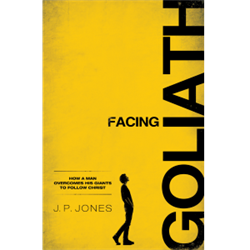
For your gift of $25 or more, we will send you a signed copy of JP's new book, Facing Goliath. Please join us every Sunday at 9:00 or 11:00 AM at Crossline Church in Laguna Hills. The address is 23331 Moulton Parkway, Laguna Hills, California, 92653. Or check us out on the web at crosslinechurch.com. We're going to get to the address and phone number again in a moment, but before we do that, Pastor JP, do you have any insight from today's message?
JP Jones: Thanks, Greg. We're looking at Matthew chapter 7 in the Sermon on the Mount. This is the greatest sermon ever preached by the greatest preacher who ever lived. The Sermon on the Mount is Jesus's teaching on kingdom discipleship. Jesus is his own authority. He doesn't appeal to any secular source, nor does he appeal to a religious source.
Jesus is the perfect god-man, God in the flesh, and these are God's words to us. Jesus is telling us the way of Christ, the way of relationship with God. And Jesus's way is a narrow way. It's a way that leads to absolute freedom, but it is a narrow way because it's the truth of Jesus and that truth alone. Jesus in Matthew chapter 7 is telling us how we love our neighbor.
He tells us two negative commands and one positive command. He says negatively don't judge others. He says negatively don't act as a hypocrite. And then he says positively do unto others as you would have them do unto you. You see, the way of Jesus is a narrow way. It's the way of absolute abandonment to the will of God, loving God with all your heart, soul, mind, and strength, and loving your neighbor as you love yourself.
In this way, Jesus says there's no room for judgment. We're sinners who come to God and experience his grace in our life, and none of us can point to others and say that their sin is worse than ours. We have no basis to judge others. Only God can judge. We need to pray for mercy for ourselves and pray for mercy for others.
In the same way, we shouldn't act as religious hypocrites who pretend to have everything together. We should be people who are in a journey seeking to grow more and more every day to become more like Christ and seeking to encourage others to join us in that journey. So Jesus says very strongly don't judge and don't be a hypocrite.
But positively he says do unto others as you would have them do unto you. This is the way of Jesus, not just saying no to the no's, but saying yes to the do's, living by the Golden Rule. That's the way of Jesus Christ. That's kingdom discipleship.
Greg: We want to help you in your relationship with Christ. Please get in touch with us at Truth That Changes Lives, 23331 Moulton Parkway, Laguna Hills, California, 92653. Or call us at 949-916-0250. On the internet, you will find us at crosslinechurch.com. We hope to see you at one of our services every Sunday at our new campus in Laguna Hills. For more information and directions, please go to crosslinechurch.com. Please join us next time on Truth That Changes Lives.
Featured Offer
Past Episodes

Featured Offer
About Truth That Changes Lives
About JP Jones
JP Jones is the founding Senior Pastor of Crossline Church in Laguna Hills, CA. Beginning with 16 people, Crossline has grown to a congregation of over 2,000 in 10 years. This growth has come largely through people receiving Christ and joining the church. JP is a dynamic and articulate Bible teacher with a passion to see people come to Christ and grow into being multiplying disciples for Jesus. JP began his ministry career with Campus Crusade for Christ and continues to have a heart for the Great Commission. Traveling on mission trips all over the world, JP preaches the gospel and trains pastors to be reproducing spiritual leaders.
For the past 25 years, JP has been an Adjunct Professor of Theology and Biblical Studies at Biola University and Talbot School of Theology. A published author, JP has written Facing Goliath by Baker Books and the discipleship curriculums, Transformed and Livin’ Large by Life Together. JP is a popular speaker at Men’s Retreats and Couples Conferences. JP is married to his wife Donna and they have 3 children. JP loves family vacation, the beach, Ultimate Fighting and a good cup of coffee.
Contact Truth That Changes Lives with JP Jones
info@crosslinechurch.com
http://pastorjpjones.com/
23331 Moulton Parkway
Laguna Hills CA 92653
(949) 916-0250