

The God We Worship, Part 9


The apostle Paul is trying to help us understand that these great truths of God, that sometimes are incomprehensible to us always have a real life application.
JP Jones: The Apostle Paul is trying to help us understand that these great truths of God that sometimes are incomprehensible to us always have a real-life application.
Greg: Thank you for joining us on Truth That Changes Lives. Pastor JP Jones is the senior pastor of Crossline Community Church in Laguna Hills, California, and a professor in biblical studies at Biola University. Today on Truth That Changes Lives, Pastor JP will be giving us a message from a series entitled First Things First. Let's listen as JP gives us part nine of The God We Worship.
JP Jones: If you have your Bible, would you open to Romans chapter 8? We're in a series where we're talking about first things first. We're looking at worship and answering two questions from scripture. Who is the God that we worship and how do we worship the true God? We've been looking at several key passages that lay out a doctrine of the nature of God and what it means to know him and love him and worship him in a life-transforming way. And we come to another passage of scripture that does exactly that in Romans chapter 8. Romans chapter 8 verses 28 to 39.
And we know that in all things God works for the good of those who love him, who have been called according to his purpose. For those God foreknew, he also predestined to be conformed to the likeness of his son that he might be the firstborn among many brothers. And those he predestined he also called, and those he called he also justified, and those he justified he also glorified. What then shall we say in response to this? If God is for us, who can be against us? He who did not spare his own son, but gave him up for us all, how will he not also along with him graciously give us all things?
Who will bring any charge against those whom God has chosen? It is God who justifies. Who is he that condemns? Well, Christ Jesus was he who died, more than that, who was raised to life, who is at the right hand of God and is also interceding for us. Well, who shall separate us from the love of Christ? Shall trouble or hardship or persecution or famine or nakedness or danger or sword? As it is written, For your sake we face death all day long. We are considered a sheep to be slaughtered. No, in all these things we are more than conquerors through him who loved us.
For I am convinced that neither death nor life, neither angels nor demons, neither the present nor the future nor any powers, neither height nor depth nor anything else in all creation will be able to separate us from the love of God that is in Christ Jesus our Lord. This is a passage that helps relate theology to life because the theology of this passage is the sovereign love of God. The fact that God rules and rules in salvation and rules over the circumstances of life. God's a God of providence. And he's a God who is committed to the people whom he loves.
And the way this is worked out in this passage is that the author, the Apostle Paul, is trying to help us understand that these great truths of God that sometimes are incomprehensible to us always have a real-life application. No matter what we're going through or what we're facing, we can have the absolute certainty that God loves us and that God's in charge. That's the application. No matter what your challenges are, no matter what your difficulties are, no matter what your temptations are, no matter what your financial portfolio looks like, no matter what condition your marriage is in, no matter what your kids are doing, no matter what the doctor tells you from your yearly checkup, God loves you and God's in charge.
That's what this passage is telling us. It's relating these truths of the infinite nature of God to the real stuff of life. And when we understand that thing, then we become worshippers, you see. Because we bow down before a loving God, a sovereign God, a holy God, a good God, and we give back to him what he deserves, our whole lives, a total surrender. That's what worship's all about. So there's some observations I want to make from the text and trying to relate what's being said here to understanding who God is and understanding how we respond to God in worship.
Here's the first observation. God uses all things to work for the good of those who love him. If you've been around the Christian life for any amount of time somewhere along the way, you've heard Romans 8:28. And we know that in all things God works for the good of those who love him, who've been called according to his purpose. Each phrase in that verse is powerful. The first phrase, And we know the ground of dynamic, confident living is in what we know to be true about God. If we don't know what's true about God, we can't live with confidence.
Because if we don't know what's true about God, we are at the mercy of every circumstance that comes into our life. But when we know what's true about God, we're able to live above our circumstances. We're able to have an enduring hope and we're able to have a supernatural love and we're able to have a confident faith because of what we know to be true about God. Now the Apostle Paul says here, And we know, and he uses the standard Greek word for knowledge, but he puts it in a particular grammatical construction. It's known as the perfect tense in Greek.
The perfect tense means a completed action in the past that has ongoing, continual, effective results into the present. In other words, there came a time in Paul's life when he understood some things about God and those things that he understood about God continued to make a difference in his life. Let me ask you, are you putting into practice the things you know about God? Or are you like a person who's come to know some things about God, but every day you kind of live like an atheist questioning whether God really exists or not? Paul says, Because I know these things, they're making a dynamic difference in my life.
What we know to be true about God is not meant to be given to us so that we can pass some theology test in the sky. Now what we know to be true about God has been revealed to us so that it might change our lives. We need to draw upon what we know to be true about God. When we're facing tough situations, when we're facing temptation, when we're facing conflict with our spouse, when we're facing a financial challenge, when we're facing depression, when we're facing cancer, when we're facing an economic crisis, we need to draw upon what we know to be true about God.
We need to know what we know. Our knowledge of God is life-changing. And we know that in all things God works for the good of those who love him and are called according to his purpose. In all things the Apostle Paul is telling us God doesn't just work in some things, he works in all things. Now you think, Well, of course that's true, but now think about it. Don't we tend to separate parts of our life and areas of our life and circumstances of our life and begin to think, Yeah, God's working here, but he's not working over here.
I do that. I have to confess I do. When I am experiencing something that I don't think should be happening, when God doesn't seem to be answering my prayers, when my expectation of the Christian life isn't being realized, I wrongly conclude God's not working here or God doesn't care about me here or this is just happening, you know, haphazardly or this is I would never say this, but I might entertain the thought about it. This is out of God's control. See, this is just part of living in a sinful world and this stuff just happens.
And God either can't do anything about it or has willed not to do anything about it. That 's wrong thinking. And that kind of wrong thinking leads you straight to despair and robs you of hope and makes you vulnerable to all kinds of temptation. Because what's true and we know that in all things God works for the good to those who love him and have been called according to his purpose. See, it's in the all things that God's at work. You mean God could be working in stuff like terrible situations and setbacks and negative Yeah, exactly.
We we saw on the on the video clip about the men's retreat. It was really taken from the movie Braveheart, right? And one of the great things about the movie Braveheart and William Wallace was his broadsword. He had this huge sword that he used that characterized him as a as a fighter. Well, you know how they make broadswords? They take the the raw material, the metal, and they heat it up to unbelievable temperatures. And then the the craftsman takes a sledgehammer and continually pounds and pounds and pounds and pounds on that metal until it becomes tempered steel.
Heat and pounding. Is that what you feel like is going on in your life right now? And we know that God causes all things, even heat and pounding, to work for the good. Maybe he's trying to make you tempered steel. It takes the heat and the pounding to become tempered steel. God uses all things. He works in all things. It's the the Greek verb soon is together with is to energize or to work towards a purpose or completion. God is putting together everything in our lives to work for the good because we love him. We've been called according to his purpose.
That's the that 's the sovereign love of God. That's the sovereign purpose of God. He's working in all things. God works. We can trust in his working. We can we can have confidence that he is who he is and he's using what's happening for the good that he's called us to, you see. And all you have to do is read the Bible and biographies of the Bible and you understand that's true. Joseph got betrayed by his brothers and thrown into a pit, got sold into slavery, got falsely accused by Potiphar's wife, got thrown into the darkest dungeon in Pharaoh's jail.
But all of those things were part of the plan that God has to make him the most powerful man in Egypt. Daniel, falsely accused. First he's taken out of his country, taken off as a slave, made to be a eunuch, falsely accused, thrown into a lion's den so that he could become the most powerful person in Persia and could be the man that God used to write prophetic scripture that would tell us about the coming of Messiah. The Apostle Paul, thrown into prison, beaten, shipwrecked. In fact, the very testimony about Paul, God said to Ananias, I'm going to show him how many things he must suffer for my name's sake.
I'm not so sure I'd want to sign up for that one. I don't know if I'd want God to say that about me to you all. I want to show you all the things that JP must suffer for my name's sake. Yet the Apostle Paul was the guy that God used to plant churches, spread the gospel, and write most of the New Testament. What about Jesus? I mean, if there was ever a case of someone who was mistreated, falsely accused, wrongly understood, betrayed, beaten, scourged, and yet Philippians 2 says that God has given him a name that's above every name, that the name of Jesus every knee will bow and every tongue will confess that Jesus Christ is Lord.
You see, God works all things for the good of those who love him and are called according to his purpose. Here's a second observation. God has already foreknown, predestined, called, justified, and glorified those whom he saves. Whoa, that's a mouthful. I just took that right out of the scripture. That might be one of those passages skip over because you don't know what those words mean or you skip over because you're scared of the theological implications of them. But that's what the Bible says. God has already foreknown, predestined, called, justified, and glorified those whom he saves.
That mean that's right out of Romans 8:29 and 30. For those God foreknew, he also predestined to be conformed to the likeness of his son that he might be the firstborn among many brothers. And those he pressed predestined he also called, those he called he also justified, those he justified he also glorified. You might even throw in there Kentucky fried and refried. He did it all. Now these verbs describing all these actions, these are in what 's known as the aorist tense in Greek. Aorist tense is a past tense verb, means something that happened in the past.
So here's the Apostle Paul describing the work of salvation to God. And from God's vantage point, everything that needed to be done for us to be saved has already been done. These are also spoken in the past tense. God has already foreknown us, predestined us, called us, justified us, and glorified us. There's tremendous mystery here. I I mean, there's there's tremendous paradox. Because there is a sovereign God not bound by space and time because he created space and time, and the sovereign God has already stated with certainty and finality his actions of foreknowing, predestining, calling, justifying, and glorifying those whom he saves.
You might be sitting there going, Well, gosh, how do I know if that includes me? It's really interesting the way scripture answers scripture. Chapter 1 starting in verse 4 the Apostle Paul says this, For we know, brothers loved by God, that he's chosen you. So here's Paul talking about how you know if you've been chosen. For we know, brothers loved by God, that he's chosen you because our gospel came to you simply with words, but with power, with the Holy Spirit, with deep conviction. You know how we lived among you for your sake. You became imitators of us and the Lord and in spite of severe suffering, you welcome the message with the joy given by the Holy Spirit.
He takes a theological question and gives a practical answer. He says, This is how I know that God chose you. When I preached the gospel, you accepted it and received Jesus into your life. You want to know whether God's chosen you? Accept and receive Jesus. He chose you if you did that. Well, that didn't seem like an answer. That's the answer God gives. You can sit and try to debate the theology and you can try to argue with God to your ultimate judgment. Or you can humble yourself and receive the offer of the gospel and you can know with certainty you've been chosen.
Isn't that wild? Or what about me? I'm I'm on the other side. I already know that I've received Christ. I already know God must have chosen me. What about me? You know what Peter says in 2 Peter chapter 1? You are to make your calling and your election more certain by obeying the commands I've given you. If you already know, obey what you know. That's how you can know that you know. You see, God will never allow himself to be leveraged by us, not leveraged by our intellectual questions or leveraged by our threats or leveraged by our pride.
God never allows himself to be leveraged. God is God and we're not. God states that he foreknew us, predestined us, called us, justified us, and glorified us. There is tremendous mystery there, but the resolution of the mystery is not going to be on this side of heaven. The response to the mystery is to bow down and worship him and to humbly receive his offer of forgiveness and salvation. So if you're here today and you don't know with certainty that you've been chosen, this is how you know, accept Jesus Christ today. Believe in Jesus today and you can know for sure you've been certain you've been chosen.
If on the other hand you know Jesus rather than question how God did what he did, obey what you already do know and follow the lordship of Jesus Christ in your life. That's what Paul's saying here because what is Paul saying in the big context of Romans 8 at the end of this chapter? He's saying life happens. You can face it on your own and it'll just lead you to despair or you can trust in a sovereign, loving, and good God who uses everything. And it may not change your circumstances, but it'll change you. Because you'll be able to have hope and you'll be able to have joy and you'll be able to have confidence because you know that there's a God who foreknew you and predestined you and called you and justified you and glorified you and is working in all things for your good.
That's what the scripture says. And when we process that stuff and we know that stuff, we fall down before God and we worship him. Do we still have questions? Of course we have questions. But we we even present our questions to him. We humble ourselves. We surrender ourselves. We do what Romans 12 says, Therefore by the mercy of God, we we present our bodies as living and and holy sacrifices acceptable to God who is our spiritual service of worship. Here's a third observation. God will protect us and keep us secure. God will protect us and keep us secure.
Verses 31 to 34 say this. What then shall we say in response to this? If God is for us, who can be against us? See, in response to what? In response to that stuff where he foreknew and predestined and called and justified and glorified. What's the response that we should have to this mysterious theological truth? The response, God is for us. Who can be against us? Don't worry about the stuff you don't know. Rest in the stuff that's clear. All that means is God is for me. God loves me. God's on my side. Verse 32.
He who did not spare his own son, but gave him up for us all, how will he not also along with him graciously give us all things? Who will bring any charge against those whom God has chosen? It's God who justifies. Who is he that condemns? Christ Jesus died more than that, was raised to life, at the right hand of God, and he's also interceding for us. Now here's the point. God will protect and keep us secure. Why? Because Paul asks a series of questions that anticipate opposition, antagonism, and accusation. He says, Who can be against us?
How will he not give us all things? Who will bring a charge against us? Who will condemn us? Now I'm going to ask you a Sunday school question and I want a Sunday school answer. If God asks who can be against you, who will condemn you, who will bring a charge against you, does that imply there may be someone who will try to condemn you, someone who will try to bring a charge against you, someone who will try to accuse you? Yes or no? Yes. Let me ask, in your life has anyone or anything external or internal ever tried to accuse you, attack you, or defeat you?
What does God say? If God is for you, who can be against you? That's what this truth is all about. This is where theology meets life. The theology that God is bigger than we can understand, that God is in control, that God has it all planned out, that God is good, that God loves us is meant to give us comfort and hope and security and confidence, you see. God will protect us and keep us secure. See, Paul asks these questions and he answers the questions. There is no enemy spiritually, physically, emotionally, relationally, psychologically that can ever ultimately accuse us, condemn us, or defeat us.
That's what this passage says. Why? Because God is for us. How do I know God is for me? He sent his son, Jesus. He didn't spare his son. He sent Jesus to die for me. How do I know God is for me? Jesus died. He was raised from the dead. He's seated at the father's right hand and right now he's interceding for me. That's what it says in the passage. In God because he did that, it says, we'll graciously give us all things. He uses the Greek verb means grace. means to graciously give.
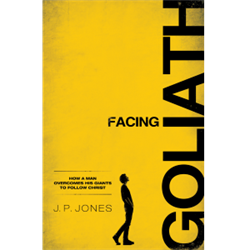
Greg: What a great message for all of us today. Pastor JP provides us with great insight. That is why we'd like to make it available to you on CD. Just get in touch and mention today's date. We'll send it your way for just $5. Or if you'd like to support this ministry, you can write us at Truth That Changes Lives, 233 31 Molten Parkway, Laguna Hills, California 92653 or give us a call at 949 916 0250. That's 949 916 0250. For your gift of $25 or more, we will send you a signed copy of JP's new book Facing Goliath.
Please join us every Sunday at 9 or 11 a.m. at Crossline Church in Laguna Hills. The address is 233 31 Molten Parkway, Laguna Hills, California 92653. Or check us out on the web at crosslinechurch.com. We're going to get to the address and phone number again in a moment, but before we do that, Pastor JP, do you have any insight from today's message?
JP Jones: Thanks, Greg. We're in a study talking about who is the God that we worship and what does it mean to worship the true God? We're seeing from scripture that God is awesome, he's holy, he's sovereign, he's the king. He loves us with a holy and sovereign love. And in Romans chapter 8 we're reminded that this love that God has for us reaches down into our lives and sustains us through all the trials and difficulties that life throws at us. God loves us and God works all things for the good for those who love him and are called according to his purpose.
We can trust God because he is a sovereign God and he's a loving God and he's good. That's the very heart of God and the very nature of God. He's the king. He's in charge. He's in control. He loves us. He's put his love on us and nothing will ever separate us from his love and he's intrinsically good. And so God will work even through the good, the bad, and the ugly of life for the good of those who love him and are called according to his purpose. God's for us. He's demonstrated that by sending Jesus Christ to die for us, to rise from the dead, to be ascended to his right hand and to reign and to intercede for us right now.
God's love is interceding for you as a believer in Jesus Christ. That's the love that the father has for you and the father has for me. God loves us and God is good and God is sovereign. Let's respond to God 's love by thanking him and acknowledging our surrender to him. God, thank you so much that you are the God who loves us. You are the God who's in control and who sovereignly rules. You're the God who's good. You have provided our salvation through Christ, Christ's death and resurrection, and you you keep us secure in our salvation because Jesus always lives to intercede for us.
We thank you for that in Jesus' name. Amen.
Greg: We want to help you in your relationship with Christ. Please get in touch with us at Truth That Changes Lives, 233 31 Molten Parkway, Laguna Hills, California 92653 or call us at 949 916 0250. On the internet you'll find us at crosslinechurch.com. We hope to see you at one of our services every Sunday at our new campus in Laguna Hills. For more information and directions, please go to crosslinechurch.com. Please join us next time on Truth That Changes Lives.
Featured Offer
Past Episodes

Featured Offer
About Truth That Changes Lives
About JP Jones
JP Jones is the founding Senior Pastor of Crossline Church in Laguna Hills, CA. Beginning with 16 people, Crossline has grown to a congregation of over 2,000 in 10 years. This growth has come largely through people receiving Christ and joining the church. JP is a dynamic and articulate Bible teacher with a passion to see people come to Christ and grow into being multiplying disciples for Jesus. JP began his ministry career with Campus Crusade for Christ and continues to have a heart for the Great Commission. Traveling on mission trips all over the world, JP preaches the gospel and trains pastors to be reproducing spiritual leaders.
For the past 25 years, JP has been an Adjunct Professor of Theology and Biblical Studies at Biola University and Talbot School of Theology. A published author, JP has written Facing Goliath by Baker Books and the discipleship curriculums, Transformed and Livin’ Large by Life Together. JP is a popular speaker at Men’s Retreats and Couples Conferences. JP is married to his wife Donna and they have 3 children. JP loves family vacation, the beach, Ultimate Fighting and a good cup of coffee.
Contact Truth That Changes Lives with JP Jones
info@crosslinechurch.com
http://pastorjpjones.com/
23331 Moulton Parkway
Laguna Hills CA 92653
(949) 916-0250