

The God We Worship, Part 6


We tend to think, "The problem is with God. He is not being who He should be!" Rather than humbly saying, "The problem is with me! I have got a wrong view of God!"
JP Jones: We tend to think the problems with God. He's not being who he should be, rather than humbly saying, the problems with me. I've got a wrong view of God.
Greg: Thank you for joining us on Truth That Changes Lives. Pastor JP Jones is the senior pastor of Crossline Community Church in Laguna Hills, California, and a professor in Biblical Studies at Biola University. Today on Truth That Changes Lives, Pastor JP will be giving us a message from a series entitled First Things First. Let's listen as JP gives us part six of the God we worship.
JP Jones: There's something about the holiness of God that is identifying as to his nature, even above other perfections. The holiness of God reveals his absolute uniqueness because the root word in both the Hebrew and the Greek of holiness is to be set apart. God is set apart. He's different. He is absolutely unique. The moment we think we've figured God out, we haven't. Holy, holy, holy is the Lord God Almighty. It not only refers to his moral perfection, and we see some of that as Isaiah encounters the holiness of God and immediately becomes convicted of his sin, but it's more than just the sense of God's moral perfection.
It has to do with his absolute uniqueness in in every category that we would even try to evaluate or measure him. He's beyond our sense of understanding and explanation. The holiness of God is like this this light that is so brilliant and blinding that we actually have to turn away from it. We're attracted to it because of its absolute brilliance, but as we look at it, we can't because it would cause us to go blind, so we have to turn away from it. The holiness of God is like that. There's something about the holiness of God that is so compelling and attractive that it draws us, but as we clearly see it, it blinds us at the same time.
Holiness is the expression of God's nature, and it's an absolute prerequisite to Biblical worship. Again, I appeal to the book of worship, the book of Psalms. Psalm 29. Ascribe to the Lord the glory due his name. Worship the Lord in the splendor of his holiness. Sing to the Lord, that's Psalm 29. Psalm 30. Sing to the Lord, you saints of his. Praise his holy name. Psalm 33. In him our hearts rejoice for we trust in his holy name. Psalm 96. Worship the Lord in the splendor of his holiness. Tremble before him all the earth. Psalm 97.
Rejoice in the Lord, you who are righteous, and praise his holy name. Psalm 99. Let them praise your great and awesome name. He is holy. Psalm 99:5. Exalt the Lord our God and worship at his footstool. He is holy. Psalm 99:9. Exalt the Lord our God and worship at his holy mountain, for the Lord our God is holy. Psalm 105. Glory in his holy name. Let the hearts of those who seek the Lord rejoice. Psalm 106. Save us, oh Lord our God, and gather us from the nations that we may give thanks to your holy name and glory in your praise.
Psalm 111. He provided redemption for his people. He ordained his covenant forever. Holy and awesome is his name. Psalm 145. My mouth will speak in praise of the Lord. Let every creature praise his holy name forever and ever. See, here in the Psalms, the holiness of God is inseparably related to the posture and attitude and expression of worship. So until we really understand that God's holy, we won't really worship him in a Biblical way. Our worship will be defective and inadequate. It requires us to see God as holy to offer him holy worship. But you see, this comes back to the heart of of our struggle.
We entertain such low view of God. We are tempted to think higher of ourselves and smaller of God. We struggle with the God that we've dreamed up in our minds, the God who doesn't meet our expectations, the God who doesn't answer all our prayers, the God who just doesn't perform the way we think God should. And we more easily think there's something wrong with God than realize there's something wrong with our view of God. You know what I'm talking about? We tend to think the problems with God. He's not being who he should be, rather than humbly saying, the problems with me.
I've got a wrong view of God. And at the heart of that is that we're missing his holiness. We're missing his holiness. You see, an understanding of the holiness of God not only is appropriate and proper and gives him the glory that he deserves, but it frees us to worship him with reckless abandon. Just going all out in loving him and serving him and rejoicing in him and praising him and giving him thanks and surrendering every parts of our life to him and and living in the fullness of who he is and the joy that he wants to give us.
We rub ourselves of all of that by not pressing on to really embrace his holiness. God is holy. And when we know and believe and trust that God is holy, we rest in his absolute perfection. We're convicted of our sin, but we're also assured of our forgiveness. And we're comforted by his love, and we're prompted by the fear of the Lord to serve him all out. And as a result, we're really set free. God's holy. Here's a another observation from this passage. God is omnipresent. Again, that this one of those great theology words. It says in the text, the whole earth is full of his glory.
Now, unpacking what omnipresent means, it's this. God is everywhere at the same time all the time. God's everywhere at the same time all the time. That 's what the woman of Samaria learned in her conversation with Jesus in in John chapter 4. Remember the story? Jesus goes into Samaria. He didn't have to go into Samaria, but he went to Samaria because he wanted to tell this woman about God and salvation. So he goes into Samaria. He asks her to get him something to drink. She thinks, you know, what are you asking me for something to drink?
It's broad daylight. You're a man. I'm a woman. You're a Jew. I'm a Samaritan. Okay, I'll get you something to drink. Then Jesus says, if you knew who I was, you'd ask me and I'd give you living water and you'd never thirst again. Sounds pretty good. Give me some of that living water. You you something first you got to take care of. Go get your husband. Uh, I don't have a husband. I know you don't have a husband. In fact, you've had about five or six guys who were your husbands, and the guy you're living with right now is not your husband.
Wow, you're a prophet. Oh. Uh, tell me. I have this great theological question now all of a sudden that I want to ask you. Yeah, I mean the whole question is occasioned by the fact that she's confronted with her sin, didn't want to deal with her sin, so she asks this theological question, which by the way I find that happened all the time. That 's like the impetus of my Jacuzzi ministry gang. You start talking about the reality of the gospel, and all of a sudden people become theologians and philosophers about all these questions that are really pressing to them, that they really could care less about.
But when the heat's on about their own life and having to repent, now they're filled with all these deep philosophical questions about God. So she asks Jesus, hey, you know, you Jews say you worship on that mountain, and we Samaritans say we worship on this mountain, so you tell me which mountain should we worship? Remember Jesus' answer? God is spirit, and those who worship him are to worship in spirit and truth. For such the Father seeks to be his worshippers. The impetus of his answer was it's not where you worship, it's who you worship and how you worship.
But in his answer, what he revealed is God is spirit. God is not bound by time and space. God is and here's a great word for you. You know I I like words. Here's another one. God is incorporeal. Ooh. He's not bound by a body, a physical body. God transcends time and space, and the reality that God transcends time and space we describe as being omnipresent. God is everywhere at all times. Now, you could just leave that alone and pretend that that's just, you know, okay, I checked that little box off my catechism class and I learned something about God, or you could think about what that really means as a worshiper.
You know what it means? You can never escape from God. You can run, but you cannot hide. Jonah tried it. God found him out in the sea. God found him in the belly of a whale. You can never escape from God. Some of us right now may be here, but we're really running from God in our hearts. Some of us maybe think we're getting away with something and God didn't seen it. He's everywhere at all time. He sees everything we do. He sees who we hang out with. He sees what places we go to. He sees what we look at on the computer.
He's everywhere at all times. You can't escape God. So the reality of God's omnipresence convicts us, humbles us, and should bring us to repentance. But here's something else. You can always find God no matter where you are, no matter what situation you find yourself in, no matter what trouble you've caused for yourself, no matter what trouble somebody else has caused for you, no matter where you are, you can always find God. Moses found God out in the middle of the desert. Daniel found God in the midst of the lion's den. Jonah found God in the belly of a great fish.
Paul found God in prison. John found God on the isle of Patmos. Jesus found God in the Garden of Gethsemane. No matter where you are, you can find God. Right now, here in this space you can find God. He's omnipresent. He's here. And he'll be with you when you get in your car and he'll be with you when you go home. Here's another observation from the text. God is almighty. God's almighty. This is what it says, verse 3 and following. And they were calling to one another, holy, holy, holy is the Lord almighty. The whole earth is full of his glory.
And at the sound of their voices, the door posts and the threshold shook and the temple was filled with smoke. Woe to me, I cried. I'm ruined. For I'm a man of unclean lips and I live among a people of unclean lips. My eyes have seen the king, the Lord almighty. Now, what's interesting is the writers and translators of the New International Version have chosen to translate this differently than if you have the King James version or if you have the New American Standard version of the Bible. Don't worry that it's somehow wrong. That's a it's it's an appropriate inference, but there actually is a title for God that is God almighty, El Shaddai.
That's the Hebrew word that literally means God almighty. This term is not El Shaddai, which you could think if you knew El Shaddai was God almighty and then you saw God almighty in here in the translation. This is The Lord of Hosts. But apparently the translators of the New International Version thought, you know, in our culture that name is maybe lost its significance or meaning. And if you say the Lord of Hosts, people may not understand the significance of what that means. And so we'll just kind of give the inference or the implication of what that means and say God almighty.
And there is an aspect to the Lord of Hosts that it's God almighty, but it also misses some nuances that I want to bring out to you because Yahweh Sabaoth used about 200 times in the Old Testament. It's literally translated Lord of Hosts or the Lord of Angel Armies or God our conqueror or God our warrior or God who defeats all of his enemies. Now, I don't know about you. I do know this about me, and the guys that I disciple and men that have been in our men's ministry know this. I really understand, and that's why I teach a lot, especially with men, that we're in a battle.
The Bible says that we're in a spiritual battle against the world, the flesh, and the devil. And I'll tell you, it gives me great comfort and confidence and hope that the God that I know and serve and has called me is Lord Sabaoth, the warrior, the conqueror, the God of Angel Armies who merely has to speak and he defeats all of his enemies, including the demons and Satan himself. Yes, Lord Sabaoth, Yahweh Sabaoth, Lord of Hosts. It does mean God almighty, but it means even more. Our God is a warrior who fights for us. Our God is a conqueror who defeats our enemies.
And if you've ever been in a battle, you will appreciate that. A couple of years ago I was in a season of my life where I had some people saying some things about me that I had no control over, but they weren't true. And I couldn't do anything about it. I couldn't go track everybody down and try to tell them the truth. All I could do is get on my knees and cry out, God, you are the Lord of Angel Armies. Fight for me. Defend me. Clear this up. Straighten it out. Let the truth prevail.
And if you've ever been in that situation, you know exactly what I'm talking about. Maybe you're facing something right now that has nothing to do with that, but it's a challenge, it's an obstacle, it 's a temptation, it's a barrier, it's a battle. It's so huge. You know you can't win, but God can. And so it's comforting to know that God is the Lord almighty, but it gives you confidence to know he's the Lord of Angel Armies. He's our warrior. He will fight for us. And we can have the kind of faith that Joshua and Caleb had and David had when he saw Goliath.
The battle belongs to the Lord. Why? Because he's Yahweh Sabaoth, the Lord of Hosts. He is God almighty. As one writer has said, to summarize this, the Lord of Hosts, Yahweh Sabaoth, it's the name of God we find used in scripture when a man or woman is at the end of their rope, so to speak. Yahweh Sabaoth is a strong tower which God has made available for those times. When we fail and we're powerless, when our resources are inadequate, when there is no other help and it is especially during those times that one comes to appreciate that God is truly the Lord of Angel Armies.
He is our comfort and our confidence. I think you could say hallelujah to that. It's okay.
Guest (Male): Hallelujah.
JP Jones: Amen. I got two more things, so you got to listen quick. God is forgiving. This is Isaiah's experience. Then one of the seraphs flew to me with a live coal in his hand, which he had taken from the tongs from the altar, and with it he touched my mouth and he said, see, this has touched your lips. Your guilt is taken away and your sin atoned for. See, God knows and sees our sin. But he loves us and he forgives us. That's why the Bible says in Romans 5, God demonstrates his own love towards us and that while we were still sinners, Christ died for us.
And he even sets it up that says, for one will hardly die for a righteous man, but Jesus, while we are still sinners, died for us to show us how much God loves us. God knows our sin. He sees our sin. He has sent his son Jesus Christ to make atonement for our sin. God forgives us, and God forgives us both in a judicial sense and in a personal sense. Let me try to explain that. In a judicial sense, that's the meaning of the great term justification. To be justified means to be declared righteous. God as a judge pronounces a verdict.
He sees that we're sinners, but because Christ has paid the penalty, he declares us not guilty. He declares us righteous. So in a judicial sense, God forgives us. That's that's all about justice being satisfied. The justice of God's holiness has been satisfied because Jesus made atonement for our sins. And so God acquits us. But he forgives us personally because Isaiah convicted of the awesomeness of God, the holiness of God, the almightiness of God, the kingship of God falls on his face and says, woe is me. It's almost like a You can just hear it cuz he says in the passage, I'm a man of unclean lips and I live among a people of unclean lips.
I'm a sinner who sins amongst a bunch of other sinners. And my particular sin, my mouth, which just reflects what's in my heart. So God forgives him, but how does he do it? He takes a coal from the altar and where does he touch him? On his lips, where he had just confessed, that's my sin. So in a judicial sense, Isaiah was forgiven, but in a personal sense God says, I want you to know that what you feel the most shame about, I'm forgiven that. What do you feel the most shame about? Oh, you know what?
Listen. I am a sinner who sins and I don't understand all the psychology about this. Scott, you could probably help me out of the rest of us out understanding why we could say on an intellectual level, this is a sin, this is a sin, this is a sin, but some things just just make us feel rotten about ourselves. You know what I'm talking about, right? You know that. It's we can intellectualize and say it's no more of a sin than this, but somehow in our own matrix we feel much more guilt and shame over this particular behavior.
That was Isaiah's behavior and that was the very thing that God wanted to assure Isaiah about. I've forgiven that. God wants you to know he's forgiven you. Yes, judicially you're forgiven. He wants you to know you're really forgiven of the stuff that you won't forgive yourself about. The stuff you really feel bad about yourself about, God wants you to know he knows that and he forgives that. God is forgiving. And when we embrace that and accept that, well, we can't help but worship him. And one last thing, God's personal. Interesting thing about this passage and it actually was the first thing that I noticed doing I was studying it kind of again.
I've taught on this passage many times. I've read it devotionally, prayed through it many times, but in just reading it again, this was the first thing I noticed, the first line and the last line, first verse and last verse. In the year that King Uzziah died, I saw the Lord. Last verse, verse 8. And I heard the voice of the Lord saying, whom shall I send and who will go for me? I saw the Lord and I heard the voice of the Lord. Boy, that's worship right there, seeing God and hearing God. If we don't see God and if we don't hear from God, we're just going through motions.
You know, it's you know, like the old cheer lead the left, lead the right, stand up, sit down, fight, fight, fight. That's all church is to us. You know, stand up, sit down, bow your head, and you know, sing a song, go. Now, worship is seeing God and hearing God. And why is it that we can see him and hear him? Cuz he's personal. He's relational. He shows up. He makes himself known. He wants us to see him. He wants us to hear from him. He wants to be involved in our life. He wants to change our life.
That's something I got to ask myself, that you have to ask yourself. Am I seeing God? Am I hearing God? And not just hear in worship, but in my personal times with him in prayer, in my life, in my just my life. Certainly when we gather for worship, but in my day-to-day life, am I seeing God and hearing God? If not, I I'm not going to be able to press on to worship him in a way that brings him glory and brings me joy and blesses other people. And the reason why I can see him and the reason why I can hear from him is he's personal.
This morning, God is here. He's personally wants to transform our church and transform our lives. Are our hearts fully open to him? We're going to respond in worship and song and prayer. It's our time to in our head and our heart and with our bodies express back to God that we have seen him and we've heard from him. And maybe this morning if you've seen him and heard from him in a very defining way, you want to express that in some way. Maybe this morning you want to say yes to Jesus Christ and ask Jesus to be the Lord of your life and and cross line and be saved.
Or maybe this morning you want to surrender something to God. Or maybe this morning you need some kind of help and somebody to pray for you to take that next step in following after God as we respond back in worship. I'm just going to kind of be over there worshiping and praying myself. And if you would love for me to be able to hear you, pray with you, just share with what you're experiencing, I I invite you to to respond in some way. And uh let's let's give back to God in response to who he is.
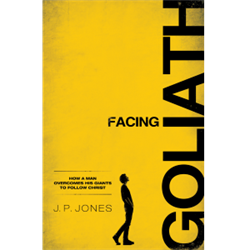
Greg: What a great message for all of us today. Pastor JP provides us with great insight. That is why we'd like to make it available to you on CD. Just get in touch and mention today's date. We'll send it your way for just $5. Or if you'd like to support this ministry, you can write us at Truth That Changes Lives, 233 31 Molten Parkway, Laguna Hills, California 92653. Or give us a call at 949 916 0250. That's 949 916 0250. For your gift of $25 or more, we will send you a signed copy of JP's new book Facing Goliath.
Please join us every Sunday at 9 or 11 a.m. at Crossline Church in Laguna Hills. The address is 233 31 Molten Parkway, Laguna Hills, California 92653. Or check us out on the web at crosslinechurch.com. We're going to get to the address and phone number again in a moment, but before we do that, Pastor JP, do you have any insight from today's message?
JP Jones: Thanks, Greg. We're in this study on the person, knowledge, and worship of God. Who is the God that we worship? And we've been discussing the fact that God is holy. Let me ask you, how are you responding to the holiness of God? Are you bowing to him in worship? Are you acknowledging him as the Lord of your life? Are you calling out to him as your one and only savior? When we see that God is holy, we put him in the rightful place of the center of our lives as the one we worship, as the one we seek after, as the one we live our whole lives for to glorify.
Let me invite you to fully surrender your lives to the holy God. Let's pray. Father, thank you that you are holy. We worship you. We acknowledge that you are our only savior and we surrender our whole lives to you in Jesus' name. Amen.
Greg: We want to help you in your relationship with Christ. Please get in touch with us at Truth That Changes Lives, Truth That Changes Lives, 233 Molten Parkway, Laguna Hills, California 92653. Or call us at 949 916 0250. On the internet you'll find us at crosslinechurch.com. We hope to see you at one of our services every Sunday at our new campus in Laguna Hills. For more information and directions, please go to crosslinechurch.com. Please join us next time on Truth That Changes Lives.
Featured Offer
Past Episodes

Featured Offer
About Truth That Changes Lives
About JP Jones
JP Jones is the founding Senior Pastor of Crossline Church in Laguna Hills, CA. Beginning with 16 people, Crossline has grown to a congregation of over 2,000 in 10 years. This growth has come largely through people receiving Christ and joining the church. JP is a dynamic and articulate Bible teacher with a passion to see people come to Christ and grow into being multiplying disciples for Jesus. JP began his ministry career with Campus Crusade for Christ and continues to have a heart for the Great Commission. Traveling on mission trips all over the world, JP preaches the gospel and trains pastors to be reproducing spiritual leaders.
For the past 25 years, JP has been an Adjunct Professor of Theology and Biblical Studies at Biola University and Talbot School of Theology. A published author, JP has written Facing Goliath by Baker Books and the discipleship curriculums, Transformed and Livin’ Large by Life Together. JP is a popular speaker at Men’s Retreats and Couples Conferences. JP is married to his wife Donna and they have 3 children. JP loves family vacation, the beach, Ultimate Fighting and a good cup of coffee.
Contact Truth That Changes Lives with JP Jones
info@crosslinechurch.com
http://pastorjpjones.com/
23331 Moulton Parkway
Laguna Hills CA 92653
(949) 916-0250