

The God We Worship, Part 17


We are to come to Jesus as worshipers offering sacrifices, and those sacrifices in this passage are spelled out with praise and thanksgiving and good works and acts of service and those sacrifices, those offerings are pleasing to God!
JP Jones: We're to come to Jesus as worshippers offering sacrifices, and those sacrifices in this passage are spelled out with praise and thanksgiving and good works and acts of service, and those sacrifices, those offerings are pleasing to God.
Announcer: Thank you for joining us on Truth That Changes Lives. Pastor JP Jones is the senior pastor of Crossline Community Church in Laguna Hills, California, and a professor in biblical studies at Biola University. Today on Truth That Changes Lives, Pastor JP will be giving us a message from a series entitled First Things First. Let's listen as JP gives us part 17 of The God We Worship.
JP Jones: Well, we've been in a series talking about worship. We spent quite a bit of time talking about who is the true God, and we've been spending these last few weeks talking about how do we worship the true God? And we've seen that we worship the true God by offering him our lives, and we worship the true God with thanksgiving and praise, and we worship the true God with brokenness and repentance. And this morning, what I want us to consider is something that is so fundamentally true and taught in the Bible that sometimes we skip over it. And it's this, that we worship the true God through offerings and sacrifice.
And that's not just an Old Testament principle, it's a New Testament principle. Listen to these scriptures from the New Testament. First Peter chapter 2, verses 4 and 5 says this: As you come to him, the living stone, rejected by men but chosen by God, precious to him, You also, like living stones, are being built into a spiritual house to be a holy priesthood, offering spiritual sacrifices acceptable to God through Jesus Christ. Here Peter says that the church is a spiritual house, and we as believers are spiritual priests, and what we're to be doing is to be offering spiritual sacrifices. The church is to be the community where the Holy Spirit has transformed people through their faith in Jesus Christ, and we come like priests offering sacrifices to God.
That is our confession and practice of worship. We offer spiritual sacrifices, and they're acceptable because of Jesus Christ and who he is and what he's done for us. In Romans 12, Paul says, I urge you therefore, brethren, by the mercies of God, to present your bodies as living and holy sacrifices, acceptable to God, which is your spiritual act of worship. Our act of worship is to present our whole lives to God, to surrender fully to Jesus Christ. And it's described as a living sacrifice, an acceptable act of worship. In Hebrews chapter 13, the writer of the Hebrews says this, Hebrews 13:15 and 16, Through Jesus, therefore, let us continually offer to God a sacrifice of praise, the fruit of lips that confess his name, and do not forget to do good and to share with others, for with such sacrifices God is pleased.
We're to come to Jesus as worshippers, offering sacrifices, and those sacrifices in this passage are spelled out with praise and thanksgiving and good works and acts of service, and those sacrifices, those offerings are pleasing to God. You see, it's the heart of worship to come bringing offering. It's the heart of worship to come bringing sacrifices, and we come because of Jesus. It's because Jesus sacrificed himself for us. In fact, in Ephesians chapter 5, the Apostle Paul says that we're to be imitators of God, we're to walk in love because Jesus, in love, offered himself to God as an aroma, as a sacrifice to God.
Jesus himself, by his death and resurrection, presented the ultimate sacrifice of worship. And so we're to mirror that by offering ourselves, offering our words, offering our stuff as sacrifices to God in worship. In fact, the Apostle Paul, in Romans chapter 15, says this: I've written to you quite boldly on some points, as if to remind you of them again, because of the grace that God gave me, to be a minister of Christ Jesus to the Gentiles, with the priestly duty of proclaiming the gospel of God, so that the Gentiles might become an offering acceptable to God, sanctified by the Holy Spirit.
Now there's a lot of words there, but they're worth for us to investigate and unpack a little bit. The Apostle Paul talks about how God had called him to be a minister to the Gentiles, a witness to the Gentiles, a preacher of the gospel to the Gentiles. And Paul said, I approach that like a priest worshiping God. And so those Gentiles who received the message of the gospel and believed in Jesus for salvation, Paul said, I'm presenting them like a sacrifice of worship to God. See, the point is this, the New Testament makes it clear that all of life is to be lived as an act of worship to God. And specifically, when we come to God for worship, our worship needs to be characterized as bringing offerings and sacrifices to God.
So all of our lives as Christians, they're to be acts of worship. We're to live as worshippers, but specifically when we come together in gatherings like this, we're to come bringing offerings of sacrifice. So our prayers are to be offerings of sacrifice. Our singing of songs, they're to be offerings of sacrifice. Our obedient listening to the word of God is to be a offering of sacrifice. Our financial gifts are to be offerings of sacrifice to God. But see, we, unfortunately, in our culture, have completely reversed the whole perspective of what worship is all about, haven't we? Because most people think about going to church in terms of what they're going to get out of it, not what God is going to get out of it.
We come to church, we pick churches based upon, you know, do we like the way the preacher speaks? Do we like the style of music that's being presented? What does it give to our kids in children's ministry? It's all about what we get out of it, when the heart of worship is about what God gets out of it. We are to be worshippers who understand that worship is coming to God, giving to him, sacrificing to him, bringing to him an offering. See, that's the principle, all right? It's taught both in the Hebrew scriptures and it's taught in the New Testament. I want you to see how it's taught in the New Testament because we, of course, understand that it's taught in the Old Testament because there was a very vivid picture in the Old Testament.
They actually brought offerings. They brought animals that were sacrificed. They brought financial gifts. They brought stuff that was presented as an offering, as in a sacrifice. But the principle is the same today as it was then, because the principle of worship is a biblical principle. If you're here as a guest this morning and you're wondering what the Christian message is all about, it's about this. God loved you so much, he offered his son Jesus to die for your sins. But even the offering of Jesus to die for your sins was an offering on Jesus' part to God the Father, of which we get the benefit.
Following Jesus means we offer our whole lives to him. That begins when we trust him as our Savior and Lord and continues throughout all of life. When we think about how do we worship the true God, we need to process this biblical truth that we worship the true God through our offerings and through our sacrifices, and there's actually a book in the Bible that specifically deals with this topic. In fact, there is a book that is all about appropriate and inappropriate worship as it's spelled out in offerings and sacrifices. It's the last book in the Old Testament, it's the book of Malachi. And I want to draw three observations from the book of Malachi as to how we implement this principle of worshiping God through offerings and sacrifices.
Here's the first observation. We should bring the best we have as an offering to God. We should bring the best we have. This is what God spoke through Malachi to Israel. Malachi chapter 1, verses 6 to 14. A son honors his father and a servant his master. If I am a father, where is the honor due me? If I am a master, where is the respect due me, says the Lord Almighty? It is you, O priests, who show contempt for my name. But you ask, how have we shown contempt for your name? Well, you place defiled food on my altar. But you ask, how have we defiled you? By saying that the Lord's table is contemptible.
When you bring blind animals for sacrifice, is that not wrong? When you sacrifice crippled or diseased animals, is that not wrong? Try offering them to your governor. Would he be pleased with you? Would he accept you? Says the Lord Almighty. Now implore God to be gracious to us with such offerings from your hands. Will he accept you? Says the Lord Almighty. Oh, that one of you would shut the temple doors so that you would not light useless fires on my altar. I'm not pleased with you, says the Lord Almighty, and I will accept no offerings from your hands. My name will be great among the nations from the rising to the setting of the sun in every place.
Incense and pure offerings will be brought to my name because my name will be great among the nations, says the Lord Almighty. But you profane it by saying of the Lord's table it's defiled and of its food, it's contemptible. And you say, what a burden, and you sniff at it contemptuously, says the Lord Almighty. When you bring injured, crippled, or diseased animals and offer them as sacrifices, should I accept them from your hands, says the Lord? Cursed is the cheat who has an acceptable male in his flock and vows to give it, but then sacrifices a blemished animal to the Lord. For I am a great king, says the Lord Almighty, and my name is to be feared among the nations.
Wow, this is a rebuke. I mean, a very stern rebuke about the worship that was taking place during Malachi's prophetic ministry, which was after the Israelites had been freed from the captivity that Daniel spoke of, we looked at that last week in Daniel chapter 9. They had been returned to the land. Ezra was used to rebuild the temple. Nehemiah was used to rebuild the wall, and Malachi is written right after the time of Ezra and Nehemiah. So here's the historical context. God's people had been in captivity for their sinful hearts. They went into captivity, but because God is a God of grace and blessing, restored them out of captivity, brought them back into the land, rebuilt their temple, rebuilt their walls, but guess what?
Their hearts were the same because they were committing the same idolatrous practices of worship as they were before they went into captivity. And this is what Malachi's rebuke is all about right here in Malachi chapter 1. He says, listen, God is speaking. He says, am I not a father? Well, why don't you respect me the way you would respect your father? Am I not the master? Then why not respect me that's due a master? You say, well, how are we not doing it? I'll tell you how you're not doing it. You're giving me your castoffs and leftovers in worship. You're giving me something that doesn't cost you anything.
You're giving me something that is not worthy to be given to me as your father and as your master. And then God gets sarcastic and said, would you ever do that to your governor? Here, here's the context. He says, the practical application of their sacrifices were the flocks and the fruit of their flocks. He says, would you invite the governor over and kind of serve up some, you know, old green hamburger meat. No, if you invited the governor over, you would do everything you can to put out the fine china, to get the house in order, and to serve the best meal possible. And God says, why won't you do that for me?
Why won't you give me your best in worship? You see, if we were to kind of read between the lines in the text, this is what God is saying. you just, you know, spent a lot of money on your latest BMW chariot that you're driving around in, and you're eating at all those nice restaurants overlooking the Mediterranean, and you're spending big fat money on tuition for your sons to go to the University of South Chaldea, USC, and then you come to worship and you throw a couple of drachmas in the plate. You're spending all your best on yourself, but you're giving me your leftovers. See, God deserves our best in worship.
I remember when I worked with Campus Crusade, discipling students about spending time with God and practicing spiritual disciplines. Sometimes I would work with students who, they just as a general principle didn't have a lot of discipline in their life. And so, in their desire to want to grow spiritually and spend time with God and study God's word, they had real difficulty with it because they weren't disciplined in anything else about their life. And so I would help students think through. Now, if you want to spend time in the Bible every day and you want to get up and start your day that way, what's probably more likely going to happen?
You go to bed early the night before and then you get up and spend some time in Bible study, or you stay out really late at a fraternity party and you're so tired that you can barely drag yourself out of bed for your first class. Do you think in that scenario you're going to spend some time with God? No, probably not. And then I would say, well, you see, God wants your best. That means you need to think about your whole life in a context to be able to give him your best in spending some time with him in Bible study. See, the principle is not just about our money, it's about what we offer to God.
And more often than not, what we're really offering to God because of the choices that we're making is our leftovers. Not just in our money, but in our time, in our choices, in our priorities. Because by default, we've said that other things are more important to us, and we'll give our best to other things, and then God gets whatever left over. And if that's the way we're approaching life, then that's probably what we're doing with our money as well, as an offering and sacrifice to God. And Malachi rebuked the nation of Israel because they didn't give God their best. I remember another story when I worked with Campus Crusade, and I was working at UCLA, and I was also going to school at Talbot Seminary, and, you know, I was a poor missionary.
The car I was driving, the engine blew up. I didn't have enough money to buy a new car, and through the graciousness of the church that I was attending, someone donated a car and gave me this car. Now, it was an old Buick, already had 150,000 miles on it. It was beat up, but it got me from campus to home to seminary and back, and I was grateful to have transportation. During that time, I drove up to Northern California, where up to San Jose, where I went to school at San Jose State, and I was seeing a buddy of mine. I drove up in front of his house, and he came out of the house, and he saw me get out of the car, and he started laughing as soon as I got out of the car.
He was laughing at my car. I said, what are you laughing at? Here's the first thing he said. He goes, someone from church gave you that car, didn't they? And I said, yeah, why? He goes, because I know you would never buy a car like that. And we had a laugh about it. And then I got to thinking, now, years into the future, do I give my old junk to God and keep the best stuff for myself? I mean, how often do we hear about people buying a new car and giving it to the missionary, and they just continue driving the car that they've had for years? God wants our best, whether it's the best of our time, the best of our service, the best of our emotional energy, or the best of our finances.
We are to bring our best as an offering to God. Here's a second observation. We should bring our offerings with a repentant heart and obedient life. We should bring our offerings with a repentant heart and obedient life. Malachi continues in his prophetic message to Israel. He says this in Malachi chapter 2, verse 11. Judah has broken faith. A detestable thing has been committed in Israel and in Jerusalem. Judah has desecrated the sanctuary of the Lord that he loves by marrying the daughters of foreign gods. As for the man who does this, whoever he may be, may the Lord cut him off from the tents of Jacob, even though he brings offerings to the Lord Almighty.
Let's stop there. See, here's the point. Now he's addressing someone who is bringing offerings, but has violated God's commandment about intermarriage. It's one of the things that God was very strong on because God's covenant plan with his people was that God's name would be glorified on earth. How is God's name glorified on earth? By a man who loves the Lord, marrying a woman who loves the Lord, raising kids who love the Lord. And that family unit would be the light to which the nations would see the reality of the God of Israel. But some of the men who were making offerings had forsaken their wives so that they could marry the daughters of pagans who were idolaters.
And what happened in the history of Israel every time they did that is they became idolaters. And so God's rebuke here isn't that they weren't bringing their offerings, or even that they weren't bringing the best of their offerings. It's that they were bringing their offerings with open sin in their lives and having no sense of repentance about it. In effect, God says, you think I need your money? I need you to be pure and holy and repentant. I need your offerings to represent a heart of repentance.
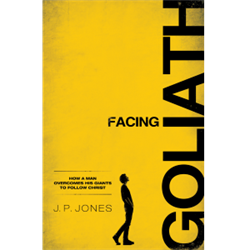
Announcer: What a great message for all of us today. Pastor JP provides us with great insight. That is why we'd like to make it available to you on CD. Just get in touch and mention today's date. We'll send it your way for just 5 dollars. Or if you'd like to support this ministry, you can write us at Truth That Changes Lives, 23331 Moulton Parkway, Laguna Hills, California, 92653. Or give us a call at 949-916-0250. That's 9499160250. For your gift of 25 dollars or more, we will send you a signed copy of JP's new book, Facing Goliath. Please join us every Sunday at 9 or 11 a.m. at Crossline Church in Laguna Hills.
The address is 23331 Moulton Parkway, Laguna Hills, California, 92653. Or check us out on the web at crosslinechurch.com. We're going to get to the address and phone number again in a moment, but before we do that, Pastor JP, do you have any insight from today's message?
Unidentified Speaker: Thanks, Greg. We're in a series talking about worshiping the true God with true worship. God is awesome and worthy of our worship. He's gracious, he's kind, he's omnipotent, he's omnipresent, he's the King of Kings, he's the Lord of Lords. By the very nature of who God is, he deserves worship. And the Bible not only reveals to us who God is, but it reveals to us how we are to approach him and how we are to worship him. And what we're discussing is the fact that the nature of worship is bringing to God an offering and sacrifice. That's not only an Old Testament concept, that's also a New Testament concept.
The very truth of worship implies the idea of offering and sacrifice. In the Old Testament, the offering was of an animal sacrifice. The offering was of a grain sacrifice. The offering was of a financial sacrifice. The New Testament speaks of bringing our very bodies to God as a living and holy sacrifice. The New Testament speaks of offering praise and worship to God as a sacrifice. The New Testament speaks of offering good works to God as a sacrifice. You see, it is the one sacrifice of Jesus Christ that pays for our sin, past, present, and future. Salvation is by grace alone, through faith alone, in Christ alone, and the offering of Jesus is the penultimate sacrifice, if you will, that completely satisfies God's righteous demands.
But the principle of offering and sacrifice is the principle of worship. And so, as people who've been washed clean by the blood of Jesus Christ, as people who come to God solely on the basis of who Christ did and what Christ accomplished through his offering and sacrifice, we worship God with that spirit of offering and that spirit of sacrifice. And our worship doesn't improve upon the work of Christ. Our worship doesn't add to the work of Christ. No, our worship is the free offering of love, of submission, of obedience, of reverence to Almighty God. And when we offer our praise, when we offer our worship, when we offer our thanksgiving, when we offer our good works, we are expressing to God the worthiness that belongs to him.
We are appropriately coming to him and giving to him what is rightfully his as the true God. You see, we are to worship the true God with true worship, and true worship is empowered by the Holy Spirit and is expressed in offering and sacrifice. And so here's the challenge. Evaluate your own spiritual life. Evaluate your own relationship with God. Is there a humble gratitude for who God is? Is there a humble submission to God's plan for your life? Is there a daily surrender, a daily offering, and a daily sacrifice? And is it expressed in praise and thanksgiving and in acts of service? These don't add to the work of Christ.
They flow out of an appreciation for the work of Christ. We're saved by grace alone, through faith alone, in Christ alone, but that salvation experience is expressed in worship, and worship is expressed in offering and sacrifice. Would you pray with me? God, thank you so much that you are worthy of our worship, and to the best we know how, and in dependence upon your Holy Spirit, we offer to you all that we have, we sacrifice to you our very lives. In Jesus' name, amen.
Announcer: We want to help you in your relationship with Christ. Please get in touch with us at Truth That Changes Lives, 23331 Moulton Parkway, Laguna Hills, California, 92653. Or call us at 949-916-0250. On the internet, you will find us at crosslinechurch.com. We hope to see you at one of our services every Sunday at our new campus in Laguna Hills. For more information and directions, please go to crosslinechurch.com. Please join us next time on Truth That Changes Lives.
Featured Offer
Past Episodes

Featured Offer
About Truth That Changes Lives
About JP Jones
JP Jones is the founding Senior Pastor of Crossline Church in Laguna Hills, CA. Beginning with 16 people, Crossline has grown to a congregation of over 2,000 in 10 years. This growth has come largely through people receiving Christ and joining the church. JP is a dynamic and articulate Bible teacher with a passion to see people come to Christ and grow into being multiplying disciples for Jesus. JP began his ministry career with Campus Crusade for Christ and continues to have a heart for the Great Commission. Traveling on mission trips all over the world, JP preaches the gospel and trains pastors to be reproducing spiritual leaders.
For the past 25 years, JP has been an Adjunct Professor of Theology and Biblical Studies at Biola University and Talbot School of Theology. A published author, JP has written Facing Goliath by Baker Books and the discipleship curriculums, Transformed and Livin’ Large by Life Together. JP is a popular speaker at Men’s Retreats and Couples Conferences. JP is married to his wife Donna and they have 3 children. JP loves family vacation, the beach, Ultimate Fighting and a good cup of coffee.
Contact Truth That Changes Lives with JP Jones
info@crosslinechurch.com
http://pastorjpjones.com/
23331 Moulton Parkway
Laguna Hills CA 92653
(949) 916-0250