

The God We Worship, Part 15


And in the same way as those who've come to beleive in Jesus Christ and embraces salvation into our lives, there never comes a place where we lose sight that we are sinners saved by grace.
JP Jones: And in the same way, as those who've come to believe in Jesus Christ and embrace his salvation into our lives, there never comes a place where we lose sight that we are sinners saved by grace.
Announcer: Thank you for joining us on Truth That Changes Lives. Pastor JP Jones is the senior pastor of Crossline Community Church in Laguna Hills, California, and a professor in biblical studies at Biola University. Today on Truth That Changes Lives, Pastor JP will be giving us a message from a series entitled First Things First. Let's listen as JP gives us part 15 of The God We Worship.
JP Jones: We are in a series talking about worshiping God. We're calling it First Things First because we have been created as worshipers, and God is glorified through our worship. And so we spent some time talking about who is it that we worship? Who is the true God? And now we're talking about how do we truly worship the true God? Jesus said in John chapter 4 that God is spirit, and those who worship him are to worship in spirit and truth, for such the Father seeks to be his worshipers. God is seeking worshipers. He's seeking us to be his worshipers. And last week we talked about, from Psalm 100, how we worship God with praise and thanksgiving, with joyful shouts, because the joy of the Lord is our strength.
But there is a path to the joy of the Lord. There is a process that godly followers and worshipers must submit to, to experience the joy of the Lord. And the Bible says that path is brokenness and repentance. In 2 Corinthians chapter 7, the Apostle Paul says, there is a sorrow of the world that leads to death, but there's a godly sorrow that brings repentance and leads to life and salvation. You see, if we just feel bad about ourselves, and we feel worse about ourselves, and we get depressed about how bad we feel about ourselves. That's the sorrow of the world. That is just death. But if we have genuine conviction of our sin and a brokenness over our sin and a repentance turning to God, that brings salvation and life and true worship.
The path to true joy and thanksgiving and gratefulness and praise and worship is paved with the tears of confession and repentance. That's the pattern of scripture. In fact, it's the truth of the word of God. The great reformer Martin Luther, when he was gripped by God with the reality of salvation by grace alone, through faith alone, in Christ alone, he felt that he had to proclaim this message, and he had to push back against the constraints of the religious world that was around him at a time. This happened several hundred years ago at the end of the 16th century, and the message of salvation so weighed heavy upon Martin Luther for his own life and for those who would be seekers of God, that he put together 95 points called the 95 Theses that he tacked up on the wall and made as a public declaration to debate and discuss about, because he was led by God to bring the church back to this great message of salvation by grace alone, through faith alone, in Christ alone.
And the first point of his 95 Theses, which humanly was the launching pad for the Reformation, was this: Our Lord and Master Jesus Christ wills that the whole life of believers should be repentance. Our Lord and Master Jesus Christ wills that the whole life of believers should be repentance. You know, we begin the Christian life with repentance, and we continue throughout the Christian life in repentance. There never comes a time this side of heaven when we, as worshippers, should not have a heart that's broken with the things that break God's heart, and we should not have a spirit that confesses our inadequacy and unworthiness and totally relies upon the grace of God through Jesus Christ and repents of trusting in ourselves so that we might trust in God alone.
This morning, as we talk about being worshippers, whether you're here as a guest, first time, never been to church before in your life, or you've been following Jesus your whole life, the message of God to you and the message of God to me to be a worshipper is to allow the Spirit of God to give me a heart that's broken and repentant. Let me give you some observations about brokenness and repentance, and to be quite honest, I don't have very much to say, but God's Word has a lot to say, so we'll be looking at what God says in Scripture. My first observation is this: brokenness and repentance is the worshipful response to seeing God for who he is.
That's just it. It's the response of the worshiper when you see God for who he really is. Isaiah chapter 6, verses 1 to 5 says this, in the year that King Uzziah died, I saw the Lord seated on a throne, high and exalted, and the train of his robe filled the temple, and above him were seraphs, each with six wings. With two wings they covered their faces, and with two they covered their feet, and with two they were flying, and they were calling to one another, Holy, holy, holy is the Lord Almighty. The whole earth is full of his glory. And at the sound of their voices, the doorposts and thresholds shook, and the temple was filled with smoke.
Woe is me, I cried. I'm ruined, for I am a man of unclean lips, and I live among a people of unclean lips. My eyes have seen the King, the Lord Almighty. Here is an example of someone who actually saw God, Isaiah. He puts it in a historical context. This was an actual experience that he had. God revealed himself to him, and he saw God as exalted, as glorious. He saw God sitting on a throne. He was the King. He saw God as the Lord Almighty, and he heard the angels calling out to one another in this vision of God, holy, holy, holy is the Lord God Almighty. And upon seeing who God really was, Isaiah reached out to his brothers and sisters and said, Kumbaya, my Lord, Kumbaya.
No, he fell at his face, and he said, I'm undone. I'm ruined. I am a man of unclean lips, and I live among a people of unclean lips. You see, when we really see God for who he is and his awesome glory, his holiness, his sovereignty, his love, his mercy, his goodness, there is an awareness that we fall short of the awesome perfection of God. And that godly awareness of our falling short is the conviction of sin in our lives, which is a necessary prerequisite to worship. It's a necessary prerequisite to salvation. We know in the book of Romans, the Apostle Paul said, you got to know the bad news if you're going to appreciate the good news.
The good news doesn't sound like good news if you don't know the bad news. The good news that Christ died for our sins as an atonement, as one who would bear the sacrifice and punishment for our sin, and he rose again from the dead. That doesn't sound like good news unless you really know you're a sinner, you see. And in the same way, as those who've come to believe in Jesus Christ and embrace his salvation into our lives, there never comes a place where we lose sight that we are sinners saved by grace. And when we are confronted with the holiness and perfection of God, there is a God-ordained, Holy Spirit-produced ministry in our lives that breaks us.
But it's not the sorrow that leads to death, it's the sorrow that is from God that brings repentance and leads to life. It could be that if we have never experienced this sense of brokenness, that we've never really seen God. And our sense of worship is really idolatry, because we're not worshiping the true God, we're worshiping a God of our own making that never makes us feel bad. Because God's just always about making us feel good all the time. And rather than being worshipers, we're just a bunch of narcissists. God is about making us feel good. He is about giving us the joy of the Lord so that our worship is filled with shouts of joy and praise and thanksgiving, like we looked at in Psalm 100.
But there's a path to that joy of salvation, and that path is brokenness and repentance. Because brokenness and repentance is the worshipful response to seeing God for who he is, and it's not just an intellectual realization. I don't think that Isaiah's experience here was one of kind of dispassionate theological reflection. Hmm, woe is me. I am undone. You know, when I was in eighth grade, we moved from Southern California, we moved to Northern California, and anytime you move, there's change, right? We're about to move to a new church campus in a whole new season. There's change. And one of the changes, this is an odd change, but in the classes, one of the classes you take when you're in middle school, you take PE.
The PE class I had in Ventura, where I was going to middle school before, it was all about playing sports. I mean, we played basketball, we played flag football, you know, we played soccer, we played just played sports. That was all physical education. Where in the middle school I moved to, there was 2 PE teachers, and one PE teacher, that's the way he taught PE, he just played sports. The other PE teacher was a former AAU track champion, and all of his physical education classes were just fitness and training, and all you did is run and do calisthenics and do pull-ups and push-ups and lifted weights.
It was just non-stop physical training. That was my PE teacher. And I can remember in 8th grade, I mean, I can close my eyes, I can actually see it. I'm sitting in 8th grade math class, pre-algebra, and I look out the window because I had PE after algebra, and I'm looking out the window, and I could see sometimes the guys in their PE uniforms run out of the gym across the campus, off the campus, up to a hill. It was called Running to Piedmont Road. It was about a 3 mile run. And I can remember sitting in math class, seeing them run, knowing that I was going to take that class next, and a feeling of dread.
Just, I mean, it wasn't just, oh, I'm going to be running in the next 40 minutes. No, it was like, oh my gosh. When Isaiah saw God in his holiness, in his awesomeness, in his greatness, there was a feeling of brokenness and repentance. Remember what Jesus said, how do we love God? Our heart, soul, mind, and strength. Some of us, as worshippers, need to step out of our comfort zone into God's comfort zone and allow the Holy Spirit to not only work on our head, but work on our hearts, and allow the Holy Spirit to produce that brokenness, which leads to repentance, which leads to life. It's a feeling as well as a reflection.
Here's a second observation. Brokenness and repentance is the worshipful response to studying the Word of God. Now, if you know anything about me, you know I believe in studying the Word of God. It's what literally has changed my life. When I was 16 years old and I gave my life to Jesus Christ, my brother bought me a Bible, said, you need to read this every day, and I did, and I still am doing it. It is the one habit, more than any other habit, that I would say will transform your life. But let me tell you, the purpose of the Word of God is not just giving us information, it's producing transformation.
And when we study the word of God, we don't just become expanded in our minds, our lives are to be changed when we study the word of God. And an example of this is Daniel, in Daniel chapter 9, where it says this, in the first year of Darius, son of Ahasuerus, a Mede by descent, who was made ruler over the Babylonian kingdom, in the first year of his reign, I, Daniel, understood from the scriptures, according to the word of the Lord given to Jeremiah the prophet, that the desolation of Jerusalem would last 70 years. This is one of those things you could almost skip over because there's a great prayer in Daniel 9, and you might get caught up in the prayer and lose what occasions the prayer.
Daniel, and he gives us a very specific time when it's happening, was spending time with God by reading Jeremiah the prophet. He was studying the Bible. He's studying the Bible, and he's studying the book of Jeremiah, and he comes across a prophetic statement in the book of Jeremiah. It's actually found in Jeremiah 29. And what it says in Jeremiah 29 is that God's people are going to be taken into captivity, into Babylon, but it's going to last 70 years. Daniel was one of those guys that got taken into captivity. I-I'm sure Daniel is reading the word, you know, and however he did his personal Bible study, he's reading this, and it just spoke to him.
The scripture spoke to him, and he thought, wow, it's going to last 70 years. How long have I been here? And he realizes, my gosh, this 70-year period is about to come to an end. And that scripture that spoke to him did more than just give him some information. It prompted something within his soul, you see, because he realized God was about to do something, and he and his people were not ready for it. In the first year of his reign, I, Daniel, understood from the scriptures, according to the word of the Lord given to Jeremiah the prophet, that the desolation of Jerusalem would last 70 years.
So I turned to the Lord God and pleaded with him in prayer and petition, in fasting, and in sackcloth and ashes, and I prayed to the Lord my God. I confessed, O Lord, the great and awesome God who keeps his covenant of love with all who love him and obey his commands. We've sinned, we've done wrong, we've been wicked, we've rebelled, we've turned away from your commands and your laws. You see, this whole prayer, which then proceeds all throughout Daniel chapter 9, is a prayer of confession, a prayer of brokenness, a prayer of repentance, but it's a prayer that's occasioned by Daniel studying the Word of God.
When you read God's Word, when you study God's Word, when you hear God's Word preached, do you allow the Word to do in you what it actually says it will do? Because 2 Timothy 3:16 says, all scripture is inspired by God and is profitable for teaching, for rebuking. Do you let the word of God rebuke you? Or you just keep trying to find those verses that make you feel good about yourself? Or find those verses that promise God's blessing? They're there. They are there. In fact, that's what Daniel observed. There was a prayer of bless, you're going to get released from captivity. But he realized, we're not ready.
We need to repent so that we can step into the blessing that God has for us. Brokenness and repentance is a response to the Word of God. Confession of sin is the mechanism to experience the fullness of forgiveness and cleansing. So brokenness and repentance is the worshipful response for seeing God for who he is. It is a response to studying the Word of God and letting the Word of God speak to us. Here's a third observation. Brokenness and repentance is the worshipful response to being convicted of our personal sin. You see, if we have sin in our life that we haven't confessed to the Lord, there's a holy response that we need to be broken over that.
We need to confess that. We need to humble ourselves before God. We need to repent of our sin. We need to seek his forgiveness. Psalm 66 says, if I regard iniquity in my heart, the Lord will not hear. Just flat out. If we have sin in our life that we are allowing to be in us with a cavalier attitude, God will not hear our prayers. We need to humble ourselves before God. We need to allow the Holy Spirit to break us. We need to repent so that we can step into that salvation and joy which God wants to give us. This is David's prayer in Psalm 51. Have mercy on me, O God, according to your unfailing love, according to your great compassion.
Blot out my transgressions, wash me of my iniquity, cleanse me from my sin, for I know my transgressions, and my sin is always before me. Against you and you only have I sinned. I've done what's evil in your sight, so you are proved right when you speak and justified when you judge. Surely I was sinful at birth, sinful from the time my mother conceived me. Surely you desire truth in the inner parts. You teach me wisdom in the inmost being. Cleanse me with hyssop, and I will be clean. Wash me, and I will be whiter than snow. Let me hear joy and gladness. Let the bones you have crushed rejoice.
Hide your face from my sins. Blot out all my iniquity. Create in me a pure heart, O God, and renew a steadfast spirit within me. Do not cast me from your presence or take your Holy Spirit from me. Restore to me the joy of your salvation. Grant me a willing spirit to sustain me, and then I will teach transgressors your ways, and sinners will turn back to you. Save me from blood guilt, O God, the God who saves me, that my tongue will sing of your righteousness. O Lord, open my lips so my mouth will declare your praise. You do not delight in sacrifice, or I would bring it. You don't take pleasure in burnt offerings.
The sacrifices of God are a broken spirit, a broken and contrite heart, O God, you will not despise. Listen to that last verse again. The sacrifices of God are a broken spirit, a broken and contrite heart, O God, you will not despise. That's what God's looking for. He doesn't want all of our religious works, doesn't want all our stuff. He wants us with hearts that are totally yielded over to him. Broken, contrite, repentant. That pleases God. That's the sacrifice that pleases God, you see. One author put it this way. In this Psalm, Psalm 51, David is speaking of a broken spirit. He uses the Hebrew word shabar.
Shabar means to burst, to break to pieces, or to reduce. It's easy to see the brokenness in David's heart as he approaches God about his sin. When speaking of a contrite heart, he uses the Hebrew word dakah, and this word means to crumble, to beat to pieces, to bruise, to crush, or to humble. According to Judson Cornwall in his book, Let Us Worship, contrite is a word that's used to describe the process of making talcum powder. Cans of talcum powder used to be labeled, this is stone that has been contrited. It means that what was once a part of a mountain has been ground and pounded so fine that it will float on water.
It takes on a new form. You know, there's a popular prayer in many Christian circles that says, Lord, break our hearts with the things that break yours. It's easy to look around us and see the things that break the Father's heart. Those things include injustice and hunger and abortion and war and racism. However, we need to make sure we don't overlook the things inside of us that break God's heart. The sin that so easily entangles us should break our hearts as well. Brokenness is essential when approaching God. Brokenness is where God dwells.
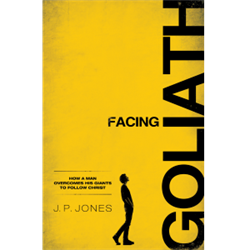
Announcer: What a great message for all of us today. Pastor JP provides us with great insight. That is why we'd like to make it available to you on CD. Just get in touch and mention today's date. We'll send it your way for just 5 dollars. Or if you'd like to support this ministry, you can write us at Truth That Changes Lives, 23331 Moulton Parkway, Laguna Hills, California, 92653, or give us a call at 949-916-0250. That's 949-916-0250. For your gift of 25 dollars or more, we will send you a signed copy of JP's new book, Facing Goliath. Please join us every Sunday at 9 or 11 a.m. at Crossline Church in Laguna Hills.
The address is 23331 Moulton Parkway, Laguna Hills, California, 92653. Or check us out on the web at CrosslineChurch.com. We're going to get to the address and phone number again in a moment, but before we do that, Pastor JP, do you have any insight from today's message?
JP Jones: Thanks, Greg. We're in a series talking about worship, the God that we worship, and worshiping the true God. And we're talking right now about this whole path of worshiping God and the importance of brokenness and repentance. This is a hard message. It's a hard experience because purely based upon feelings, no one wants to feel broken. In terms of our own experience, it's much more comfortable to be filled with positive joy. But the Bible says that there's a path to experiencing the joy of the Lord. The joy of the Lord is our strength. The joy of the Lord is the fruit of the Spirit. The joy of the Lord is the realization of God's work in our life and God's fullness in our life.
But in the path of following after God and becoming more and more like Jesus Christ so that we can be worshippers who glorify him and honor him, there is the necessity for brokenness. We're told in scripture that Jesus himself was a man of sorrows and acquainted with grief. To walk in the path of Jesus is to experience sorrow and to experience grief. We experience sorrow over the things that break God's heart. We experience sorrow over our own sin. We experience sorrow for how sin devastates people. We experience sorrow for what sin did in nailing Jesus Christ to the cross. But in experiencing that, we identify with the pain and suffering of Jesus Christ, and we experience in a measure his death.
And because we experience in a measure his death, we're also able to experience his resurrection, because we can experience the fullness of Christ's resurrection in our lives. Because of that, we can experience the joy of the Lord, and our worship can flow out of an authentic heart, both of brokenness and of joy. That's what the Bible talks about. Worshiping God is to be genuine and real through the whole personality, through all the feelings of the personality, through the full expression of everything that we deal with in life. When we experience brokenness before God, we come closer to him in humility, and we're able to grieve over our sin and experience the power of repentance and the fruit of the Spirit, which is the joy of the Lord.
The path to joy in worshiping God is paved with brokenness. Let's ask God to work in our hearts so that we're people who humble ourselves before him and repent of our sin and experience the brokenness that God is pleased to bring about to lead us to deeper intimacy and worship of him. God, thank you for the work of your spirit in our lives, even the work of brokenness. May we experience the dying of Jesus so that we also might experience the life of Jesus in our mortal flesh. We pray for that in Jesus' name, amen.
Announcer: We want to help you in your relationship with Christ. Please get in touch with us at Truth That Changes Lives, 23331 Moulton Parkway, Laguna Hills, California, 92653, or call us at 949-916-0250. On the internet, you will find us at crosslinechurch.com. We hope to see you at one of our services every Sunday at our new campus in Laguna Hills. For more information and directions, please go to crosslinechurch.com. Please join us next time on Truth That Changes Lives.
Featured Offer
Past Episodes

Featured Offer
About Truth That Changes Lives
About JP Jones
JP Jones is the founding Senior Pastor of Crossline Church in Laguna Hills, CA. Beginning with 16 people, Crossline has grown to a congregation of over 2,000 in 10 years. This growth has come largely through people receiving Christ and joining the church. JP is a dynamic and articulate Bible teacher with a passion to see people come to Christ and grow into being multiplying disciples for Jesus. JP began his ministry career with Campus Crusade for Christ and continues to have a heart for the Great Commission. Traveling on mission trips all over the world, JP preaches the gospel and trains pastors to be reproducing spiritual leaders.
For the past 25 years, JP has been an Adjunct Professor of Theology and Biblical Studies at Biola University and Talbot School of Theology. A published author, JP has written Facing Goliath by Baker Books and the discipleship curriculums, Transformed and Livin’ Large by Life Together. JP is a popular speaker at Men’s Retreats and Couples Conferences. JP is married to his wife Donna and they have 3 children. JP loves family vacation, the beach, Ultimate Fighting and a good cup of coffee.
Contact Truth That Changes Lives with JP Jones
info@crosslinechurch.com
http://pastorjpjones.com/
23331 Moulton Parkway
Laguna Hills CA 92653
(949) 916-0250