

The God We Worship, Part 11


See, worship is a reflection of the mind and it's an attitude of the heart and it's a response of the body.
JP Jones: See, worship is a reflection of the mind, and it's an attitude of the heart, and it's a response of the body. Thank you for joining us on Truth That Changes Lives. Pastor JP Jones is the senior pastor of Crossline Community Church in Laguna Hills, California, and a professor in biblical studies at Biola University. Today on Truth That Changes Lives, Pastor JP will be giving us a message from a series entitled First Things First. Let's listen as JP gives us part 11 of The God We Worship. If you have your Bibles, would you open to Romans chapter 12? Romans chapter 12. We have, for the last several weeks, been looking at what the Word of God says about the nature of God, the attributes of God, the characteristics of God, trying to understand who is the true God.
Because the basis of worship is knowing the true God. And as we continue in this series, First Things First, we're going to kind of put the focus in a little different direction this morning with, now that we know who the true God is, how do we respond to him? How do we love him? How do we serve him? How do we obey him? How do we worship him? Because this is what we've been created for. Jesus said that God is spirit, and those who worship him are to worship in spirit and truth, for such the Father seeks to be his worshippers. You may be here this morning, and you've never been to church before in your life.
Maybe this is the first time in a long time. Maybe you've never really considered what your ultimate purpose is. The Bible says that our ultimate purpose is that we might be worshippers who bring glory to God. And so when we come to discuss and meditate on what the Bible says about who God is, and we discover together what it means to respond to God, we're looking at the most important dynamic of our lives, because this is what we've been created for, to be worshippers. In Romans chapter 12, which is a familiar passage to many of us, the Apostle Paul lays out the essential response of worship.
It's the bottom line. It's the most important aspect that should govern everything else as we think about what it means to be worshippers. Romans chapter 12, verses 1 and 2, it says this: Therefore, I urge you, brothers, in view of God's mercy, to offer your bodies as living sacrifices, holy and pleasing to God. This is your spiritual act of worship. Do not conform any longer to the pattern of this world, but be transformed by the renewing of your mind, and then you will be able to test and approve what God's will is, his good, pleasing, and perfect will. Notice at the end of this passage, it gives us a payoff, it gives us a result of being spiritually transformed.
It says that we'll have the discernment and the capacity to test and approve God's will. I can tell you in my life, the question that I have more than anything else is what's God's will for my life? The question that I've been asked by people from when I was working in youth ministry to the present being a senior pastor to teaching courses at Biola. The question that I'm asked by people all the time at all walks of life is what is God's will for my life? Well, here's a passage that actually tells us we could come to a place where we can understand God's will. We can test the options, and we can approve what God's will is.
And that spiritual dynamic of being able to understand and process and discern God's will for our lives is a result of being a worshipper. It's a result of knowing God, responding to God, following after God, and worshiping God. You see, there are tremendous personal results from worshiping God. God gets glory, and we receive great joy as we experience the transforming work of God in our lives. As we look at this passage, I want to unpack a couple of things for us. Here's the first idea. It's the reason for worship. The reason for worship. It's really all that we've been talking about in the last 6 weeks as we've been looking at the nature and attributes of God.
Paul says this, therefore, I urge you, brothers, in view of God's mercy, to offer your bodies as living sacrifices, holy and pleasing to God. This is your spiritual act of worship. He says, in view of God's mercies. In other words, based upon what is true with respect to the mercies of God, your response ought to be to present yourself as an act of worship. You see, worship is responding to a God-sized vision. Worship is always responding to what we learn to be true about God. And Paul says, as he's talking about what's true about God, he describes it as God's mercies. Now, from one aspect, you could say he must be referring to everything that he said in the first 11 chapters.
In chapters 1 to 11, the Apostle Paul lays out some tremendous spiritual truths with respect to the mercies of God. This whole book in the book of Romans is all about the gospel. Paul says in Romans 1:16, for I'm not ashamed of the gospel, it's the power of God for salvation to everyone who believes, to the Jew and also to the Greek. For in it, the gospel, the righteousness of God is revealed from faith to faith, just as is written, the righteous person shall live by faith. So Paul, talking about the gospel, summarizing it in 11 chapters, says at the beginning of chapter 12 that this is a statement of God's mercy.
You see, the gospel is the power of God for salvation, and it reveals God's holiness and God's righteousness and God's justice and God's love. It reveals what God has done for us in saving us, as Romans 5:8 says, that even while we were yet sinners, Christ died for us. And it reveals all the implications of Christ's death. The fact that his death brought redemption, it, his blood purchased us out of slavery to sin, and his death has brought reconciliation. The barrier of sin has been removed, and we've become God's friends. And his death has brought justification. God, as a righteous judge, has actually declared us righteous.
And his death has brought propitiation, that is, that his death actually atoned for sin. We won't be punished for our sin anymore. God isn't mad at us anymore. We're not under his wrath anymore. We're free, forgiven. And then Paul continues in this great statement about the gospel in Romans 1 to 11 to describe how this great plan of salvation was initiated and put into effect in eternity before we ever even came on the scene. That God's infinite nature is such that he has elected us and predestinated us and outside of time operated in such a way that in time his will would be accomplished. And these mysteries are so great that he ends chapter 11 by saying, who can understand the wisdom of God?
Who can understand the knowledge of God? Who can understand the mercy of God? And so in response, Paul says, I urge you therefore, by the mercies of God, to present your bodies a living and holy sacrifice acceptable to God, which is your spiritual service of worship. You see, the reason why we worship is because of who God is. When we see who God is, there is an intellectual, emotional, and volitional response of worship. Several years ago, my wife and I had the opportunity to be in Europe, and we were in Paris, and we went to the Louvre. And all this great art, famous art, masterpieces are there.
And we went from one sculpture, one painting, one artistic expression after another. And every time we came across something, like I remember when we saw the Mona Lisa, it was just like, I mean, it wasn't the Chevy Chase vacation routine, okay, I've seen that, now let's go on to the next thing. No, it was a stop, kind of a awe, and just reflection because we were seeing something that was so beautiful that it caused a response. The first time I'm, I was in Yosemite, camping up in Yosemite and saw El Capitan, if you've ever been there, you just stand there and go, oh my gosh, look at that. Or even related to something as ordinary, as mundane as watching sports.
When you see, you know, a basketball player at the buzzer make a three-pointer, or when you see a wide receiver make a one-handed grab, or you see some guy hit a home run out of the park, it's like there's always a response, right? You jump up, you cheer, you clap. That's worship because you're seeing something that takes you out of your ordinary kind of finite experience. It expands your thoughts, it grips your emotions, and your body just responds. I urge you, therefore, by the mercies of God, to present your bodies a living holy sacrifice acceptable to God, which is your spiritual service of worship.
We will never move into being the kind of worshipers that God wants us to be, that we want to be, if we don't have a God-sized vision. We've got to see God for who he is. We've got to reflect upon what he's done. We've got to understand the promises that he's made to us. That's why the most spiritually healthy experience is to spend regular time alone with God. Just thinking about God, meditating on God, reflecting on God, studying his word, praying, asking God to speak to you, being still. That's what the psalmist said, Psalm 46, be still and know that I'm God. Because this is what happens. We get still and we take our eyes off ourself, off our problems, off our struggles, off just our world.
We start thinking about God, we start reflecting upon God, we start meditating on God, and we start gaining a God-sized vision, and intellectually and emotionally, volitionally, viscerally, we just respond. That's worship. And Paul says here, I urge you therefore, brethren, by the mercies of God, to present your bodies a living and holy sacrifice acceptable to God, which is your spiritual service of worship. So to be worshippers, we have to be intentional. We have to be proactive in making sure we are focusing on God. We are spending time with God. We are seeking after God. We are reflecting on God.
We're bringing our thoughts and our attentions back to having a God-sized vision. That's the necessary prerequisite, because that's the reason why we worship, because we see God. Here's a second observation. It's the response of worship. It's the response of worship. I urge you, therefore, brothers, in view of God's mercy, to offer your bodies as living sacrifices, holy and pleasing to God. This is your spiritual act of worship. Now, in that phrase, the Apostle Paul uses several words that are important for us to unpack and understand because they are worship words, and they're worship words that obviously meant something to the people he's writing to, but may not mean as much to us, because we don't live in a deeply religious culture that has religious traditions that form the way we understand our world, but his audience did.
So he says, I urge you therefore, brothers, by the mercies of God, to offer your bodies. That word offer is the Greek word peristemi. It means to place as an offering, or to surrender as an offering, or to present as an offering. It's actually a technical word. It's a technical word that was used to describe within Jewish worship when a priest would bring an actual offering as part of the religious experience. And the priest would come and actually place the offering before God. So Paul's talking about worship, and he says in view of God's mercy, we are to offer an offering, and the offering is us.
We're to offer our bodies as a living sacrifice acceptable to God, which is our spiritual service of worship. And even the way that Paul gives this action to us is important. It's the verb peristemi, which I said is a technical term to give an offering, to place an offering, to present an offering, but he phrases this grammatically in such a way that it implies not something that you do casually or something that you do even repeatedly, but it's something that you calculate so that you, in a comprehensive way, give everything you have. And it's to be done in such a way that you give everything that you have with an understanding that once you do this, everything else is going to change from here on out because now you've done this.
See, the point that Paul's making is real worship is to flow out of a life that is absolutely surrendered to Jesus Christ. So when we see the mercies of God, we have a God-sized vision. The response is to present our whole selves, the whole shooting match. That's not something that you just do casually. That's not something where you see, oh, you know, at the end of the service, there's an invitation, other people are standing up, so I guess I stand up. No, this is the kind of thing that you have to think about, you have to pray about, you have to consider. It's like what Jesus said, count the cost.
But you're doing it in light of the mercies of God, you see. And because of God's mercies and who God is, you are caught up with an understanding that the most important thing, the most intelligent thing is to fully give yourselves to God. To not do so would to be saying, you really don't understand the mercies of God. To not do so would to be saying, I see what you're offering me, God, but no thanks. To not do so would to be either actively or passively to say, God, you go your way and I'm going to go my way. I urge you, therefore, brothers, by the mercies of God, to offer your bodies as living sacrifices, holy and pleasing to God, and this is your spiritual act of worship.
You see, we offer our bodies because that represents everything of who we are. Because our mind, our will, our intellect, our emotions, our values, our priorities, everything flows and expressed through our bodies. So to offer our bodies is to offer our whole lives. And it says we're to offer our bodies as living sacrifices. So the point is, we offer ourselves so that from that time forward, that is after our offering, we live as sacrifices. This is a call to give everything you have to God in worship, and that's really what worship is all about. In fact, all throughout the Hebrew scriptures, the word of the prophets rebuking Israel and Judah for their inadequate worship, essentially centered on the fact that they gave token aspects, but they never gave their whole lives.
They'd give their money sometimes, they'd give their praise sometimes, they'd give certain sacrifices of certain things sometimes, but they didn't give what God wanted the most, which was their whole selves. So they're rebuked because with their lips they praised God, but their hearts were far from him. And Jesus even takes this theme because it's mentioned in Isaiah, and Jesus repeats it a couple of times to the people of his day, and God could say the same thing to the people of our day. You think you've given me a lot by you giving me 10%. I want 100%, and not just of your money, but of your thoughts, of your emotions, of your time, of your family.
I want everything. I want you to present your whole selves to me as a living sacrifice. That's being a worshiper. That's opening the door to total life transformation. We offer ourselves to live as sacrifices to God, and our offering, notice, is to God. It's not to some denomination, it's not to some church, not to some person, it's not some program, it's not some institution, it's to God. And it's described here in Romans 12 as our spiritual act of worship. The Greek word here is logikos, which we get the word logic. In the context, it can be logical, reasonable, spiritual. It implies the fact that when we think about the mercies of God and the call of God on our lives to offer our whole selves to him, it's the most intelligent thing we could do.
It's the most reasonable thing we could do. It's the most spiritual thing we could do as an act of worship to God. And then he says, this is our spiritual act of worship. The King James and New King James version says it's our act of service. Well, it's an act of worship or an act of service? Well, it's both, because the word that the Apostle Paul uses here is latria. It's a word that means the service of worship. In Hebrews 9:1, it says, using the same word, now even the first covenant had regulations of divine worship and of the earthly sanctuary. In Hebrews 9:6, it says, now when these things have been prepared, the priests are continually entering the outer tabernacle, performing the divine worship.
That's the word latria. See, it's describing the service of a priest as he carries out the service of worship. What a priest did, leading in worship, expressing worship. So it's a service, a ministry, but it's a service ministry of worship. So when we present our bodies, offer our bodies, give our whole selves to God, it is the most reasonable, intelligent, spiritual thing we do, and it is our service of worship to God. That's why, as we're kind of shifting in this series from who is the God that we worship to how do we worship the true God, this is the first passage we look at because this is how we worship God.
If we don't get this one right, whatever else we do is just partial and minimal and possibly even hypocritical with respect to worship, because we're majoring on the minors if we don't get this one, because this is the majoring on the majors. Giving our whole lives, surrendering our whole lives, not holding anything back. Looking at the mercies of God, being overwhelmed by the goodness of God, the grace of God, the love of God, the justice of God, the salvation of God, being so overwhelmed by that vision of God that we come to him and we present everything to him, and we don't hold back anything, and we offer our whole selves to him, and we offer ourselves in a way that we're saying, and I'm not turning back.
I'm giving my whole self to you now, and I'm gonna continue to give myself to you tomorrow and the next day and even into eternity. Because I'm living as a worshiper. It's my service unto God. We're to offer ourselves the way a priest presented an offering to God.
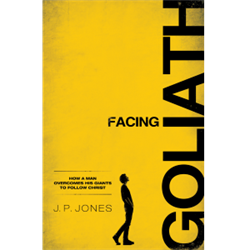
Announcer: What a great message for all of us today. Pastor JP provides us with great insight. That is why we'd like to make it available to you on CD. Just get in touch and mention today's date. We'll send it your way for just 5 dollars. Or if you'd like to support this ministry, you can write us at Truth That Changes Lives, 23331 Moulton Parkway, Laguna Hills, California, 92653, or give us a call at 949-916-0250. That's 949-916-0250. For your gift of 25 dollars or more, we will send you a signed copy of JP's new book, Facing Goliath. Please join us every Sunday at 9 or 11 a.m. at Crossline Church in Laguna Hills.
The address is 23331 Moulton Parkway, Laguna Hills, California, 92653. Or check us out on the web at CrosslineChurch.com. We're going to get to the address and phone number again in a moment, but before we do that, Pastor JP, do you have any insight from today's message?
JP Jones: Thanks, Greg. We're in this series on the God that we worship. First things first, who is the true God, and what does it mean to worship the true God? And in the New Testament, the Apostle Paul gives us the first step in our liturgy, in our process of worship. It's found in Romans chapter 12, verse 1. The Apostle Paul says this, I urge you therefore, brethren, by the mercies of God, to present your bodies a living and holy sacrifice acceptable to God, which is your spiritual service of worship. Paul here is talking about what he's been developing in the book of Romans. The first 11 chapters in the book of Romans is all about the doctrine of God, the doctrine of salvation, the greatness of God, the mercy of God, the grace of God in our salvation.
And so Paul says, in light of what's true about God, what he calls the mercies of God, what should our response be? And the response is a response of worship. We should present our entire being to God as an act of worship. In fact, Paul talks about presenting ourselves and our bodies as a living sacrifice. We're to see and picture ourselves like a priest making an offering to God in that Old Testament imagery, a priest bringing an offering to God. We are bringing an offering to God in worship, and the offering that we're bringing is our very lives, our bodies. I think Paul uses the term body to represent the totality of who we are, body, soul, and spirit.
Everything that makes up who we are, we are to present to God as an offering to him, as an act of worship. You see, worship is the response to God that calls our whole being into love and sacrifice and obedience. It's an act of surrender. We are surrendering ourselves to God when we see how great he is, how awesome he is, how loving he is, what he's done for us in the gospel. Our response is to surrender to him, to offer ourselves to him, to present ourselves to him as an act of worship. That's the first and foremost response of a worshiper. It's to present ourselves to God. So let me ask you, have you presented yourselves to God?
Have you yielded yourself and surrendered yourself to Christ's lordship and to live your life as an act of worship to God? That's the most important thing. More than practicing spiritual disciplines, more than sharing your faith, more than being active in your church, the most important priority as a worshiper is to surrender yourself to God as an act of worship. Let me encourage you to do that. In fact, you can do that right now. Lord God, thank you for your love and mercy towards us in Christ. Thank you for the gospel that saves us. Because you have saved us and because of your mercy, we present ourselves to you.
We offer ourselves to you. We surrender our whole lives to you as an act of worship. In Jesus' name, amen.
Announcer: We want to help you in your relationship with Christ. Please get in touch with us at Truth That Changes Lives, 23331 Moulton Parkway, Laguna Hills, California, 92653. Or call us at 949-916-0250. On the internet, you will find us at crosslinechurch.com. We hope to see you at one of our services every Sunday at our new campus in Laguna Hills. For more information and directions, please go to crosslinechurch.com. Please join us next time on Truth That Changes Lives.
Featured Offer
Past Episodes

Featured Offer
About Truth That Changes Lives
About JP Jones
JP Jones is the founding Senior Pastor of Crossline Church in Laguna Hills, CA. Beginning with 16 people, Crossline has grown to a congregation of over 2,000 in 10 years. This growth has come largely through people receiving Christ and joining the church. JP is a dynamic and articulate Bible teacher with a passion to see people come to Christ and grow into being multiplying disciples for Jesus. JP began his ministry career with Campus Crusade for Christ and continues to have a heart for the Great Commission. Traveling on mission trips all over the world, JP preaches the gospel and trains pastors to be reproducing spiritual leaders.
For the past 25 years, JP has been an Adjunct Professor of Theology and Biblical Studies at Biola University and Talbot School of Theology. A published author, JP has written Facing Goliath by Baker Books and the discipleship curriculums, Transformed and Livin’ Large by Life Together. JP is a popular speaker at Men’s Retreats and Couples Conferences. JP is married to his wife Donna and they have 3 children. JP loves family vacation, the beach, Ultimate Fighting and a good cup of coffee.
Contact Truth That Changes Lives with JP Jones
info@crosslinechurch.com
http://pastorjpjones.com/
23331 Moulton Parkway
Laguna Hills CA 92653
(949) 916-0250