

The Bible, Part 2


There are two kinds of people, those that know Christ and those that don't know Christ. If you know Christ, study the bible and do what it says.
JP Jones: Well, two kinds of people here today. Those who know Christ, those who do not know Christ. If you know Christ, study the Bible and do what it says.
Greg: Thank you for joining us on Truth That Changes Lives. Pastor JP Jones is the senior pastor of Crossline Community Church in Laguna Hills, California, and a professor in Biblical Studies at Biola University. Today on Truth That Changes Lives, Pastor JP will be giving us a message from a series entitled Foundations. Let's listen as JP gives us part two of The Bible.
JP Jones: Peter says this. We did not follow cleverly invented stories when we told you about the power and coming of our Lord Jesus Christ, but we were eyewitnesses of his majesty. For he received honor and glory from God the Father when the voice came to him from the majestic glory saying, this is my son whom I love, with whom I'm well pleased. We ourselves heard this voice that came from heaven when we were with him on the sacred mountain. Now I just stop there. Peter says, listen. What I'm relating to you, what I'm telling you, I didn't invent this.
I didn't think this up. This isn't a story. It's not a myth. In fact, the phrasing there, a cleverly devised tale, is from the Greek word muthos, where we get the concept of Greek myths. And most of us have studied the Greek myths, you know, like Hercules and uh all the different stories of the gods. Those are myths. They have a certain literary characterization. Peter says, what I'm talking to you, all the miracles, all the uniqueness of the Gospel of Jesus Christ as unique God man, that's not a myth. No, I was an eyewitness. And in fact, I was an eyewitness to a particular event, the transfiguration where Jesus was glorified before my very eyes.
And God the Father spoke, and God said, this is my beloved son with whom I'm well pleased. So I'm writing to you, not making up a story, but I'm writing to you as an eyewitness of the truth about Jesus Christ. And then he says, verse 19, and we have the more certain word of the prophets, and you will do well to pay attention to it as to a light shining in a dark place until the day dawns and the morning star rises in your hearts. And above all, you must understand that no prophecy of scripture came by the prophet's own interpretation.
For prophecy never had its origin in the will of man, but men spoke from God as they were carried along by the Holy Spirit. Peter says, and we have the more certain word of prophecy. More certain than what? More certain than my experience of being an eyewitness at the Mount of Transfiguration. Do you connect what Peter's actually saying? In fact, some people reverse it, and in fact, you'll find in some Bible translations that it's phrased differently because they've changed the grammar to fit what they think makes more sense. Cuz this is what we would think would make more sense.
I had this great experience, this religious experience, this personal experience. I heard God speak. I saw this great miracle. And that made me more certain that the Bible was what it is, the word of God. You see? That makes sense. But that's not the grammar of the passage because Peter uses a Greek word which means more certain. And in the grammatical construction, he doesn't say that the amount of transfiguration experience made the scriptures more certain. He says, I just had this unbelievable amount of transfiguration experience, but I have the more certain word of scripture. More certain than what?
More certain than my religious experience. Hey, I'm all for religious experiences. I 'm all for seeing miraculous prayers answered. I'm all for going up to Forest Home in the men's retreat and having the greatest time of my life. I'm all for God doing whatever he wants to do, giving us dreams, visions, stand up, sit down, lean to the left, lean to the right, doing all that stuff. I am for God working in any way that God wants to work. But you know what this passage says? The most fantastic religious experience that could be imagined was Peter's experience on the Mount of Transfiguration.
And Peter says that the word of God is more sure, more reliable, and more certain than that. You know why? We can get it wrong. I can have great feelings but be misguided by my feelings. I can have great religious experiences and think I hear God speaking to me and still get it wrong. But you know what? I can never get wrong what the truth of God's word says. It's objective, it's authoritative, it's absolute, it's the standard. And that's why Peter says you do well to pay attention to it cuz this is what you need to know about it.
It's not a matter of one's private interpretation. And Peter's not talking here about me or you or any of us interpreting it after the fact. He's talking about it when it was originally written. When the prophetic scripture was originally written, it wasn't just their own take on God and they wrote that down. No, the Holy Spirit handpicked individuals and led them to write the actual words of prophecy that were written. So we have those of us who have a Bible, we have the authoritative, inspired, inerrant word of God. The final rule for faith and practice.
In fact, there is a 10-step process that has come about from God's hand so that a truth in the mind of God results in life change for a believer today. First five steps in that process was God's sovereign moving to bring us to a place where we have a Bible in our hands. Last of those five uh steps in the process is our interaction with what God does so that that truth changes our lives. First step in this 10-step process is revelation. God makes himself known. He shows up. He reveals himself. God has revealed himself in creation.
God has revealed himself in miracles. God has revealed himself in history. God has revealed himself through the words of the prophets. So it says in Psalm 19 that the heavens declare the glory of God. Romans chapter 1 says that since the beginning of creation, God's invisible attributes, his eternal powers, divine nature has been clearly seen through what has been made. Hebrews chapter 1 says that in the past through many ways through the prophets, God has spoken. But in these last days, he's spoken through his son, Jesus Christ. So there is a general sense in which God reveals himself to everybody, but then there's a special way that God reveals himself through the person of the Lord Jesus Christ and in the actual words of scripture.
So there's general revelation and there's special revelation, but it begins with revelation. God unveils something that is hidden, couldn't be known without God making it known. That's what revelation is. Then the next step in that process is inspiration. That revelation is written down as the Holy Spirit speaks it out. So we have in the 66 books of the Bible the inspired word of God. The revelation of God made known through the Holy Spirit, guided by the Holy Spirit, written down in scripture. There is revelation and then there's inspiration. And then the next step in this process is canonization.
And canonization is the process by which God led his people to discover those books which were truly inspired. So both in the period of the Old Testament and in the period of the writing of the New Testament, all kinds of things were being written. That's why today, you know, we've got some scholar at some university who wants to tell us that, you know, Christianity's gotten it all wrong all these years and really the Gospel of Thomas or the Gospel of Judas, that's really what we ought to believe. Well, why is it that we don't believe that and instead we believe in Matthew, Mark, Luke, and John rather than Thomas and Judas?
Well, canonization is the process. The word canon is a Greek word that literally means read or stick. It described a plant that used to grow along a river. And it grew really tall and they would take that plant, the stock of it, let it dry out, they put marks on it, and then they dip it in the river and be able to measure how deep the river was. So the idea of a canon of a reed came on to transfer to mean a measuring stick. And then it began to be used in common language as a standard of measurement.
And then it came to mean the standard to compare all writings to what was actually inspired word of God. And those books that were considered actually inspired the word of God were part of the canon of scripture. Well, how did they figure that out? They all get together like we're all gathered here and okay, now we got Matthew up here. Everybody vote. Who thinks Matthew's inspired? Okay, we got a majority 51% Matthew's in. Okay, now let's pick out the book of Romans. What do you think? You know, Gospel of Thomas. Oh, we we got a 49%.
Okay, that's out. No, didn't happen like that at all. It was actually a grassroots movement because scripture was being written under the inspiration of the Holy Spirit as the apostles were preaching the gospel and spreading Christianity and fulfilling the Great Commission. And they evaluated the written works of the apostles. First of all, was it written by an apostle? Cuz Jesus gave authority to the apostles. He gave them the keys of the kingdom. So was it written by an apostle or under the direct influence of an apostle? That was one of the questions that was asked by the church.
Secondly, does it internally claim to be the word of God? Thirdly, does it have integrity about it in terms of historical reliability? Is the guy who wrote it really the guy that's writing it? And are all the facts driving with what we know to be the facts? Because there's a whole genre of literature including the Gospel of Thomas and the Gospel of Judas that don't pass that test right off the bat. What do you mean, JP? Well, there's a genre of literature in ancient writings known as pseudepigrapha. Don't say you never learned anything at Crossline.
You're going to write that word down. Pseudepigrapha. Pseudo means false, epigrapha means writing, false writing. See, if I wanted you to read something, I would write it and attach a name to it that I thought you would believe has authority behind it. So in the early Christian movement, people would write works and attach to it the name of an apostle and try to pass it off as if it had been written by an apostle. But in fact, it hadn't been written by an apostle. It was written by just some Joe Blow. Well, if that was the case, it didn't have integrity about it.
It's out. Gospel of Thomas. Thomas didn't write that. It was written several hundred years after Thomas died. Gospel of Judas. Judas didn't write that. It was written much later after he died. Those were part of the pseudepigrapha writings. So just from an historical perspective, it didn't pass the test. So there's apostolic test, internal evidence test, there was the integrity test, there was the dynamic test. In other words, when you read this and when you believe it and you put it into practice, does it change you the way Paul says in 1 Thessalonians 2:13 scripture does?
When we gave you the word of God's message, you accepted it not as the word of men, but as the word of God, which it actually is, and it performs its work in you who believe. Well, if it didn't perform any work, it wasn't scripture cuz scripture performs a work. So they had these these truth tests to affirm what was the actual word of God. God revealed, inspired, canonized scripture. What's the next step in the process? Preservation. There is no book like the Bible that has been attacked and has sought to be destroyed. We know that within our lifetime, how within Communist countries and Muslim countries there's Bible burnings and there's there's the banning of scripture and there's censorship of the word of God.
But if you go back historically, it's it's far worse. In fact, in 303 AD, the Emperor Diocletian, and this is a time when the then known world was ruled by Rome, the Emperor Diocletian issued an edict that had all Bibles to be burned and anyone founding a Bible, not only burned the Bible, but they burned the person who had it at the stake. And they burned thousands of copies of scripture in 303. And yet what do most of us have here today? Bibles. Cuz God preserved his word. So there's revelation, inspiration, canonization, preservation, and then there's translation.
That's where the original autographs of scripture, that is the writings in Hebrew, Aramaic, and Greek get translated into another language. And the Bible is the first book that has ever been translated from one language to another. That's just an historical fact. The first book ever written that got translated from one language to another language is the Bible. It's the Hebrew scriptures translated in 250 BC from Hebrew to Greek. It's known as the Septuagint. And since that time, the Bible has been translated into more languages than any other book that's ever been written by far. In fact, you could take the top 10 books ever published and you could total up how they've been translated into other languages and total up all those translations and it wouldn't equal to the number of translations from the one book, the Bible, into all the languages of the world.
In fact, there are there are agencies and organizations that exist today just for that very purpose to actually learn languages that have yet been formulated into written form taking those sounds and the linguistic aspects of the language, putting them in an actual alphabet and written form and then using that to translate the Bible into that language. So there's there's revelation, there's inspiration, there's canonization, there's preservation, there's translation. And the result of that is now we have a Bible in our language that we can read and study for ourselves. So what are we going to do about it?
Well, the next step is observation. Read it for yourself. Don't take my word for it. Don't just say, well, you know, the preacher said all this stuff must be true. Read it for yourself. You can read the Bible for yourself. In fact, you should read it. In Revelation 1:3 it says, blessed are those who read the words of this prophecy. 1 Timothy 4 says, give attention to the public reading of scripture. Read the Bible. Study it. Memorize it. Without a doubt, the greatest habit I ever developed in my Christian life is just daily reading the Bible, bar none.
In fact, I was telling someone before the 9:00 service that, you know, I've had the privilege of going to a lot of conferences, retreats, seminars, education, master's program, post doctoral work. I've studied. I've had that blessing. But there's no doubt that in terms of my personal beliefs, it's been my daily reading of Bible of the Bible that has influenced what I believe and why I believe it more than anything else. My my personal theology has been shaped more by personal Bible study than somebody else teaching me what it says. Read it for yourself. Observation. Well, what's next step?
Interpretation. So that's that's saying, reading it is what does it say? Interpretation is what does it mean by what it says? Now you have to dig a little deeper because you want to understand what was the intent of the original author writing to the original audience. But you're trying to understand the meaning. So you're looking at the context and the history and the background and you're you are looking at the words and the meaning of words and you're you're making observations and you're you're processing those so that to help you understand what does this really mean.
Not the not what other people think it means. What does it actually mean when it was written? That's interpretation. It's it's both a science and an art. I'll be real honest with you. There are there are techniques to ask questions and to dig deep and to study, but there's just also there's a there's an art to it. It's If you've been doing it for a while, there's an intuitive sense in which you pick it up. Well, there's observation, there's interpretation, then there's illumination cuz this isn't just kind of something we're just doing on our own.
This is a Holy Spirit led process. And illumination is the work of the Holy Spirit showing me the spiritual principles in a text. A text that was written 2,000 3,000 years ago from a particular author to a particular audience, but because it's inspired by the Holy Spirit, the Holy Spirit can use that text in my life today and speak to me today personally. There's an illumination that happens. Paul says in Ephesians 1 he prayed for the Ephesian church that God would give them the spirit of wisdom and revelation that they might know God. And Jesus said in John 16 that the spirit of truth would guide us into the truth.
He will take of mine and glorify me and bring to your remembrance all the things that I said. So the Holy Spirit illuminates to us how scripture applies to our lives. Then there's application. What am I going to do about it? I've read it, I've interpreted it. The Holy Spirit has spoken to me about it. Now am I going to do what it says or not? And James says, prove yourselves doers of the word and not merely hearers who delude themselves. If anyone's a hearer of the word and not a doer, he's like a man who looks at his natural face in a mirror and once he has left, immediately forgotten what kind of person he was.
But the person looks intently at the perfect law, not having become a forgetful hearer, but is an effectual doer, this man will be blessed in what he says. Just do it. Do what it says. And what happens when we read and interpret and respond to the Holy Spirit and do what it says? Transformation. That's it. Transformation. 2 Corinthians 3 17 and 18 where the spirit of the Lord is, there's liberty. And we all with unveiled face behold as in a mirror the glory of the Lord, we are being transformed into his image from glory to glory even by the Lord, the Holy Spirit.
A truth in the mind of God becoming life change in a believer today because God revealed, inspired, canonized, preserved, translated, and we observed, interpreted. The Holy Spirit illuminated to us. We applied it in the power of the spirit and the Holy Spirit changes us to become more like Jesus Christ. What are we going to do about that, man? What a brain dump. What are we going to do? Well, two kinds of people here today. Those who know Christ, those who do not know Christ. If you know Christ, study the Bible and do what it says.
It's real simple. Study it for yourself and do what it says. If you ever if you've never read it before, start somewhere. Matthew, John, Romans, Psalms, Proverbs. Read it and do what it says. If you're here and you're a seeker, you got questions. You're not even convinced you believe this is true. Please do not take my word for it. Don't read it for yourself. In fact, I have a Bible I would love to give you. No strings attached. I'd like to give you a Bible. You can read it for yourself. I'll make a recommendation. You start with the Gospel of John.
There are four gospels that give the story of Jesus, Matthew, Mark, Luke, and John. John writes and he tells us why he wrote in in John 20. He said, these things I have written that you might believe that Jesus is the Christ, the son of God, and believing you have life in his name. So he writes about who Jesus is and how believing in Jesus leads to eternal life. There's 21 chapters in the Gospel of John. My encouragement, take the next 21 days, take three weeks, read a chapter a day, and just ask yourself, do I think this is true?
And if it is, how can it change my life? Just think that. Ask yourself that every day. Take a chapter a day for the next three weeks. Read it for yourself because I am thoroughly convinced that one of two things will happen if you do that. So I'm I'm preparing you up front. One of two things will happen. You will come to the place where you believe that this is the word of God and that Jesus is the Christ, but you want to live your own life and not believe in him and surrender his lordship.
Or you will come to the place that you believe this is the word of God and Jesus is the Christ and you want to have a relationship with him. John says, I've written these things that you might believe that Jesus is the Christ, son of God, and believing me of life in his name. You see, the Bible's not the word of God cuz I believe it is. It's the word of God cuz it is the word of God. And that's what we believe.
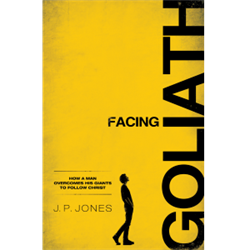
Greg: What a great message for all of us today. Pastor JP provides us with great insight. That is why we'd like to make it available to you on CD. Just get in touch and mention today's date. We'll send it your way for just $5. Or if you'd like to support this ministry, you can write us at Truth That Changes Lives, 233 31 Molten Parkway, Laguna Hills, California 92653. Or give us a call at 949 916 0250. That's 949 916 0250. For your gift of $25 or more, we will send you a signed copy of JP's new book Facing Goliath.
Please join us every Sunday at 9 or 11 AM at Crossline Church in Laguna Hills. The address is 233 31 Molten Parkway, Laguna Hills, California 92653. Or check us out on the web at crosslinechurch.com. We're going to get to the address and phone number again in a moment, but before we do that, Pastor JP, do you have any insight from today's message?
JP Jones: Thanks, Greg. We're talking about the Bible. It is a unique book, 66 books over 1,500 years in its making, 40 plus authors, one continuous theme, salvation by grace through faith, one savior, the Lord Jesus Christ. The Bible is the word of God. It is inspired, it is authoritative, it is God's message to us, and it reveals God's plan of salvation through faith in Jesus Christ. When we study the word of God, it changes our lives and we are to be quick to be doers of the word and not just hearers who delude themselves. You see, I'm aware that as you're listening to this, there are two kinds of people, some who already believe in Jesus Christ as their Lord and savior and others who have not yet come to a place of belief in Jesus as their Lord and savior.
To those who already believe in Jesus Christ, the the application of this message is simple. Study the word of God and do what it says. Study the word of God and grow in your faith. Study the word of God, put it into practice and grow in your love for God and love for neighbor. For those who are seekers, for those who have yet to put their faith in Christ, here's the simple application. Study the word of God and see what it says about Jesus. Study the word of God and ask yourself, is this the way of salvation?
How can I know God? How can I be in a personal relationship with God? You see, the Bible speaks about Jesus Christ in every page. In every page of scripture, Jesus is the Lord and savior. But in particular in the New Testament and in the gospels and in that message, the the Gospel of John gives us a clear word about Jesus. And the Gospel of John tells us this, to as many as received him, to them he gave the right to become children of God. If you want to know God, study his word and believe on Jesus Christ whom he has sent.
Greg: We want to help you in your relationship with Christ. Please get in touch with us at Truth That Changes Lives, 233 31 Molten Parkway, Laguna Hills, California 92653. Or call us at 949 916 0250. On the internet, you'll find us at crosslinechurch.com. We hope to see you at one of our services every Sunday at our new campus in Laguna Hills. For more information and directions, please go to crosslinechurch.com. Please join us next time on Truth That Changes Lives.
Guest (Male): The cross people, world behind, no turning back. There's the banner high. It's not for me. It's all for you.
Featured Offer
Past Episodes

Featured Offer
About Truth That Changes Lives
About JP Jones
JP Jones is the founding Senior Pastor of Crossline Church in Laguna Hills, CA. Beginning with 16 people, Crossline has grown to a congregation of over 2,000 in 10 years. This growth has come largely through people receiving Christ and joining the church. JP is a dynamic and articulate Bible teacher with a passion to see people come to Christ and grow into being multiplying disciples for Jesus. JP began his ministry career with Campus Crusade for Christ and continues to have a heart for the Great Commission. Traveling on mission trips all over the world, JP preaches the gospel and trains pastors to be reproducing spiritual leaders.
For the past 25 years, JP has been an Adjunct Professor of Theology and Biblical Studies at Biola University and Talbot School of Theology. A published author, JP has written Facing Goliath by Baker Books and the discipleship curriculums, Transformed and Livin’ Large by Life Together. JP is a popular speaker at Men’s Retreats and Couples Conferences. JP is married to his wife Donna and they have 3 children. JP loves family vacation, the beach, Ultimate Fighting and a good cup of coffee.
Contact Truth That Changes Lives with JP Jones
info@crosslinechurch.com
http://pastorjpjones.com/
23331 Moulton Parkway
Laguna Hills CA 92653
(949) 916-0250