

The Bible, Part 1


So Peter says, this word that has intrinsic lasting value because it's eternal in nature, has the power to change our lives.
JP Jones: So Peter says this word that has intrinsic lasting value because it's eternal in nature, has the power to change our lives.
Greg: Thank you for joining us on Truth That Changes Lives. Pastor JP Jones is the senior pastor of Crossline Community Church in Laguna Hills, California, and a professor in biblical studies at Biola University. Today on Truth That Changes Lives, Pastor JP will be giving us a message from a series entitled Foundations. Let's listen as JP gives us part one of The Bible.
JP Jones: Well, Jesus said in John chapter 8 that you shall know the truth and the truth shall set you free. I I share with you uh regularly conversations that I have with people and more often than not I have them at the gym where I work out and quite often I have them while I'm sitting in the Jacuzzi talking with people. It's kind of a disarming place to have a pretty deep conversation. But what I find more often than not is that as I'm discussing with people spiritual truth, I'm listening to what people believe and I'm asking questions about what they believe and I'm opening up a dialogue so that they can in turn ask me questions about what I believe.
And I find a pattern in all of my conversations with people, whether someone uh is an atheist or an agnostic or a Jehovah's Witness or a Buddhist, I find a common ground where I tend to regularly come back to in the conversation. And that is I come to a place in the conversation where I say, here's what I believe is the fundamental difference between yourself and myself. You have these sets of beliefs and I have these sets of beliefs. But the critical factor is why we believe what we believe. Why we believe what we believe.
Quite often other people don't know why they believe what they believe. And I'm able to share with them, I know exactly why I believe what I believe. I believe what I believe because the authority in my life is scripture, God's word. And I've come to a place that I define what I believe and how I live based upon the teachings of the Bible. The foundation for my faith as a follower of Jesus Christ is the word of God. And as we begin this series and we talk about what we believe and what differences it make, we've got to start at the very beginning.
So here is our our first statement of faith of what we believe and why we believe it. We believe the Bible consisting of the 66 books of the old and New Testaments to be the inspired, authoritative, and inherent word of God. It is the final rule for faith and practice. The Bible, the 66 books of the Old Testament, the New Testament, we believe it to be inspired, authoritative, inherent, and the final rule for faith and practice. Now why do we believe that? Well, Isaiah 48 says this, the grass withers, the flower falls, but the word of our God stands forever.
Isaiah writing this uh you know close to 600 years before the birth of Jesus Christ is contrasting the finiteness of man and the infinite nature of God. He's describing the in indescribable, incomprehensible greatness of God versus the uh temporary transitory glory of man. And he says, human beings and the product of human ingenuity and the words of man, they just kind of bloom for a while and then they burn up. The grass withers, the flower falls. But the word of God, it's eternal. It's lasting. It's transcendent. It stands forever. Peter quotes this by the way in his letter 1 Peter several months back we studied the book of 1 Peter and we saw that Peter takes this truth, the grass withers, the flower falls and the word of God stands forever.
And then he says, it's this very word that we preach to you by which you've been born again. It's the imperishable word of God. So Peter says this word that has intrinsic lasting value because it's eternal in nature has the power to change our lives. In fact, it actually contains the message of salvation that would enable us to be born again spiritually. Jesus in Matthew chapter 5 verses 17 and 18, this is taken from the Sermon on the Mount, the greatest sermon preached by the greatest preacher who ever lived, Jesus says this, do not think that I have come to abolish the law or the prophets.
I've not come to abolish them but to fulfill them. I tell you the truth, until heaven and earth disappear, not the smallest letter, not the least stroke of a pen will by any means disappear from the law until everything is accomplished. Now Jesus in this well-known sermon is contrasting the uh the contemporary understanding of religion with the actual truth and grace of God. And so Jesus uses a formula throughout the Sermon on the Mount. If you were to read it, in fact you can find it in your Bible, Matthew 5, 6, and 7. In this sermon Jesus uses a literary device and he frequently says this, you have heard it said, and then he explains what they've heard said.
And then he contrasts that by saying, but I say to you, you have heard it said, but I say to you, you've heard it said, but I say to you, you've heard it said, but I say to you. Jesus in the Sermon on the Mount in his but I say to you appeals to the absolute authority of scripture and equates his words to that same level of authority of scripture. Jesus said, I didn't come to abolish the law. I'm not getting rid of the law or the prophets. In fact, I'm going to fulfill it perfectly.
And let me tell you something, not the uh smallest letter, not even the stroke of a pen will fail to be completely fulfilled in the law. Jesus is making reference to an understanding of the Hebrew alphabet. Now uh the Hebrew alphabet is different. It's much more typical of Middle Eastern language. And uh the smallest letter in the Hebrew alphabet is the letter that's called a yod. And a yod is like an apostrophe in uh English grammar. If you were writing out a word and you put a little apostrophe for dozen, you put don't. You take the little apostrophe there and that's equivalent to the size and position of the Hebrew letter yod.
Jesus said not the smallest letter will fail to be fulfilled. And then he says not even the smallest stroke of a pen. And he is making reference to the difference between two letters in the Hebrew alphabet, the letter hey and the letter het. Now some of you speak Hebrew better than I do and you will concur with me. I mean Dave Bratzke will concur with me. If you're really going to talk Hebrew like like an Israeli, you almost have to have a cold going and kind of phlegm in your throat like you are hawking a lugi, you know, het.
The difference between a hey and a het is just a tiny stroke of a pen because if you connected a vertical line with a horizontal line, it's a het. If you just left a little bit of space between the vertical line and the horizontal line, it's a hey. Now if you're writing real sloppy penmanship, it might be hard to read what you're really writing. Are you writing a hey or a het? But Jesus said, you know what? Not the smallest letter, not even the smallest stroke of a pen is going to fail in its full fulfillment because the very words of God, the very letters of God, the very intricacies of the letters are inspired, authoritative, and truthful.
They are from God. And Jesus says my words have that same ring of authority because my words are the words of God. Paul in writing to the church at Thessalonica in 1 Thessalonians chapter 2 says, for this reason we also thank God without ceasing because when you receive the word of God, which you heard from us, you welcomed it not as the word of men but as it is in truth the word of God which effectively works in you who believe. Paul says, we we gave you this message which was the word of God and you actually accepted it as the word of God.
And because you accepted it for what it actually was, the word of God, guess what? It worked in you and changed you. God's word has life-changing power not just because we believe it. You see, it doesn't become the word of God because we believe it to be the word of God. It is the word of God intrinsically and objectively. But when we believe it for what it actually is, it has power to change us. I am I have a picture here. In fact, I I know at some point in the past I actually passed this picture around.
It's a picture of a plaque up at Forest Home Conference Center. And if you've been up to Forest Home, we have many of our retreats up there, both men's retreats and women's retreats. There's a place up in that conference center on the lakeside part of the camp where there's a little uh dedication to Billy Graham. And there's a plaque up there. That's significant to me because about 4 and 1/2 5 years ago I went up there with a group of men and prayed and asked God to give me direction for what he wanted to do in my life and what was kind of the next step in my service for the Lord.
And out of that prayer time came the vision to start Crossline Church. And I take a picture of this plaque because there was a meaningful experience that I had there. On this plaque, this is what it says. This is dedicated to Dr. Billy Graham who had a life-changing encounter on this spot with God here at Forest Home. When as a young man he knelt with a Bible in his hand and he promised God that he would take the Bible by faith and preach it without reservation. And from that time his preaching was marked by a new God-given authority.
He preached the scriptures in the power of the Holy Spirit and he has seen multiplied thousands turn to the Lord Jesus Christ in repentance and faith. See, Billy Graham had a crisis of faith. Is this really the word of God or just a good collection of stories written by men? And that night at Forest Home he knelt on his knees and he came to the conviction that it actually was the word of God and he was going to preach it without compromise. And what happened was his whole life was changed and his whole ministry was changed because he believed what was already true about the word of God.
He accepted it as the word of God because it was the word of God. In uh 2 Timothy 3 15 to 17 the apostle Paul says, how from infancy you have known the holy scriptures which are able to make you wise for salvation through faith in Jesus Christ. All scripture is God-breathed. It's inspired and it's useful for teaching, rebuking, correcting, training in righteousness so that the man of God may be thoroughly equipped for every good work. The New International Version says that all scripture is God-breathed and that is the most accurate translation of the Greek term.
It's the Greek word theopneusia. Theos is God, neusia means breath. All scripture is God-breathed. Now virtually every other translation translates that word as inspired. All scripture is inspired which is the doctrine that is studied in relationship to the scriptures. It it's it's the statement that is the Bible primarily a work of God written by men or primarily a work of men about God. The doctrine of inspiration says it's primarily a work of God written by men, you see. But the term inspiration, while it's the term that we all use, actually fails to represent what Paul is really saying by using the word theopneusia because a more accurate term is expiration because the idea of inspiration gives us this idea that somehow God breathed into the human author and then the human author wrote down what got breathed into them.
All right? There's a element of truth behind that and maybe 2 Peter chapter 1 deals with that a little more effectively. We'll look at that verse in a minute. But that's not primarily what 2 Timothy 3 15 says. No, it says it was breathed out from God. That's expiration, breathing in versus breathing out. God breathed out his word into the minds and hearts of the human authors who wrote it down. The emphasis of inspiration is not on the human authors, it's on the origin of the words. The origin of the words of scripture come from God.
He breathed them out. That's what we believe because that's what the Bible teaches. Now what's interesting about this passage is that Paul ties that truth to life change. And truth should always be tied to life change. Doctrine should always relate to transformation because Paul says all scripture is God-breathed. And then he says it's profitable for and he mentions five things, teaching, rebuking, correcting, training in righteousness that the man of God might be adequate, thoroughly equipped for every good work. Many years ago when I was working with Campus Crusade for Christ up in Santa Barbara I met a student who's a pastor now in Northern California and uh he was kind of floundering in his faith and we got together in the student union over a cup of coffee and I said, you know you are never going to grow spiritually until you develop a habit of spending time with God.
You are never going to become the Christian that God wants you to be until you get into this book and study it and believe it for yourself and apply it to your life. And he says, I know but I don't know how. I said, well let me show you a real simple method. And I took his notepad and I wrote down five columns. And then at the top of each column I put teaching, rebuke, correction, training, equipping. And I said when you read a passage of scripture, you want you to ask a question, what does this teach me?
What's the truth of the passage? Then ask what's the rebuke? Where do I sin? How does it fall short? How does it convict me? Then what's the correction? What do I need to do about it right now to put it into practice? Then ask, okay, what's the training in righteousness? How do I apply this not just today but every day throughout the course of my life in becoming a righteous person? And then lastly ask, how does this equipment good work? How does this give me a direction to serve the Lord in some way? He goes, this is this is phenomenal.
Where did you come up with this study? I said 2 Timothy 3 15 to 17 where it says all scripture is God-breathed and profitable for teaching, rebuking, correcting, and righteousness so that the man of God might be adequate, equipped for every good work. God's word is the word of God and it is profitable to transform our lives because it teaches us, it rebukes us, it corrects us, it trains us, and it equips us for good works. 2 Peter chapter 1 Peter says this, we did not follow cleverly invented stories when we told you about the power and coming of our Lord Jesus Christ.
But we were eyewitnesses of his majesty. For he received honor and glory from God the Father when the voice came to him from the majestic glory saying, this is my son whom I love, with whom I am well pleased. We ourselves heard this voice that came from heaven when we were with him on the sacred mountain. Now I just stop there. Peter says, listen, what I'm relating to you, what I am telling you, I didn't invent this. I didn't think this up. This isn't a story. It's not a myth. In fact, the phrasing there a cleverly devised tale is from the Greek word muthos where we get the concept of Greek myths.
And most of us have studied the Greek myths, you know, like Hercules and uh all the different stories of the gods. Those are myths. They have a certain literary characterization. Peter says, what I'm talking to you, all the miracles, all the uniqueness of the gospel of Jesus Christ as unique God-man, that's not a myth. No, I was an eyewitness. And in fact I was an eyewitness to a particular event, the transfiguration where Jesus was glorified before my very eyes and God the Father spoke and God said, this is my beloved son with whom I'm well pleased.
So I'm writing to you not making up a story but I'm writing to you as an eyewitness of the truth about Jesus Christ. And then he says verse 19, and we have the more certain word of the prophets and you will do well to pay attention to it as to a light shining in a dark place until the day dawns and the morning star rises in your hearts. And above all you must understand that no prophecy of scripture came by the prophet's own interpretation. For prophecy never had its origin in the will of man but men spoke from God as they were carried along by the Holy Spirit.
Peter says, and we have the more certain word of prophecy. More certain than what? More certain than my experience of being an eyewitness at the Mount of Transfiguration. Do you connect what Peter is actually saying? In fact, some people reverse it and in fact you'll find in some Bible translations that it's phrased differently because they've changed the grammar to fit what they think. It makes more sense because this is what we would think would make more sense. I had this great experience, this religious experience, this personal experience. I heard God speak. I saw this great miracle.
And that made me more certain that the Bible was what it is, the word of God. You see, that makes sense. But that's not the grammar of the passage because Peter uses a Greek word bebeao which means more certain. And in the grammatical construction he doesn't say that the Mount of Transfiguration experience made the scriptures more certain. He says, I just had this unbelievable amount of transfiguration experience but I have the more certain word of scripture. More certain than what? More certain than my religious experience. Hey, I'm all for religious experiences. I'm all for seeing miraculous prayers answered.
I'm all for going up to Forest Home in the men's retreat and having the greatest time of my life. I'm all for God doing whatever he wants to do, giving us dreams, visions. Stand up, sit down, lean to left, lean to the right, doing all that stuff. I am for God working in any way that God wants to work. But you know what this passage says? The most fantastic religious experience that could be imagined was Peter's experience on the Mount of Transfiguration. And Peter says that the word of God is more sure, more reliable, and more certain than that.
You know why? We can get it wrong. I can have great feelings but be misguided by my feelings. I can have great religious experiences and think I hear God speaking to me and still get it wrong. But you know what? I can never get wrong what the truth of God's word says. It's objective. It's authoritative. It's absolute. It's the standard. And that's why Peter says, you do well to pay attention to it because this is what you need to know about it. It's not a matter of one's private interpretation. And Peter's not talking here about me or you or any of us interpreting it after the fact.
He's talking about it when it was originally written. When the prophetic scripture was originally written, it wasn't just their own take on God and they wrote that down. No, the Holy Spirit handpicked individuals and led them to write the actual words of prophecy that were written. So we have those of us who have a Bible. We have the authoritative, inspired, inherent word of God. The final rule for faith and practice. In fact, there is a 10-step process that has come about from God's hand so that a truth in the mind of God results in life change for a believer today.
First five steps in that process was God's sovereign moving to bring us to a place where we have a Bible in our hands. Last of those five uh steps in the process is our interaction with what God does so that that truth changes our lives.
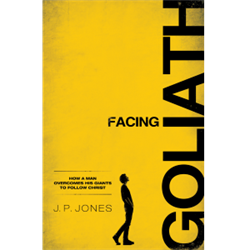
Greg: What a great message for all of us today. Pastor JP provides us with great insight. That is why we'd like to make it available to you on CD. Just get in touch and mention today's date. We'll send it your way for just $5. Or if you'd like to support this ministry, you can write us at Truth That Changes Lives, 2333 31 Molten Parkway, Laguna Hills, California 92653. Or give us a call at 949 916 0250. That's 949 916 0250. For your gift of $25 or more we will send you a signed copy of JP's new book Facing Goliath.
Please join us every Sunday at 9 or 11:00 a.m. at Crossline Church in Laguna Hills. The address is 2333 31 Molten Parkway, Laguna Hills, California 92653. Or check us out on the web at crosslinechurch.com. We're going to get to the address and phone number again in a moment. But before we do that, Pastor JP, do you have any insight from today's message?
JP Jones: Thanks Greg. We're talking about the Bible and the fact that the Bible is the word of God. It is the inspired, authoritative message from God. It's God speaking to us, God revealing himself to us. And the power of the word of God is that it changes our lives. Hebrews chapter 4 says that the word of God is living and active and sharper than any two-edged sword. It pierces as far as the division of soul and spirit and joint and marrow. It's able to judge the thoughts and attentions of the heart. You see the word of God reveals Jesus Christ to us and the word of God reveals how we can come to know Jesus Christ through faith.
In the Bible the message of salvation is clear. It's by grace alone, through faith alone, in Christ alone. And when we call out to Jesus Christ, he saves us. He forgives our sins and he gives us new life. And this message is the message of the gospel. And the gospel message is contained in the word of God. And the word of God is alive and powerful and truthful. In fact, the word of God can change your life right now. If you want God to change your life, open up your whole life to God's word and the message of salvation in Jesus Christ.
Would you pray with me right now? Lord, we believe that you are real and that you've spoken to us and that your message is in the word, the word of God. And we believe what it says about Jesus. May Jesus save us, forgive us, and be the Lord of our lives in Jesus' name. Amen.
Greg: We want to help you in your relationship with Christ. Please get in touch with us at Truth That Changes Lives, 2333 31 Molten Parkway, Laguna Hills, California 92653. Or call us at 949 916 0250. On the internet you'll find us at crosslinechurch.com. We hope to see you at one of our services every Sunday at our new campus in Laguna Hills. For more information and directions please go to crosslinechurch.com. Please join us next time on Truth That Changes Lives.
Featured Offer
Past Episodes

Featured Offer
About Truth That Changes Lives
About JP Jones
JP Jones is the founding Senior Pastor of Crossline Church in Laguna Hills, CA. Beginning with 16 people, Crossline has grown to a congregation of over 2,000 in 10 years. This growth has come largely through people receiving Christ and joining the church. JP is a dynamic and articulate Bible teacher with a passion to see people come to Christ and grow into being multiplying disciples for Jesus. JP began his ministry career with Campus Crusade for Christ and continues to have a heart for the Great Commission. Traveling on mission trips all over the world, JP preaches the gospel and trains pastors to be reproducing spiritual leaders.
For the past 25 years, JP has been an Adjunct Professor of Theology and Biblical Studies at Biola University and Talbot School of Theology. A published author, JP has written Facing Goliath by Baker Books and the discipleship curriculums, Transformed and Livin’ Large by Life Together. JP is a popular speaker at Men’s Retreats and Couples Conferences. JP is married to his wife Donna and they have 3 children. JP loves family vacation, the beach, Ultimate Fighting and a good cup of coffee.
Contact Truth That Changes Lives with JP Jones
info@crosslinechurch.com
http://pastorjpjones.com/
23331 Moulton Parkway
Laguna Hills CA 92653
(949) 916-0250