

The 3 Cs of Grace, Part 1


If we come to God based upon acknowledging our need and sin and placing our faith in Christ alone for our salvation; that always results in life, hope, forgiveness, love, and transformation.
JP Jones: If we come to God based upon acknowledging our need, acknowledging our sin and putting our faith in Christ alone for our salvation, that always results in life and hope, and forgiveness, and love, and transformation.
Guest (Male): Thank you for joining us on Truth That Changes Lives. Pastor JP Jones is the Senior Pastor of Crossline Community Church in Laguna Hills, California, and a Professor in Biblical Studies at Biola University.
Today on Truth That Changes Lives, Pastor JP will be giving us a message from a series entitled, Galatians. Bless us then as JP gives us part one of the three C's of grace.
JP Jones: If you have your Bibles, would you open to the book of Galatians? Galatians chapter 2.
This is one of the first of Paul's letters and it's a strong statement of grace alone as the means by which we come to God. Paul has been saying in the introduction to this book that there are two paths that a person can take towards God. One is good news and the other is bad news.
The good news is grace through faith results in forgiveness and acceptance, and love, and transformation, and eternal life. The other is bad news because it's based on what we do. It's based on our works. It's based on keeping law. It's based on religious perfection. And it's bad news because it always results in death, it always results in condemnation, it always results in alienation from God.
And Paul is using the backdrop of the early controversy over the Jewish law to really present a a broader spiritual principle for us, because whether our approach to God is based on the Jewish law, whether it's based on Eastern religions, whether it's based on the New Age, whether it's based on some perverted form of Christianity, or just through personal good works.
If we try to come to God based on what we do, we always end in failure, condemnation, and death. There's no good news in that at all.
On the other hand, if we come to God based on what Jesus Christ has done for us, if we come to God based upon acknowledging our need, acknowledging our sin and putting our faith in Christ alone for our salvation, that always results in life and hope, and forgiveness, and love, and transformation. So Paul is very passionate about this message because life and death are at stake. Bondage and freedom are at stake.
This is a book that is designed to set us free from everything that would bind us. The Pastor of Willow Creek Community Church, Bill Hybels, has said that the difference between Christianity and every other religion is just two letters, D-O-N-E. Because every religion on the planet is spelled D-O, what we do.
But Christianity is spelled D-O-N-E. Done, what Christ has done for us. And this morning among us here, people from different spiritual backgrounds, we're on different spiritual journeys. But every person here is either this morning thinking, processing, moving towards God either on the basis of what we do, or on the basis of what Christ has done.
And the book of Galatians would challenge us over and over again to come back to this center that it's based on what Christ has done. In fact, this is so important, Paul describes in autobiographical fashion in Galatians chapter 2, about a confrontation he had with another apostle. Peter, over this very issue of grace.
This is what Galatians chapter 2, verses 11-21 says: When Peter came to Antioch, I opposed him to his face because he was clearly in the wrong. Before certain men came from James, he used to eat with the Gentiles. But when they arrived, he began to draw back and separate himself from the Gentiles because he was afraid of those who belonged to the circumcision group.
The other Jews joined him in his hypocrisy so that by their hypocrisy, even Barnabas was led astray. When I saw that they were not acting in line with the truth of the Gospel, I said to Peter in front of them all, "You're a Jew, yet you live like a Gentile and not like a Jew. How is it then that you force Gentiles to follow Jewish customs?"
"We who are Jews by birth and not, quote unquote, Gentile sinners, know that a man is not justified by observing the law, but by faith in Jesus Christ. So we too have put our faith in Christ Jesus, that we may be justified by faith in Christ and not by observing the law, because by observing the law, no one will be justified."
"If while seeking to be justified in Christ, it becomes evident that we ourselves are sinners, does that mean that Christ promotes sin? Absolutely not. If I rebuild what I once destroyed, I prove that I am a lawbreaker. For through the law, I died to the law, so that I might be one who lives for God. I have been crucified with Christ."
"And I no longer live, but Christ lives in me. The life I live in the body, I live by faith in the Son of God, who loved me and gave himself for me. I do not set aside the grace of God, for if righteousness could be gained through the law, Christ died for nothing."
This is a powerful passage of Scripture because it illustrates some of the most important truths that are fundamental to the Gospel. This whole principle of grace through faith. The fact of justification and God declaring us righteous. The opposition between works and faith as a means to coming to God and being in relationship with God.
The importance of this truth to the degree that one apostle would confront another apostle over it. I mean, that's pretty heavy description of why and how this truth was affirmed and held on to in the early church. I'm going to look at in our time together the three C's of grace.
First of all, the confrontation over grace. Secondly, the controversy about grace, and thirdly, the conditions for living by grace. First of all, this confrontation. Paul is telling us the fact that he had a confrontation with Peter. In the flow of the context of Paul's letter, Paul has been speaking very personally about his own experience with the Gospel of Christ, how he was set apart even from his birth. God had a call on his life. And then at a certain point in time, Christ was revealed to him.
And he was called not only to be a Christ follower, but to be an apostle, someone who proclaimed this message, and in particular, someone who proclaimed it to the Gentiles. And Paul is very careful to share, "This was something that he didn't learn, wasn't passed on, wasn't brought up in, didn't follow some catechism to experience." No, Jesus Christ revealed himself to him in a dramatic way. He had an encounter with the resurrected Jesus Christ, and Jesus revealed truth to him that he was to be a spokesman for, a mouthpiece for, an apostle of.
And so Paul is saying his apostleship wasn't something that was delegated by the existing apostles. His apostleship came from Jesus Christ himself. And part of the defense of this truth is to show he had the spiritual fortitude to go toe-to-toe with Peter. In fact, he rebuked Peter over an issue that was fundamental, non-negotiable, essential to having a relationship with God.
It's about grace, but there's a truth about grace. You know, truth is is a powerful, powerful weapon. It's a powerful message, because truth unites and truth divides. Truth is like drawing a line in the sand. And you're either on one side or you're on another side. The truth about grace unites everybody who believes they come to God based on what Christ did, and that's it.
And it divides them from those who believe, "No, there's other ways we can come to God." Paul says this is what happened: At Antioch, where Paul and Barnabas were pastoring, Peter came up to visit the growing church, and the Antiochian church was primarily a Gentile church. There were some Jews, but mostly Gentiles. And it was a laboratory where Paul and Barnabas discovered that grace is open to anybody and everybody. Not just to Jews, but to Gentiles.
And grace means Gentiles don't have to become Jews first in order to become Christ followers. They come straight by grace through faith into a relationship with God, and Jews are set free from all the customs and rituals and legalistic expectations that were part of the package of Judaism, that grace had enabled them to come to God directly, not based upon a bunch of things that they added to the equation.
And so, Peter had fellowship with Gentiles, which a Jewish person wouldn't have done. And Peter actually ate with Gentiles, which means he was eating food that had been prohibited by Jewish custom. But remember, Peter was the guy that had the vision. In the book of Acts, Peter saw in Acts chapter 7, chapter 8, that a sheet came down. There were all these animals and God said, "Go and kill and eat." And he said, "I can't eat those things because they're unclean. I've never had, you know, ham and eggs in my entire life, I'm not going to start now." And God says, "Eat it."
So he did. And he thought, "Oh, this means that these foods are okay to eat." But there was even a broader application of that vision. It was the Gentiles are being incorporated into the Gospel. And Peter went down and preached to Cornelius, and all these Gentiles got saved. So Peter, of all people, understood that grace meant everybody can come to God through Jesus Christ, and grace meant the legalistic expectations of his religion no longer applied. It was grace, and grace alone.
So Peter came to Antioch. He saw a case where Gentiles and Jews were together in fellowship, and he thought, "This is awesome!" So he joined in. And he was eating all the delicacies that the Gentiles were eating, and he realized it had no iota of impact on his spiritual life. What you ate or didn't eat had nothing to do with having a relationship with God. So he's enjoying this fellowship.
And then some guys come down from Jerusalem, who were Judaizers. These were the guys who said, "No, you can't eat that stuff because you first got to become a Jew before you can become a Christian." Now you would have thought that Peter, I mean, the Apostle Peter, the guy who actually had the vision before Paul, that Gentiles are included in the Gospel. You would have thought he said, "You guys are wrong." But he didn't.
Because he took his eyes off of the Gospel and off of Christ and off of grace, and put his eyes on what other people thought about him. And fear led him to hypocrisy. Fear led him to hypocrisy. You know, fear can lead us to do all kinds of things against what God wants for our lives.
And not just young Christians. Not just immature followers. Mature leaders can compromise what they know to be true because of fear. And it says, "Because of fear, Peter withdrew." And stopped having fellowship with the Gentiles. And Paul says, "It was of such impact because of Peter's position, that a bunch of other Jewish people pulled away from the Gentiles. And even Barnabas, who was the pastor of the church, pulled away from the Gentiles."
See, Paul is setting up how important grace is. Grace brings us into relationship with God. Grace brings us into relationship with one another. And anything that destroys grace, you need to be willing to make a stand over. You need to be willing to make a stand over because it's an essential element of the Gospel. And so, Paul says that he publicly confronted Peter over the issue.
The language in this passage is so profound because poor Peter is not given any break at all. We're not left to conclude, "Well, you know, Peter thought this and..." No, it's obvious, Peter was wrong. In fact, Paul says that he was not acting in line with the truth of the Gospel. So what are some takeaways from this first interaction about the confrontation over grace? Well, grace is a life principle that not only governs how we come to God, it also governs how we live after we've come to God.
Grace is a life principle. It not only affects how we cross the line, it affects how we walk after we cross the line. And Paul says in Romans chapter 5 that were sin did abound, grace did much more abound, so that as sin reigned in death, even so grace might reign through righteousness to eternal life through Jesus Christ our Lord. Grace is to reign in our lives as Christ followers. Did you know that?
Grace is to reign in our lives. Grace is to be the principle that we live every day. Grace is to be the principle by which we have personal relationships. Grace is to be the principle by which we seek to know God. Grace is to be the principle by which we speak to one another. Ephesians 4:29, "Let no unwholesome word proceed out of your mouth, but only such a word that is good for edification, that it might give grace to those who hear."
Grace is the basis by which we're to grow. Titus 2 says, "The grace of God has appeared, bringing salvation to all men, and instructing us to deny ungodliness and worldly desires and to live sensibly, righteously, and godly in this present age." That's how we grow spiritually and are sanctified and become more holy and more godly and more righteous, by grace.
And Paul says by way of personal story, Peter lost sight of that. Peter went back to the law. Peter was led by fear. Peter's more concerned about what people thought than what God thought. And it began to affect everyone else in the church. And so, commensurate with the offense, Peter was rebuked by Paul. Now that's really important.
I mean, if this was a private matter between Paul and Peter, Paul would have talked to him privately. If it was a matter of just the small group that they were in, they would have dealt with it in the terms of their small group. But the offense you see was public. Everybody knew about it and everybody was affected by it. So for Peter's correction and for the correction of the whole church, the rebuke was public.
And the rebuke was about an essential. It was not over some piddly little church issue that, you know, some people think this way and other people think this way, but the Bible doesn't really say about it anyway, so you can make up your own mind and just live with it. It wasn't about that stuff. It was about the Gospel. And it was about how we live once we've believed the Gospel.
It demanded confrontation. Grace is so important that we got to make a stand for it. We got to make a stand for it in terms of our own belief system. We got to make a stand for it in terms of what we share with others. We got to make a stand for it in terms of what our church believes about it. There is a confrontive aspect to this awesome, unbelievable truth of grace.
Because what's at stake? Well, that's what Paul's going to tell us. Paul kind of in this passage moves from what he actually said to Peter to kind of the teaching principle, and it's not really clear when he stops telling us what he actually said to Peter and he's transitioning into what he's actually writing to the church at Galatia.
Probably around verse 14, 15, 16, it shifts from what he was actually saying to Peter to now the principle he's teaching about it, telling us kind of why he had this explanation and discussion. He says this in verse 16, "Know that a man is not justified by observing the law, but by faith in Jesus Christ. So we too have put our faith in Christ Jesus, that we may be justified by faith in Christ and not by observing the law, because by observing the law, no one will be justified."
"If while seeking to be justified in Christ, it becomes evident that we ourselves are sinners, does that mean that Christ promotes sin? Absolutely not. If I rebuild what I once destroyed, I prove that I am a lawbreaker. For through the law I died to the law so that I might live for God." Drop down to verse 21. "I do not set aside the grace of God, for if righteousness could be gained through the law, Christ died for nothing."
Paul is talking here about the doctrine of justification. This is the most powerful truth of the Gospel. The Gospel of Christ is based upon two dynamic truths. One, what Christ accomplished on the cross, and two, the gift of the Holy Spirit. Here's a whole semester's worth of the doctrine of salvation. I teach this at Biola University. The doctrine of salvation. Here's a whole semester's worth in like two minutes.
Based upon what Christ did on the cross, the Bible says we have justification, redemption, reconciliation, and propitiation. Based upon the gift of the Holy Spirit that every believer receives at the very moment they cross the line and become a Christian, we have regeneration, adoption, sealing, indwelling, and baptism. Those nine truths make up what the Bible teaches about salvation. It's based upon what Christ did on the cross, and it's based upon the gift of the Holy Spirit at the moment of salvation.
Paul is dealing with here in Galatians, as he does in the book of Romans, with this fundamental issue of how to get right with God. You see, because of sin, we're not right with God. Because of sin, we're separated from God. Because of sin, there's a gulf between us and God. So how do we get right with God? Well, come back to the two ways that Paul's talking about. There's good news and there's bad news.
The bad news is, you try to get right with God through something you do. It's bad news because you're going to never do enough, and you can never do it perfectly, and you can never do it all the time. So it's always bad news because it doesn't work. Or you can follow the good news, which is you can't do it. You can't get right with God, but God makes you right with himself through Jesus Christ.
Guest (Male): What a great message for all of us today. Pastor JP provides us with great insight. That is why we'd like to make it available to you on CD. Just get in touch and mention today's date. We'll send it your way for just $5. Or if you'd like to support this ministry, you can write us at Truth That Changes Lives, 23331 Moulton Parkway, Laguna Hills, California 92653, or give us a call at 949-916-0250. That's 949-916-0250.
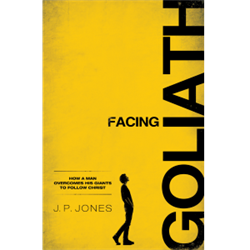
For your gift of $25 or more, we will send you a signed copy of JP's new book, *Facing Goliath*. Please join us every Sunday at 9 or 11 AM at Crossline Church in Laguna Hills. The address is 23331 Moulton Parkway, Laguna Hills, California 92653. Or check us out on the web at crosslinechurch.com. We're going to get to the address and phone number again in a moment, but before we do that, Pastor JP, do you have any insight from today's message?
JP Jones: Thanks, Greg. You know, I've heard it said that truth is like a knife. If it's wielded by an assassin, it brings death. If it's wielded by a surgeon, it brings life. God is the one who speaks truth to us and takes his truth to change our lives, and God is a God of grace. And so God uses his truth empowered by his grace to save us, to transform us, to bring us to become more and more like Jesus Christ. That's what the book of Galatians is all about.
That's why Paul is arguing so strongly for the Gospel of grace because it's the truth that sets us free. It's the Gospel of grace that tells us that we're sinners and we cannot save ourselves. It's the Gospel of grace that tells us what we couldn't do on our own, God did for us by sending Jesus Christ. It's the Gospel of grace that tells us that Jesus Christ was the perfect sacrifice for our sins. He made full atonement for our sins. It's paid in full through Jesus Christ. It's the Gospel of grace that tells us that the resurrection of Jesus Christ gives us hope for life now and for eternity. It's the Gospel of grace that is the only message of salvation. It is the truth and it's the truth that sets us free.
And so Paul tells us in Galatians chapter 2 that we can try to come to God through self-effort, and through works, and through a pattern laid out by religion, or we can come to God based on the truth. The truth of grace. It's the only way to be saved, it's the only way to be set free, it's the only way to be healed from the inside out. Grace changes everything. And grace is the way that God deals with us. And grace is the basis for our new life in Jesus Christ. Grace saves us and grace changes us.
If you've come to faith in Jesus Christ, you've come to faith because of grace. In Christ, you continue to grow on the basis of grace. In Christ, you continue to grow by trusting in what God says, trusting in what God does, and allowing his grace to change you. That's why in John's Gospel, the beginning of the Gospel, he says, "The law came by Moses, but grace and truth were realized in Jesus Christ." You see, only Jesus Christ can save us and only Jesus Christ can change us. And the only way to be connected to Jesus Christ is through truth and grace.
It's a one-two punch. Grace and truth always work together. Paul tells us in Galatians chapter 2 that the way to a transforming life is to follow the truth of grace. Let me ask you, today, are you following the truth of grace? Today, are you being transformed by the truth of grace? Today, are you being set free by the truth of grace? You see, Jesus said it this way, "You shall know the truth, and the truth shall set you free."
So every person is either being set free by the truth or being held in bondage by a lie. God wants us to be free. It's the truth that sets us free. It's the truth of grace that sets us free. If that's the truth that you want in your life today, if that's the truth that you want changing you today, would you ask God for his grace? Would you surrender to his grace? Let's do that in prayer right now. Lord Jesus, thank you that you have explained and revealed truth and grace to us.
And we thank you that you are the way, the truth, and the life and that no one comes to the Father but by you. And we thank you that your grace is free and available to us today. Immerse us in your grace, change us by your grace, fill us up with your grace. We pray for that in your name. Amen.
Guest (Male): We want to help you in your relationship with Christ. Please get in touch with us at Truth That Changes Lives, 23331 Moulton Parkway, Laguna Hills, California 92653, or call us at 949-916-0250. On the internet, you will find us at crosslinechurch.com. We hope to see you at one of our services every Sunday at our new campus in Laguna Hills. For more information and directions, please go to crosslinechurch.com. Please join us next time on Truth That Changes Lives.
Featured Offer
Past Episodes

Featured Offer
About Truth That Changes Lives
About JP Jones
JP Jones is the founding Senior Pastor of Crossline Church in Laguna Hills, CA. Beginning with 16 people, Crossline has grown to a congregation of over 2,000 in 10 years. This growth has come largely through people receiving Christ and joining the church. JP is a dynamic and articulate Bible teacher with a passion to see people come to Christ and grow into being multiplying disciples for Jesus. JP began his ministry career with Campus Crusade for Christ and continues to have a heart for the Great Commission. Traveling on mission trips all over the world, JP preaches the gospel and trains pastors to be reproducing spiritual leaders.
For the past 25 years, JP has been an Adjunct Professor of Theology and Biblical Studies at Biola University and Talbot School of Theology. A published author, JP has written Facing Goliath by Baker Books and the discipleship curriculums, Transformed and Livin’ Large by Life Together. JP is a popular speaker at Men’s Retreats and Couples Conferences. JP is married to his wife Donna and they have 3 children. JP loves family vacation, the beach, Ultimate Fighting and a good cup of coffee.
Contact Truth That Changes Lives with JP Jones
info@crosslinechurch.com
http://pastorjpjones.com/
23331 Moulton Parkway
Laguna Hills CA 92653
(949) 916-0250