

Samuel, Part 2


We need a Samuel. Every one of us knows somebody whose going through something that they need God to be their rock of hope.
JP Jones: We need a Samuel. Every one of us knows somebody who's going through something that they need God to be their rock of hope.
And while Samuel was sacrificing the burnt offering, the Philistines drew near to engage Israel in a battle. But that day, the Lord thundered with loud thunder against the Philistines and threw them into such a panic that they were routed before the Israelites. The men of Israel rushed out of Mizpah, and they pursued the Philistines, slaughtering them along the way to a point below Beth Kar.
Then Samuel took a stone and set it up between Mizpah and Shen. And he named it Ebenezer, saying, "Thus far has the Lord helped us." So the Philistines were subdued and did not invade Israelite territory again. And throughout Samuel's lifetime, the hand of the Lord was against the Philistines.
And the towns from Ekron to Gath that the Philistines had captured from Israel were restored to her, and Israel delivered the neighboring territory from the power of the Philistines. And there was peace between Israel and the Amorites. And Samuel continued to judge over Israel all the days of his life.
Just like the Israelites, we live in the land of the Philistines. We've got enemies, spiritual enemies. We've got pressures, we've got giants, we've got temptations, we've got struggles. And we need the Lord's help. These people, it was real. The spiritual battle was real to them because there were real Philistines who were really going to invade them and who were really going to waylay them.
But the spiritual battle is just as real for us. You just can't see it. You can see the symptoms of it, but it happens in the unseen realm, the Bible tells us in Ephesians chapter six. We need the Lord's help. Samuel prayed, fasted, confessed, sought the Lord, cried out to the Lord, sacrificed worship offerings unto the Lord. And it says the Lord heard, the Lord answered.
And God did a miracle. The Philistines were coming down to invade them, and they didn't even have to fire a shot. God caused a thunderstorm with lightning strikes to so confuse them and disrupt the troops of the Philistines even though they had a superior fighting force. And we know historically, they also had iron implements as weapons and they had much better armor.
So the Israelites were outmanned and outgunned, but God intervened for them, caused a great confusion to take place among the Philistines, and then the Israelites just came and wiped them out. Samuel was a guy who knew when to pray and he knew when to shoot, and God used him.
We need some Samuels in our life, godly people who will pray for us and intercede for us. We need to be Samuels in the life of other people. You're either one of those kinds of persons right now, and maybe you're both at the same time. You're either a person who needs to be a Samuel for somebody else in your life or you need a Samuel in your life.
Because you've got something going on in your life that's overpowering. The Philistines are coming down on you. Or somebody you know is going through something that is overpowering them and the Philistines are coming down on them. What God did historically is He raised up Samuel to pray for Israel, to intercede for them, to seek the Lord for them, and God heard his prayers and He gave them help.
That's why he erected what was known as his Ebenezer. He wasn't talking about Ebenezer Scrooge. Ebenezer is a Hebrew word that means rock of help. In fact, there's an old hymn where the lyrics have been changed to meet more modern-day words, but the original lyrics went: "Here I raise mine Ebenezer, hither by Thy help I'm come, and I pray by Thy good pleasure, safely to arrive at home. Jesus sought me when a stranger wandering from the folds of God, He to rescue me from danger, interposed His precious blood."
Ebenezer. It means rock of help. Because of Samuel's prayer, God became their Ebenezer, their rock of help. Every one of us here needs God to be our rock of help. We need a Samuel. Every one of us knows somebody who's going through something that they need God to be their rock of hope. We need to be the Samuel.
That's why Paul says in Ephesians, "Ever since the first day I heard of it, I have not ceased to pray for you and to ask that God might give you the spirit of wisdom and revelation to know Him better. I pray that the eyes of your heart might be enlightened so that you can know the riches of the glory of His inheritance in the saints and to know the surpassing greatness of His power toward you." Paul says as soon as he heard about their decision to follow after Christ, he started praying for them.
Don't you wish you had people like that in your life who were praying for you like that? That's the kind of people we need to be for others, where we seek the Lord, not only for ourselves but for others, you see. That's why from the very beginning, prayer has been such a crucial part of our church. It's a core value.
That's why every week, every Thursday morning, eight o'clock, in my office, a group of men gather together for power prayer. And whether we've got just a couple of guys or we pack the place out, we're praying because we are seeking God on behalf of this church. And we're praying for people by name and we're praying especially for our men to be the servant leaders that God has called us to be.
We're praying for our men's retreat, and we prayed for DVBS, and we prayed for this worship service this past Thursday as we gathered together in prayer. We asked God to do miracles here this morning, that if people are in bondage, they'd be set free, and if people are sick, they'd be healed, and if people are lost, they'd find the wonderful grace of Christ and be saved. We prayed for marriages and people's finances. We need to seek the Lord for ourselves and for one another. That's what we learn from Samuel.
Here's a third thing, final thing. Samuel proclaimed the whole truth of God. I wish I had time to go into this in more depth. This is 1 Samuel chapter 12. We won't read this, I just want to walk through it with you. Here's what's happened. Samuel in chapter three has been called by God. God said that not any of the words of Samuel would fall to the ground flat without accomplishing all that He wanted it to happen.
And Samuel listened to God, and everybody knew that he was a prophet. And then so Samuel spoke and led and called Israel to revival and repentance. And during his time, they had peace with the Philistines. God gave them victory not only in the spiritual realm but in the military realm and the economic realm. And the people called out for a king because everybody else had a king.
And God's message to them was, "I will be your king." But they said, "No, we want a king." So finally God said, "Okay, I'll give you one." And Saul became the first king, and Samuel was led by God to anoint Saul to be the first king of Israel. So now Saul has assumed his role as the king and Samuel is fading into the background, kind of like John the Baptist when he handed the baton to Jesus.
John the Baptist said, "He must increase but I must decrease." So in 1 Samuel 12, it's Samuel giving his farewell address, so to speak, after serving well. Here's the first thing Samuel says. First of all, is there anybody here, they're all gathered together, anybody here has anything against me? I've done something and I never made it right. I didn't practice what I preached. I wasn't consistent. I took something from you and I never gave it back. Anybody here has anything to witness against me?
And all Israel said, "No." So the first thing Samuel does is, "I've got to maintain my own integrity. I've got to be a person who applies what I'm saying first to me before I say anything to anybody else." And then he says, "Let me recount to you all that God's done." And then he takes just a few verses and he recounts the history of Israel and how God has done one miracle after another after another in calling them out.
And then he says, "This is all the blessing of God and the promise of God to every one of us." But then he says, "You know what? This is your sin." With crystal clear precision, he's just laying some truth bombs right at them and points out their sin and points out the truth of God's judgment on sin. And he doesn't mix any punches, just nails them.
And then he says, "But you know what? This is what we need to do to repent." And he calls upon the whole nation to repent and get right with God. And then he says, "And this is God's direction for us, and this is what we need to do. This is the word of God. This is the truth that we need to follow."
In other words, he proclaimed the whole truth, not just the good parts but the hard parts, not just the blessings but also the judgments, not just the promises but also the truthful commands. He presented the whole truth. You know, we live in a time where it's just a wishy-washy kind of response to truth.
And there's a lot of churches where they just back away from speaking the whole truth. There's a lot of Christ followers who are very intimidated about making a stand for the truth. Not Samuel. Graciously, humbly, first and foremost applying it to his own life, he proclaimed the truth. He set it down and said, "This is what God says. God says it, I believe it, that settles it."
It's really similar to in the New Testament book of Acts, Acts chapter 20, where the Apostle Paul is giving his farewell address to the church at Ephesus. And he says, "I have not ceased to declare to you the whole counsel of God." And he recounts how even with tears, he went from house to house and he met with people and poured out his heart, but he gave them the whole truth, you see.
I sent one of the devotions out this past week of study that I'm doing with my daughter Ashton, who's 13. It's a study on right choices. And we have been talking about absolute truth in a relativistic world, and how our understanding of truth matters because it's not just what we believe about God, it's what we believe about right and wrong. It's not just the truth in terms of understanding the Gospel, it's the truth in terms of how we live, the ethical choices that we make. It matters.
We live in a time where that's being assaulted. I'm going to come back to that story, but tie it into this. I'm reading a book by Mark Driscoll, one of my favorite authors. Mark Driscoll is a young, cutting-edge Bible teaching pastor up in Seattle. He pastors a church called Mars Hill's Church where a lot of people coming out of the inner-city culture up in Seattle have come to know the Lord.
In this book on "Reformed" mission, he talks about how we need to be on mission, but we need to be reformed, that is personally renewed and directed in our own life. He says this. He's just been talking about John 4 and the woman of Samaria. He says, "Reformed mission requires that God's people understand their mission with razor-sharp clarity. The mission is to be close to Jesus. This is what transforms our hearts. This is what leads us to love God and to love people. This is what leads us to hate what God hates. We need to pursue relationships with lost people in hopes of connecting them with God and with His church."
"This actually protects us from sin because the way to avoid sin is not to avoid sinners, but to stick close to Jesus." Did you get that? The way to avoid sin is not to avoid sinners, it's to stick close to Jesus. And then he goes on and says this in his church. He says as a pastor in Seattle, he has fielded the following difficult cultural questions that relate to truth and right and wrong and absolutes.
"It may be that this is the first time in any generation that the church has had to respond to these kind of questions. You may find them offensive, but recognize these are actual questions that I've been asked by people who are coming to my church." And then he lists some of the questions. Here they are. "Can I pierce any part of my body in an attempt to look like a spinning rack that displays fishing lures?"
"Can I tattoo any part of my body? If I'm HIV positive, can I still get married? Can I get a sex change because I feel like God has made me the wrong gender? What words," and this is my favorite one, "what words actually count as swearing and who decides this? And if I don't agree, can I cuss them out?" I like that one.
"Can I continue to make a living as a professional blackjack player even though I'm following Christ? Is it okay for a man to look like a woman or a woman to look like a man? Can I improve my appearance from plastic surgery? Does a wife really have to submit to her husband? Is it a sin to use birth control? Why are smoking cigarettes and drinking coffee and taking prescription drugs okay but smoking pot is not? Is homosexuality always a sin?"
And he just gives a whole bunch of questions that he's being asked as a pastor. Now, some of those questions are cultural and are relative to the culture and to the person. But some of them are absolute. Some of them have an absolute answer because it's an absolute word from God. Okay, now back to my discussion with my daughter.
We're having this whole discussion about the difference between what's relative and what's absolute, what's true versus what's false, what's wrong for you versus what's wrong for everybody, what's right for you and right for everybody versus what's just right for you. These are difficult kind of questions, but very important in terms of understanding not just what we believe but why we believe what we believe.
So we had this discussion, we get back in the car, we're driving home. We get back in the car, she turns on the radio, 102.7 Ryan Seacrest in the morning. Boom. So Ryan and Ellen K are having a discussion. They're interviewing somebody who called in. And the gal who called in works for a grocery store. And she's talking about an experience where she discovered in a cart where after somebody had taken their groceries and put them out in the cart, a bag of money.
And it was one of those cloth bags that had come from some kind of commercial store. There were $15,000 in the bag. So Ryan says to the woman, "Well, what'd you do with it?" She goes, "Well, I turned it back in to our manager and the woman came back and she found the money." And then Ryan says, "Well, were you tempted at all to try to keep the money since you found it and nobody knew it was there?"
Here was the point. She said, "Oh no, I knew I had to turn it in because karma can bite you in the butt." And she said, "I knew if I took that money, something bad was going to happen to me." So we're listening, I heard that, I turn the radio off, I looked at my daughter. I said, "Did you hear her response?" And she said, "Yeah." I said, "What do you think about it?" She goes, "Well, she turned the money back in, that was the right thing to do, right?" I go, "Yeah, it was the right thing to do. Did you hear why she said she turned the money back in?"
She thought for a moment, she said, "Well, it was because of karma." I said, "Do you know what karma is?" She goes, "Yeah, it's kind of like what goes around comes around." I go, "Yeah," and so then I explained to her the Hindu philosophy of karma. And I said, "And you know what? There really is a principle there that's even somewhat biblical. But then," I said, "do you think that's the real reason why the woman should have turned the money back in?"
My daughter thought for a while and she goes, "No, because it would have been stealing to keep the money." I go, "Right. Does God say anything about stealing?" Just that morning, we had looked at the Ten Commandments as a basis for talking about right and wrong. She goes, "Well, the Bible says don't steal." I go, "Exactly. You know what? This woman didn't do the right thing for the right reason. She did the right thing for the wrong reason."
"Her reason was relativistic. Her reason was, well, it's all about me. What am I going to get out of the deal? And if I can get something better out of the deal, then I'll do it. If I can't get something better out of the deal, I won't do it. That's not how we base right and wrong," I went on to explain. Now, the discussion in the car was a whole lot better than the discussion at the lake because now we're doing a real-life example about truth versus error, about right versus wrong, about absolute versus relativistic.
Here's the whole bottom-line point. Are you willing to stand up for what's true even if everybody else is pushing against it? Are you willing to proclaim the truth even if people don't like hearing it? Because Samuel was. Samuel stood up before all of Israel and not only told them about God's blessings and God's promises, but also about sin and judgment and truth. It's not either-or, it's both-and.
Paul said in Acts chapter 20, "I have not failed to preach the whole counsel of God." Are we willing, even if it means some pushback, some strong, strong pushback, are we willing to stand up for the truth and the whole truth? For ourselves, first of all, because we've got to look at the guy in the mirror. For ourselves, then for our families, for our kids, for our church. Are we willing to speak the truth to one another here? Because 1 Peter says, "Judgment's going to begin with the household of God." We know the truth, so we're far more accountable than people who've never heard it.
Samuel, he was a guy who listened to God, he interceded before God for other people, and he didn't hesitate from proclaiming the whole truth of God. That's why Samuel's a hero and why we can learn from him in our own relationship with Christ. Because we need to be people who listen to God. We need to be people who seek God for ourselves and for others. And we need to be people who don't hesitate in speaking the whole truth of God. First to ourselves, then to one another, and then to the culture.
Guest (Male): Thank you for joining us on Truth That Changes Lives. Pastor JP Jones is the senior pastor of Crossline Community Church in Laguna Hills, California, and a professor in Biblical Studies at Biola University. Today on Truth That Changes Lives, Pastor JP gave us a message from a series entitled "Heroes." That was part two of "Samuel."
What a great message for all of us today. Pastor JP provides us with great insight. That is why we would like to make it available to you on CD. Just get in touch and mention today's date. We'll send it your way for just $5. Or if you'd like to support this ministry, you can write us at Truth That Changes Lives, 23331 Moulton Parkway, Laguna Hills, California, 92653. Or give us a call at 949-916-0250. That's 949-916-0250.
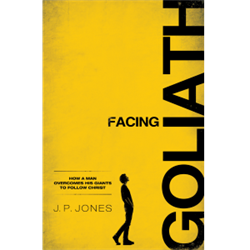
For your gift of $25 or more, we will send you a signed copy of JP's new book, "Facing Goliath." Please join us every Sunday at 9:00 or 11:00 AM at Crossline Church in Laguna Hills. The address is 23331 Moulton Parkway, Laguna Hills, California, 92653. Or check us out on the web at crosslinechurch.com. We're going to get to the address and phone number again in a moment, but before we do that, Pastor JP, do you have any insight from today's message?
JP Jones: Thanks, Greg. We're in a series entitled "Heroes," and today we're looking at Samuel from the Old Testament. Samuel was a man who listens to God. In fact, his name means "he who listens to God." He was a guy who heard God speak to him and he put God's word into practice in his life, and he called people to listen to and to obey the word of God.
You know, each one of us can be like Samuel. We can be people who stand up in our generation and say, "Follow me as I follow Christ." Be a person who listens to God, be a person who puts God's word into practice. Samuel is an important person in the Hebrew scriptures because he functioned as a prophet, a priest, and a king. He's a type of Jesus Christ.
Before there was a king in Israel, Samuel was the ruler over Israel. He was the person to whom the people of Israel looked to give them direction for the nation. He not only functioned like a king, but he was a prophet. He spoke the words of God to people. In fact, he spoke the word of God both in terms of encouragement and in terms of rebuke. An example of that is when he confronted Saul about Saul's disobedience to God.
Samuel spoke the truth about what God's plan was for Saul and what God's plan was for his kingdom. Samuel also was a priest because he offered sacrifices to God. He prayed to God and he called the people to be involved in worship and in seeking God for their personal spiritual lives. He was a type of Christ—a prophet, a priest, and a king.
But one of the incidents in Samuel's life that is an example for each of us of how he was a hero and how we can be heroes takes place in 1 Samuel 7 and 1 Samuel 8. Samuel is interceding to God for the people. Israel is under attack from the Philistines and the army of Philistia is more numerous than those of the Israelites. From a human perspective, it looked like the Philistines were going to prevail over Israel.
So Samuel intercedes to God, he sacrifices to God, he calls out to God in prayer, and he establishes an Ebenezer, which means a rock of faith. He calls the people to say, "Look at what God is doing. Look to who God is. Stand upon God as your rock and believe in God." And the people listen to Samuel.
And the people take trust and courage and hope in God. And because the people turned their attention away from their challenges and their enemies and put their faith and hope and trust in God, they were strengthened and they received courage and they prevailed in the battle. What a great lesson for us.
We can be people like Samuel who say, "Here is our Ebenezer, here is our rock of faith. Our hope is going to be in the Lord Jesus Christ and we're going to trust in Him. We're going to take God's word and put it in practice. We're going to believe that greater is He that is in us than he that is in the world." That will not only give us strength and hope, but that will be contagious to others.
We can be people who call others to faith. We can be people who encourage others and give hope to others when we say our hope and our trust, our Ebenezer, is in Jesus Christ. Do you want to be that kind of person? Do you want to be a hero in this generation? Do you want to be a person and a leader like Samuel who calls folks back to faith in Jesus Christ?
You can be that kind of person. God wants to use you in this generation to be a hero for His kingdom. Let's ask Him to make us strong in faith and call others to faith. Lord, thank You that You used Samuel in his generation. And we pray, Lord, that You'll use us as well. We pray, Lord, that we'll take You at Your word and put it into practice and trust You.
And that we'll be folks who love You and cling to You and stand on Jesus as our rock of faith and say, "Follow me as we follow Christ." We pray for that in Jesus' name. Amen.
Guest (Male): We want to help you in your relationship with Christ. Please get in touch with us at Truth That Changes Lives, 23331 Moulton Parkway, Laguna Hills, California, 92653. Or call us at 949-916-0250. On the internet, you'll find us at crosslinechurch.com. We hope to see you at one of our services every Sunday at our new campus in Laguna Hills. For more information and directions, please go to crosslinechurch.com. Please join us next time on Truth That Changes Lives.
Featured Offer
Past Episodes

Featured Offer
About Truth That Changes Lives
About JP Jones
JP Jones is the founding Senior Pastor of Crossline Church in Laguna Hills, CA. Beginning with 16 people, Crossline has grown to a congregation of over 2,000 in 10 years. This growth has come largely through people receiving Christ and joining the church. JP is a dynamic and articulate Bible teacher with a passion to see people come to Christ and grow into being multiplying disciples for Jesus. JP began his ministry career with Campus Crusade for Christ and continues to have a heart for the Great Commission. Traveling on mission trips all over the world, JP preaches the gospel and trains pastors to be reproducing spiritual leaders.
For the past 25 years, JP has been an Adjunct Professor of Theology and Biblical Studies at Biola University and Talbot School of Theology. A published author, JP has written Facing Goliath by Baker Books and the discipleship curriculums, Transformed and Livin’ Large by Life Together. JP is a popular speaker at Men’s Retreats and Couples Conferences. JP is married to his wife Donna and they have 3 children. JP loves family vacation, the beach, Ultimate Fighting and a good cup of coffee.
Contact Truth That Changes Lives with JP Jones
info@crosslinechurch.com
http://pastorjpjones.com/
23331 Moulton Parkway
Laguna Hills CA 92653
(949) 916-0250