

Philippians 3:7-21, Part 2


We need to value knowing Jesus Christ above everything else.
JP Jones: We need to value knowing Jesus Christ above everything else.
Guest (Male): Thank you for joining us on Truth That Changes Lives. Pastor JP Jones is the senior pastor of Crossline Community Church in Laguna Hills, California, and a professor in biblical studies at Biola University. Today on Truth That Changes Lives, Pastor JP will be giving us a message from a series entitled "Joy." Let's listen in as JP gives us part two of Philippians 3:7-21.
JP Jones: And what the Apostle Paul is saying, even the things that are important and God-given and blessings are a loss when you compare them to knowing Jesus because his point is trying to show us how important it is to know Jesus. Life and death hinge on knowing Jesus. Eternity hinges on knowing Jesus. Joy is dependent upon knowing Jesus.
Whatever was to my profit, I now consider loss for the sake of Christ. Now, Paul in verse 8, it says in the NIV, "What is more." It's like just a throwaway transition. I just said this, now I'm going to say this. We kind of lose the impact. In the original language in the Greek, he uses five words. They're small words. They're called particles. They're like transition words. They tie a sentence together. And the impact of what these five particles play in the Greek text is to basically say, if you think what I just said was a big deal, wait until you hear what I'm going to say.
"What is more, I consider everything a loss compared to the surpassing greatness of knowing Christ Jesus my Lord, for whose sake I've lost all things and I consider them rubbish so that I may gain Christ." Paul is telling us there's an even more value to knowing Jesus. You take all the stuff in your resume, and it's like that is a loss compared to Christ. But you take everything, I mean, everything about your life, it's a loss compared to the value of knowing Christ. In other words, Paul is telling us knowing Jesus is the most important thing in life and eternity. Is it for you? Is it for me?
Paul does something here too, which is subtle in English, it's glaring in the Greek grammar. In verse 7, he says, "Whatever was to my profit, I now consider loss." That's actually what's known as the perfect tense. Perfect tense means something that happened in the past: "I have come to consider it a loss." So it's a completed action in the past that affects the present. Paul is describing a commitment where he evaluated everything, all the things that he had, and he looked at them rationally, logically. He looked at them and then he said, "You know what? They're a loss compared to knowing Christ. I'm going to commit myself to knowing Christ."
It's the kind of spiritual commitment many of us can understand. Maybe it's the commitment we made at a retreat to cross the line and give our lives to Christ. Or at some kind of service. Or this summer, we're going to be rallying as a church to support the Harvest Crusade and Greg Laurie as a good crusade evangelist is going to call for a commitment and is going to ask people to come from all over Anaheim Stadium and walk down on the field and say, "I'm following Christ." Maybe you've had one of those kind of spiritual commitments and decisions. That's what Paul is describing, the kind of commitment that is an all-in commitment.
Now, he says in verse 8, "What is more, I consider everything a loss." He uses the same word "consider." It's the Greek word *hēgeomai*, which means to consider or to think about or to account for or to write in the books. It's an accounting term. He's looking at all his profits, writing them in the books compared to knowing Jesus. They're a loss. Only now he changes the verb tense from the perfect to the present. "Right now, I consider them a loss." This isn't just some decision I'm writing on from the past. It's something I'm making every day. It's something I'm living with right now. It's something I'm emotionally committed to right now. Even as I'm writing this to you Philippians, I consider everything a loss compared to knowing Jesus.
Tomorrow is my wedding anniversary. Donna and I will be celebrating 24 years of being married. So 24 years ago, we stood in front of our family, friends, the pastor. We committed our lives to each other. I committed my whole life to my wife. And I can say beyond a shadow of a doubt, I love her more now than I did 24 years ago. I'm more excited about our marriage, I'm more committed to her, I have a greater desire to be the man that God wants me to be in her life than I did 24 years ago. And today and tomorrow, as we celebrate our anniversary, I am committing myself to her. I made a commitment. I'm re-upping on that commitment. I am re-upping on it every day, you see.
Many of you here, you have made a commitment to Jesus. But today, are you committed to knowing Jesus more than anything else? Today, would you say with all integrity that loving Jesus, seeking after Jesus, pursuing Jesus is the most important thing in your life? It was at one time when you made that commitment, but is it right now, today? See, Paul says that was his experience because he saw the value of knowing Christ. This wasn't just an altruistic spiritual discipleship decision. It was an intelligent decision when he saw how valuable it was to know Jesus.
It's like the parable that Jesus gave about the guy who found the treasure in the field and he gave everything to buy it and to get it. Well, let me tell you, if I told you a guaranteed investment, I mean, absolute guarantee that would yield an unbelievable return, it's not like you're making some real sacrifice to put all your money together and make that investment because you see it's valuable. It makes sense. You'd be an idiot not to do it. You'd be an idiot not to give your whole life to Jesus. I'd be an idiot not to consider everything a loss for the sake of Christ. Why? Because it is a surpassing value. That's an objective truth.
Paul describes the surpassing value of knowing Christ. He uses the Greek participle *hyperechōn*. And what that means is it's super great. It's beyond an understanding of greatness. "Hyper" is where we get the English "hyper." It's like an exaggerated term to describe something that's beyond what you can even imagine. The value of knowing Christ is beyond what we can imagine. Now, just think about what we can imagine. We know Jesus is the unique God-man, fully God, fully man. We know Jesus is the compassionate healer. We know Jesus is the miracle worker.
We know Jesus is the anointed Messiah of Israel. We know Jesus is the sacrifice for our sins. He made full atonement for our sins. We know Jesus is the resurrected Lord. We know Jesus is seated at the right hand of the Father right now. We know Jesus has all authority in heaven and on earth. We know Jesus is interceding for us right now. We know that Jesus is coming back again as the King. We know Jesus is the judge of the living and the dead. That's what we know. Paul says it's even beyond what we know, how valuable it is.
The point is this: every act of discipleship, every commitment of sacrifice in the Christian life, always has to be compared to the value of knowing Christ, of gaining Christ, of experiencing Christ. We have to always see it in the proper light, to see it in the balance. It's like there's a scale up here and on one side we put whatever discipline it's going to require to know Christ, whatever sacrifice God is calling us to make to be an obedient follower of Christ, whatever sin it is we have to avoid, whatever habit it is we have to practice, whatever sense of challenge it's going to take on our part. That's here. On this part, you put the value of knowing Christ. Boom. That's the way the scale tips just like that. It's not even a comparison.
Paul says, "What's more, I consider everything a loss compared to the surpassing greatness of knowing Christ Jesus my Lord, for whose sake I have lost all things." Remember Jesus in Mark chapter 8? He said, "If anyone would come after me, he must deny himself, take up his cross and follow me. For whoever wants to save his life will lose it, but whoever loses his life for me and for the gospel will save it." If you're here this morning and you don't know Christ, I want to persuade you to give your life to Jesus Christ. But I don't want to give you a bait and switch message. Jesus is asking you to take up your cross and follow him, to deny yourself, to sacrifice your life for Christ.
For those of you who have already made that commitment, many of us somewhere along the way, we've let go of the cross. We've put something else in our lives that should only be the place where Jesus is. Knowing Christ is of surpassing value. It's more important than anything else. In fact, Paul says, as I shared with you last week, he says, "I consider it rubbish." Everything. I consider it rubbish that I may gain Christ. When I was in seminary and taking Greek exegesis, one of the tools, the books that we had to pour over and study, was a book called Reinecker's *Linguistic Key to the Greek New Testament*. Every word in the Greek New Testament is there and all of its usage.
I went back just to make sure, in case I was misleading you from last week. In Reinecker's *Linguistic Key to the Greek New Testament*, the word here for rubbish, *skybala*, it says human excrement. There's nothing wrong with calling crap crap. And what Paul says by inspiration of the Holy Spirit, there's a whole group of words he could have used that were much nicer and religiously correct, but he picked this word on purpose because he says, "You take all the stuff in your resume and you take everything and you compare it to knowing Christ, and you know what it is? It's just crap." I'm sorry if that offends you.
But here's the point: if we think it's of more value than it really is, we'll put it in the place of Jesus in our life. If we think getting a promotion is really important, we'll pursue that and won't pursue Jesus. If we think having a fancy house is really important, we'll pursue that rather than pursuing Jesus. If we think trying to look like 20 when we're really 60 is really important, we'll pursue that rather than pursuing Jesus. You see, there's all kinds of things on a scale of bad to good, but they're of no value compared to the surpassing value of knowing Christ Jesus. We need to value knowing Jesus Christ more than anything else in our lives.
Here's a second observation and really an exhortation to us: we need to seek to live by faith. We need to seek to live by faith. Paul says this, "And I might be found in him," verse 9, "not having a righteousness of my own that comes from the law, but that which is through faith in Christ, the righteousness that comes from God and is by faith." See, Paul's talking about his spiritual passion, the passion to know Christ and the degree to which he wants to know Christ. And he's tying this into a larger context with an eye that that's the only way to really find joy in life. When we put Jesus first in our lives, "I want to know him," he says, "I want to consider everything as a loss compared to knowing him. I want to be found in him, not having a righteousness of my own that's derived from the law, but that which is through faith, the righteousness which comes from God and is by faith."
Paul is telling us that the righteousness that he aspired to was a faith righteousness. So first of all, he tells us with certainty it's not a law-based righteousness. It's not the righteousness that came from trying to keep God's commandments. Which, by the way, he already said in Philippians 3:5-6, that the kind of righteousness that in his religious peer group that was aspired to, he was faultless. He said if it was just that, he already had it. Now, he didn't have the righteousness that God expected, but he had a righteousness that his fellow Jewish leaders sought after. He was righteous. So he's not talking about a law-based righteousness. He's not talking about being righteous by keeping commandments, being righteous by taking communion, being righteous by being baptized, being righteous by giving 10% of your income to the church, being righteous by being in a Bible study, being righteous by sharing your faith, being righteous by being really active in serving, being righteous by being an ordained minister, being righteous by anything religious.
He didn't want that kind of righteousness. No, he wanted a faith-based righteousness. Well, you know what? There's two kinds of faith-based righteousness. One kind is the kind you get at the moment of faith. That's called justification in Greek. It's the declaration by God, our judge, that we are righteous. The word for righteousness in Greek is *dikaioō*. To be declared righteous, *dikaiosynē*. It is God as a judge in response to our faith in Jesus pronouncing a verdict and declaring us righteous. Sometimes in theology, we call that imputed righteousness. God gives us his righteousness, or imparted righteousness. Not anything we have; it's imparted to us by God. 2 Corinthians 5:21 says he made him who knew no sin to be sin on our behalf that we might become the righteousness of God in him.
So if you're a believer in Jesus, the moment you put your faith in Jesus, that very moment, God declared you righteous. God imputed righteousness to you. He imparted righteousness to you. And the condition was faith. That's the gospel that Paul preached in the book of Romans. That's why Paul in Romans 1:16 says, "I'm not ashamed of the gospel. It's the power of God to salvation to everyone who believes, to the Jew first and also to the Greek. For in it, the righteousness of God is revealed from faith to faith, just as it is written, 'The righteous man shall live by faith.'" So it's not law righteousness that Paul aspired to. It's faith righteousness. But I said there's two types of faith righteousness. The one type is that all-inclusive declaration of being righteous. It's our position in Christ.
Is that what Paul's talking about here? Could be. But the context and the words describing this verse would indicate not. Because Paul says this in Philippians 3:9, "I may be found in him, not having a righteousness of my own that comes from the law, but that which is through faith in Christ, the righteousness that comes from God and is by faith." It's that "I may be found in him." Paul is describing this: he understood he was righteous by virtue of his faith in Jesus Christ, and he understood he could never be righteous on his own efforts. But what he's talking about now is what he might be found out to be by his fellow human beings.
If the searchlight of his life was all of a sudden turned on and someone was actually being able to bore into his character and see him for who he really was, what he wanted was to be found righteous. He already knew the verdict of God was that he was righteous. He wanted the verdict of men to be that he was righteous. And so he says, "What I want to be found by my fellow human beings when they look at my life is that I am righteous, not because of the things I do, but because of who it is I believe in and who it is that I seek after by faith."
God wants us to live by faith. God is pleased with faith. Did you know that? Hebrews 11:6 says, "Without faith, it is impossible to please him. For he who comes to God must believe that he is and that he's a rewarder of them that seek him." When we take God at his word, when we believe what God says is true and we accept it and we act upon it, that's faith. And when we do that with respect to what God says about Jesus, that faith leads to God's righteousness coming into our lives, not only at the moment of salvation, but as we continue to live by faith and as we continue to seek God by faith.
That salvation which is ours, that righteousness which is ours, becomes more and more operational in our lives so that we actually live righteously. We live righteously not because we're trying to keep laws; we live righteously because Jesus is changing us. He's changing us by faith. It is a faith-driven life that pleases God. It is a faith-driven life that leads to deeper knowledge of Christ. It is a faith-driven life that brings the joy of the Lord into our hearts. And Paul here in Philippians 3 is talking about the extent to which he wanted to know Jesus. And he says, "I'm counting all my resume stuff as a loss for Christ. I'm counting everything in my life as a loss for Christ. I want to know Christ and I want to know the righteousness that Christ can produce in my life. I want to live by faith."
Let me ask you today: how are you living? Are you living by the law? Are you living just upon the faith of something that happened in the past when you believed in Jesus? Or are you living today by faith and as a result becoming more and more righteous in your life? Becoming more and more like Jesus in your life? Experiencing the joy of Christ in your life because today you're believing his promises and today you're taking him at his word and today you're doing what he says to do by faith? See, Paul is challenging us with the reality of the choice that we have.
You know, when you go on a trip, especially if you go on a trip with your family, you've got all your luggage, you've got all that stuff. You go to the airport and you get all checked in, you get everything passed through security. And now you've got the terminal. If you're carrying stuff with you and kids and everything else, you have a choice because you can walk that long path down the terminal kind of on your own, or you can take advantage of what a lot of airports provide, that walkway. You know the walkway where you get on it and as soon as you step on it, you're being carried along because there's a motor that's driving that belt, that conveyor belt, and it's pulling you along?
When we commit ourselves to follow Jesus Christ, to make that commitment, there's a decision, a choice that we make where we say, "I can't do it on my own. I trust in Jesus Christ alone to save me." That's like stepping onto that belt. Somewhere along the path, though, many of us step off. And it's like we're carrying all that stuff on our own. Today, are you trusting in Christ and Christ alone, not only for your salvation but for all of your needs today? Jesus said in the Lord's Prayer, "Give us today our daily bread." Are you trusting for everything that you need in Jesus today? Are you living by faith today, or have you gotten off that belt, that walkway, and are you taking all that load on yourself? See, Paul said, "I want to be found at any given time, not as a person who trusts in himself, not as a person who tries to live by the law, but as a person who's living by faith. And because I'm living by faith, I'm becoming more and more righteous."
This whole chapter, Paul is just talking about his passion to know Christ and the payoff, obviously, is heaven because he says at the end of it all our citizenship is in heaven and from there we're awaiting a savior, the Lord Jesus, who's going to transform our bodies. He's going to give us resurrection bodies. But right now in the present, we need to press on to know Christ. We need to value knowing Jesus Christ as more important than anything else. And we need to be living by faith right now in the present.
Among us here, there are those that that's what we're doing. And if your heart of hearts, you know that's what you're doing, I say well done. God bless you. Keep on doing it. Don't give up. Don't grow weary. Keep putting Jesus first in your life. To some of us here, we have sometime in the past considered things as a loss for Christ, but somewhere along the line, things have gotten in the way. And if that's you, repent. Get back on track. Step back on that walkway. Put all of your trust in Jesus today. Make Jesus the Lord of your life today. And to others of us, we know we don't know Christ. And Jesus said, "Behold, I stand at the door knock. If anyone hears my voice and opens the door, I will come into him." All you have to do is open the door of your life today and ask Jesus Christ in your life. All you have to do is tell God today, "I want to know you." And Jesus Christ will come into your life today. And the only way to really have joy according to the Apostle Paul is when knowing Jesus is more important than anything else.
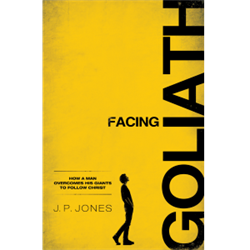
Guest (Male): What a great message for all of us today. Pastor JP Jones provides us with great insight. That is why we'd like to make it available to you on CD. Just get in touch and mention today's date. We'll send it your way for just $5. Or if you'd like to support this ministry, you can write us at Truth That Changes Lives, 23331 Moulton Parkway, Laguna Hills, California, 92653. Or give us a call at 949-916-0250. That's 949-916-0250. For your gift of $25 or more, we will send you a signed copy of JP's new book, *Facing Goliath*.
Please join us every Sunday at 9:00 or 11:00 AM at Crossline Church in Laguna Hills. The address is 23331 Moulton Parkway, Laguna Hills, California, 92653. Or check us out on the web at crosslinechurch.com. We're going to get to the address and phone number again in a minute, but before we do that, Pastor JP, do you have any insight from today's message?
JP Jones: Thanks, Greg. Here in Philippians chapter 3, the Apostle Paul tells us that the key to knowing joy is in knowing Jesus Christ. We experience joy when knowing Jesus Christ is the most important part of our life. And Paul speaks autobiographically. He's talking about his own life and he says in light of my life and everything that constitutes my life, knowing Jesus Christ is number one. It is the most important pursuit of my life.
If you know Jesus Christ, you have come into a relationship with God. You've received the gift of eternal life. Your sins are forgiven. You have the Holy Spirit living inside of you. You have become a brand new person and you're on your way to heaven. Knowing Jesus should continue to be the most important part of your life. Every day should be a day that you can commit yourself to seeking after God and to knowing Christ and to growing in your relationship with Christ.
If you are not a believer, the most important thing for you is to come to Christ for salvation, to get to know him, to ask him into your life, to put your faith in him, to have your sins forgiven, to receive the gift of eternal life, to know Jesus, which is to know eternal life. John says in 1 John, and the witness is this: that God has given us eternal life, and this life is in his Son. He who has the Son has the life; he who does not have the Son of God does not have the life. If you don't have the Son of God in your life, if you don't know Jesus Christ as your Lord and Savior, you do not have eternal life. You are outside of God's forgiveness, you are under his wrath. But God loves you, Christ died for you, and you can have eternal life when you come to know him as your Lord and Savior. And it's as simple as confessing your sins and asking Jesus to come into your life. If you'd like to do that, I invite you to do that with me right now.
Lord Jesus, I believe that you are the Lord and Savior. I believe you died for my sins and rose again from the dead. Jesus, forgive my sins, come into my life, be the Lord of my life. I want to know you, Jesus, and I want to trust you. I surrender my whole life to you. In Jesus' name, Amen.
Guest (Male): We want to help you in your relationship with Christ. Please get in touch with us at Truth That Changes Lives, 23331 Moulton Parkway, Laguna Hills, California, 92653. Or call us at 949-916-0250. On the internet, you'll find us at crosslinechurch.com. We hope to see you at one of our services every Sunday at our new campus in Laguna Hills. For more information and directions, please go to crosslinechurch.com. Please join us next time on Truth That Changes Lives.
Featured Offer
Past Episodes

Featured Offer
About Truth That Changes Lives
About JP Jones
JP Jones is the founding Senior Pastor of Crossline Church in Laguna Hills, CA. Beginning with 16 people, Crossline has grown to a congregation of over 2,000 in 10 years. This growth has come largely through people receiving Christ and joining the church. JP is a dynamic and articulate Bible teacher with a passion to see people come to Christ and grow into being multiplying disciples for Jesus. JP began his ministry career with Campus Crusade for Christ and continues to have a heart for the Great Commission. Traveling on mission trips all over the world, JP preaches the gospel and trains pastors to be reproducing spiritual leaders.
For the past 25 years, JP has been an Adjunct Professor of Theology and Biblical Studies at Biola University and Talbot School of Theology. A published author, JP has written Facing Goliath by Baker Books and the discipleship curriculums, Transformed and Livin’ Large by Life Together. JP is a popular speaker at Men’s Retreats and Couples Conferences. JP is married to his wife Donna and they have 3 children. JP loves family vacation, the beach, Ultimate Fighting and a good cup of coffee.
Contact Truth That Changes Lives with JP Jones
info@crosslinechurch.com
http://pastorjpjones.com/
23331 Moulton Parkway
Laguna Hills CA 92653
(949) 916-0250