

Philippians 1:23, Part 2


Living by the empowerment and energizing effect of the Holy Spirit within us; that gives life. It gives life to us and it gives life to others.
JP Jones: Living by the empowerment and energizing effect of the Holy Spirit within us, that gives life. It gives life to us and it gives life to others.
Greg: Thank you for joining us on Truth that Changes Lives. Pastor JP Jones is the senior pastor of Crossline Community Church in Laguna Hills, California, and a professor in biblical studies at Biola University. Today on Truth that Changes Lives, Pastor JP will be giving us a message from a series entitled "Joy". Let's listen in as JP gives us part two of Philippians 1:23.
JP Jones: I don't know about you, but I have, in just my temperament and my personality, a basic default that says, "Can't we all just get along?" If I could just sit down with people and explain my position, share my heart, or talk about my perspective, we may not agree, but at least we'd like each other.
Life has shown me that's just not the case. Not everybody thinks I'm as wonderful as I do, and not everybody thinks you're as wonderful as you think you are, either. There are even to spirit-filled, Christ-centered disciples, detractors, critics, dogs, and evil workers. Paul says, "Watch out for them." In fact, he repeats that three times: "Watch out! Watch out! Watch out!"
It's in the Greek text. It's in the imperative position in the sentence, so that's what screams out when you read it. Watch out for these people like flashing red lights. There are some people out there that are going to steal your joy. Whether they realize it or not, they are actually tools of the evil one, the thief who comes to steal, kill, and destroy.
Most of these people don't realize that they're tools of the evil one. In fact, many of them feel like they're championing God's cause, but they are toxic to you and to your faith. There are people who are spiritually toxic to us. They may really feel like they are the voice of the Lord, but they're actually to us the voice of discouragement. We need to watch out for these people.
Paul, in his context, is describing a group of people who were known as the Judaizers. These were the extreme Jewish legalists who accepted Jesus but added all types of rituals, regulations, and rules to Christianity. The only way they would allow Gentiles to come into the covenant relationship with God was for the Gentiles to convert to Judaism and then become Christians.
Even then, they had to hold to a very high standard of legalistic obedience and application. The whole book of Galatians is written to this group of people. Here in Philippians 3, where he's talking about joy and rejoicing in the Lord, he gives a warning that these people are out there, they are among us, and they will steal our joy. Authentic Christianity has its critics and its detractors.
There are people who are well-meaning and maybe they feel like they're championing some religious cause, but their relationship with us, their comments to us, and their involvement with us drain us of our spiritual passion and rob us of our spiritual joy. I was looking on the internet and I found some statements that are actual employee evaluations. These are actual comments that supervisors made of their employees in doing their job evaluations.
Greg: They were rather sarcastic and critical. Here are some of the actual statements that were written by supervisors of their employees: "If you gave him a penny for his thoughts, you'd get change." "If he were any more stupid, he'd have to be watered twice a week." "The gates are down, the lights are flashing, but the train isn't coming."
"He donated his brain to science before he was done using it." "He has a photographic memory, but the lens cover is glued onto the camera." "He brings a lot of joy whenever he leaves the room." "He's been working around glue too much." "I'd like to go hunting with him sometime." "He doesn't have ulcers, but he's a carrier."
"He's not so much of a has-been, but more of a never-will-be." "I wouldn't allow him to breed." "He'd be out of his depth if he was in a mud puddle."
JP Jones: This goes on and on. These were actual statements. They are sarcastic and have a little bit of humor to them, but what's their real design? They're critical. I've been in professional ministry for over 30 years. I've been a pastor for 20 years. If I had before you some of the emails that I've received from people in the church about the music, the times of services, the emphasis on missions, the change in leadership structure, or the sermons I preach and the sermons I don't preach, I'd get the same kind of response.
At first a little bit of laughter and then like, "Ugh, you mean people really said those things to you?" Yeah. You know what they did? They robbed me of joy. When people say those things to you, they rob you of joy. When you say those things to people, you rob them of joy. Authentic Christianity has its critics and its detractors. More often than not, those who are the critics and the detractors don't even realize that's who they are.
Let's first of all ask the Holy Spirit to give us eyes to see whether our words are detracting, critical, and draining of joy of others. Let's ask the Holy Spirit to give us a spiritual discernment so that we will see and avoid those who would rob us of joy because there's just not enough time to be filled with discouragement and to wallow in the criticisms that other people would give us. Paul says, "Watch out for that."
In contrast to that, authentic Christianity produces spirit-empowered worship. He says, "For it is we who are the circumcision, we who worship by the spirit of God, who glory in Christ Jesus, and who put no confidence in the flesh." In verse two, when he talks about the mutilators of the flesh and then here in verse three where he talks about the circumcision, it's just the changing of two letters in Greek from a word that means to "mutilate" to a word that means to "circumcise."
Paul is using circumcision as a spiritual metaphor of real Christianity. At the end of Romans chapter two, he does the same thing when he says that circumcision is not of the flesh but of the heart, and it's not performed by hands but it's performed by the spirit of God. Paul's talking here about the spiritual circumcision that happens in a person's life when they come into a living relationship with Jesus Christ.
The Holy Spirit actually implants new life within us. He gives us a new nature and we now are brought into a relationship with God. We're reconciled to God. We have eternity in heaven as our hope, but right now we have the presence of Jesus in our life. That's real Christianity. What he says about authentic Christianity is that it produces spirit-empowered worship. We are the true circumcision who worship by the spirit of God.
Greg: In Romans chapter seven, Paul says this: "So my brothers, you also died to the law through the body of Christ, that you might belong to another, to him who was raised from the dead, in order that we might bear fruit for God. For when we were controlled by the sinful nature, the sinful passions aroused by the law were at work in our bodies, so that we bore fruit for death."
"But now, by dying to what once bound us, we've been released from the law so that we serve in the new way of the spirit and not in the old way of the written code."
JP Jones: Paul says that authentic Christianity isn't driven by a checklist of a written code with boxes that we check off to measure our spirituality. Instead, authentic Christianity is energized by and empowered by the indwelling Holy Spirit. It is the Holy Spirit inside of us who forms within us the very life of Jesus. It is the Holy Spirit inside of us who produces spiritual fruit.
It's the Holy Spirit inside of us who fills us with the knowledge of Christ, who fills our lives with the presence of Christ, and who overflows through us the life of Jesus Christ. Paul says the same thing over in Second Corinthians chapter three when he says this: "Such confidence is this through Christ before God. Not that we are competent in ourselves to claim anything for ourselves, but our competence comes from God."
"He has made us competent as ministers of a new covenant, not of the letter but of the spirit; for the letter kills, but the spirit gives life." The letter kills, but the spirit gives life. Living by rules, regulations, obligation, guilt, shame, performance, that kills. Living by the empowerment and energizing effect of the Holy Spirit within us, that gives life. It gives life to us and it gives life to others.
We're the true circumcision. We are authentic Christians, those who worship by the spirit of God. So here are some questions to honestly ask ourselves: Are we filled with the Holy Spirit? Do we see the evidence of the fruit of the spirit in our lives? Are we proactively surrendering every area of our life to the Holy Spirit's control? Are we actively seeking in every decision the leading of the Holy Spirit?
Is the Holy Spirit producing breakthroughs in our thoughts, our feelings, our actions, our habits? Are we hearing the voice of the Holy Spirit and are we feeling the presence of the Holy Spirit? There's a big difference between synthetic Christianity and authentic Christianity. Synthetic Christianity is rules, regulations, obligations, performance standards, externals, and written code.
Authentic Christianity is the living reality of the Holy Spirit in us changing us from the inside out. As the Apostle Paul said in Second Corinthians 3:17 and 18, where the spirit of the Lord is, there's freedom, and we all with unveiled faces behold as in a mirror the glory of the Lord and we're being changed into that same image from glory to glory even by the Lord, the spirit.
Authentic Christianity gives us joy. Experiencing authentic Christianity and living out authentic Christianity is where we find joy. Fourth observation: Authentic Christianity puts no confidence in the flesh. Paul says, "For it is we who are the circumcision, we who worship by the spirit of God, who glory in Christ Jesus, and who put no confidence in the flesh."
He's not using the flesh here in its ethical spiritual sense as he does in Romans chapter seven or in Galatians chapter five. It's not the flesh as the sin principle within us, but the flesh as in what we bring to the table: the self. We know that because of what Paul describes in the following verses because he says, "Listen, you can't put confidence in the flesh and live out true authentic Christianity."
"If you think you can, let me give you a personal example. Because if anybody could, it'd be me, and I can't. So allow me some sanctified boasting, not for the purpose of making you impressed with who I am, but for pointing out the fact that I can't live out the demands of the Christian life and I got a whole lot more going for me than anybody else."
Paul says from the standpoint of Judaism, this is what he had going for him: he was circumcised the eighth day, of the people of Israel, of the tribe of Benjamin, a Hebrew of Hebrews; and in regard to the law, a Pharisee; as for zeal, persecuting the church; and as for legalistic righteousness, faultless. Did you get that?
Paul says with respect to all of the credentials and resume gravel that you'd be looking for, I had it. In fact, the man-made expectation of righteousness, I reached it and I was faultless. But just because I reached and attained the man-made expectation of righteousness doesn't mean I achieved God's expectation of righteousness because God's expectation of righteousness is perfection.
So Paul's argument is if you think you can commend yourself based upon what you bring to the table, you're wrong, you're deceived. Because if anybody could do it, it'd be me, and I couldn't do it. In fact, this is what I came to realize. Now Paul tells us the payoff benefit. He says, "Whatever was to my profit," verse seven, "I now consider as loss for the sake of Christ."
He uses accounting terms. What I thought was to my profit, literally gain in the plural, all of these things he saw like these were gains. But now he switches back to the singular as one big loss compared to Christ. So he says, "I take all the things that were my accomplishments, my education, my promotions, all the things that within my world everybody would say, 'You got it.'"
"You went to the best school, you got the best job, you made the best income, you had the most successful kids, you had the top house, drove the best car." I mean, you name it, whatever we'd put together here and say the world says this is success, Paul had it and he says, "All those things are one big loss compared to Christ."
Authentic Christians don't put their confidence in themselves. They don't put their confidence in what they bring to the table or in what the world says is success. When we do, as followers of Jesus, when we revert back to that kind of thinking, that is what I call stinking thinking because what we end up feeling is either pride ("look at all this stuff I got") or guilt and shame ("look how much I fall short").
Both pride and guilt and shame are not fruits of the spirit and we're no longer living authentic Christianity. We're living some false kind of Christianity and we don't have joy; instead, we're filled with discouragement, depression, defeat, and death. The only way to real joy is by living out authentic Christianity, which Paul sums up by saying authentic Christianity focuses on Jesus.
He says in verse three, "We glory in Christ Jesus," and in verses seven and eight, "But whatever was to my profit I now consider loss for the sake of Christ. And what's more, I consider everything a loss compared to the surpassing greatness of knowing Christ Jesus my Lord, for whose sake I've lost all things and I consider them rubbish, that I may gain Christ."
Paul says, "I consider all things to be loss in comparison to the surpassing greatness of knowing Christ." In fact, he repeats himself and says, "I do consider all things to be loss." It comes across in most of our English translations as just a repetition of the same statement, but it's really a subtle difference in the Greek text. In the Greek text, what he says is, "I have considered all things to be loss," and then he says, "I do consider all things to be loss."
The "I have considered" is in what's known as the perfect tense. The perfect tense is describing something of a completed nature that then has continual residual results. So it's the kind of decision where you evaluate everything and you make a once-for-all kind of decision that then impacts everything else that you do afterwards.
Then he switches to the present tense, which talks about making daily decisions. It's compared to a healthy, successful, intimate marriage where you stand one day before a preacher and a bunch of witnesses and you commit yourself to your spouse to love, to honor, to cherish. Then in a healthy, intimate, growing marriage, every day you re-up on that commitment.
Every day you make that decision all over again by the way you treat your spouse and by the way you stay faithful in that marriage. So you made a once-and-for-all decision and then you make daily decisions based upon that once-and-for-all decision. Paul says he came to a place where he made a once-and-for-all decision to see knowing Jesus as of more importance than anything else.
Then every day he re-upped on that decision. That's authentic Christianity: making Jesus more important than anything else, keeping Jesus more important than anything else, focusing on Jesus, understanding that Jesus is more important than anything else, and pursuing Jesus above everything else. Paul says that factors into a life that is full of joy.
The only way we can live a joy-filled life, which is real authentic Christianity, is being totally sold out to Jesus Christ. So wherever you are right now in your spiritual journey, the most important life commitment you can make is to be totally focused on Jesus. He is, as Hebrews 12 says, the author and perfecter of our faith.
Greg: What a great message for all of us today. Pastor JP provides us with great insight. That is why we'd like to make it available to you on CD. Just get in touch and mention today's date. We'll send it your way for just five dollars. Or if you'd like to support this ministry, you can write us at Truth that Changes Lives, 23331 Moulton Parkway, Laguna Hills, California 92653, or give us a call at 949-916-0250.
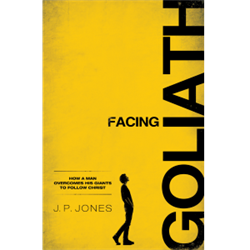
For your gift of 25 dollars or more, we will send you a signed copy of JP's new book, Facing Goliath. Please join us every Sunday at 9:00 or 11:00 AM at Crossline Church in Laguna Hills. The address is 23331 Moulton Parkway, Laguna Hills, California 92653, or check us out on the web at crosslinechurch.com.
We're going to get to the address and phone number again in a minute, but before we do that, Pastor JP, do you have any insight from today's message?
JP Jones: Thanks, Greg. In Philippians chapter three, the Apostle Paul is telling us the source of authentic Christianity. He says that the source of authentic Christianity is the Holy Spirit. He is the sign and the seal of the New Covenant. In fact, Paul says that true circumcision isn't outward in the flesh, but true circumcision is a work of God in the heart and it's a work that is initiated and perfected by the Holy Spirit.
It's when a person believes in Jesus Christ as their Lord and Savior. They're declared righteous by faith, the Holy Spirit indwells their life, and the Holy Spirit gives them a new nature. If you've come to faith in Jesus Christ, you have a new nature and you're indwelt by the Holy Spirit. He is the source of the authentic Christian life. When the Holy Spirit is in control of our life, he produces his spiritual fruit: love, joy, peace, patience, kindness, goodness, faithfulness, gentleness, and self-control.
We're looking at the book of Philippians talking about this whole theme of joy. Joy is a fruit of the Holy Spirit. It's the fruit that is produced in the life of someone who's experiencing authentic Christianity. That's the person who's living a spirit-filled life. If you want to live an authentic life, if you want to experience joy, it comes from being a spirit-filled Christian.
He is the one who transforms us and makes us more and more like Jesus Christ. Second Corinthians chapter three says, "Where the spirit of the Lord is there's freedom, and we all with unveiled faces behold as in a mirror the glory of the Lord and we're being transformed into that same image from glory to glory even by the Lord, who is the spirit." The Holy Spirit transforms us.
He makes us more and more like Jesus Christ. He produces the joy of Christ in our lives. The Apostle Paul says here in Philippians chapter three that's not just a realization for someone who has come to the end of himself and fully realizes that there's nothing in himself that can even contribute to the Christian life.
In fact, he actually says in some ways it's a more important realization to the person who thinks that he has something to commend himself before God. Paul talks about the credentials that he had as a Pharisee in Judaism. He says those could be things that I actually could boast about, but those things profited me nothing with respect to becoming a follower of Christ.
They were in no way contributing to his transformed life in Christ. They in fact were an impediment, an obstacle to coming to faith in Christ. He had to take his eyes off himself and put his eyes on Jesus, and that's the same thing every one of us has to do. We need to take our eyes off ourselves, both our strengths and our weaknesses, both our victories and our failures.
Take our eyes off ourselves and put our eyes on Jesus Christ. When we put our eyes on Christ, we put our faith in Christ and we walk in the way of Christ, and the Holy Spirit produces his joy in our life. The key to abiding, sustaining, contagious joy is living in the power of the Holy Spirit. Would you surrender yourself to the Spirit's control and ask him to fill you with his joy?
God, thank you that you save us by grace alone through faith alone in Christ alone. Salvation's in Jesus. We pray, Lord Jesus, that you would give us the empowerment of the Holy Spirit, fill us with the Holy Spirit, and produce in us the joy of the Lord as our strength. We ask for that in Jesus' name, Amen.
Greg: We want to help you in your relationship with Christ. Please get in touch with us at Truth that Changes Lives, 23331 Moulton Parkway, Laguna Hills, California 92653, or call us at 949-916-0250. On the internet you will find us at crosslinechurch.com.
We hope to see you at one of our services every Sunday at our new campus in Laguna Hills. For more information and directions, please go to crosslinechurch.com. Please join us next time on Truth that Changes Lives.
Featured Offer
Past Episodes

Featured Offer
About Truth That Changes Lives
About JP Jones
JP Jones is the founding Senior Pastor of Crossline Church in Laguna Hills, CA. Beginning with 16 people, Crossline has grown to a congregation of over 2,000 in 10 years. This growth has come largely through people receiving Christ and joining the church. JP is a dynamic and articulate Bible teacher with a passion to see people come to Christ and grow into being multiplying disciples for Jesus. JP began his ministry career with Campus Crusade for Christ and continues to have a heart for the Great Commission. Traveling on mission trips all over the world, JP preaches the gospel and trains pastors to be reproducing spiritual leaders.
For the past 25 years, JP has been an Adjunct Professor of Theology and Biblical Studies at Biola University and Talbot School of Theology. A published author, JP has written Facing Goliath by Baker Books and the discipleship curriculums, Transformed and Livin’ Large by Life Together. JP is a popular speaker at Men’s Retreats and Couples Conferences. JP is married to his wife Donna and they have 3 children. JP loves family vacation, the beach, Ultimate Fighting and a good cup of coffee.
Contact Truth That Changes Lives with JP Jones
info@crosslinechurch.com
http://pastorjpjones.com/
23331 Moulton Parkway
Laguna Hills CA 92653
(949) 916-0250