

Philippians 1:18, Part 1


We experience joy when we find our true identity in Christ and give ourselves to His purposes for our lives.
Host JP Jones: We experience joy when we find our true identity in Christ and give ourselves to His purposes for our lives.
Guest (Male): Not to us, but to your name be the glory. Yes. Thank you for joining us on Truth That Changes Lives. Pastor JP Jones is the senior pastor of Crossline Community Church in Laguna Hills, California, and a professor in Biblical Studies at Biola University. Today on Truth That Changes Lives, Pastor JP will be giving us a message from a series entitled, Joy. Let's listen in as JP gives us part one of Philippians 1:18.
Host JP Jones: If you have your Bibles, would you open to Philippians chapter 1?
We're in a study we just started a couple of weeks ago in the book of Philippians, and we're we're talking about the whole theme of joy because 16 times in this book, the Apostle Paul speaks of joy or rejoicing. It is obviously the attitude that dominated his thinking as he wrote this book. It's it's a book that tells us how to have God's perspective on our life so that we can experience God's fruit with his, which is joy. And and the joy of the Lord is our strength. And joy is a fruit of the Holy Spirit. And joy is something that Jesus wants to fill our lives with because in John chapter 15, after talking about this union that we have with Jesus, this abiding relationship with Jesus, he said, “These things I have spoken to you that my joy may be in you and that your joy may be made full.”
God may not change our circumstances. He may not give us the life of ease and comfort that we would all want, but he will give us joy, and that joy is greater than any challenge that we would face. And the Apostle Paul tells us some of the keys to experiencing joy, and we look at the next one in Philippians 1:18-30.
God's word says this: “But what does it matter? The important thing is that in every way, whether from false motives or true, Christ is preached. And because of this I rejoice. Yes, and I will continue to rejoice, for I know that through your prayers and the help given by the spirit of Jesus Christ, what has happened to me will turn out for my deliverance. I eagerly expect and hope that I will in no way be ashamed but will have sufficient courage so that now as always, Christ will be exalted in my body, whether by life or by death, for to me to live is Christ and to die is gain. If I am to go on living in the body, this will mean fruitful labor for me, yet what shall I choose? I don't know. I I'm torn between the two. I desire to depart and be with Christ, which is better by far, but it is more necessary for you that I remain in the body. Convinced of this, I know that I will remain and I will continue with all of you for your progress and joy in the faith, so that through my being with you again, your joy in Christ Jesus will overflow on account of me. Whatever happens, conduct yourselves in a manner worthy of the gospel of Christ. Then whether I come and see you or only hear about you in my absence, I will know that you stand firm in one spirit, contending as one man for the faith of the gospel. Without being frightened in any way by those who oppose you, this is a sign to them that they will be destroyed, but that you will be saved, and that by God. For it has been granted to you on behalf of Christ not only to believe on him, but also to suffer for him. And since you are going through the same struggle you saw I had and now hear that I still have.”
In this passage, Paul is relating his present circumstances to the experience of the church at Philippi, and he's speaking about a mutual joy that he aspired to, that was possible. The key principle is this: we experience joy when we find our true identity in Christ and give ourselves to His purposes for our lives.
We experience joy when we find our true identity in Christ and give ourselves to His purposes for our lives. You know, people will give themselves to all kinds of things. People will pursue all kinds of things. We will allow ourselves to be captured by all types of motivations in careers and relationships. But when we find our true identity in Jesus Christ, and we surrender ourselves fully to His purposes for our lives, that's when we can have joy. And as we talked about last week, it's a joy that can transcend any and all circumstances. The Apostle Paul is writing from a prison cell and talking positively and confidently and joyfully because he'd come to this place where his identity was in Jesus Christ alone, and what he wanted more than anything in life was what Christ wanted for his life.
Here's some observations from this passage. We can have joyful confidence in knowing that the Holy Spirit helps us in response to our prayers. Joyful confidence in knowing that the Holy Spirit helps us in response to our prayers. Paul is saying by way of reflection, “What does it really matter?” He's talking about people who were preaching from all kinds of motives, some less than pure motives, and then some who had a real heart to serve God and to bless God's work. And he says, “It really doesn't matter whether it's from false motives or true, Christ is preached, and because of this I rejoice. Yes, I will rejoice.” And then he ties the idea together with the next verse, verse 19. “For I know that through your prayers and the help given me by the spirit of Jesus Christ, what has happened to me will turn out for my deliverance.”
Paul had the absolute confidence that God had a plan for his life, that God was working through the present circumstances of his life, that God was going to redeem the circumstances of his life to something even bigger and better, and that the means that God was going to use to do that was through the help of the Holy Spirit, but what was going to release the work of the Holy Spirit was through the prayers of the folks at Philippi. That's a one-two punch, gang. Our prayers and the Holy Spirit's help. That's the way God does his work. It's always his part and our part. We can spend all kinds of brain power trying to figure out the relationship between God's sovereignty and our free will. We can come up with all types of theological paradigms to explain how God works and we work and how we work and God works. And it's all wasted energy. There's a mystery. An absolute mystery. But what is true is there's God's part and there's our part. Our part is to pray, and God's part is to release His Holy Spirit to help us and bring about his salvation work.
Only God can help us, deliver us, and produce salvation, but he chooses to use our prayers as a means to accomplish his kingdom work. And Paul, convinced of this, had great joy even in prison because he knew, “Hey, I'm in prison here, the gospel's going out, but you know what? God's going to complete the work of salvation in me.” That's really what he has in mind, by the way, because when he says here deliverance, he uses the Greek word soteria. This word soteria is used about 20 times in the New Testament. It's a derivative of the verb sozo, which means to save. Soteria literally means salvation. And in the New Testament arena, salvation always has spiritual implications.
If you looked up the doctrine and the study of salvation from the standpoint of the Old Testament, sometimes it means the emotional effect of a relationship with God. The Psalms use it that way a lot. Sometimes it's speaks about being in a covenant relationship with God. Often times it's speaking about physical deliverance, like the nation of Israel being delivered out of Egypt. But in the New Testament, the term salvation always has its spiritual implications. But what Paul's trying to say is everything in life has spiritual implications. Being here in prison has spiritual implications. It's opened up a platform for me to be a representative of Jesus. I got a prison ministry now because I'm in prison. And I'm going to get out and God's going to use me when I get out. And he's going to complete the work that he began in me because Philippians 1:6 says that he's confident that he who began a good work in us will complete it until the Day of Christ.
So Paul says in Philippians 1:18 and 19, “I'm rejoicing because I have confidence that God is at work in my present circumstances. God is at work in my future. God is going to provide and help me by means of the Holy Spirit, but the means that he's going to use for that to happen is through your prayers.” So, we all can have joyful confidence when we are in line with God's will praying for God's work for ourselves and for others, and then seeing the help of the Holy Spirit being provided.
I mean, it's exciting when you see God at work in your life. It's exciting when you see God at work in the church. It's exciting when you hear about God's work. It's exciting to hear my son Taylor talking about going to El Salvador and the trip that he was there on in the at the Easter break, and what they're expecting God to be able to do. And then we pray for that. And when then we we partner, and we get to see it happen, you see, because the Holy Spirit is at work doing what only the Holy Spirit can do. And then what do we get? What's the bang for the buck? We get joy.
Paul says that there is an expectation, a confident, hopeful, joyful expectation when we are praying and in response to our prayers, the Holy Spirit helps and provides. It says in the New International Version, the confidence that Paul had was because of the help of the Holy Spirit. It's literally the provision of the Holy Spirit. That's the way it reads in the King James and the New American Standard Version. It's the Greek word epichoregeia. It's only used one other time in the New Testament. It's used over in Ephesians chapter 4, where where Paul is talking about the body of Christ, and how we are interconnected in the body, and how we each have a part to play, and we have spiritual gifts and it's when the whole body is using their spiritual gifts that the body is built up. And Paul says in Ephesians 4:16, that the whole body being fit and held together by that which every joint supplies or provides or helps epichoregeia, according to the proper working of each individual part, it causes the growth of the body for the building itself up in love.
This is the word that he uses to talk about what the Holy Spirit helps us with or provides us with or gives us. Basically, it means the Holy Spirit gives us what we need for whatever situation we're facing. Jesus said in John chapter 14, “I'm not going to leave you as orphans, but I'm going to send to you the helper, the Holy Spirit. He will be with you and he will be in you.” Jesus calls the Holy Spirit in John 14, John 15, John 16, the helper.
Now I'm going to ask you a very challenging theological question right now. If Jesus calls the Holy Spirit the helper, what do you think he does for us? He helps us. Let me just I'm just going to take a straw poll. How many here in the last week in some area, your marriage, your parenting, your job, your relationship, just your thoughts, your feelings, your emotions, you needed some kind of help this past week. Yeah, every one of us. God's given us the helper. The Holy Spirit. He lives inside of us. He helps us. He gives us what we need.
And Paul says for him in his personal situation, that was mediated because the Philippians were praying for him. He got the help of the Holy Spirit, but he got the help of the Holy Spirit because the Philippians were praying for him. Do you get the point? You get the connection. It is as we are really praying for ourselves, praying for our families, praying for our fellow members of the church, praying for our pastors, praying for our spiritual leaders that the Holy Spirit then releases his fruit and gifts and miracles and help. What that tells me is we got to be praying all the time. We got to be a praying church. We need to be praying people. We need to pray spontaneously, we need to have planned times of prayer. We need to pray publicly, we need to pray privately. We need to pray in response to crises, and we need to just pray when everything's great. We need to pray all the time because there is this inseparable relationship between our prayers and then the release of the Holy Spirit's help, which Paul says was deliverance or soteria, salvation. All that God saved us for, we experience through the help of the Holy Spirit, which comes when we are praying.
That's my first observation. Here's here's a second observation. Remember, all this ties back to this experience of joy that God wants us to have as individuals and to have as as the people of God. Second observation: what matters more than anything else is that Jesus be exalted through our lives. That's what matters most. Not that the Lakers win the championship, not that you break par in your golf game, not that you get that promotion, not that you have enough money to pay for your kids' college, not that you get that dream house, not even that you have the perfect family. What matters most is that Jesus is exalted through our lives. Philippians 1:20: “I eagerly expect and hope that I will in no way be ashamed but will have sufficient courage.” Notice how he's just loading this up. Paul loves to do this. He he loads before he even says what it is he's going to say, he loads it up with all types of strong, passion-filled, emotional kind of language. “I eagerly expect and hope that I will in no way be ashamed but will have sufficient courage so that,” now we get to the point, “now as always, Christ will be exalted in my body, whether by life or by death.”
Paul's passion, consuming passion, his overwhelming desire, his his intelligent pursuit was that Christ be exalted in his life. In fact, in the NIV it says, “I eagerly expect.” This is one Greek word, which is a combination of three words, apokaradokia. And this is what the word, it's a word picture. It means to strain your neck, to turn your head and to fix your gaze. To strain your neck, to turn your head, to fix your gaze. It's talking about all of a sudden something happens, you stop whatever you're doing, and it's like, you strain your neck, you turn your head, you fix your gaze. It's like, what? And you're looking intently. You're your focus just became, you know, crystallized on something. Like if you were standing out on the street and having a conversation with someone and all of a sudden you heard screeching tires and a crash of metal. Whatever the conversation would just come to a stop. You'd strain your neck, you'd turn your head, you'd fix your gaze.
Paul's relating that word picture to wanting to have Christ exalted in his life. This wasn't like a one-time commitment he made at a conference and then lived the rest of his life like it never happened. This is the way he lived life, you see. This is the way he got up every day. This is the way he approached every challenge, every circumstance. It was what I want more than anything else is for Christ to be exalted. And then he even, he adds to this in in no way to be ashamed. He he doesn't want to have any shame related to this. In other words, he wants to come to the end of his life and say, “This is the way I lived, and I lived it consistently, and I lived it passionately, and I lived it with integrity. This wasn't, you know, an up and down type of personal commitment that I made. I gave my whole life to this, wanting to exalt you, Jesus.” “I eagerly expect and and hope and no way be ashamed, but will have sufficient courage.”
This is one Greek word, parrhesia, means to speak freely. It's translated in most of our Bibles as boldness. Boldness of speech. In other words, I don't want this to be some private closet commitment. I don't want anybody to be in doubt about what kind of person I am and what I'm committed to. In fact, I want to be so passionate about wanting to exalt Christ that I don't have any intimidation to talk about it either.
I told the men this I know at a men's retreat one time, I you know, I I teach at at Biola and I I write the syllabus for the course, and I've written a couple books, and the students buy these books from me and I had these, this was a couple years ago, I had these checks from from students from purchasing the material and a bunch of them. And I'd been holding them for a while and they needed to go to the bank. And so I went to the bank and and it was just like this really long line at the bank. And so I'm I'm waiting in line, waiting in line, it's taking a long time. And other people are in waiting line, starting to lose their patience a little bit. And a guy up in front of me, like two people in front of me, gets up there and just pitches a fit about the how long it took to be in the bank and and you know, the service he was receiving, and and it was like a huge thing. And everybody in the line were like, “Gosh, guy, take a chill pill.” You know? And I'm and I was thinking like, “Dude, you know, take time to smell the coffee. Relax. It's okay.”
So then I get up there in line and I have these checks. And I I set them up there and I go, “Yeah, I just want to cash these checks.” And there were a bunch of them. You know, I got a bunch of students. I mean, probably like 60 or 70 checks. And she said, “You know, I I can cash 10 of them.” I I go, “What?” She goes, “Well, I can cash 10 of them. We've got a policy now that that 10 is the maximum number of checks we can cash.” And I go, “Well, no, I've been coming to Bank of America for a long time. I just I just want to cash these checks.” “Sorry, sir, I I can only count 10 of them.” I go, “Well, I got about 60 or 70 checks.” She goes, “Well, you're welcome to go back in line and come back again for the.”
And then I I said, I said, “Who established a 10 check policy?” I said it about like that. Well, I like that. And then all of a sudden, get the and the manager came. And it's like, now I'm the guy. I'm the guy pitching the fit. The manager came, we had this whole conversation. Make a long story short. Finally, they said, the manager says, “Well, just, you know, just give him what he wants.” And so then he he goes, “Oh, I I see all these checks are for the same amount. What what what's that about?” And I said, “Well, that's because I I I teach a course.” “What do you teach?” She asked me, “What do you teach?”
They say confession's good for the soul, but it's bad for the reputation. Your pastor lied. I said, “I teach philosophy.” I lied. I lied because in that clarity moment, I just realized I was the worst witness in the entire world. I'm not going to tell her I teach Bible. Oh my gosh. I lied. Paul says he wanted to have full integrity, confidence, passion about what? Exalting Christ and freedom to talk about it. You see, it's hard to talk about Christ with a lot of enthusiasm if our lives don't back that up. What matters more than anything else is that Jesus be exalted. And Paul says by life or by death. He didn't mean that metaphorically. He was in prison, waiting to see Caesar, making his appeal to Caesar. He literally could have been given the death sentence. By life or death. And everything in between.
See, Paul had come to a place where he really was living this exchanged life. You you may have heard that that term it's from Galatians 2:20 where Paul says, “I've been crucified with Christ, it's no longer I who live, it's Christ who lives in me. And the life which I now live in the flesh, I live by faith in the Son of God, who loved me and gave himself for me.” Paul understood, he made an exchange when he crossed the line and gave his life to Jesus, not only did he receive the forgiveness of his sins and the gift of eternal life, he gave up his life. He transferred the ownership of his life to Jesus. He experienced, “I'm crucified with Christ. I've exchanged my life for Christ's life.”
He he wrote in Colossians chapter 3, you know, “Since then we've been raised up with Christ, keep seeking the things above where Christ is. See at the right hand of God, set your mind on the things above and not on the things that are on earth. For you've died and your life is hidden with Christ in God, and when Christ who is our life is revealed, then you'll be revealed with him in glory.”
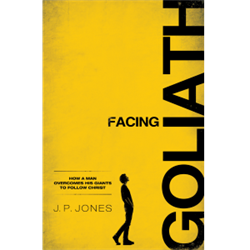
Guest (Male): What a great message for all of us today. Pastor JP provides us with great insight. That is why we'd like to make it available to you on CD. Just get in touch and mention today's date. We'll send it your way for just $5. Or if you'd like to support this ministry, you can write us at Truth That Changes Lives, 23331 Moulton Parkway, Laguna Hills, California, 92653. Or give us a call at 949-916-0250. That's 949-916-0250. For your gift of $25 or more, we will send you a signed copy of JP's new book, Facing Goliath. Please join us every Sunday at 9:00 or 11:00 a.m. at Crossline Church in Laguna Hills. The address is 23331 Moulton Parkway, Laguna Hills, California, 92653. Or check us out on the web at crosslinechurch.com. We're going to get to the address and phone number again in a moment. But before we do that, Pastor JP, do you have any insight from today's message?
Host JP Jones: Thanks, Greg. We're seeing from the book of Philippians that God wants to fill our lives with joy. It is His great desire that we live joy-filled lives, but there's a plan and there is a means to experience joy, and it's found in abiding in Jesus Christ, surrendering our whole lives to Christ, living in the power of the Holy Spirit, and sharing the gospel with others, and seeing our whole lives lived for this very purpose of knowing Jesus and making Jesus known. When that is the part that really identifies who we are, that's when God's joy can fill us. And here in Philippians chapter 1:18-30, the Apostle Paul makes this powerful statement: “To live is Christ and to die is gain.” That's when joy can fill a person's life, when they can truly say, “I see my life completely identified with Jesus Christ, and everything about my life is surrendered to Christ, and everything about my hopes and dreams and desires has been crucified with Christ, and Christ now has complete freedom to live in me in the power of the Holy Spirit. My life is Christ.” When that can be said with confidence, there is a joy, a transcendent joy, an eternal joy that fills our lives. If you would like to experience God's joy in your life, it can only be found in truly surrendering every part of your life to Jesus Christ so that you could say with confidence, “To live is Christ and to die is gain.” Let's pray together. God, I pray that you would fill our lives with joy because we've surrendered every part of our lives to you. I pray, Father, that we would hold nothing back and that we'd sacrifice our very lives to you on the altar of Christ and be able to say that all of our hopes and dreams and desires and thoughts and our very body is surrendered to you. We present ourselves to you as a living and holy sacrifice, acceptable to you, which is our spiritual service of worship. To live is Christ. Please, fill us with your joy, I pray. In Jesus' name, Amen.
Guest (Male): We want to help you in your relationship with Christ. Please get in touch with us at Truth That Changes Lives, 23331 Moulton Parkway, Laguna Hills, California, 92653. Or call us at 949-916-0250. On the Internet, you will find us at crosslinechurch.com. We hope to see you at one of our services every Sunday at our new campus in Laguna Hills. For more information and directions, please go to crosslinechurch.com. Please join us next time on Truth That Changes Lives.
Featured Offer
Past Episodes

Featured Offer
About Truth That Changes Lives
About JP Jones
JP Jones is the founding Senior Pastor of Crossline Church in Laguna Hills, CA. Beginning with 16 people, Crossline has grown to a congregation of over 2,000 in 10 years. This growth has come largely through people receiving Christ and joining the church. JP is a dynamic and articulate Bible teacher with a passion to see people come to Christ and grow into being multiplying disciples for Jesus. JP began his ministry career with Campus Crusade for Christ and continues to have a heart for the Great Commission. Traveling on mission trips all over the world, JP preaches the gospel and trains pastors to be reproducing spiritual leaders.
For the past 25 years, JP has been an Adjunct Professor of Theology and Biblical Studies at Biola University and Talbot School of Theology. A published author, JP has written Facing Goliath by Baker Books and the discipleship curriculums, Transformed and Livin’ Large by Life Together. JP is a popular speaker at Men’s Retreats and Couples Conferences. JP is married to his wife Donna and they have 3 children. JP loves family vacation, the beach, Ultimate Fighting and a good cup of coffee.
Contact Truth That Changes Lives with JP Jones
info@crosslinechurch.com
http://pastorjpjones.com/
23331 Moulton Parkway
Laguna Hills CA 92653
(949) 916-0250