

Philippians 4:2-9, Part 1


We experience joy when we follow God's plan for peace.
JP Jones: We experience joy when we follow God's plan for peace.
Guest (Male): Not to us, but to your name be the glory. Thank you for joining us on Truth That Changes Lives. Pastor JP Jones is the senior pastor of Crossline Community Church in Laguna Hills, California, and a professor in Biblical Studies at Biola University.
Guest (Male): Today on Truth That Changes Lives, Pastor JP will be giving us a message from a series entitled Joy. Let us listen as JP gives us part one of Philippians 4:2 through 9.
JP Jones: If you have your Bibles, would you open to Philippians chapter 4? If not, you can see the passage up on the screen. We are coming close to the end of this study in the book of Philippians, where we have been discovering principles of joy. Over 16 times, the Apostle Paul speaks of having joy or of rejoicing, and he relates it to the fruit of the new life that we have in Christ. Literally what God wants to do for every person who surrenders their life to Jesus Christ is to fill their life with joy.
JP Jones: A joy that transcends circumstances and relationships and even citizenship. A joy that is based on a growing, abundant life in Christ. And this is what Paul says about that in Philippians chapter 4:2 through 9. "I plead with Euodia and I plead with Syntyche to agree with each other in the Lord. Yes, and I ask you loyal yoke-fellow, help these women who have contended at my side in the cause of the Gospel, along with Clement and the rest of my fellow workers whose names are in the Book of Life. Rejoice in the Lord always. I will say it again, rejoice. Let your gentleness be evident to all. The Lord is near. Do not be anxious about anything, but in everything by prayer and petition with thanksgiving, present your requests to God. And the peace of God which transcends all understanding will guard your hearts and your minds in Christ Jesus."
JP Jones: "Finally, brothers, whatever is true, whatever is noble, whatever is right, whatever is pure, whatever is lovely, whatever is admirable. If anything is excellent or praiseworthy, think about such things. Whatever you have learned or received or heard from me or seen in me, put into practice, and the God of peace will be with you."
JP Jones: This is a great passage because we are promised in this passage the peace of God and the God of peace. And in the larger context, he is talking about joy. So here is the key principle of this passage. We experience joy when we follow God's plan for peace.
JP Jones: Did you know that God has a plan for peace in your life? A peace that he says transcends human understanding. God wants to fill your life with peace in spite of your circumstances, in spite of your relationships, in spite of what is happening in your world externally. What God wants to do is give you peace, but there is a plan that needs to be followed.
JP Jones: And the context of Scripture tells us, if we will follow this plan, we will have God's peace, and then we will have God's joy.
JP Jones: Imagine a pilot of an aircraft flying at thousands of feet and all of a sudden all the computers go out, and the controls and the avionics are gone. And so a pilot is having to depend upon his own understanding and experience to take the plane to its destination and land it safely on a runway.
JP Jones: And the pilot takes over, and after a certain amount of time, starts his descent because he assumes that this is where the airport is going to be and where the runway is going to be, and starts to come in for a landing, and all of a sudden the computer comes back on, all the avionics come back online, and he starts receiving communication from the control tower, and the air traffic controller, and the air traffic controller says, "You are off course. You are going to crash the plane."
JP Jones: "You need to make these changes in order to come and line yourself up on the runway and land safely."
JP Jones: Now the pilot has several options at that point in time. He could make the course corrections and land the plane.
JP Jones: Or he could say, "You know what, I have a lot of experience in flying planes and I think I know how to do it better than you do. So I am going to do it the way I think my experience tells me."
JP Jones: Or the pilot could say, "Well, that's nice for you to say, but you are up in the air traffic controller tower. I am actually in the plane. I mean, it's different here. And so what you are saying sounds great, but actually doing it, that's a whole another thing. So it's just unrealistic."
JP Jones: Or the pilot could have an argument and say, "Well, explain to me why that's a better way to fly the plane."
JP Jones: All of those responses would lead to the same result. He wouldn't make the course corrections, and because the air traffic controller actually has the actual data, he would crash the plane.
JP Jones: The only way that the pilot could get the plane safely on the ground would be to make the course corrections necessary, following the instructions of the air traffic controller. Now, here's the parallel. All of us are living life, right?
JP Jones: And God gives us some instructions about how to have peace in our lives.
JP Jones: Some of us think we know how to live our lives better than God does. And whether we do it passively or we do it actively, we shake our fists at God and say, "Thanks, but no thanks. We are going to do our own thing."
JP Jones: Some of us see those instructions, hear those instructions, and we think the course corrections are just unrealistic. Yeah, they may be true, but good grief, we are living our lives here in the trenches, and it's easier said than done, and that's just unrealistic to do what God says to do, because it's a lot harder actually living life here. And so we don't make the course corrections.
JP Jones: Some of us want to have a dialogue with God, want to have a discussion with God, want to have an argument with God to get all the reasons and rationale first before we make any type of course corrections.
JP Jones: And the end result is the same thing. We don't land the plane. We miss out on the peace that God promises to us.
JP Jones: You see, God has a plan for peace. It's spelled out in this passage here, but it's going to require course corrections from us.
JP Jones: So I want to ask myself a question and ask you a question. It's this: Are we teachable enough?
JP Jones: Are we coachable enough to receive these instructions from God and make the necessary attitude adjustments and course corrections that it will take,
JP Jones: so that the peace of God that passes all comprehension will guard our hearts and minds in Christ Jesus, and so that the God of peace will be with us?
JP Jones: Because if we are, not only will we get the peace of God and the God of peace, we'd also get God's joy, which the Bible says is our strength.
JP Jones: Here's the first of four things that I want to say. These are the things that I want to say. We need to be peacemakers, we need to be peace receivers, we need to be peace thinkers, and we need to be peace practicers.
JP Jones: Here's the first one, being a peacemaker. Verses 2 and 3 has some information about some people that we don't know, but we can step away and put together what's going on here.
JP Jones: It says this, "I plead with Euodia and I plead with Syntyche." Obviously two people that Paul knew, obviously two people that the believers at Philippi knew. "I plead with Euodia and I plead with Syntyche to agree with each other in the Lord."
JP Jones: These two people are in disagreement. They are in some kind of conflict.
JP Jones: Verse 3. "Yes, and I ask you loyal yoke-fellow," we are not really sure who the you is. Maybe it's a generic you, a partner, that's what yoke-fellow means. Maybe it's just the general person who was a believer at Philippi who agreed with Paul on a commitment to Christ and on living a Christian lifestyle.
JP Jones: And he says, "You need to help these people," because it says, "I urge you to help these women who have contended at my side in the cause of the Gospel, along with Clement," we are not really sure who Clement is, but they knew who he was, "and the rest of my fellow workers whose names are in the Book of Life."
JP Jones: Here's what Paul is saying. Sometimes in the course of living life, Christians get sideways with one another.
JP Jones: Believers in Jesus have conflicts with each other.
JP Jones: And these people were fellow workers. They actually contended with Paul in the Gospel. So these weren't fringe church people, they were actually serious followers of Jesus, but serious followers of Jesus are just human like the rest of us.
JP Jones: And sometimes they get into interpersonal conflicts, and sometimes they don't handle their conflicts very well. And what this passage is telling us as it relates to this experience of peace and joy is this: When we have interpersonal conflicts in our lives that we don't resolve according to God's plan, they drain us of energy and rob us of peace.
JP Jones: When we are sideways with someone and we don't straighten it out, it will rob us of emotional energy and rob us of peace.
JP Jones: When people that we care about and that we love are at odds with one another and they are not working it out, it robs us of peace.
JP Jones: Several years ago, when my wife Dawn and I were living in Santa Barbara, we were working with a ministry called Campus Crusade for Christ, and we went to a conference that was held up in San Francisco, and we were driving back from San Francisco, back to Santa Barbara.
JP Jones: And about halfway back on the journey, we passed King City, but before we got to San Luis Obispo, I noticed that the needle on the alternator gauge was starting to go down.
JP Jones: So I knew something was wrong. And as we approached San Luis Obispo, the lights on the car started to go dim. And as we stopped in San Luis Obispo, now it was late at night and it was starting to storm, there weren't any gas stations open that did any mechanical work, and there weren't any repair places open. I realized my alternator was going out on my car.
JP Jones: Now, simple layman's term, what the alternator does is when your car and your engine is running, the alternator helps the electrical energy coming from the battery to go throughout the engine and keeps your battery charged, because your battery has a finite amount of energy, and it takes a certain charge from the battery to start your car, takes a certain amount of electrical energy to keep your car going, and without the alternator, it would just drain all the energy out of the battery, and the battery would go dead. So the alternator keeps the energy flowing, all right? Well, the alternator was going out, so what was happening is was that my car engine had enough to keep going, but the battery was getting weaker and weaker. It was being drained of its energy.
JP Jones: So we had a decision to make because it's late at night, starting to storm, we are in San Luis Obispo. The alternator is either completely gone or it's going out. We either spend the night in San Luis Obispo, and the next morning take the car to a mechanic and get a new alternator, or we think we can make it from San Luis Obispo to Santa Barbara.
JP Jones: So we had this discussion, and we decided to try to make it to Santa Barbara.
JP Jones: So we get the car loaded up with gas and we take off. Now we are leaving San Luis Obispo, and I am watching that needle like a hawk, and it's starting to get lower and lower and lower. The lights on the car are getting dimmer and dimmer and dimmer. The storm is starting to come. Now it's starting to rain.
JP Jones: And right past Buellton, you know Anderson's Split Pea? Boom, the lights go out. No lights and there are no streetlights out there. So we are driving in the dark. The engine is still running.
JP Jones: I slow down to about 15 miles an hour. And then I see in my rearview mirror a car coming, and as that car comes up to me, I speed up, and I ride behind this car following the lights of this car from Buellton all the way to Santa Barbara, and finally make it back safely. But the whole way down, what was happening, you see, because my alternator was going out, was that all the electricity from my battery was just being drained away.
JP Jones: We have, I think, like a spiritual alternator. And if it goes out because of interpersonal conflict and unresolved conflict, all of our emotional spiritual reserves just drain away from us.
JP Jones: You know what I am talking about. If you are in conflict with somebody right now, it's probably eating away at you. If there are people that you care about that are in conflict with one another and they are not resolving their conflict, it's affecting you. It's robbing you of peace.
JP Jones: So Paul says here in Philippians chapter 4 in very practical terms, "Be a peacemaker."
JP Jones: If you are at odds with somebody, make it right.
JP Jones: If people that you care about are at odds with one another, help them make it right.
JP Jones: We need to be peacemakers because Jesus said in the Sermon on the Mount, "Blessed are the peacemakers. They are going to be called sons of God."
JP Jones: Unresolved conflict robs us of God's peace.
JP Jones: God wants us to be people who are living in harmony, in agreement with other believers. And so if we are having the conflict, we need to resolve it. If somebody else is having the conflict, we need to help them resolve it.
JP Jones: We need to be peacemakers.
JP Jones: Here's a second observation. We need to be peace receivers.
JP Jones: Philippians 4:4 to 7 says, "Rejoice in the Lord always. I will say it again, rejoice. Let your gentleness be evident to all. The Lord is near. Do not be anxious about anything, but in everything by prayer and petition with thanksgiving, present your requests to God, and the peace of God which transcends all understanding will guard your hearts and your minds in Christ Jesus."
JP Jones: There's that great promise. The peace of God that transcends all understanding will guard your hearts and your minds in Christ Jesus.
JP Jones: Now, we need to be peace receivers, but there are prerequisites, you see.
JP Jones: There are conditions that have to be met.
JP Jones: Verses 4, 5 and 6 list the conditions necessary to receive the peace that transcends all understanding, and each one of those conditions are a command to be obeyed.
JP Jones: Now, when you are reading the Bible and you see a truth, the response is to believe it.
JP Jones: You see a promise, the response is to claim it.
JP Jones: When you see a command, the response is to obey it.
JP Jones: And it's always a choice.
JP Jones: Put you right back in that seat of the pilot, flying the plane, getting the information from the air traffic controller. You have to make these course corrections if you want to land the plane.
JP Jones: Are you going to say, "I know how to do it better than the air traffic controller?"
JP Jones: Are you going to say, "That's unrealistic. Nice, but just unrealistic?"
JP Jones: Are you going to say, "Well, give me all the reasons and rationale and let me think about it and consider it before I make that decision?"
JP Jones: You see, it's a choice.
JP Jones: It takes course corrections to have peace. And these course corrections affect us right at the core of our being, our attitudes.
JP Jones: And the first attitude is whether or not we are rejoicing in the Lord, because it says, "Rejoice in the Lord. I'll say it again, rejoice." That's a command.
JP Jones: And it's a command with a context. Rejoice in the Lord.
JP Jones: My early days as a pastor, I pastored a church up in Thousand Oaks, and there was a lot of conflict in transition. And we would leave many of those elder boards just drained because of walking through some of the issues that we were walking through in pastoring the church.
JP Jones: And there was a guy that I had become pretty close friends with who his dad had been a pastor and he grew up in the church his whole life, and he used to tell me after a lot of those elder meetings, he'd pat me on the back and say, "Be encouraged." Now that was it.
JP Jones: Not, "Be encouraged about the meeting," or "Be encouraged about what's going on in church," or "Be encouraged about answered prayer," or "Be encouraged about what God's going to do." Just, "Be encouraged." And I'd always look at him and go, "About what?"
JP Jones: See, you don't get encouragement in a vacuum. You get encouragement about something that's happening that encourages you.
JP Jones: In the same way in Philippians 4, it doesn't just say, "Rejoice." The idea isn't just, you know, somehow wake up in the morning and go, "I'm happy." Rejoice in the Lord.
JP Jones: Rejoice in the Lord. In fact, Paul uses this same command and this same idea seven times, the command to rejoice in the book of Philippians.
JP Jones: In Philippians 1:18, he says, "Rejoice that the Gospel of Jesus is being proclaimed to people who need to hear it."
JP Jones: In Philippians 1:19, he says, "Rejoice that God's spirit will provide all that you need to live the Christian life."
JP Jones: In Philippians 2:17, he says, "Rejoice that even though your life is being poured out, it's being poured out for something eternally significant that is going to matter in heaven."
JP Jones: In Philippians 3:1, he says, "Rejoice that you understand authentic Christianity and that you have been set free from legalism and a pseudo false version of Christianity."
JP Jones: In Philippians 4:10, a little further on in the passage in this book, he says, "Rejoice that you partner with other people. You are not living life alone, but you are partnering with other Christians in this spiritual journey."
JP Jones: You see, when we rejoice, we are to rejoice in the Lord.
JP Jones: So what that means is, when we are in the midst of difficulty and frustration and boredom and opposition, and the last thing that we feel is rejoicing, to rejoice in the Lord means we have to get our focus off whatever it is we are looking on.
JP Jones: We have to get our focus on God. We have to get our focus on God's promises. We have to get our focus on eternity. We have to get our focus on that which really gives us a basis for rejoicing.
JP Jones: It's a choice. It's a course correction.
JP Jones: Rejoice in the Lord, again I say, rejoice. Here's the second command that he gives as a prerequisite for this peace, which is a course correction. He says, "Let your gentleness be evident to all. The Lord is near."
JP Jones: Sounds like a simple idea.
JP Jones: The word gentleness is the Greek word epieikeia. It means a reasonableness, a humble patience that submits to injustice and maltreatment. A trust in God in spite of adverse circumstances.
JP Jones: Hmm. A humble patience that submits to injustice and maltreatment.
JP Jones: Let me ask myself. How do I respond? I am just I am having a little self-dialogue. You just listen in on it.
JP Jones: How do I respond when I am unjustly treated? When I am disrespected? When people don't respond to me the way I think they should respond to me? When people don't show me just the basic respect or honor that I think I deserve?
JP Jones: Do I just respond back with a gentleness and a kindness and a Christ-likeness?
JP Jones: No, I don't! I think, "Who do you think you are? Do you know who I am? I'm the head of this household. I'm your father. I'm your husband. I'm the pastor of this church. I'm an adult." These are all the things that go through my mind when people disrespect me, treat me unjustly.
JP Jones: You see what I am saying? Because all of those responses actually have a certain legitimacy to them, don't they? Because I am an adult. I am a husband. I am a father. I am a pastor.
JP Jones: But the passage doesn't qualify whether or not you deserve to be treated that way. It's, "When you are treated this way, let your gentleness be evident to all. Let your Christ-likeness be evident to all."
JP Jones: I got to tell you, I'd get a big F in this one.
JP Jones: It's a course correction.
JP Jones: It's a course correction. If I want to have God's peace, if you want to have God's peace, there are certain prerequisites. Rejoice in the Lord, again I say, rejoice. Let your gentleness be evident to all.
JP Jones: That be evident to all means it's from the Greek word that's used in Philippians 3, *gnosko*, which means to know experientially, to know by relationship. We are to have a gentleness that other people know. In other words, they see it in us. They see we have a certain gentleness when we are being mistreated and unjustly treated.
JP Jones: And when circumstances are not what they should be for us, they are actually able to see in us a gentleness that comes out, rather than an entitlement that comes out.
JP Jones: If I am always acting like I am entitled, maybe I am, but as a result, I am not experiencing the peace of God that transcends all human understanding.
Guest (Male): What a great message for all of us today. Pastor JP provides us with great insight. That is why we would like to make it available to you on CD. Just get in touch and mention today's date, we will send it your way for just $5.
Guest (Male): Or if you would like to support this ministry, you can write us at Truth That Changes Lives, 23331 Moulton Parkway, Laguna Hills, California 92653. Or give us a call at 949-916-0250. That's 949-916-0250.
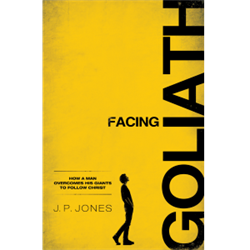
Guest (Male): For your gift of $25 or more, we will send you a signed copy of JP's new book, Facing Goliath.
Guest (Male): Please join us every Sunday at 9 or 11 a.m. at Crossline Church in Laguna Hills. The address is 23331 Moulton Parkway, Laguna Hills, California 92653. Or check us out on the web at crosslinechurch.com.
Guest (Male): We are going to get to the address and phone number again in a moment, but before we do that, Pastor JP, do you have any insight from today's message?
JP Jones: Thanks, Greg. Here in the book of Philippians, the Apostle Paul is giving us God's keys to experiencing joy. How we can be joy-filled people, how we can reflect the joy of the Lord as our strength. Both to one another in the body of Christ, but also to the community as a witness for Jesus Christ. God wants to produce his joy in us, and the book of Philippians gives us the scriptural keys to experiencing joy.
JP Jones: Here in Philippians chapter 4, Paul says that when we pursue peace, when we pursue relationships of peace, then joy is a byproduct. You see, God has called us to peace. He's called us to be at peace with one another. He's called us to be at peace with our neighbors.
JP Jones: In fact, Romans chapter 12 says, "If possible, so far it depends on you, be at peace with all men."
JP Jones: Here in the beginning of Philippians chapter 4, Paul describes a conflict that must have been taking place within the church at Philippi. There were a few believers who had gotten sideways with one another, and Paul is exhorting the community of believers to come alongside these people and help them resolve their conflict.
JP Jones: Have you ever noticed that when your world is kind of filled with interpersonal conflict, how it robs you of joy and robs you of peace?
JP Jones: It's amazing how when there are unresolved conflicts with people in your family, or people in your small group, or people in your church, or people at work, or people in your neighborhood, that conflict creates a level of stress and that stress robs us of joy.
JP Jones: And so very practically, God says we are to be peacemakers. We are to be people who seek to have peace with others and seek to help others have peace.
JP Jones: And then he gives us some real practical keys as to how to experience that.
JP Jones: The word of God is very practical. We are to rejoice in the Lord, we are to have a gentle spirit towards others, we are to stop allowing ourselves to be overcome by stress, but instead we are to go to God in prayer. We are to put our minds on the things above and not on the things on earth. These are practical keys to having peace.
JP Jones: Because when we have peace, the byproduct is joy.
JP Jones: God, thank you for the joy that you want to give us and thank you that joy comes from pursuing peace. In Jesus name, amen.
Guest (Male): We want to help you in your relationship with Christ. Please get in touch with us at Truth That Changes Lives, 23331 Moulton Parkway, Laguna Hills, California 92653. Or call us at 949-916-0250. On the internet, you will find us at crosslinechurch.com. We hope to see you at one of our services every Sunday at our new campus in Laguna Hills. For more information and directions, please go to crosslinechurch.com.
Guest (Male): Please join us next time on Truth That Changes Lives. The cross before me, the world behind, no turning back. Grace the banner high, it's all for me, it's all for you.
Featured Offer
Past Episodes

Featured Offer
About Truth That Changes Lives
About JP Jones
JP Jones is the founding Senior Pastor of Crossline Church in Laguna Hills, CA. Beginning with 16 people, Crossline has grown to a congregation of over 2,000 in 10 years. This growth has come largely through people receiving Christ and joining the church. JP is a dynamic and articulate Bible teacher with a passion to see people come to Christ and grow into being multiplying disciples for Jesus. JP began his ministry career with Campus Crusade for Christ and continues to have a heart for the Great Commission. Traveling on mission trips all over the world, JP preaches the gospel and trains pastors to be reproducing spiritual leaders.
For the past 25 years, JP has been an Adjunct Professor of Theology and Biblical Studies at Biola University and Talbot School of Theology. A published author, JP has written Facing Goliath by Baker Books and the discipleship curriculums, Transformed and Livin’ Large by Life Together. JP is a popular speaker at Men’s Retreats and Couples Conferences. JP is married to his wife Donna and they have 3 children. JP loves family vacation, the beach, Ultimate Fighting and a good cup of coffee.
Contact Truth That Changes Lives with JP Jones
info@crosslinechurch.com
http://pastorjpjones.com/
23331 Moulton Parkway
Laguna Hills CA 92653
(949) 916-0250