

Mark 4:1-20, Part 1


The word that Jesus is talking about is God's word that has the power to change our lives. To teach us, to rebuke us, to correct us, to train us in righteousness. The word that can set us free!
JP Jones: The word that Jesus is talking about is God's word that has the power to change our lives. To teach us, to rebuke us, to correct us, to train us in righteousness, the word that can set us free.
Male Guest: Not to us, but to your name be the glory. Yeah! Thank you for joining us on Truth That Changes Lives. Pastor JP Jones is the senior pastor of Crossline Community Church in Laguna Hills, California and a professor of biblical studies at Biola University. Today on Truth That Changes Lives, Pastor JP will be giving us a message from a series entitled Read the Red. Let's listen as JP gives us part one of Mark 4, 1 through 20.
JP Jones: We're in the series we're calling Read the Red, and what we're doing is we're going through the gospels, looking at the greatest teachings by the greatest teacher. So it is those words in red that speak out to us because they're the words of Jesus Christ and the words that speak life to us. They're the words of the gospel that our relationship with God is by grace alone, through faith alone, in Christ alone. It's not based on our works, our efforts, our goodness, our religion, our keeping of rules or laws. We could never do all that would be required to satisfy a holy and perfect God. But because God loves us, He has provided a way of salvation for us through Jesus Christ alone.
So by grace, through faith in Christ, we can have a relationship with God and by grace through faith, we can be spiritually transformed every day as we live as Christ's disciples. And so the teachings of Jesus both introduce us to a relationship with God and call us how to live in a relationship with God. And especially the teaching that we're going to be looking at this morning because we're looking at a parable. This is known as the parable of the four soils or the parable of the sower. And it really has application to every one of us wherever we are on our spiritual journey. And one of the things that we say around here a lot is that every person's on a spiritual journey. And the words of Jesus speak to us wherever we might be.
Several years ago, in one of my Jacuzzi story experiences, I was sitting in the Jacuzzi at the gym after I'd worked out. I have a Bible, I just throw it in my bag. It's an old beat up Bible and I take it with me sometimes. I'm reading it while I'm sitting in the Jacuzzi. So I'm sitting there reading this Bible and I saw a guy walk out to the outside area by the pool, and he sits in the Jacuzzi and he looks at me and he sees me reading, and I could see over the Bible that he's trying to look to see what it is I'm reading. And it was almost like I'm reading, but I could see in my peripheral vision that, ah-ha moment, that guy's reading a Bible in the Jacuzzi. What's that about?
So he speaks up and says, you know, what are you reading? And I look at him and I said, I'm reading the Bible. And then I just turned back and started reading again. And I could see he never took his eyes off me. So it was like somehow that was interesting to him or fascinating to him. And he wanted to talk more, but I just kind of left him kind of ask me. So I'm sitting there reading and then he says to me, what are you reading in the Bible? And I look up, I said, I'm reading Mark chapter 4. And I looked back and I kept reading the Bible.
A few seconds passed by and he goes, well, what's in Mark chapter 4? I looked back up, I said, it's a parable, it's called the parable of the four soils. I looked back and I kept reading. And he said, well, what's it about? Do you know what it's all about? And so I closed the Bible and I set it down. I said, well, I'd be happy to tell you, but I want you to know, you ask me before we get into this conversation. And for the next several minutes, I explained the parable, how it applied to us in general and how it could apply to him personally in terms of his own spiritual life.
You see, parables have that capacity to speak to us because they're stories. And the stories kind of bring truth to life. In Mark chapter 4, Jesus begins this whole telling of this story by saying this, Mark 4:1. Again, he began to teach by the sea and a very large crowd gathered around him. So he got into the boat on the sea and he sat down while the whole crowd was on the shore facing the sea. He taught them many things in parables, and in his teaching he said to them, listen, consider the sower who went out to sow. As he sowed, this occurred, some seed fell along the path and the birds came and ate it up. Other seed fell on rocky ground where it didn't have much soil, and it sprang up right away since it didn't have deep soil. When the sun came up, it was scorched. And since it didn't have a root, it withered. Other seed fell among thorns and the thorns came up and choked it, and it didn't produce a crop.
Still others fell on good ground and produce a crop that increased 30, 60 and 100 times what was sown. And then he said, anyone who has ears to hear should listen. So here's Jesus, there's a crowd, he gets into a boat kind of it's a natural kind of sound amphitheater out on the water, speaking back to land. So a large crowd is out there. People from various spiritual backgrounds, like any crowd. Some people who were disciples, some people who were antagonists, some people who were interested, some people who probably just got caught up in the mob mentality and kind of figure out why everybody's gathered together to listen to this guy. Just a cross-section of people, a cross-section of people in terms of their spiritual interest and spiritual commitment.
And Jesus uses a story that would have been very relevant to the people of his day. The Sea of Galilee in Israel is surrounded by kind of rolling hills and many of them are terraced, they're used for growing crops. In fact, it could have been that where Jesus was located, he's in the boat and there could have been an actual sower behind the crowd up on the hill. And he could have been speaking to them but kind of looking up and they kind of all turned to see this guy planting seeds. And what Jesus refers to is the way the guys planted seeds back in those days. He's walking along the path and he's scattering the seed.
He says the sower sows the seed and then Jesus says it lands in different kinds of ground. Now, the ground in Israel is like the ground in your backyard. You know, there's part probably part of the ground is really fertile and watered well and has a great capacity to grow plants. And maybe there's some part of the ground that's real dry, the sprinklers don't hit and it's really hard and kind of clay soil. And some part of the ground has a lot of rocks in it. And some places weeds grow more than they grow in other places. It's just ground, you see. But Jesus says, the seed lands in different kinds of soil. And depending on the kind of soil it is, then that impacts what the seed does in the soil. And Jesus makes mention of four types of soil that the farmer who sow the seed, it hits, the seed hits in different kinds of ground.
He says there's the hard soil and he says it hits and it isn't able to be planted and so a bird comes and snatches the seed before it has a chance to do anything. And then there's the rocky soil, the seed gets in there and it looks like there's a plant starts to grow, but there's not really a root. And so the sun kind of withers the plant and it just dies. And then there's the weedy soil where the seed is sown and actually gets planted and there's a root and a plant grows, but there's all kinds of weeds around there and it chokes it out. So there's no fruit that comes out of that plant. And then there's good soil, and the seed is sown in the good soil and it produces fruit, 30, 60, 100 fold. So there's this story that Jesus gives. And then he says, you know, let he who has ears hear.
So obviously there's something more than just telling a story about a farmer sowing seed, there's some kind of spiritual implication. Now, further in this passage, we're actually going to get the interpretation. But if we didn't have the benefit of that interpretation, we'd be trying to guess what it means. And there'd be scholars who'd be telling us, now, the farmer in those days walked with a certain kind of gate, which caused the seed distribution to land at a certain angle. And the arm would be thrown at a certain angle and the seed would fly out a certain distance. And they'd be going into depth about all this stuff that wouldn't have anything to do with what Jesus is talking about. Because Jesus was a great storyteller, and great storytellers tell stories and not everything in the story is necessarily deep and esoteric and spiritual. It helps the story sound like a good story.
There's a basic meaning, there's a primary thrust to the story. Jesus is going to give us that thrust and help us understand how that applies to our lives as we read further into the passage. But before he does that, he helps us understand why he uses stories in the first place. So verse 10 says this, when he was alone with the 12, those who were around him asked him about the parables. He answered them, the secret of the kingdom of God has been given to you, but to those outside, everything comes in parables, so that they may look and look, yet not perceive. They may listen and listen, yet not understand. Otherwise, they might turn back and be forgiven.
Matthew in his record of this account gives us a little more detail of the conversations. This is found in Matthew 13 and Luke chapter 8. Same story, same circumstance. Mark gives us kind of like the mini version of it. Luke and Matthew give us the fuller version of all the things that Jesus said. And in Matthew, he says, Jesus replied, the knowledge of the secrets of the kingdom of heaven have been given to you, but not to them. Whoever has will be given more and he will have an abundance. Whoever does not have, even what he has will be taken from him. This is why I spoke to them in parables. Though seeing, they do not see and though hearing, they do not hear or understand. In them is fulfilled the prophecy of Isaiah, you will be ever hearing but never understanding. You will be ever seeing but never perceiving.
For this people's heart has become callous, they hardly hear with their ears, they have closed their eyes, otherwise they might see with their eyes, hear with their ears, understand with their hearts and turn and I would heal them. So Jesus says to his disciples, you're getting the interpretation and the mystery or the secret of the kingdom. Parables teach us about God's kingdom. God's plan of salvation, God's plan of being in a relationship with him, God's rule, God's will. Parables help us understand life from God's perspective. What it's all about? What it means to know him, to experience him, to live in relationship with him. Parables explain that to us.
And those whose hearts are pure, whose hearts are sincere, whose hearts are humble, they hear parables and it causes them to want to know more and it causes them to understand more. Parables actually help them understand these spiritual truths and parables encourage them to seek after more spiritual truths. On the other hand, parables serve to expose that some people have bad hearts. Some people have hidden motives, some people have personal agendas and they're really rejecting of God and his kingdom and his plan. And the parables serve to show, they're just hardened in their own heart. So seeing, they don't really see. Hearing, they don't really hear, and they never turn to follow God.
Parables also help us understand God's perspective. Because Jesus quotes from this passage in the book of Isaiah and while God gives an honest appraisal of people's spiritual condition, he says, if they would turn, I would hear, I would listen and I would heal them. So Jesus stands in a position to any person who would turn to him, any person who would repent, any person who would follow him. Jesus stands in a position to offer forgiveness, love, acceptance, but he puts the ball in our court. Jesus puts the responsibility with us. So no one can kind of point the finger at God and say, you didn't give me a chance or you didn't make it clear to me or you didn't, you know, bless me like you bless somebody else. We basically the teaching of the parables expose us for who we are. Either active seekers or rejecters.
And Jesus understood, by the way, as he was giving this parable that the crowd that was gathered before him fit into those categories. Some of the people were hearing the words that he spoke and it energized them to want to know more. It answered some questions, it created other questions, but the end result was it caused them to want to seek all the more after Christ. And for others, the very same parables served to harden them in their rejection of Christ. So as Jesus is speaking this parable, it's been recorded, I'm sharing with you. You know what? It's having the same effect with us here. It's having the same effect with us here.
Some of us have a spiritual disposition to want to seek the things of God, to want to understand who God is, to want to be in a relationship with God, to want to be followers of Jesus Christ, to want to accept God's love and forgiveness into our lives, to want to actively pursue him. Others of us put up barriers and defenses and sometimes we hide behind those. And Jesus basically is saying, take ownership for your own rejection. The parables serve a dual purpose, but they expose what's really in our hearts.
Now Jesus is going to explain to us what the parable means. So we don't have to sit around and guess and read commentaries and try to figure all that, he just tells us what it means. It's pretty clear. He gives us the meaning and the application of this parable. And Jesus says in verse 13 of Mark chapter 4, don't you understand this parable and how will you understand any of the parables? The sower sows the word. These are the ones along the path where the word is sown. When they hear, immediately Satan comes and takes away the word that is sown in them. And these are the ones sown on rocky ground when they hear the word, immediately they receive it with joy. But they have no root in themselves, they're short-lived. When pressure or persecution comes because of the word, they immediately stumble.
Others are sown among thorns. These are the ones who hear the word, but the worries of this age, the seduction of wealth, and the desires for other things enter in and choke the word, and it becomes unfruitful. But the one sown on good ground, they are those who hear the word, welcome it and it produces a crop 30, 60 and 100 times which was sown. So Jesus gives us the spiritual interpretation and application of this parable to our lives. And everyone here is on a spiritual journey, just like everyone in that crowd that Jesus was speaking to. They were on a spiritual journey. And Jesus says, the sower sown out the word and it lands in different kind of soil. And in that crowd that Jesus spoke to, there were folks who would identify with each of the four soils that are mentioned. And among us here, there are those of us that could identify with each of the four soils that are mentioned.
So first of all, Jesus says, the sower sows the seed which is God's word. The seed being sown is God's word. Now, in some of the parables that Jesus gives, he uses a similar metaphor and the seed is identified as the gospel of the kingdom or the good news of salvation. Here it's the word. So it's more generic. So in other words, this parable is not exclusively about salvation. This parable is not exclusively about how do you enter into God's kingdom, how do you come into a saving relationship with Jesus Christ. It does speak to that, but that it's not exclusively about that. This is more a generic parable about how any person can either have a good heart or a bad heart. And how the word can change any person's life if they have a good heart.
So this this parable speaks to every person here. Speaks to me and you and every one of us. The seed is the word of God. Now, the word, we're told in 2 Timothy 3, the word of God, the scriptures are inspired. And they're profitable for teaching, rebuking, correcting, and training in righteousness, equipping us for every good work. Hebrews chapter 4 says, the word of God is living and active and sharper than any two-edge sword. It pierces as far as the division of soul and spirit and joint and marrow. It's able to judge the thoughts and intentions of our heart. Jesus says about the word in John chapter 17, praying to God the Father, sanctify them in truth, thy word is truth.
So, the word that Jesus is talking about is God's word that has the power to change our lives. To teach us, to rebuke us, to correct us, to train us in righteousness. The word that can set us free. And as I mentioned, it's the word not in a specific sense of the word as in the gospel, but in the word as in its broad sense, all the truth that God has communicated to us. So for some of us, it may be the gospel. The word that we're hearing is the word calling us to salvation in Jesus Christ, teaching us that salvation is by grace alone, through faith alone, in Christ alone. But for others of us, it may be the word of God that's instructing us about our marriage and the kind of marriage God wants us to have. Or for others of us, it might be the word of God that's telling us about how we should be handling our finances. Or for others of us, it's the word of God that should be it's teaching us about the priorities we should be living by on a daily basis. Or for others of us, it's the word of God that's instructing us about living by faith. Or for others of us, it's the word of God that's teaching us about having a godly righteous character and being people of integrity.
See, Genesis to Revelation, 66 books, the word of God that speaks to us in our life situation. The sower sows the word. So whenever the word of God goes out through preaching on Sunday morning or on a radio program or by reading it in the Bible for yourself or setting in a small group or talking over a cup of coffee with somebody or sitting in a Jacuzzi, somebody's reading the Bible, it's the word of God that goes out. Jesus is talking about that phenomena. The sower, sowing the word. And then Jesus says, it lands just like seed in different kind of ground. Not all ground is the same. Not all soil is the same. People's spiritual responsiveness to God, it's not the same. And Jesus says, depending on the kind of ground that the seed lands in, it will or will not produce fruit. So the ground, the soil that it lands in determines the fruitfulness of the seed. The seed has life in itself. The word of God has life changing power in itself. But the kind of soil that it lands in determines whether that life giving power is released or stifled.
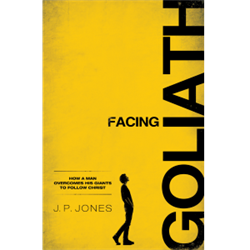
Male Guest: What a great message for all of us today. Pastor JP provides us with great insight. That is why we'd like to make it available to you on CD. Just get in touch and mention today's date. We'll send it your way for just $5. Or if you'd like to support this ministry, you can write us at Truth That Changes Lives. 23331, Moulton Parkway, Laguna Hills, California, 92653 or give us a call at 949-916-0250. That's 949-916-0250. For your gift of $25 or more, we will send you a signed copy of JP's new book, Facing Goliath. Please join us every Sunday at 9 or 11 a.m. at Crossline Church in Laguna Hills. The address is 23331 Moulton Parkway, Laguna Hills, California, 92653. Or check us out on the web at crosslinechurch.com. We're going to get to the address and phone number again in a moment, but before we do that, Pastor JP, do you have any insight from today's message?
JP Jones: Thanks Greg. We're in a series called Read the Red and we're looking at the teachings of Jesus from the Gospels. Jesus is the greatest teacher who ever lived and his teachings have life. They're the very words of God. And what we're looking at is the parable of the four soils or the parable of the sower. It's found in three of the Gospels and we're looking at Mark chapter 4 verses 1 to 20 because it unpacks for us this teaching of Jesus. Jesus loved to tell stories and he told stories that related to real life. He told stories that related to his audience. And the parable of the sower or the parable of the four soils, Jesus is talking about a farmer who's sowing seed and the seed lands in different kinds of soils. And because of the soil quality, what was produced out of that soil was affected by the quality of the soil.
And so then he went on to unpack the meaning of that spiritually. And Jesus highlights two ideas. The one idea is the nature of the seed and the second idea is the nature of the soil. You see, the nature of the seed is that it's the word of God. God's word is planted into our hearts. But God's word has power and life-changing capacity. Isaiah said in Isaiah chapter 40, the grass withers, the flower fades, but the word of our God abides forever. Hebrews chapter 4 says, the word of God is living and active and sharper than any two-edged sword. It pierces as far as the division of soul and spirit and joint and marrow. It's able to judge the thoughts and intentions of the heart.
Peter says in 1 Peter chapter 1 that we've been born again not of seed which is perishable, but seed which is imperishable, the living and abiding word of God. The word of God imparts faith to us. The word of God imparts life to us. It's the word of God that the Holy Spirit uses to cause us to be born again spiritually. And so God's word is the message of life. It's the message of truth. It's the message of hope. It's the message of grace. And Jesus says it's the farmer who sows this word into our hearts. And the condition of our heart determines how the word is able to interact with the human life. Every one of us has a heart condition. And those who have good hearts receive the word and are transformed, but those who have bad hearts limit the capacity of the word to do its transforming work. The real question is, what's the condition of our heart? What kind of hearts do we have? Because God's word is God's word. And the only reason it wouldn't be changing us is that we have bad hearts. If you want to have a good heart, would you ask God to give you a good heart so his word would change you? Let's pray. Father, thank you that your word is powerful enough to impart salvation to us in Jesus Christ. Give us a good heart. Give me a good heart. Give me a good heart to receive your word. Give me a good heart to believe the gospel. Give me a good heart to obey Jesus as the Lord and Savior of my life. And I ask for that in Jesus' name. Amen.
Male Guest: We want to help you in your relationship with Christ. Please get in touch with us at Truth That Changes Lives. 23331, Moulton Parkway, Laguna Hills, California, 92653. Or call us at 949-916-0250. On the internet, you will find us at crosslinechurch.com. We hope to see you at one of our services every Sunday at our new campus in Laguna Hills. For more information and directions, please go to crosslinechurch.com. Please join us next time on Truth That Changes Lives.
Featured Offer
Past Episodes

Featured Offer
About Truth That Changes Lives
About JP Jones
JP Jones is the founding Senior Pastor of Crossline Church in Laguna Hills, CA. Beginning with 16 people, Crossline has grown to a congregation of over 2,000 in 10 years. This growth has come largely through people receiving Christ and joining the church. JP is a dynamic and articulate Bible teacher with a passion to see people come to Christ and grow into being multiplying disciples for Jesus. JP began his ministry career with Campus Crusade for Christ and continues to have a heart for the Great Commission. Traveling on mission trips all over the world, JP preaches the gospel and trains pastors to be reproducing spiritual leaders.
For the past 25 years, JP has been an Adjunct Professor of Theology and Biblical Studies at Biola University and Talbot School of Theology. A published author, JP has written Facing Goliath by Baker Books and the discipleship curriculums, Transformed and Livin’ Large by Life Together. JP is a popular speaker at Men’s Retreats and Couples Conferences. JP is married to his wife Donna and they have 3 children. JP loves family vacation, the beach, Ultimate Fighting and a good cup of coffee.
Contact Truth That Changes Lives with JP Jones
info@crosslinechurch.com
http://pastorjpjones.com/
23331 Moulton Parkway
Laguna Hills CA 92653
(949) 916-0250