

Luke 16:19-31, Part 1


What would you want people to say in their eulogy of you at your memorial service? And then the challenge is whatever it is that you want people to say about you, start living that way now so that will be the legacy that you leave.
JP Jones: What would you want people to say in their eulogy of you at your memorial service? And the challenge is, whatever it is that you want people to say about you, start living that way now, so that will be the legacy that you leave.
Greg: Thank you for joining us on Truth That Changes Lives. Pastor JP Jones is the senior pastor of Crossline Community Church in Laguna Hills, California, and a professor in biblical studies at Biola University. Today on Truth That Changes Lives, Pastor JP will be giving us a message from a series entitled Read the Red. Let's listen in as JP gives us part one of Luke 16:19-31.
JP Jones: What we do in this life echoes throughout eternity. That's not only a great line from a movie; that's biblical. See, Jesus has a lot to say about eternity and about what we do in this life and its impact on eternity. In fact, as we're working through our series Read the Red, we come to a passage this morning in Luke chapter 16 where Jesus is talking about the reality of death, judgment, heaven, and hell. Now, some people might think, "Well, why didn't you just skip over that passage and go on to something lighthearted and positive?"
Because Jesus didn't skip over the tough stuff in life, and Jesus didn't teach things just to please the audience who was listening to him. Jesus spoke the truth, the truth that sets us free. And so as we look at Luke 16 and a few other passages of Scripture, we are going to see and hear a tough message, but it's truth that will transform our lives and truth that will set us free if we take it to heart. So here's Jesus teaching on this reality of death, judgment, heaven, and hell. Luke chapter 16. I'm reading the red, what Jesus said.
"There was a rich man who was dressed in purple and fine linen and lived in luxury every day. At his gate was laid a beggar named Lazarus, covered with sores and longing to eat what fell from the rich man's table. Even the dogs came and licked his sores. The time came when the beggar died and the angels carried him to Abraham's side. The rich man who died was buried in hell, where he was in torment. He looked up and saw Abraham far away, with Lazarus by his side.
So he called to him, 'Father Abraham, have pity on me and send Lazarus to dip the tip of his finger in water and cool my tongue, because I am in agony in this fire.' But Abraham replied, 'Son, remember that in your lifetime you received your good things, while Lazarus received bad things, but now he is comforted here and you are in agony. And besides all this, between us and you a great chasm has been fixed, so that those who want to go from here to you cannot, nor can anyone cross over from there to us.'
He answered, 'Then I beg you, father, send Lazarus to my father's house, for I have five brothers. Let them warn them, so that they will not also come to this place of torment.' Abraham replied, 'They have Moses and the Prophets; let them listen to them.' 'No, father Abraham,' he said, 'if someone from the dead goes to them, they will repent.' He said to him, 'If they do not listen to Moses and the Prophets, they will not be convinced even if someone rises from the dead.'"
Matthew chapter 13, again, Jesus is teaching and Jesus said, "The one who sowed the good seed is the Son of Man. The field is the world, and the good seed stands for the sons of the kingdom. The weeds are the sons of the evil one, and the enemy who sows them is the devil. The harvest is the end of the age, and the harvesters are angels. As the weeds are pulled up and burned in the fire, so it will be at the end of the age.
The Son of Man will send out his angels, and they will weed out of his kingdom everything that causes sin and all who do evil. They will throw them into the fiery furnace, where there will be weeping and gnashing of teeth. And then the righteous will shine like the sun in the kingdom of their Father. He who has ears to hear, let him hear." John chapter 5, reading the red, Jesus says, "I tell you the truth, whoever hears my word and believes him who sent me has eternal life and will not be condemned; he's crossed over from death to life.
I tell you the truth, a time is coming and now has come when the dead will hear the voice of the Son of God and those who hear will live. For as the Father has life in himself, so he has granted the Son to have life in himself. And he's given him authority to judge because he is the Son of Man. Do not be amazed at this, for a time is coming when all who are in the graves will hear his voice and they will come out. Those who have done good will rise to live, and those who have done evil will rise to be condemned."
And John chapter 14, Jesus answered, "I am the way, the truth, and the life and no one comes to the Father except through me." So beginning with Luke 16, we've looked at some other scriptures as well, we see a pattern in what Jesus is teaching. Jesus is teaching about the reality of death, of judgment, and heaven and hell. And this is a dominant theme in the teaching of Jesus. Jesus, in fact, gives us more information about this particular topic than any author of Scripture, any apostle, or any prophet.
Jesus spoke over and over again about these realities, and so these are realities we need to understand. We need to understand what Jesus actually teaches so that it can transform our lives and the lives of those that we care about and the lives of those that we love. So here's some observations from the red, what Jesus actually says. First of all, death comes to everyone: rich and poor, good and bad. Did you know that death is a reality?
I worked for Campus Crusade for Christ at UCLA for quite a few years and lived all around Westwood and all around the campus. For a while, I actually lived at Westwood Village Mortuary. There's a little mortuary where several movie stars are buried; it's right off of Wilshire Boulevard, Wilshire and Westwood, and behind the Avco building. And the people who owned the mortuary were Christians. I was working up at Campus Crusade and I was also going to seminary, so they allowed me and some other guys to live there for free.
We lived in a caretaker's cottage on the grounds of the mortuary, and it was an interesting experience living at a mortuary because you're confronted with the reality of death every day. Being a pastor, I have been involved in counseling bereaved people. In my own family, my father passed away last year. Death is a reality. It's an odd thing to say, but it's a part of life. In fact, if you look at the Bible, there's only two people who didn't die.
There are some resurrections, but Enoch and Elijah are the only guys who didn't die. If you take everybody who's ever lived and just say everybody except for two, that's just a little bit short of 100 percent. People die. You're going to die. I'm going to die. The person sitting next to you is going to die. People you care about are going to die. People you've never heard of are going to live and die. Good, bad, rich, poor, educated, uneducated, Christian, non-Christian, religious, irreligious—death comes to everyone.
And in this teaching of Jesus, he talks about two guys that die: Lazarus and a rich man. It's interesting, here in the United States this past year, 2.5 million people died. The death rate in the United States was 794 deaths per 100,000 people. Life expectancy is 78 years. Top five killers, contributors to death: heart disease, cancer, respiratory diseases, stroke, and accidents. Young people die, middle-aged people die, old people die. You're going to die. Death comes to everybody.
Understanding that can help us know how to live. Stephen Covey, in his book Seven Habits of Highly Effective People, talks about having the end in sight, and he actually gives an exercise. It's a pretty good one. He says imagine yourself at a memorial service, and it's your memorial service. And people are giving eulogies about your life. So you're thinking, "This is the end of my life and people are saying things about me." And there's someone from your family who speaks, there's someone from your work who speaks, there's a neighbor who speaks, and he says someone from your church.
They get up and they talk about you, and he says in this exercise, what would you want people to say in their eulogy of you at your memorial service? And the challenge is, whatever it is that you want people to say about you, start living that way now, so that will be the legacy that you leave. Now, I would say that's a pretty good exercise, but I'd add one more person to speak. In fact, it would be the most important person: it's Jesus Christ.
So if Jesus Christ was speaking at your memorial service, what would you want him to say? What would you want Jesus to say about your life? And then the takeaway is: start living that way. Jesus is speaking here in this passage and others about the reality of death and judgment and heaven and hell. Here's a second observation from this teaching: after death, there is a judgment and a separation. See, Jesus is saying that death is not the end. There's life after death.
But Jesus doesn't teach the way Hollywood does in all of the fantasy movies where in the movie somebody dies. Jesus doesn't teach that everybody goes to heaven. Jesus says there's a judgment, and at that judgment, there's a separation. In Jesus's teaching, there's Lazarus, there's the rich man, they die, and they go to different places. There's the parable that Jesus gave of the kingdom and the seed is sown, and some is good seed and some are weeds, and then when they're harvested, they're separated.
And Jesus says that he's going to speak and those who hear his voice and believe in the one who sent him are going to be resurrected to life, and those who did the evil deeds are going to be resurrected to death. See, there's life, death, judgment, separation. Jesus is giving us an understanding of this reality, and really it's a reality that, in a spiritual sense, makes sense. In fact, quite honestly, I was talking to somebody on the patio between the services. Before I gave my life to Christ and became a follower of Christ, it was a reality that I accepted.
Because I wasn't raised in a religious home at all, but I did have a belief in God, and in that uneducated belief in God, I kind of thought, "Well, not everybody's going to go to heaven. I mean, there's some wicked people who deserve hell." Immanuel Kant, one of the great philosophers in history, certainly no evangelical Christian, but he actually argued—one of his great arguments for the existence of God was an argument based on justice. Because Kant believed in the sense of justice.
But he said in this life, we don't see justice because we see people acting immorally and getting away with it. So there must be a great reckoning afterlife. There must be a judgment where rights are upheld and wrongs are righted. But the only one who could actually execute that kind of justice is an absolute judge, and the only one who could be the absolute judge is God. Kind of an interesting way that he argued for the existence of God based upon his sense of justice and judgment.
Jesus says that there is a judgment and there's a separation. The writer of the Hebrews says, "It is appointed unto men to die once and after that comes judgment." Jesus, in Matthew chapter 25, says, "When the Son of Man comes in his glory, and all the angels with him, then he will sit on the throne of his glory and all the nations will be gathered before him. He will separate them one from another as a shepherd separates the sheep from the goats."
So Jesus is teaching death is a reality, it comes to rich and poor, good and bad, and after death, there's judgment and separation. Here's a third thing, observation from this teaching: some people go to heaven and some people go to hell. That's what Jesus says, and he says it's the end of every person. Now, some may take issue with that. In fact, you might be here this morning and think, "Oh my gosh, that's a little fundamentalist, JP. I mean, what are you really saying? That sounds so exclusive and narrow."
Okay, let's step away from this because this is not my agenda. I don't have a particular agenda here; I'm just trying to teach what Jesus taught. I'm looking at the red: what did Jesus actually say? Now, when I teach courses in theology at Biola and we're looking at a particular doctrine, what I like to do is step away and say, "What are the options to believe? What are the various things you can believe about something?" And then go, "Let's look at Scripture and look at all the relevant scriptures, and then based upon the scriptures, which of those options are the scriptural teaching or the scriptural position?"
So what are our options here about heaven and hell? Well, first of all, we could say they don't exist. We just say, "You know what? When you die, you're dead. You just cease to exist. You get buried in the ground; it's over. We're all just a random collection of chemicals, time, chance, and we came together, but there's no afterlife, there's no transcendence, there's no God, there's no heaven and hell. You just die and it's over." That's one option.
Another option is everybody goes to heaven. Just, we all go to heaven. There's a recent book out by a pastor, a guy named Rob Bell, called Love Wins. Rob Bell was plagued by the idea of judgment and hell and started thinking that, "Well, you know what? God's love must be powerful enough to overcome anything and everything, and it really doesn't matter what you've done or what you do, or even what you believe; ultimately, the love of God will make sure everybody gets to heaven. Love wins. Everybody goes to heaven."
A third option: God is holy, just, exacting; everybody's a sinner; everybody falls short; everybody goes to hell. God judges everybody and says, "You fell short of my standard; you didn't keep all my commandments; you're guilty of one, you're guilty of all. You're going to hell." Fourth option: some people go to heaven, some people go to hell. So those are your options. Now, go back and look at Scripture, the whole teaching of the Bible. Just the red: what is the teaching of Jesus?
So you look at the teaching of Jesus. Does Jesus teach that we just die and it's all over, we cease to exist? No. Does Jesus teach that everybody goes to heaven? No. Does Jesus teach that everybody goes to hell? No. What does Jesus teach? Some people go to heaven and some people go to hell. That's what Jesus teaches. So now, I want you to indulge with me in an exercise. All eyes—whatever you've been looking at, reading your bulletin, looking at your Bible, looking at your phone—just everybody look at me right now.
Everybody see me? Okay, now everybody look down the row and look at everybody looking down the row this way. Everybody that's sitting down the row this way. Okay, now turn around this way and everybody that's looking down your row this way. Okay, now turn around and look at everybody behind you and side of you, in front of you. Just look all around. All right, back up here. Everyone in this room is either going to heaven or hell. Everyone.
Everyone in this room is either going to heaven or going to hell. Your neighbor is either going to heaven or going to hell. The people in your family are either going to heaven or going to hell. The people you see randomly at Starbucks are either going to heaven or going to hell. The people I run into at the gym are going to heaven or going to hell. The people that were at the football game that you were at this past weekend are either going to heaven or going to hell.
Everybody you will ever meet, you will ever see, you will ever know or not know, every person is either going to heaven or going to hell. You say, "JP, that is just so narrow." I know, but I didn't say it; Jesus did. Read the red. Read the red. Jesus says that death is real; it's going to happen to everybody: rich, poor, good, bad. And after death, there's a judgment and a separation, and some people go to heaven and some people go to hell. That's what Jesus taught.
Heaven is a place of eternal reward and hell is a place of eternal torment. You see, Jesus is not ambiguous, confusing, oblique; he's explicit in his teaching about heaven and hell. And he uses specific terms to describe both places and the experience of those who are in both places. So when Jesus describes hell, he says that it's a place of utter darkness and isolation, and it's a place of fire and burning. And some people have said, "Well, you see, those are such metaphorical, allegorical descriptions that it really doesn't mean that."
Well, I want to be fair as a student of the Bible and someone who understands the Bible is written in various literary genres with the use of language that we use language in the way they use language at the times that it was written. Those could very well be metaphorical descriptions. They could be. When Jesus talks about darkness and isolation, when Jesus talks about fire and burning, they could be descriptions, but they're descriptions of something that's literal, of something that's real. And let me see if I can illustrate this.
Yesterday, the Trojans slaughtered the Rainbow Warriors. USC slaughtered Hawaii. Now, do I mean that they took out knives and hatchets and hacked their limbs off and killed them like a scene from Gladiator? No, I don't mean that. I mean they beat them really badly on the football field. But here's the point: when I said they slaughtered them, you didn't think that was a close game or they barely won. You understood that they must have beat them so thoroughly that "slaughtered them" was a fair comparison.
So when Jesus says that hell is a place of isolation and darkness and fire and burning, it must be so bad that he had to use those terms to describe it. So it may not be literal, but if it's not literal, it's so bad that the only way Jesus could explain and describe it was that it's darkness and isolation and it's fire and it's burning. So whether it's literal or he's describing something that's literal, it's bad.
Greg: What a great message for all of us today. Pastor JP provides us with great insight. That is why we'd like to make it available to you on CD. Just get in touch and mention today's date. We'll send it your way for just five dollars. Or if you'd like to support this ministry, you can write us at Truth That Changes Lives, 23331 Moulton Parkway, Laguna Hills, California 92653, or give us a call at 949-916-0250. That's 949-916-0250.
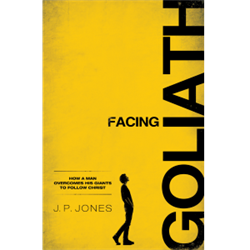
For your gift of 25 dollars or more, we will send you a signed copy of JP's new book, Facing Goliath. Please join us every Sunday at 9:00 or 11:00 AM at Crossline Church in Laguna Hills. The address is 23331 Moulton Parkway, Laguna Hills, California 92653. Or check us out on the web at crosslinechurch.com. We're going to get to the address and phone number again in a moment, but before we do that, Pastor JP, do you have any insight from today's message?
JP Jones: Thanks, Greg. We're in a series called Read the Red, and in our study today, we're talking about Luke chapter 16 and Jesus's teaching about eternity. Really, Jesus is teaching about heaven and hell. Do you know, Jesus Christ said more about heaven and hell than any other writer of Scripture, any other prophet, any other apostle? Jesus Christ is the one who gives us the biblical doctrine of heaven and the biblical doctrine of hell. And in Luke chapter 16, Jesus gives us a story.
It's a story of Lazarus and the rich man. And in this story, both of them die. One of them goes to be with God in conscious blessing, and one of them goes to be separated from God in conscious torment. And this represents the fact that after death, there is a separation. This is the major teaching of Jesus in his kingdom parables. There's this great separation and there's this judgment. Those who in this life come into a right relationship with God and are declared righteous by faith, they in the afterlife spend eternity with God in heaven.
But those who reject God's offer of salvation and those who live in rebellion to God, when they die, they are judged and they spend eternity separated from God in hell. This is the great teaching of the Bible, and this is the teaching of Jesus Christ. Jesus teaches the reality of heaven and Jesus teaches the reality of hell. And understanding that should cause us in this life to make important decisions to get right with God, to accept God's offer of forgiveness through faith in Jesus Christ, and to repent of our sin.
So that not only we receive his forgiveness right now and not only do we have his love in our life to live an abundant life right now, but we have the certain hope of heaven. Because the Bible is quite clear that those who in this life do not repent of sin and do not get right with God, there is waiting for them a certain terrifying expectation of judgment. The doctrine of hell is a doctrine of God's justice and holiness and a doctrine that prompts us to repent now and get right with God so that we might receive the blessing of salvation and the hope of eternity in heaven.
Luke chapter 16, Jesus clarifies these truths, and Jesus tells us that after life and after death, there is eternal life, and this eternal life is either in heaven or this eternal life is in hell. And this is the great reality of God's teaching as both judge and savior. If you'd like to get right with God right now, don't put it off. Would you pray with me right now and tell God that you want the hope of heaven in your life?
Lord Jesus, thank you that you died for our sins and you alone are the hope of heaven. Thank you, Jesus, that you are the way, the truth, and the life and no one comes to the Father but through you. So I pray right now, Jesus, that anyone who would call upon you would be saved. Anyone who would believe in you would have the hope of heaven in their heart, that right now people would look to you, believe in you, accept you as their Lord and Savior and have the certain hope of heaven. In Jesus' name, Amen.
Greg: We want to help you in your relationship with Christ. Please get in touch with us at Truth That Changes Lives, 23331 Moulton Parkway, Laguna Hills, California 92653, or call us at 949-916-0250. On the internet, you will find us at crosslinechurch.com. We hope to see you at one of our services every Sunday at our new campus in Laguna Hills. For more information and directions, please go to crosslinechurch.com. Please join us next time on Truth That Changes Lives.
Featured Offer
Past Episodes

Featured Offer
About Truth That Changes Lives
About JP Jones
JP Jones is the founding Senior Pastor of Crossline Church in Laguna Hills, CA. Beginning with 16 people, Crossline has grown to a congregation of over 2,000 in 10 years. This growth has come largely through people receiving Christ and joining the church. JP is a dynamic and articulate Bible teacher with a passion to see people come to Christ and grow into being multiplying disciples for Jesus. JP began his ministry career with Campus Crusade for Christ and continues to have a heart for the Great Commission. Traveling on mission trips all over the world, JP preaches the gospel and trains pastors to be reproducing spiritual leaders.
For the past 25 years, JP has been an Adjunct Professor of Theology and Biblical Studies at Biola University and Talbot School of Theology. A published author, JP has written Facing Goliath by Baker Books and the discipleship curriculums, Transformed and Livin’ Large by Life Together. JP is a popular speaker at Men’s Retreats and Couples Conferences. JP is married to his wife Donna and they have 3 children. JP loves family vacation, the beach, Ultimate Fighting and a good cup of coffee.
Contact Truth That Changes Lives with JP Jones
info@crosslinechurch.com
http://pastorjpjones.com/
23331 Moulton Parkway
Laguna Hills CA 92653
(949) 916-0250