

Luke 12:1-12, Part 1


And what Jesus essentially is saying; be on guard against pharisaicism, legalism and hypocrisy.
Guest (Male): And what Jesus essentially is saying, here's my kind of summary idea, is be on guard against Pharisaism, legalism, and hypocrisy. Not to us, but to your name be the glory.
Guest (Male): Thank you for joining us on Truth That Changes Lives. Pastor JP Jones is the senior pastor of Crossline Community Church in Laguna Hills, California, and a professor of biblical studies at Biola University. Today on Truth That Changes Lives, Pastor JP will be being us a message from a series entitled Read the Red. Bless us then as JP gives us part one of Luke 12:1-12.
JP Jones: Well, if you have your Bibles, would you open to Luke chapter 11. We are in this teaching section in Luke 11, 12, and 13. It's part of the larger series that we're engaged in called Read the Red, where we're looking at the greatest teachings by the greatest teacher, where examining the teaching discourses of Jesus and we're developing them chronologically. And here we are in Luke, and in 11, 12, and 13, Luke records for us these teachings of Jesus, which we've said are in some way they're stand-alone messages. Each little teaching that Jesus gives could stand on its own, but Luke has put them together for us.
And there is an idea that weaves in and out of them. It's a very simple idea, but it's really hard-hitting. And that is that our allegiance ought to be to Jesus Christ alone. He's to be the Lord of our lives. And so we're to be living our lives fully surrendered to Christ, experiencing Christ in an authentic way, not a synthetic way, not a phony fake way, but an authentic way, abiding in Christ, knowing Christ, surrendering every area of our lives to Christ.
And so Jesus touches on different areas, and some of it comes close to home. In the first area that Jesus touches on in this teaching that we're looking at today is the whole area of religion. What is the nature of authentic religion? And how does authentic religion differ from legalistic, pharisaical, synthetic religion? This is what Jesus says in Luke chapter 11, starting at verse 37.
"When Jesus had finished speaking, a Pharisee invited him to eat with him. So he went in and reclined at the table, but the Pharisee noticing that Jesus did not first wash before the meal was surprised."
Now, Pharisees were the religious green berets of the time. They were the theologians, they were the priests, they were the teachers, they were the arbiters of fundamentalism for their day. They were the ones that everybody looked to for direction in spiritual and religious matters. So this Pharisee invites Jesus over to his house, they sat down before the meal. The Pharisee did a ritual washing of his hands, which was part of his religious practice, but Jesus didn't do it. And he was surprised.
Notice how Jesus responds to his attitude of his heart. Verse 39, "Then the Lord said to him, 'Now then, you Pharisees, you clean the outside of the cup and dish, but inside you are full of greed and wickedness. You foolish people, did not the one who made the outside make the inside also? But give what is the inside of the dish to the poor, and everything will be clean for you. Woe to you, Pharisees, because you give God a tenth of your mint, you rue, and all other kinds of garden herbs, but you neglect justice and the love of God. You should have practiced the latter without leaving the former undone. Woe to you, Pharisees, because you love the most important seats in the synagogues and the greetings in the marketplaces. Woe to you, because you are like unmarked graves, which men walk over without knowing it.'"
"Now one of the experts in the law answered him." I'll stop there. This term expert in the law, sometimes it's translated in the gospels as lawyer and sometimes it's translated as scribe. These were more like the theologians. So they were the technical experts on all the scriptures and the laws and the legalistic requirements of Judaism. So one of the experts of the law answered him, "Teacher, when you say these things, you insult us also."
And Jesus replied, "And you experts in the law, woe to you, because you load people down with burdens they can hardly carry, and you yourselves will not lift one finger to help them. Woe to you, because you build tombs for the prophets and it was your forefathers who killed them. So you testify that you approve of what your forefathers did. They killed the prophets and you build their tombs. Because of this, God in his wisdom said, 'I will send them prophets and apostles, some of whom they will kill and others they'll persecute. Therefore this generation will be held responsible for the blood of all the prophets that has been shed since the beginning of the world, from the blood of Abel to the blood of Zechariah, who was killed between the altar and the sanctuary.'
"Yes, I tell you, this generation will be held responsible for it all. Woe to you, experts in the law, because you've taken away the key to knowledge. You yourselves have not entered and you have hindered those who were entering." "When Jesus left there, the Pharisees and teachers of the law began to oppose him fiercely and besiege him with questions, waiting to catch him in something he might say. Meanwhile, when a crowd of many thousands had gathered, so that they were trampling on one another, Jesus began to speak first to his disciples saying, 'Be on your guard against the yeast of the Pharisees, which is hypocrisy. There is nothing concealed that will not be disclosed, or hidden that will not be made known. What you have said in the dark will be heard in the daylight, and what you've whispered in the ear in the inner room will be proclaimed from the roofs.'"
Now, I mean, this is hard-hitting stuff. Six times Jesus says, "Woe, woe, woe, woe, woe, woe!" And that's not for us to be understood, "Hey, wait a minute." That's not what woe means. When Jesus said, "Woe," it was a pronouncement of rebuke and condemnation. It was a pronouncement of judgment. In other words, Jesus had the harshest things to say to religious people.
Now, gang, I may not be the sharpest tool in the shed, but on Sunday morning, where are you more than likely to find religious people today? Look around. In other words, these things that Jesus is saying right here could be said to any one of us. These are strong words. And what Jesus essentially is saying, here's my kind of summary idea, is be on guard against Pharisaism, legalism, and hypocrisy.
Because Jesus says in chapter 12 verses 1 and 2, that the essence of the teaching of the Pharisees was hypocrisy. Be on guard against any kind of hypocrisy. I mean, if there is one sin at the top of the list of sins that is rebuked with the strongest language in the Bible, it's not pornography. It's not gossip. It's not murder. It's not adultery. It's not homosexuality. It's religious hypocrisy. Religious hypocrisy. And so Jesus says, "Be on guard against this."
Why? Because it takes what is an authentic relationship with God and makes it synthetic. It takes what's a real relationship with God and makes it phony. It takes what can transform a person's life for today, tomorrow, and all eternity to something that just keeps people in bondage. And so Jesus rebukes the Pharisees. He rebukes the experts in the law. And he says, "Be on guard against every kind of hypocrisy in your own life."
See, the problem as Jesus works his way through this teaching here is the Pharisees majored on the minors, rather than dealing with the things that really mattered in terms of forgiveness of sins and salvation and love and a transformed life and the certainty of heaven, they dealt with peripheral issues. You ever meet somebody in church that just major on the minors? Just want to talk about stupid, pedantic things that didn't amount to a hill of beans. And that was the stuff that really got him torqued out and really exercised and energized. I get those emails all the time, by the way.
They major on the minors. Another thing with the Pharisees, they focused on external righteousness rather than internal transformation. It was all about looking good to everybody else, rather than having a heart that's transformed by Christ. Another thing that Jesus rebukes about the Pharisees is they put burdens on other people in terms of the expectations, the religious expectations, the religious standard that they were communicating to other people that other people had to live up to to be spiritual. It was so burdensome. They themselves couldn't even keep it, but that's what they projected out to other people.
And then they didn't even lift a finger to help people even try to live up to it. So Jesus really nails them with the fact that they had no love for people. They just put this religious expectation and could care less whether people could actually live it out or not. They didn't have a real love for their neighbor. And then he gives the final, you know, nail to the coffin is they shut out the key to knowledge. So they basically hindered people from coming to God rather than help people come to God.
I shared this in the first service, with a classic service. And I've shared this before. You know, when they do surveys, you know, the Barna Group and some other groups kind of do these religious surveys and kind of what are the trends going on in terms of people's spiritual thinking and and decision-making. The number one reason why people who are rejecting the faith, reject it. At least in the United States, the number one reason why people are rejecting the faith, because of the hypocrisy of Christians. They look at other Christians, "There's a bunch of hypocrites. Why would I want to be around those folks?"
In surveying people who have come to faith, people who have become Christ followers, the number one reason why people become Christ followers, because of the authentic lives of Christians. So, you got one group of people saying, "The number one reason I don't want to become a Christian is because of Christians." And then you got other people, "The number one reason I am becoming a Christian is because of Christians." That doesn't make any sense. Oh yes, it does. Because gang, we could bring it down to right here, in this room. There are some of us who are authentic followers of Jesus Christ, and some of us who are synthetic.
And it was the same in Jesus's day. And he warns his followers to be on guard against the yeast, the teaching, the essence of Pharisaism and legalism, which he says is hypocrisy. And every one of us better pay attention to that. I need to pay attention to that because, listen, if if religious people are open to becoming Pharisees, the Pharisees were the leaders of the religious people, right? You're looking at a potential Pharisee right here. See, because I I get paid for being good. You're just good for nothing. Bah-bump-bump-ping.
So, I mean, this is this is stuff that Jesus wants us to take to heart. To do a gut check, to do a heart check, to do a mind check, to do a life check. Are we falling into this trap of religious legalism and hypocrisy? You know Jeff Foxworthy, the comedian Blue Collar Comedy Tour. He kind of became popular with uh that, "You may be a redneck if." You've heard some of those. Here's some of Jeff Foxworthy's redneck jokes.
"You may be a redneck if you think the stock market has a fence around it." "You may be a redneck if your stereo speakers used to belong to a drive-in theater." "You may be a redneck if your wife has to say, 'Could you move the transmission so I can take a bath?'" "You may be a redneck if your school fight song was Dueling Banjos from Deliverance." "You may be a redneck if your mother has ammo on her Christmas list." "You may be a redneck if you're asked to show an ID and you show him your belt buckle."
Okay, so that's Jeff Foxworthy. Now, let's do "You may be a legalist if." "You may be a legalist if you try to act more spiritual at church than you do at home." If you try to act more spiritual at church than you do at home, you you may be a legalist. "You may be a legalist if your Christian life is more about keeping religious rules than knowing Jesus Christ." You may be a legalist. If your Christian life is more about keeping religious rules than knowing Jesus Christ. "You may be a legalist if you want to argue about theological issues rather than seek unity around the gospel."
"If you'd rather get in an argument about your particular theological bent rather than being unified around the gospel of Jesus Christ, you may be a legalist." "You may be a legalist if you are more motivated to learn deeper biblical truths than to apply essential gospel truths." If you're just on a quest for more Bible knowledge rather than just applying the basic truths of the gospel, you may be a legalist. "You may be a legalist if you become easily offended by the sins of other Christians, but don't do anything to help them or encourage them in their walk with the Lord." You may be a legalist.
You may be a legalist if you just get upset by what other Christians do, but you don't do anything to help them. "You may be a legalist if you're angered by the sins of our culture, but not filled with compassion to share the gospel with lost people." You may be a legalist if you sit around and you get all angered by what you hear on the news, but you don't do anything out of compassion to help people who are lost find God, find Christ. You see, Jesus is warning us about the danger of hypocrisy, about being synthetic, rather than authentic in our relationship with God.
So Jesus continues in his teaching. Luke records it for us. And Jesus says this in verse 4 of chapter 12, "I tell you, my friends, do not be afraid of those who kill the body and after that can do nothing more. But I will show you whom you should fear. Fear him who after killing the body has the power to throw you into hell. Yes, I tell you, fear him. Are not five sparrows sold for two pennies? Yet not one of them is forgotten by God. Indeed, the very hairs of your head are all numbered. Don't be afraid, you're worth more than many sparrows. I tell you, whoever acknowledges me before men, the Son of Man will also acknowledge him before the angels of God, but he who disowns me before men will be disowned before the angels of God. And everyone who speaks a word against the Son of Man will be forgiven, but anyone who blasphemes against the Holy Spirit will not be forgiven. When you are brought before the synagogue, the rulers, and the authorities, do not worry about how you will defend yourselves or what you will say, for the Holy Spirit will teach you at that time what you should say."
Here's the big idea of what Jesus is saying: Fear God and trust in the help of the Holy Spirit. Fear God and trust in the help of the Holy Spirit. In fact, Jesus says, it's almost again, kind of counter-cultural or counterintuitive. He says, "Fear God, but don't be afraid." In other words, fear of something is a part of all of us. We're either driven by the fear of man or the fear of God. We either want men's approval or we want God's approval. We either want men to speak well of us or we want God to speak well of us.
So he says in there, "Don't be afraid of man, don't be afraid of what other people think, don't be afraid of other people's approval, don't be driven by what other people think, be afraid of God in the positive, healthy sense of the fear of the Lord." The Bible says, "The fear of the Lord is the beginning of wisdom, and knowledge of the Holy One is understanding." The Bible says in the book of Acts that the early church grew and people's lives were dynamically changed in the fear of the Lord. See, the fear of the Lord is this healthy, reverential awe of God's awesome greatness, of his truth, that he's a promise keeper, that he's the good shepherd, that he's the judge, that he's the ultimate authority in the universe. We're to have a fear of God.
And what is taught here, and it needs to be understood, is a fear of God so that we're not afraid. Well, how can you have a fear of God so that you're not afraid? Because the biblical sense of the fear of God is coupled with this sense that you are awesomely loved and accepted and cared for and shepherded and held in the palm of his hand so that you fear him and that gives you great security because you know you're loved by him. We either live in that awareness or we're we live with the fear of man, insecurely, desperately trying to find the approval of other people.
And so Jesus says, "Fear God, but don't be afraid. The very hairs of your head are numbered." Now, for some of us, that doesn't take much numbering, but for others of us, there's a lot of hairs to number. The point is, I don't even I don't know how many hairs I have on my head, but God does. In other words, God knows everything about me and he still loves me. I mean, I got to be, you know, brutally honest. I am convinced that if some of you knew everything about me, you wouldn't love me anymore. I mean, I don't even love myself sometimes, because I know some things about me. But God knows everything about me and loves me.
And I am to live out of that secureness. We are to live out of that absolute security of knowing that God loves us and we fear him in his awesome greatness, you see. So we're to fear God but not be afraid. Now what Jesus does is he ties together three things on it's almost like you could take a piece of paper, draw them down the line, and these three things line up over here, and these three things line up over here. So on one side, it's the fear of God, on the other side, it's the fear of man.
On this side, under the fear of God, it's confessing Jesus before men as Lord. Cause he says, "If you confess me before men as Lord, guess what I'm going to do? I'm going to confess you before my Father in heaven." So fearing God and confessing Jesus as Lord. Over here, fearing man, he says, "But if you don't confess me before men, you know what? I'm not going to confess you before my Father in heaven." So you got fearing man and not confessing Jesus as Lord. Over here, fear God, confessing Jesus as Lord, experience the leading of the Holy Spirit, the prompting of the Holy Spirit, the the reality that when you get in a situation and you don't know what to do, the Holy Spirit's going to help you in that situation and he's going to lead you what to do and what to say.
So you got on this side, fearing God, confessing Jesus as Lord, experiencing the leading, help and prompting of the Holy Spirit. On this other side, you got fearing man, not confessing Jesus as Lord, and blaspheming the Holy Spirit.
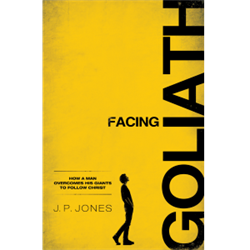
Guest (Male): What a great message for all of us today. Pastor JP provides us with great insight. That is why we'd like to make it available to you on CD. Just get in touch and mention today's date. We'll send it your way for just $5. Or if you'd like to support this ministry, you can write us at Truth That Changes Lives, 23331 Moulton Parkway, Laguna Hills, California, 92653, or give us a call at 949-916-0250. That's 949-916-0250. For your gift of $25 or more, we will send you a signed copy of JP's new book, Facing Goliath.
Please join us every Sunday at 9:00 or 11:00 a.m. at Crossline Church in Laguna Hills. The address is 23331 Moulton Parkway, Laguna Hills, California, 92653. Or check us out on the web at crosslinechurch.com. We're going to get to the address and phone number again in a moment, but before we do that, Pastor JP, do you have any insight from today's message?
JP Jones: Thanks, Greg. We're in a series called Read the Red, and we're looking at the teachings of Jesus. And right now we're in a section in Luke, Luke chapters 11, 12 and 13, where Jesus is giving an extended teaching about discipleship, about following God, and about the uniqueness of his mediation between God and man. We come to God only through Jesus Christ, and Jesus is our Lord, he's our king, and he's our savior. Following Christ is living out the life of Christ in us. It's following in the steps of Jesus.
And in Read the Red, we're talking about what Jesus teaches about kingdom discipleship. And here in Luke 11 and Luke 12, Jesus is contrasting the way of the Pharisees and the way of authentic Christianity. The emphasis of pharisaical religion was the external. It was the external obedience to the law, and not just the law, but external obedience to the law and the Pharisees' interpretation of the law. That's the nature of legalism. Legalism is not being obedient to the Word of God. Legalism is basing your spirituality on external standards, and many of those external standards go beyond even the the confines of scripture, they're human interpretations and they're they're religious expectations that other people put on us.
The Pharisees put burdens on people that God himself didn't even put, and they held to a standard that God himself didn't have. And the Pharisees measured spirituality, not by a transformed heart and by the love of God. They measured it by external obedience to the intricate, prideful interpretation and rules that they had for religion. And that is a that is a danger for us today. It is a danger for us to think of Christianity in terms of just the do's and don'ts that fulfill some church or denomination or philosophy or some human standard.
Rather than understanding that a real relationship with God is a transformed heart that's been transformed by the love of Jesus Christ, and an energized life that's being lived out in the power of the Holy Spirit. And that's what Jesus teaches in Luke chapter 12. He says authentic Christianity comes from within, a changed heart, a heart that's changed by the Holy Spirit. When we live in step with Jesus in the power of the Holy Spirit, that's authentic Christianity. And that that is experienced when we open up our hearts to the salvation of Christ and when we surrender our lives every day to the power of Christ. Wherever you are in your spiritual journey, that's God's call in your life right now. Would you surrender to him? Let's pray to the Lord.
Jesus, thank you that you died on the cross and rose again from the dead. And thank you that you send your Holy Spirit into our hearts. Jesus, save us and transform us, empower us by the Holy Spirit. In Jesus' name, amen.
Guest (Male): We want to help you in your relationship with Christ. Please get in touch with us at Truth That Changes Lives, 23331 Moulton Parkway, Laguna Hills, California, 92653. Or call us at 949-916-0250. On the internet, you will find us at crosslinechurch.com. We hope to see you at one of our services every Sunday at our new campus in Laguna Hills. For more information and directions, please go to crosslinechurch.com. Please join us next time on Truth That Changes Lives.
Featured Offer
Past Episodes

Featured Offer
About Truth That Changes Lives
About JP Jones
JP Jones is the founding Senior Pastor of Crossline Church in Laguna Hills, CA. Beginning with 16 people, Crossline has grown to a congregation of over 2,000 in 10 years. This growth has come largely through people receiving Christ and joining the church. JP is a dynamic and articulate Bible teacher with a passion to see people come to Christ and grow into being multiplying disciples for Jesus. JP began his ministry career with Campus Crusade for Christ and continues to have a heart for the Great Commission. Traveling on mission trips all over the world, JP preaches the gospel and trains pastors to be reproducing spiritual leaders.
For the past 25 years, JP has been an Adjunct Professor of Theology and Biblical Studies at Biola University and Talbot School of Theology. A published author, JP has written Facing Goliath by Baker Books and the discipleship curriculums, Transformed and Livin’ Large by Life Together. JP is a popular speaker at Men’s Retreats and Couples Conferences. JP is married to his wife Donna and they have 3 children. JP loves family vacation, the beach, Ultimate Fighting and a good cup of coffee.
Contact Truth That Changes Lives with JP Jones
info@crosslinechurch.com
http://pastorjpjones.com/
23331 Moulton Parkway
Laguna Hills CA 92653
(949) 916-0250