Oneplace.com

Luke 11:1-13, Part 2

July 16, 2026
00:00

How many of you have had every prayer you have ever prayed answered exactly the way you prayed it?

JP Jones: How many of you have had every prayer you've ever prayed answered exactly the way you prayed it?

Audience: Not to us but to your name be the glory! Yes!

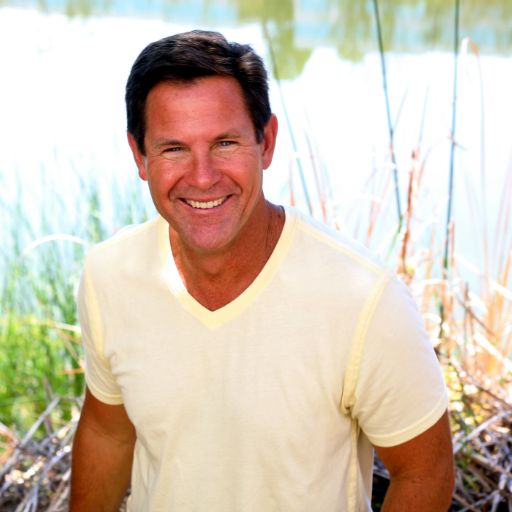
JP Jones: Thank you for joining us on Truth that Changes Lives. Pastor JP Jones is the senior pastor of Crossline Community Church in Laguna Hills, California and a professor in biblical studies at Biola University.

Today on Truth that Changes Lives, Pastor JP will be giving us a message from a series entitled, Read the Red. Bless us then as JP gives us part two of Luke 11, 1 through 13.

Now, see, some of us think prayer is, "If I just say the Lord's Prayer the right way, then God will give me all my requests. Then God will listen." That's not what Jesus is teaching. He's not saying, "Say these words and if you say them enough or if you say them in the right way, then I will hear and then I will answer."

That's not the teaching of Jesus. What he's saying is, there is a liturgy of prayer. Now, the word liturgy is from a Greek word _leitourgeo_, which means to serve as a worshiper or serve as a priest. And from _leitourgeo_, we get the English liturgical and the word liturgy. In a church, a liturgy is the form or the flow, the program.

It's the program and every church has a liturgy. Some churches are very highly liturgical. I mean, the program is the same every week and everybody knows it. It's even printed out and there's certain prayers and there's certain things that you say, that you repeat back and you lean to the left, you lean to the right, you stand up, sit down, fight, fight, fight. It's very liturgical.

How many of you, you know, have attended a church like that or grew up in a church like that? Very, okay. Jesus is saying here, this is how you pray. And the liturgy is first, you start with talking to God as your Father and you give praise and honor and glory to your Father.

And then now that you've got a God-centered focus, you tell Him your needs. The most pressing, the daily need. I, you know, for people that Jesus is speaking to, they had to be able to eat. I need food today. You can't get any more basic than that.

And then your spiritual needs. Forgive my sins. And then your spiritual needs toward others. Help me forgive others who have sinned against me. And then your spiritual protection and guidance. Lead me not into temptation.

See, there is a liturgy, start with God at the center, a focus of praise and worship, and then express your need, and then talk about the spiritual needs that you have. This is what Jesus is teaching here.

There is a language and a liturgy to the way we are to pray. Here's a third observation that's in this passage. There is an intimacy and dependence in prayer. Intimacy and dependence because Jesus said, "Pray this way. Say this. Father, hallowed be your name. Your kingdom come. Give us each day our daily bread. Forgive us our sins for we also forgive everyone who sins against us and lead us not into temptation." We are to address our prayers to our Father.

This was radical to the audience that Jesus is speaking to because a Jew at the time that Jesus is speaking this had such a high view of God. God was the creator, the sovereign Lord, the King. They couldn't even say His name. His covenant personal name. They couldn't even say it because it was revered in such awesomeness.

And Jesus said, "When you pray, say Father." Intimacy, openness, a loving connection, a child in the arms of their loving Father. In fact, Paul says in Romans chapter 8, "We haven't received the spirit of the world, which leads to fear, but the spirit of sonship by which we cry out, 'Abba, Father, Daddy.'"

We have an intimate relationship with God through Jesus Christ. Every person who has a relationship with Jesus Christ is a child of God. Today, maybe the prayer that you need to pray more than anything else is, "Lord Jesus, come into my heart and make me a child of God."

If you've prayed that prayer, if you have come into a personal relationship with God through Jesus Christ, you can address God as your Father in the most loving sense, the most intimate sense, the most gracious and compassionate sense that that word can possibly mean.

Because there's an intimacy and a dependence in prayer. And then talking to our Father who loves us and cares for us and created us and knows everything about us. We're to depend on our Father for our daily bread. We're to depend on our Father for the forgiveness of our sins. We're to depend on our Father for the grace to forgive others. We're to depend on our Father for guidance and spiritual protection.

You see, there is a humility that is to characterize our prayer life. We're to humble ourselves before God. We're to surrender our lives to God. We're to ask for God's help. We're to, "I can't do it on my own, God. I need you. Help me."

Help me just with what I need for my daily provision today in body, soul and spirit. Help me forgive my sins. Help me enable me to forgive others. Help me spiritually protect me. Guard me. Guide me.

There's a tremendous intimacy and dependence that's to characterize our prayers. I'm reading through the book of Deuteronomy right now in my quiet time. And I just read Deuteronomy chapter 3. Deuteronomy is the second giving of the law. So, it's the story of after the children of Israel, they've left Egypt, they've wandered for 40 years.

Now they've, they've come underneath Israel and they've come around it and they're kind of in what would be modern-day Jordan. And then they're going to cross the Jordan River and go into the Promised Land. But because of Moses's frustration, he disobeyed God and he did it in a public way, he doesn't get to lead the children of Israel into the Promised Land.

And in Deuteronomy 3, there's a recording of a conversation, a prayer between Moses and God. And Moses asks one more time, "Can I take them into the Promised Land?" And God says, "No." In fact, the language when you read that in Deuteronomy 3, it's, it's so intimate, God actually says, "No, and don't bother me about this again because I've already told you no."

"But what I want you to do is climb up on Mount Pisgah in Jordan and look at the Promised Land because you brought them this far. But now Joshua is going to take them in." That whole prayer conversation, even though God says, "No" to Moses's request, and Moses had asked for that several times, there's a certain familiarity about the conversation, a certain intimacy.

In fact, the Bible says that Moses was a guy who talked to God face to face. When you look into the New Testament, you see a prayer like Jesus in the Garden of Gethsemane when He is in such agony and stress and He says, "God, remove this cup from me." And He's talking about having to go to the cross.

"But not what I will, Your will be done." Absolute surrender. You fast forward a little further in Acts chapter 4 and you have Peter and James and John, they're set free after being persecuted and beaten and told never to again to preach in the name of Jesus and they find the church all gathered together in a prayer gathering in Acts 4. And they all get together and they, they talk to God and they say, "You're the sovereign Lord."

And they, they quote from the Psalms that you're the creator of heaven and earth and they talk about God's authority and God's sovereign rulership over everything. And then they say, "You know, they're gathered together those who crucified the Lord Jesus and now they want to get us. So protect us and empower us with your Holy Spirit and enable us to speak the word of God with boldness."

There's this prayer in Acts 4 of the church about what they needed at that particular moment. So, you have all these examples in scripture of intimate, open, dependent prayer. That's what Jesus is teaching here in, in Luke 11.

We're to talk to God and, and we're to ask for what we need and we're to be very open and humble and surrendered in talking to Him about everything. Here's a fourth observation. There's a passion and a persistence in prayer.

A passion and a persistence. Because now Jesus illustrates his teaching and He says, "Suppose one of you has a friend and he goes to him at midnight and says, 'Friend, let me have three loaves of bread because a friend of mine is on a journey and has come to me and I have nothing to set before him.'"

"Then the one inside answers, 'Don't bother me. The door is already locked and my children are with me in bed and I can't get up and give you anything.' I tell you, though, he'll not get up and give him the bread because of the fact that he's his friend. Yet because of the man's boldness he will get up and give him as much as he needs. So, I say to you, 'Ask and it will be given to you; seek and you will find; knock and the door will be opened to you.'"

So, Jesus illustrates this particular teaching about prayer by talking about a guy who in the middle of the night knocks and wakes up his neighbor and says, "Hey, I got some friends who've come from a long journey and I don't have anything to feed them for breakfast. So, can I borrow some food?" And the guy goes, "What are you doing? It's the middle of the night. We're all in bed. No."

And he just keeps on knocking, keeps on banging and says, "I really need something. Come on." And finally, the guy gets up, not because it's his friend, but he says, "I got to stop this dude from knocking on my door." Jesus said, "That's the way we're supposed to come to God in prayer."

This very interesting teaching what Jesus is telling us here. And in the New International Version, it says, "He doesn't do it because he's his neighbor and friend, but because of his boldness." In other translations, it says because of his persistence. And in still other translations, it says because of his shameless audacity.

Well, now those are interesting words, boldness, persistence, shameless audacity. I'm not really sure that they all tie together. The reason that there's a variance in the translation is because this word, and don't say you never learned anything in church. This word is a _hapax legomenon_, which means it only appears once. Only one time in the Bible. This is it. So, it's not like there are other places in the Bible where you can compare how it's used, how it's translated.

So, we don't have any other way of knowing how this word is used other than looking at classical Greek language outside the Bible and looking at the etymology of the word in terms of where it comes from. It's a compound word. In other words, it's actually made up of three words. And this particular word that's used here is, it's the Greek term _anaideia_.

And _anaideia_ is made up of _a_, _n_ and _daia_. Three words. And when you put them all together, a loose translation would be a continual activity that has no sense of regard or shame. A continual activity that has no sense of regard or shame. In other words, doing something without giving a rip about what anybody thinks about it. And you keep on doing it.

Now this is a weird illustration. Why I thought of this when I thought of a picture. Jesus already gives us the picture of the dude knocking on the door without caring about what the guy thinks. But you know what I thought of. You're just going to have to go with me on this. I thought of the scene in the movie _The Graduate_. Remember _The Graduate_ with Dustin Hoffman? So, Dustin Hoffman is in love with Elaine, played by Katharine Ross.

And then but he had an affair with her mom, you know, not a good deal. So, they try to put an end to the relationship, but he goes up to see her when she's up at Berkeley. And then she, you know, accepts a proposal of marriage from some fraternity guy just because she wants to please her parents. So, then she leaves Berkeley and goes down to Santa Barbara. So, now Dustin Hoffman's on a search and he's leaving Berkeley.

And he's trying to get in time to get to her before the wedding takes place. And the whole time before in the background, you hear, (_singing_) "Doo doo doo doo doo doo doo doo doo doo. And here's to you, Mrs. Robinson. Jesus loves you more than you will know." So, then he's on the way. So, now he gets to Santa Barbara and he runs out of gas and he pretends he's a priest and he finally gets directions and he gets over to where the, where the church is.

Anybody see this movie? You know what I'm talking about? It's all kind of. And then the theme behind, you know, it's going on, Simon and Garfunkel singing Mrs. Robinson. And he finally gets to the church and he can't get in. It's locked. So, he climbs up to the top and there's this glass. And he sees Elaine about to be married to this dude. And everybody's out there.

And he starts pounding on the glass, "Elaine! Elaine!" I mean, right in the middle of the wedding ceremony. And everybody stops like, "What is this dude doing?" It'd be like he was right up there and the wedding's taking place down here. He's pounding on the glass, "Elaine!" Oh, because he doesn't care. He's got shameless audacity. He's got boldness and persistence. He's got _anaideia_ all over him.

"Elaine!" And she turns around and she looks at the guy that she's going to marry. And she looks at him. And she runs out of the church. And they get together and they take off down the street. And then they get on the bus. And then it comes, (_singing_) "Doo doo doo doo doo doo doo doo. And here's to you, Mrs. Robinson." Boy, it took me out. I told all my energy to give that illustration.

Okay, so the point is. The point of all of that, Dustin Hoffman. "Elaine!" It's like, he didn't care what anybody thought. He didn't care if it was like a taboo, a wedding was going on, if her, if her parents didn't like it. He didn't care that he interrupted what was going on because he was desperate to stop the situation because he wanted to marry Elaine. So, he did not care what anybody else thought about how he was acting.

Now, that's shameless audacity. That's the same thing the dude getting up in the middle of the night in a Middle Eastern culture, banging on somebody's door when the whole family's together, waking them up and keep on banging on the door until the guy finally gets up and gives him what he wants. And that's what Jesus says ought to characterize the way we pray.

That's urgency. That's desperation. That's boldness. That's persistence. That's conviction. Now just let that set and, and let it go. Is that the way I pray? I think far too many of us pray with a passivity, an intellectual manipulation.

We pray with a mechanical, rote. I checked that off the box. Or we pray with a over-casualness. You know, "Me and Jesus, we're buds. I'm talking to the old man upstairs." And we need to pray if we're going to pray like Jesus taught us. If we're going to pray like Jesus taught us and He says this is the kind of prayer that God hears and answers, with conviction, persistence, boldness, passion, desperation, urgency.

We need to pray saying, "God, unless you do this for me, I'm done. I got no plan B. Unless you meet my daily needs, they aren't going to be met. Unless you forgive my sins, they won't be forgiven. Unless you give me the grace to forgive someone else, I can't forgive them. Unless you keep me from temptation, I'm stepping right into sin."

We need to pray. I'm not making this up. This is what Jesus said. And that's why He illustrated it in the most extreme way possible. He illustrates it with what would be a total cultural faux pas to the people who were listening to what He was saying. And He says, "And guess what? That real rude, awkward who cares what my neighbor thinks? I need something from him, so I'm going to keep banging on the door until he gives it to me. That's the way I want you to come to God and pray."

One last thing. There's a promise and an expectancy in prayer. A promise and an expectancy. Jesus says, "For everyone who asks receives; he who seeks finds; he who knocks, the door will be opened. Which of you fathers, if your son asks for a fish, will give him a snake instead? Or if he asks for an egg, will give him a scorpion? If then, though you are evil, you know how to give good gifts to your children, how much more will your Heavenly Father give the Holy Spirit to those who ask him?"

Jesus is promising answered prayer here. Now let me tell you. Before you think this passage answers all of your questions about prayer, there's a whole lot of verses in the Bible about prayer and you need to read and study every one of them before you develop a comprehensive biblical theology of prayer. And even once you do that, there will be unanswered questions.

And I'll tell you what I mean. Just quick illustration. Absolute honesty. How many of you with a show of hands have had every prayer you've ever prayed answered exactly the way you prayed it? Yeah, that's it. No one. Now, lest you feel discouraged, how many of you here have had God answer a prayer for you in some way?

Yeah. See, there's mystery in prayer. And in this passage, in this situation, in response to this question, Jesus says, "This is how you ought to pray and guess what? You can pray with expectancy. God's going to hear and answer your prayer." How? "Keep on asking. Keep on seeking. Keep on knocking."

So, He relates answered of prayer to God's faithfulness and promise. He promises. So, we should expect God to hear and answer our prayers based upon the faithfulness of God. He's a promise keeper. And based upon the goodness of God. Because then He says, "If you being evil, know how to give good gifts to your children, how much more will your Heavenly Father give the Holy Spirit to those who ask Him?"

So, He says, "You're evil." But you know the concept of giving good gifts to your children, fathers. He said. So, how many here are dads? Okay. Dads, we're limited, we're finite. None of us are perfect fathers. In the words of Jesus, we're evil. How many of you dads that raised your hand? How many of you like giving good gifts to your kids? Yeah, same show of hands, right?

So, Jesus's point is, "You understand this. You're evil but you know how to give good gifts to your kids." How much more will your Heavenly Father give the Holy Spirit to those who ask Him? See, this is a Jewish argument. It's a rabbinical argument. And it's kind of known as the how much more argument. Jesus uses this on several occasions. It's He sets up a condition, which we all can appreciate and understand and accept.

And then He says in a comparative way, "God's even supernaturally beyond that. And if you can accept this, then of course you must accept this about God. So, if we can accept that we're evil and we know and delight in giving good gifts to our children, God who is perfect and good, do you think He wants to give good gifts to His children? Infinitely more. How much more?" That's what Jesus says.

So, when we pray, we have the promise of God and the goodness of God to give us hope and expectancy that God is going to hear and answer our prayers. We need to pray. And Jesus shows us how. He shows us how.

Host: What a great message for all of us today. Pastor JP provides us with great insight. That is why we'd like to make it available to you on CD. Just get in touch and mention today's date. We'll send it your way for just $5. Or if you'd like to support this ministry, you can write us at Truth That Changes Lives, 23331 Moulton Parkway, Laguna Hills, California 92653. Or give us a call at 949-916-0250. That's 949-916-0250.

For your gift of $25 or more, we will send you a signed copy of JP's new book, _Facing Goliath_. Please join us every Sunday at 9 or 11:00 AM at Crossline Church in Laguna Hills. The address is 23331 Moulton Parkway, Laguna Hills, California 92653. Or check us out on the web at crosslinechurch.com.

We're going to get to the address and phone number again in a moment. But before we do that, Pastor JP, do you have any insight from today's message?

JP Jones: Thanks, Greg. We're in a series called, Read the Red. We're looking at the teachings of Jesus. And the teaching that we're looking at right now is the teaching of prayer. In Luke chapter 11, verses 1 through 13, Jesus teaches us how to pray. Jesus teaches us what to expect when we pray. You see, the promise of God is that he hears and answers our prayers.

Prayers, prayer is an intimate conversation with God. And we pour out our heart to him and he hears and he answers because of his goodness and because of his faithfulness and his promise. In Luke 11, Jesus compares the goodness of God to earthly fathers. And he says that every earthly father understands the concept of giving good gifts to his children. And if we can embrace that and get our hands around that, how much more will our Heavenly Father give to those who ask him?

And not just give, but he promises give the Holy Spirit to those who ask him. In other words, Jesus says that our prayers actually access the work of the Holy Spirit in our life. When we come to God and we seek him and we pour out our hearts before him, the Holy Spirit energizes us, empowers us, creates faith within us. The Holy Spirit fills us. The Holy Spirit assures us of the goodness of God.

You see, God hears and responds to prayer. There's mystery there because of his sovereignty and his power and his wisdom. Sometimes he says no, sometimes he says wait, sometimes he says yes, sometimes he says yes and it's even better than what we asked. But the Holy Spirit always responds to our praying, giving us the encouragement that our good God will give us good gifts.

Our good God will give us good gifts and he gives us those good gifts as we seek him and ask him and pray. Every one of us has the need to come to God and to seek him and to pray and to ask him to work in our life. You right now have so many things that God wants to unfold for you and open up for you if you will seek him and ask him in prayer.

And especially he wants to give you the Holy Spirit to give you that assurance that he's doing that. If we are evil and we know how to give good gifts to our children, how much more will our Heavenly Father give the Holy Spirit to those who ask him? Would you ask him? Would you ask him even right now?

God, thank you that you're good and you're faithful and you're powerful. You hear and you answer our prayers. And we ask you to send your Holy Spirit to assure our hearts of your love and goodness and plan. And send your Holy Spirit as our helper to guide us as we're seeking you in prayer. Thank you God that you hear and you answer our prayers. In Jesus' name, Amen.

Host: We want to help you in your relationship with Christ. Please get in touch with us at Truth That Changes Lives, 23331 Moulton Parkway, Laguna Hills, California 92653. Or call us at 949-916-0250. On the Internet, you will find us at crosslinechurch.com. We hope to see you at one of our services every Sunday at our new campus in Laguna Hills. For more information and directions, please go to crosslinechurch.com.

Please join us next time on Truth That Changes Lives.

Audience: Cross before, the world behind. No turning back. Raise the banner high. It's not for me. It's all for you.

This transcript is provided as a written companion to the original message and may contain inaccuracies or transcription errors. For complete context and clarity, please refer to the original audio recording. Time-sensitive references or promotional details may be outdated. This material is intended for personal use and informational purposes only.

Featured Offer

Facing Goliath: How a Man Overcomes His Giants to Follow Christ
Facing Goliath offers help to every man who wants to overcome his giants and experience a life-changing relationship with Jesus Christ. Addressing topics like intellectual doubt, fear, pride and selfishness men will find practical steps to discovering the answers to questions, of faith, salvation and spiritual growth. This discipleship game plan will help men learn Christian essentials in a way that appeals to those who are seeking what it means to be a follower of Jesus and those who have already found Jesus and wanting to grow.

About Truth That Changes Lives

The mission of Truth that Changes Lives is to maximize the use of creative media for the purpose of preaching the gospel and teaching the Word of God. Our vision is to see believers transformed to become multiplying disciples and lost people calling on the name of Jesus and being saved. Our prayer is that every day someone, somewhere around the world, hears the gospel, believes in Jesus and is saved.

About JP Jones

JP Jones is the founding Senior Pastor of Crossline Church in Laguna Hills, CA. Beginning with 16 people, Crossline has grown to a congregation of over 2,000 in 10 years. This growth has come largely through people receiving Christ and joining the church. JP is a dynamic and articulate Bible teacher with a passion to see people come to Christ and grow into being multiplying disciples for Jesus. JP began his ministry career with Campus Crusade for Christ and continues to have a heart for the Great Commission. Traveling on mission trips all over the world, JP preaches the gospel and trains pastors to be reproducing spiritual leaders.

For the past 25 years, JP has been an Adjunct Professor of Theology and Biblical Studies at Biola University and Talbot School of Theology. A published author, JP has written Facing Goliath by Baker Books and the discipleship curriculums, Transformed and Livin’ Large by Life Together. JP is a popular speaker at Men’s Retreats and Couples Conferences. JP is married to his wife Donna and they have 3 children. JP loves family vacation, the beach, Ultimate Fighting and a good cup of coffee.

Contact Truth That Changes Lives with JP Jones

Mailing Address
23331 Moulton Parkway
Laguna Hills CA 92653
Telephone Number
(949) 916-0250