

Husbands & Wives, Part 1


See to it that no one takes you captive through empty philosophy according to the traditions of men rather than according to Christ. Jesus Christ should be at the center of our thinking.
JP Jones: See to it that no one takes you captive through empty philosophy, according to the traditions of men, rather than according to Christ. Jesus Christ should be at the center of our thinking.
JP Jones: Thank you for joining us on Truth That Changes Lives. Pastor JP Jones is the senior pastor of Crossline Community Church in Laguna Hills, California, and a professor of biblical studies at Biola University. Today on Truth That Changes Lives, Pastor JP will be giving us a message from a series entitled All About Jesus. Let's listen in as JP gives us part one of Husbands and Wives.
JP Jones: If you have your Bibles, would you open to Colossians chapter 3? Colossians 3, verse 22, to chapter 4, verse 1. Slaves, obey your earthly masters in everything, and do it not only when their eye is on you to win their favor, but with sincerity of heart and reverence for the Lord. Whatever you do, work at it with all your heart as working for the Lord, not for men. Since you know that you will receive an inheritance from the Lord as a reward, it is the Lord Christ you are serving. Anyone who does wrong will be repaid for his wrong, and there's no favoritism. Masters, provide your slaves with what is right and fair, because you know that you also have a master in heaven.
JP Jones: This passage addressed to first-generation believers deals with a cultural, social, economic reality: slavery. It might be offensive to us, it should be offensive to us, but it was a reality of the New Testament world, and the Apostle Paul speaks spiritual truth into that reality. Now, step away and remember the context. Paul is talking about how Jesus Christ is the answer to every question. In Colossians, he talks about theological and philosophical issues, and he says, "See to it that no one takes you captive through empty philosophy, according to the traditions of men, rather than according to Christ. Jesus Christ should be at the center of our thinking."
JP Jones: In the book of Colossians, Paul says that Christ is before all things, and he is the Creator of all things, and he holds all things together. In fact, in Jesus dwells the fullness of God in bodily form. And then he says, "We've been made complete in Christ." In chapter 3, Paul addresses personal, relational issues and says, "Jesus is the answer to marriage. Jesus is the answer to parenting. Because in Jesus, we've died. We've been raised to new life. Jesus is in us and we're in Jesus." And so the Christian life applies to everything. And so Paul applies it to his audience at that time, to their reality, which was being a slave and being a master. In fact, in the church at Colossae, there were side-by-side worshipping together those who were masters and those who were slaves.
JP Jones: Here's my first observation. I'm no master, and I'm certainly not a slave. That might be what you're thinking as you read this. You might be thinking, "I'm no master. I'm not a slave, so what does this have to do with me?" In fact, you may be thinking, "I can't believe this says what it says about masters and slaves." Because maybe you're feeling a little bit like I remember I felt back when I was in college when the mini-series Roots came out, based on Alex Haley's book. Now, probably like most of us, I was raised to believe that slavery was a blight on our history as a people, and I couldn't understand how someone could enslave another human being. But I do remember watching that mini-series Roots and the story of the main character, Kunta Kinte, when he was taken from his home in Africa, brought to the Americas and made to be a slave. And there's a scene in the very beginning of that mini-series where he's trying to be forced to change his name to Toby, and he wouldn't change his name, and he's beaten and whipped.
JP Jones: I remember watching that, and it's just a movie, but kind of getting viscerally connected to it and almost feeling something hot inside of me, like, "This is just not right!" You know, how sometimes you get emotionally involved in movies? It's like, I'm watching this, and I just felt this anger towards the whole idea. So maybe on some level, you have a similar response, and you read a passage like this, and you almost can't believe that the passage says what it says because what you would expect for it to say is a scathing rebuke of slavery and a call to overthrow the institution. But it doesn't say that. In fact, it doesn't even give a comment one way or the other. Now, to be sure, there are prophetic words in the Bible that call Christians to stand for justice, to stand for truth, to demonstrate mercy, even at the expense of their own life. When you look at the Hebrew prophets, the book of Isaiah in particular, Isaiah 58 and 59, we're called as God's people to break the bonds of wickedness, and to to release the captives, and to stand for justice and for mercy.
JP Jones: But as Paul is writing to this church in the New Testament, he just acknowledges that there are some slaves and that there are some masters. But both have authentic relationships with Jesus Christ, and as such, they should live authentically as followers of Jesus Christ. It's interesting to note, Paul's focus is on transformation. And as a result, in the second century, virtually every Christian master had completely freed and released his slaves, which created a whole upheaval in the culture and led primarily in the Greco-Roman world to a whole change of that system. But it didn't happen by the masses revolting, it happened by individuals experiencing personal transformation.
JP Jones: You may be thinking, "I'm no master, I'm certainly not a slave." But you know, there is a parallel. Because slaves were those who were under authority, and masters were those who exercised authority, and that's just the way the economic system worked in those days. And we have different names and different titles and different job descriptions, but we have a similar economic system. We got some people who work, and some people who oversee the people who work. We got some people who are in charge, and some people who are under authority. We have some people who are blue-collar grunts, and some people who are white-collar entrepreneurs. We have some people who are middle managers, and some people who are CEOs. We have some people who work at McDonald's, and some people who own McDonald's. And all of them are potential followers of Jesus Christ.
JP Jones: And Paul says, "The power of the gospel is primarily not in changing your social strata, but in living new life, whatever station in life you find yourself in. Living new life." So wherever you are on the economic scale, the challenge of this passage is, "Live new life in Jesus Christ." Live as an authentic follower of Jesus Christ. You see, new life in Christ is practical. In other words, it is it is relevant to every sphere of our life. It's relevant to the way we think politically, it's relevant to the way we think economically, it's relevant to the way we raise our kids, it's relevant to the way we do our marriages, it's relevant to every part of our lives. It's practical. We don't just come to church and learn this theology about Christianity, and then go live any life we want to live. No, the the truth of the gospel changes us, and it's to change us from the inside out. That's why Jesus said in the Sermon on the Mount, "Let your light shine before men, that others may see your good works and glorify your Father in heaven."
JP Jones: So this passage, by the way, is primarily addressed to Christians. If you're here as a seeker, as a guest, as someone who's trying to figure out even if you buy into this message of the gospel, you are more than welcome. We like to say this is a safe place to hear a life-changing message. But I don't want you to get the impression that these words are addressed to what you have to do in order to get in. No, this is addressed to those who are already in and how they're supposed to live because they're in. This is a this is a passage that is challenging us to take our Christianity to the marketplace, to live it out as real followers of Jesus.
JP Jones: It's not only practical, it's pervasive, because being a follower of Jesus touches on every area. There is a way to be a Christian boss, and there is a way to be a Christian employee. It's powerful. Because what changed society wasn't revolution, but transformation. Transformation. In 1 Peter 3, Peter kind of in a similar way addresses this dynamic. Many of us have heard 1 Peter 3:15, "But sanctify Christ as Lord in your hearts, always being ready to make a defense to everyone who asks you to give an account for the hope that's in you," with gentleness and reverence. It's a great verse on apologetics. How we'd have answers for people's questions, how we'd have to make a defense for Christianity, how we'd have to set forth the case of Christianity. Many of us think about that as a very, you know, theological or intellectual type argument, how we can know apologetics and be able to answer people's questions.
JP Jones: And we can take that verse out of its context and miss what's really being said there, because verse 15 is preceded by verses 1 to 14. And verses 1 to 14 describe, first of all, the dynamic of marriage. What a Christian marriage looks like, what it means for a wife to be a follower of Christ, what it means for a husband to be a follower of Christ. Then it talks about social relationships and and how we're to live as citizens and how we're to even be people who bless when other people curse. But rather than cursing in response, we bless in response. And then it talks about how we handle pressure and persecution and tough times. And and the fact that when we live a distinctive Christian life, all of a sudden people take notice. That's verses 1 to 14. And verse 15 says, "But sanctify Christ as Lord in your hearts, always being ready to make a defense to anyone who asks you to give an account for the hope that's in you, yet with gentleness and reverence."
JP Jones: Well, why in the world would anybody ask me to give an account of my hope? Because they see the way I'm living. They see the way I'm living, and then they say, "What is it about your life?" And then I make a defense with gentleness and reverence. Well, if no one's asking you to give an account, it's probably because you're not living a life that would make them want to find out what you got. That's why in Colossians 3, Paul talks about this new life, he applies it to marriage, he applies it to parenting, and now he applies it to the marketplace. Be someone in the marketplace, whether you're a boss or whether you're an employee, but be that person as a follower of Jesus, that your life is so distinct, people will want to ask you to give an account for the hope that you have. You may not be a master or a slave, but you're in social relationships. And as such, live as a follower of Jesus.
JP Jones: Here's a second observation. Know who you're working for. Know who you're working for. Verse 22 says out of reverence for the Lord. Verse 23, working for the Lord, not for men. Verse 24, since you know that you will receive an inheritance from the Lord as a reward, it's the Lord Christ you're serving. Verse 1 of chapter 4, because you know that you have a master in heaven. Wow! Did you see how many times that's that's one, two, three, four, five times. The Lord, the Lord, the Lord, the Lord. Jesus Christ is our boss. That's who we work for. Wherever we are on the strata of the workforce, Jesus is our boss. We need to understand that.
JP Jones: Whether we're a blue-collar grunt or the richest CEO in Orange County, we all work for Jesus Christ, as followers of Jesus Christ. See what I'm saying? It's written to people who are followers of Jesus, and as followers of Jesus, Jesus is our boss. And we're told to fear the Lord, to work for the Lord, to understand we're going to receive a reward or a punishment from the Lord, and to understand we got a master in heaven. See, this is reality. But is it our reality? Are we living that out? Are we experiencing that? It is true because that's what it's saying, it's true, Jesus is the boss. But are we experiencing that?
JP Jones: I had a conversation this past week. Guess where? The Jacuzzi. That's right. I'd worked out, I'm sitting in the Jacuzzi, I'm talking to this guy, and I've talked to him several times and and I've struck up a friendship with him and and had the opportunity to share my faith and we kind of have this ongoing dialogue. So we pick it up every time when I see him, kind of where we left it off. We're having a dialogue, we start talking about truth, and objective truth, and subjective truth, and relativism. I mean, it's amazing how deep you can go while you're sitting there in a Jacuzzi, right? This guy's a really smart guy, and he's telling me about his view that he's kind of come to this place in his life where he he really doesn't really care that much about objective truth. What really matters to him is what's true for him. And he kind of said it like challenging me like, "Well, you know, what's your take on that?"
JP Jones: And I said, "Well, I to tell you the truth, since we're talking about truth, I do believe that what's true for you is true for you." I believe that. Of course, you believe certain things and to you they're true, and you live in the light of those truths and you make your decisions based upon that. So what's true for you is true for you, but I also believe there is truth independent of what you or I or other people think. And he goes, "What do you mean?" I said, "Well, you may be one of those Holocaust deniers. You could be one of those people who say, 'I just don't believe the Holocaust happened.' That's your truth. And you really don't believe it happened, and you feel certain things in light of the fact that you don't believe it happened, and you make decisions in light of the fact that you don't believe it happened. What's true for you is the Holocaust never happened."
JP Jones: "Only guess what? The Holocaust really happened. It did. It's an objective fact verifiable by history and evidence. So what's true for you may be that it didn't happen, but what is actually true is it did happen." I go, "Let me just tell you, I've come to a place in my life where I really believe part of maturity is aligning what's true for me with what is actually true. In fact, I don't want to be a person who just lives by what's true for me. I want what's true for me to be what is actually true." I go, "That's especially important for me as a follower of Jesus Christ, because I don't want to believe in Jesus just because it's true for me. If it's not true, I don't want to believe it. No, I believe in Jesus Christ because he really lived, he really died, he really rose from the dead. It's true. And I believe it, not because it's just true for me, I believe it because it's really true. And I want my whole life to be like that. I want my truths to be truth. Truth. It is the Lord Jesus Christ who has authority over everything, who is our boss." Is it our truth? See, we got to know who our boss is.
JP Jones: Here's a third observation. We got to know what's at stake. We have to know what's at stake. Verse 24 says, "Since you know that you will receive an inheritance from the Lord as a reward, it is the Lord Christ you are serving. Anyone who does wrong will be repaid for his wrong, and there's no favoritism." Reward and recompense. It's part of a larger New Testament teaching. Now we know, as we read the Bible, and we take the Bible seriously, which we do, that there is an ultimate heaven and hell. But the Bible also teaches that as followers of Jesus Christ, there is a spiritual judgment. Heaven and hell is not at stake, but you know what is at stake according to the Bible? Reward.
JP Jones: It's an interesting teaching in the Bible that for some reason many people either have never explored or they somehow don't like. Because we've wrongly, and if you hold this, it is wrong, it is unbiblical, I want to tell you that. Held on to this notion that because we're saved by grace, which we are, by grace alone through faith alone in Christ alone, that really it doesn't matter how I live once I get to heaven. I'm going to have the same experience as everybody else in heaven, because we're in heaven. So whether someone really lived a committed, faithful, Christ-centered life, or they were up and down, or worldly, or backslidden, or did whatever they did, once we get to heaven, it's all going to be same for all of us, because we're in heaven. That's wrong, and that's not what the Bible teaches. Is true, if you believe in Jesus, and you're saved by grace alone through faith alone in Christ alone, you're going to go to heaven. But your experience in heaven may not be the same experience as the person sitting next to you.
JP Jones: Really? Because the Bible teaches rewards for faithfulness and obedience. And that's what Paul's talking about here in Colossians chapter 3. "Say, JP, where do you get that?" Well, I get it from a lot of places, but let me just take you to one place, 1 Corinthians chapter 3. 1 Corinthians chapter 3, Paul says this, verse 10 to 15: "By the grace that God has given to me, I laid a foundation as an expert builder, and someone else is building on it. But each one should be careful how he builds, for no one can lay any foundation other than the one already laid, which is Jesus Christ. If any man builds on this foundation, using gold, silver, costly stones, wood, hay or straw, his work will be shown for what it is because the day will bring it to light. It will be revealed with fire, and the fire will test the quality of each man's work. If what he has built survives, he will receive his reward. If it's burned up, he'll suffer loss. He himself will be saved, but only as one escaping through the flames."
JP Jones: Paul uses the imagery of building a building, and he's very clear, you got to have a foundation to build a building. You don't have a foundation, you can't build that building. The foundation is critical, and he says the foundation is Jesus Christ. So he's addressing Christians who have the foundation of Jesus Christ in their life. So he's not addressing heaven or hell, saved or unsaved. He's addressing people who have the foundation of Jesus, but who build a building on that foundation, the building is our lives. And he says, "You can build with different building materials, and you can build with different quality of work, and it all makes a different building." We within a 10-mile radius of our location right here could find super cheap homes and the most expensive homes in the country. They all have a foundation, but they're built with different building materials, and they are built with different craftsmanship.
JP Jones: Every Christian has the same foundation, Jesus Christ. But not every Christian lives the same kind of Christian life. And so Paul is saying, "There's coming a day when we will stand before God, who's the ultimate judge, who knows the secrets of men's hearts, who will look at everything about our lives, everything about our building. We're there because we got the foundation, but he's going to look at our building, and he's going to test it." And what passes the test is rewarded. So if you show up and your building is strong and built out of eternally significant building materials and built out of the craftsmanship of a Spirit-filled life and a faithful dedication to Jesus Christ, the substantial part of your building will pass the test, and you'll be rewarded. But on the other hand, if you stand before God, you got the foundation of Jesus, but the building burns up, you're saved because you got the foundation of Jesus, but barely.
JP Jones: I like to say, "You're either going to receive, 'Well done,' or you're going to be, 'Well done.'" This is a biblical teaching, and the Bible then tells us, "What are those rewards, and what are the basis of those rewards?" There are several passages in the New Testament that speak about reward, that speak about crowns, that speak about the hope of of "well done" in heaven that will will be part of our experience in heaven. You know one of my favorite movies, Gladiator with Russell Crowe. But in Gladiator, in the beginning, he's he's Maximus, he's the general. They're about ready to take on the hordes of Germania, and they're all lined up to fight, and they got the infantrymen and they got the they got the artillery, you know, the guys with the arrows. And he's he's on his horseback and he's ready to take the cavalry troops and and march into them. And he and he looks over at his guys and he says, "You know, if you find yourself riding all alone in green fields with the sun in your face, don't be afraid, because you're in Elysium, and you're already dead." And his troops go, "Yeah!" And then he looks over and says, "Men, what we do in this life echoes throughout eternity." That's good theology.
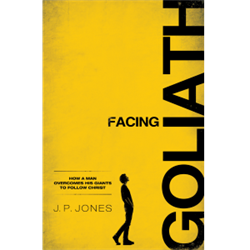
JP Jones: What a great message for all of us today. Pastor JP provides us with great insight. That is why we would like to make it available to you on CD. Just get in touch and mention today's date. We'll send it your way for just $5. Or if you'd like to support this ministry, you can write us at Truth That Changes Lives, 23331 Moulton Parkway, Laguna Hills, California, 92653, or give us a call at 949-916-0250. That's 949-916-0250. For your gift of $25 or more, we will send you a signed copy of JP's new book, Facing Goliath. Please join us every Sunday at 9 or 11:00 AM at Crossline Church in Laguna Hills. The address is 23331 Moulton Parkway, Laguna Hills, California, 92653. Or check us out on the web at crosslinechurch.com. We want to help you in your relationship with Christ. Please get in touch with us at Truth That Changes Lives, 23331 Moulton Parkway, Laguna Hills, California, 92653. Or call us at 949-916-0250. On the internet, you will find us at crosslinechurch.com. We hope to see you at one of our services every Sunday at our new campus in Laguna Hills. For more information and directions, please go to crosslinechurch.com. Please join us next time on Truth That Changes Lives.
Featured Offer
Past Episodes

Featured Offer
About Truth That Changes Lives
About JP Jones
JP Jones is the founding Senior Pastor of Crossline Church in Laguna Hills, CA. Beginning with 16 people, Crossline has grown to a congregation of over 2,000 in 10 years. This growth has come largely through people receiving Christ and joining the church. JP is a dynamic and articulate Bible teacher with a passion to see people come to Christ and grow into being multiplying disciples for Jesus. JP began his ministry career with Campus Crusade for Christ and continues to have a heart for the Great Commission. Traveling on mission trips all over the world, JP preaches the gospel and trains pastors to be reproducing spiritual leaders.
For the past 25 years, JP has been an Adjunct Professor of Theology and Biblical Studies at Biola University and Talbot School of Theology. A published author, JP has written Facing Goliath by Baker Books and the discipleship curriculums, Transformed and Livin’ Large by Life Together. JP is a popular speaker at Men’s Retreats and Couples Conferences. JP is married to his wife Donna and they have 3 children. JP loves family vacation, the beach, Ultimate Fighting and a good cup of coffee.
Contact Truth That Changes Lives with JP Jones
info@crosslinechurch.com
http://pastorjpjones.com/
23331 Moulton Parkway
Laguna Hills CA 92653
(949) 916-0250