

Freedom Reigns, Part 1


You've come into this relationship with God. You've stepped across the line. You're living by grace. Stay living by grace. Don't go back to some form of law. Don't go back to some form of religious deception, and don't let other people pull you back into it either.
JP Jones: You've come into this relationship with God, you've stepped across the line, you're living by grace. Stay living by grace. Don't go back to some form of law. Don't go back to some form of religious deception. And don't let other people pull you back into it either.
Guest (Male): Thank you for joining us on Truth That Changes Lives. Pastor JP Jones is the senior pastor of Crossline Community Church in Laguna Hills, California, and a professor in Biblical Studies at Biola University. Today on Truth That Changes Lives, Pastor JP will be giving us a message from a series entitled Galatians. Let's listen in as JP gives us part one of Freedom Reigns.
JP Jones: If you have your Bibles, would you open to Galatians chapter four? We're going to continue for a few moments in our study in the book of Galatians, which we began several weeks ago. This book, which is the earliest of Paul's letters, lays out the simple message of the gospel: that it's all about grace. It's all about what God has done for us in Jesus Christ. It's not about what we do.
Because God tells us in scripture, and especially the book of Galatians, that there are only two avenues or paths or approaches to God. One is by means of grace, trusting in who God is and what God has done for us. The other is by law, trusting in ourselves and what we do to earn favor with God.
When we come to God on the basis of law, the Bible says it always ends in death, frustration, guilt, and pride. When we come to God on the basis of grace, it leads to forgiveness and freedom, the power of the Spirit, and the certainty of eternal life. So this basic theme is developed in the book of Galatians, really in every chapter.
In Galatians chapter four, what the Apostle Paul is telling us is that we have a new spiritual position. And because we have a new spiritual position, we're to live a new life. We are new people and we're to live a new life. In fact, say that with me: We are new people and we're to live a new life. Let's say it again: We are new people and we're to live a new life.
Paul unpacks that by going back to the Old Testament and drawing some analogies. He unpacks that by his personal interaction with the Galatians, and then he drives it home with a strong exhortation to live the new life that we have because we're new people.
This morning we're going to do something a little different in terms of the way we look at this passage and study it. I'm going to do just an expositional Bible study. I'm going to look at a few verses and then come back and try to explain what they mean and how they impact each of our lives.
We're going to work our way through Galatians four, starting at verse seven. And then when we finish our study in God's word, we're going to celebrate the Lord's Supper and communion together. Galatians chapter four, verse seven says this: "So you are no longer a slave but a son; and since you are a son, God has made you also an heir."
God says that we have this new birthright with Him, a new spiritual position. We were strangers, we were aliens, we were separated from God, but now we're sons of God. A few weeks ago when we looked at what this meant, I tried to explain to you that this is a very particular term. It's not a generic term; this is not a gender-neutral term.
It's important to understand that everybody, men and women, are sons of God because to be a son is to be an heir. It's to be the rightful inheritor of all the resources of the Father. And so by our relationship with Jesus Christ, God has made every person, male and female, a son—that is an heir to all of God's blessing.
That's why in Ephesians chapter one it says that blessed be the God and Father of our Lord Jesus Christ, who has blessed us with every spiritual blessing in Christ. If you're a believer in Christ, if you've crossed the line, you have every spiritual blessing because you are a son and you are an heir to all that God has provided.
And so we have a new spiritual position, a new status, a new identity. In fact, God has sealed that new identity by giving us the Holy Spirit to confirm it to us. Romans chapter eight, verses fifteen to seventeen says, "For you did not receive a spirit that makes you a slave again to fear, but you received the spirit of sonship. And by him we cry, 'Abba, Father.' The Spirit himself testifies with our spirit that we are God's children. And now if we are children, we are heirs—heirs of God and co-heirs with Jesus Christ."
So that's our spiritual standing. We are sons and heirs; in fact, we are co-heirs with Jesus Christ. So because we're new people, we ought to live a new life. Paul continues in the book of Galatians chapter four, verse eight: "Formerly, when you did not know God, you were slaves to those who by nature are not gods. But now you do know God—or rather you're known by God. How is it that you are turning back to those weak and miserable principles? Do you wish to be enslaved by them all over again?"
It's a rhetorical question. Paul says we've come to know God. And then he clarifies it and says, "Well, really, we've come to be known by God." We are now in a relationship with God where we know God and God knows us. You can't get any more intimate than that.
Paul says in Philippians chapter three, "Whatever things were gain to me, those things I count as loss for the sake of Christ. And more than that, I count all things to be loss in view of the surpassing value of knowing Christ Jesus, my Lord." We know God. We've been rescued out of darkness, we've been rescued out of slavery to sin and to the law and to works.
We've come into this relationship of grace. And so Paul asks the question, since we've come to know God and we're known by God, why would we want to go back to the very system and very approach and very lifestyle we've been rescued from?
What I find interesting is Paul wrote these words two thousand years ago to the church at Galatia, and they're just as relevant today to the church in America, to the church in Orange County, to the church at Crossline. Because every one of us as believers in Christ is in this daily spiritual battle where we are being pulled and torn and tempted to go back to a life that we've asked God to rescue us from.
It's crazy, isn't it? In a sense, every one of us is spiritually schizophrenic. That's what Paul wrote in Romans chapter seven. He talked about this spiritual struggle. "I myself with my mind am serving the law of God, but with my flesh the law of sin. Wretched man that I am! Who's going to set me free from this body of death?" Here's Paul, the greatest Christian of all time, acknowledging he had that struggle.
But he's saying as a spiritual mentor to the Galatians, "I shared this message with you, which was of grace that set you free, and you're no longer in slavery to these false gods, these false philosophies, these false ideologies, these false schemes to live your life successfully. Why do you want to go back to it?"
Paul says here that we are all on this teeter-totter of following the true God versus some form of false gods. And there's all kinds of false gods. When you read the Hebrew scriptures, they had real names and they were represented by wood and stone and metal idols. And there're still people today who worship gods like that.
I just came back from India, and India is a country of over a billion people and it is a polytheistic society. Everywhere you go, there are shrines and idols. In fact, people wear clothing that's specifically designated to certain gods, and they have certain paintings and makeup that they wear that represents their devotion to certain gods. And those gods are actually idols like the Bible talks about.
So don't think that form of idolatry no longer exists today. It may not be that prevalent in our culture, but it is in cultures around the world. But what Paul is saying here is that behind every idol is an idea. And you may have been an atheist—you may be an atheist here this morning—but your atheism is a false god. Agnosticism is a false god.
Different forms of secular psychology are false gods. Materialism is a false god. See, they are philosophies that control us and guide us and lead us, and in that form they're like gods that we worship. Colossians 2:8 says, "See to it that no one takes you captive through hollow and deceptive philosophy, which depends on human tradition and the basic principles of this world rather than on Christ."
So any kind of lifestyle, worldview, philosophy, religion, preoccupation that is not according to Christ is a false god that can capture us. And for those of us in Christ, it's something we've been set free from. And Paul is arguing here as he's writing to the Galatians, why go back to that which we've been set free from? We're new people. And because we're new people, we ought to live a new life.
Galatians chapter four, verse ten says, "You are observing special days and months and seasons and years. I fear for you that somehow I have wasted my efforts on you. I plead with you, brothers, become like me, for I became like you." Paul's saying, "When I came to you, I came on a level to be able to share the gospel of grace with you."
He talks about this in 1 Corinthians chapter nine, that this was his evangelistic approach. He didn't come as someone who was self-righteous and altogether and then challenge people to step into his world. Paul put himself on a level of a common denominator with people and then tried to reach them on their level.
Using language and terms and felt needs and approaches on their level to help them see the truth and the grace of Jesus Christ. So he says in 1 Corinthians chapter nine, "To the weak I became weak even though I wasn't weak; to the strong I became strong even though my strength is in the Lord; to those who are under law, I became as one under law even though I'm not under law; to those who are without the law, I became as one who is without the law, though I'm not without the law of Christ. Why? I became all things to all men that I might save some."
And Paul is saying, "When I came to you, Galatians, I came to you on a level that you could understand and you could appreciate because I wanted to tell you the message of Jesus Christ." And so now what I'm challenging you to do is to become like me in what sense? Someone who's living by grace. Someone who's committed to Christ, someone who's focusing on seeking after Christ.
Because what had happened was the Galatians had made a good start but were now going back to their old approaches to living life. And that's typical of human behavior. When the pressure is put on us, we tend to revert to what's comfortable to us or what's known to us or what's familiar to us.
Even if it's dysfunctional, even if it's destructive, even if it's something that we hate, because it's familiar, we revert to it. And so these Galatians had been people who had been strictly observing Jewish law. And they'd come to realize that that was a dead-end street, and that salvation was by grace alone and that salvation was through the freedom that Christ provided, what we're going to celebrate here in a few moments in the Lord's Supper.
And they welcomed that message, they received it, and were walking in it for a while. And then some people came down and said, "What are you doing?" and tried to put pressure on them in terms of their old religious habits and ways. And when the pressure became too great, they reverted back to what was familiar to them.
There's going to be in our lives a daily pressure to revert back to what's familiar. Now, that is going to be very personal to our own upbringing and to our religious experience. Some of us come from deeply religious backgrounds, but there's a certain dysfunctionality about that religious background. Others of us come from totally secular backgrounds, and we know there's a dysfunctionality about that secular background.
But what's going to happen is when the pressure intensifies, we are going to be tempted to revert back to what is familiar. And what God is saying to us is to stay with grace. It's grace that saves us and it's grace that sustains us, and what we need to do is stay with grace.
For these folks at Galatia, what they were being tempted and pulled back into was to evaluate and judge their spirituality based on their religious rituals—how they observed certain days, how they kept certain creeds, how they followed certain traditions, how they measured themselves by their discipline in sticking with certain religious laws.
Paul addresses this issue in Colossians chapter two, he says this: "Don't let anyone condemn you for what you eat or drink or for not celebrating certain holy days or new moon ceremonies or Sabbaths. For these rules are only shadows of the reality that is yet to come, and Christ himself is that reality. Don't let anyone condemn you by insisting on pious self-denial or the worship of angels or saying that they have had visions about these things or other things."
People who do that are following the pride of their sinful minds and they are not connected to Christ. He's the head of the body, for he holds the whole body together with its joints and ligaments and it grows as God nourishes it. You have died with Christ. He has set you free from these spiritual powers of this world. So why do you keep on following the rules of this world like "don't handle" or "don't taste" or "don't touch"?
These rules are mere human teaching about things that deteriorate as we use them. These rules may seem wise and spiritual and religious because they appear to represent strong devotion and pious self-denial, but they provide no help in conquering your flesh.
Wow! That's Colossians chapter two, verses sixteen to twenty-three. Did you catch what was being said there? It's don't let people judge your spirituality based on how you keep certain traditions. Don't let people judge your spirituality based on how you keep certain man-made rules. Don't let people judge your spirituality based on their religious paradigm.
Because the real issue is Christ, and are you connected to Christ and are you experiencing the very life of Christ? But the danger because of the familiarity of religion is that living a life like that kind of seems religious. It kind of appeals to our pride in terms of our part in the bargain.
And so we're going to be pulled into thinking that's what it really means to live a religious life: it's following rules and traditions and celebrating certain holidays and ceremonies. And Paul is saying that stuff only has meaning when it connects you to Christ. And if it doesn't connect you to Christ, it's worth nothing.
In fact, it's not even worth nothing; it's negative and detrimental because it gives you a false sense of having a relationship with God when in fact it does nothing for your relationship with God. That's why Paul is so adamant in his letters, especially to religious people. Because pagans don't even claim to have any kind of relationship with God.
But religious people do. So it's its own deception around it because they think they're okay with God when in fact they're not. That was the danger that the Galatians had. And Paul is saying, "Hey, you've come into this relationship of God, you've stepped across the line, you're living by grace. Stay living by grace. Don't go back to some form of law. Don't go back to some form of religious deception. And don't let other people pull you back into it either."
Galatians chapter four, verse thirteen says, "You've done me no wrong. As you know, it was because of an illness that I first preached the gospel to you. Even though my illness was a trial to you, you did not treat me with contempt or scorn. Instead, you welcomed me as if I were an angel of God, as if I were Christ Jesus himself. What has happened to all your joy?"
"I can testify that if you could have done so, you would have torn out your eyes and given them to me." So here's a very personal exchange that is between Paul and the Galatians, and we've got to understand what was going on there. Paul comes to Galatia early in his ministry, and apparently he had some kind of physical infirmity and it was related to his eyes.
There's been different theories about that. Maybe Paul had very weak eyesight. He says later in the book of Galatians chapter six, "See with what large letters I am writing this with my own hand." We know that Paul in many of his letters used an amanuensis or a secretary, a guy named Tertius, who Paul dictated it and wrote it out, probably because Paul had a difficulty in his vision.
But he wrote Galatians himself, but he wrote it in very large script. Apparently when he came there, he had a problem with his eyes—maybe with some kind of eye infection, maybe it was just a vision problem. Maybe it was related to what took place in Acts chapter fourteen when Paul was literally stoned.
He was stoned in the Jewish custom because they thought he was a false messenger. And so they dragged him out of the city, and according to the Jewish custom, those who were his accusers started chucking rocks at him. And after he got hit by enough rocks, he fell down. And the custom was once the person was down, the actual accusers took large stones and dropped them on the head to ensure that the person was dead. That was what stoning was all about.
In Acts chapter fourteen, it says Paul was stoned. But then all of a sudden he got back up. And it's not really clear in Acts chapter fourteen whether he was resurrected from the dead or he just made a miraculous recovery. What is a plausible explanation—and this is just my opinion, take it for that—is later on in 2 Corinthians chapter twelve, Paul talks about he says, "I know a man who was caught up into the third heaven."
He saw visions and things that he wasn't even supposed to see. He saw the marvelous things of heaven that were so powerfully consuming that it transformed him. And Paul is speaking about himself. He had a vision of heaven. And then he afterwards says, "And then I had the thorn in the flesh." So I had this heavenly vision, but I also had the thorn in the flesh, and I prayed three times that the thorn in the flesh would go away, but it didn't go away, and God said, "My grace is sufficient for you."
So here's my opinion: Acts chapter fourteen, Paul really died. And he was in heaven. And he saw how awesome it was. But God said, "I want you to see how awesome it is so you'll stay motivated in serving me as my apostle." And God raised him back from the dead. But whatever took place in that stoning marred him physically, probably gave him some kind of eye problem. Who knows? Maybe he went partially blind. Maybe the sockets were crushed.
And that was the thorn in the flesh that he prayed for deliverance from but he never got deliverance from; he just got God's grace to sustain him. He comes to Galatia and the Galatians saw physically saw this representation and understood the pain it actually took Paul to preach the gospel. They were moved with compassion.
Here's a guy that's in physical pain and is dealing with this infirmity, and yet he loves us so much he wants to tell us about Jesus. That made them all the more open to the message. Then they heard the message of grace and they received it. Paul is saying here in Galatians chapter four, "Remember that? You would have given me your own eyes. That's how much you connected with me and my heart with you."
And then he says, "What the heck has happened? What's happened?" And then he says this: "Who's stolen your joy?" It's a little throwaway line in the midst of this. Do you know what? When you try to live by the law, you've got no joy. When you live by grace, you've got an abundance of joy because it's one of the fruits of the Holy Spirit.
Guest (Male): What a great message for all of us today. Pastor JP provides us with great insight. That is why we'd like to make it available to you on CD. Just get in touch and mention today's date. We'll send it your way for just $5. Or if you'd like to support this ministry, you can write us at Truth That Changes Lives, 23331 Moulton Parkway, Laguna Hills, California, 92653, or give us a call at 949-916-1
Featured Offer
Past Episodes

Featured Offer
About Truth That Changes Lives
About JP Jones
JP Jones is the founding Senior Pastor of Crossline Church in Laguna Hills, CA. Beginning with 16 people, Crossline has grown to a congregation of over 2,000 in 10 years. This growth has come largely through people receiving Christ and joining the church. JP is a dynamic and articulate Bible teacher with a passion to see people come to Christ and grow into being multiplying disciples for Jesus. JP began his ministry career with Campus Crusade for Christ and continues to have a heart for the Great Commission. Traveling on mission trips all over the world, JP preaches the gospel and trains pastors to be reproducing spiritual leaders.
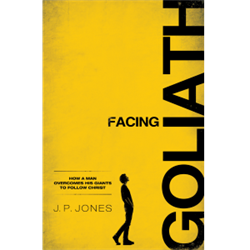
For the past 25 years, JP has been an Adjunct Professor of Theology and Biblical Studies at Biola University and Talbot School of Theology. A published author, JP has written Facing Goliath by Baker Books and the discipleship curriculums, Transformed and Livin’ Large by Life Together. JP is a popular speaker at Men’s Retreats and Couples Conferences. JP is married to his wife Donna and they have 3 children. JP loves family vacation, the beach, Ultimate Fighting and a good cup of coffee.
Contact Truth That Changes Lives with JP Jones
info@crosslinechurch.com
http://pastorjpjones.com/
23331 Moulton Parkway
Laguna Hills CA 92653
(949) 916-0250