

Ask Seek Knock, Part 1


If we think about prayer as having a magic lamp and all we have to do is rub the lamp to receive our three wishes, we are not thinking about prayer the way Jesus teaches us to think about it.
JP Jones: We know that if we thought about prayer as a blank check or we thought about prayer as having a magic lamp and we got our three wishes and all we had to do was rub the lamp and we’re going to get our three wishes, then we’re not thinking about it the way Jesus teaches us to think about it.
Guest (Male): Thank you for joining us on Truth That Changes Lives. Pastor JP Jones is the senior pastor at Crossline Community Church in Laguna Hills, California, and a professor in biblical studies at Biola University. Today on Truth That Changes Lives, Pastor JP will be giving us a message from a series entitled "The Religion of Jesus." Let’s listen in as JP gives us part one of "Ask, Seek, Knock."
JP Jones: If you have your Bibles, would you open to Matthew chapter 7? We’re continuing in our study in the Sermon on the Mount. This is the greatest sermon ever preached by the greatest preacher who ever lived. In Matthew 5, 6, and 7, we have Jesus teaching on what it means to be a kingdom disciple.
Jesus is teaching us a countercultural lifestyle. He’s putting His way in opposition to the way of religion and to the way of the secular culture. The way of Jesus is a unique path. It’s a path of inner transformation. Jesus says that it’s a transformation of the heart, that true religion begins in the heart.
When your heart is transformed by God’s love and God’s righteousness, that transformation of the heart expresses itself out in a transformation of life and a transformation of relationship. In Matthew chapter 7, Jesus has begun this chapter with some pretty strong statements about our own hypocrisy.
He says that every one of us has a propensity to not see our own stuff and to magnify the stuff of others. We are guilty of judging others. Jesus says we need to first deal with the speck in our eye before we try to take the log out of somebody else’s eye. Then He drops down in a few verses and talks about the general rule that kingdom disciples are to follow as they treat one another.
He says to do unto others as you would have them do unto you. In other words, the Golden Rule. Sandwiched between this teaching negatively on judgment and positively on doing unto others as you would have them do unto you is the teaching of Jesus on prayer.
Jesus is saying the connecting point in terms of really having transformed relationships with people is having a transformed relationship with God. When your relationship with God is transformed by prayer, the natural byproduct is healthy relationships with one another.
This is what Jesus says in Matthew chapter 7: "Ask and it will be given to you; seek and you will find; knock and the door will be opened to you. For everyone who asks receives; and he who seeks finds; and to him who knocks the door will be opened. Which of you, if his son asks for bread, will give him a stone? Or if he asks for a fish, will give him a snake? If you then, though you are evil, know how to give good gifts to your children, how much more will your Father in heaven give good gifts to those who ask him?"
Jesus says that we are to ask, we are to seek, and we are to knock. Because God is good, to those who ask, they receive; and to those who seek, they find; and to those who knock, the door is opened unto them. This is the general teaching of Jesus about prayer. Prayer is talking to God and listening to God.
It's to be the normal, natural conversation of kingdom disciples. You don’t have to use holy thees and thous. You don’t have to get on your knees or stand with your hands in the air. It’s not the position of your body; it’s the attitude of your heart. The attitude of the heart is to keep on asking, keep on seeking, and keep on knocking, knowing that because God is good and He loves you, He delights in giving good gifts to His children.
Jesus is making this huge promise and there are some things that are foundational to what He has to say. First of all, Jesus phrases this promise in what's known as a present tense language. It’s a progressive kind of language. I’ve been trying to help my daughter in her Spanish II and I’ve reached the wall where I remember as much as I remember and I don't remember any more.
"Como estan Pablo y Louisa? Pablo esta bien pero Louisa tiene catarro. Que lastima lo siento. Ojala que se mejore pronto." It's a dialogue I memorized, but I really don't know much beyond that. But she's working on right now what's called the present progressive tense. It's talking about the ongoing action.
That's the verb tense that Jesus phrases this promise in. In other words, we don't just ask once. We don't just seek once. We don't just knock once. We keep on asking. We keep on seeking. We keep on knocking. What motivates us? God's good and God has promised that He hears and He wants to give good gifts to His children.
Prayer is to be the ongoing communication. That's what Paul said in 1 Thessalonians chapter 5. He said to pray without ceasing. There should be both consciously and even subconsciously an ongoing dialogue that we have with God. It's one of the things that I'm really appreciative of in modern technology, the Bluetooth device in your car.
Now people don't think I'm a schizophrenic talking to myself as they see me driving because they just assume I'm talking on the phone as I'm one hand on the wheel and gesturing this way and doing that. They think I'm talking to somebody closing some big deal. I'm talking to God.
For some reason, I get this delusion that I'm in my own personal space if I'm in my car, but people can see in. I get in my car and I start talking because like many of you, I have been privileged to develop in my relationship with God a sense of an ongoing dialogue with God.
Sometimes it's quietly in my head in my prayers and sometimes when I have the opportunity I voice my prayers, but there is an ongoing communication. There needs to be an ongoing communication we have with God. Certainly there need to be some times that we pray in a focused disciplined way.
We get alone as Matthew 6 describes into our closet, our prayer time of devotion, and we talk to God in a very focused disciplined way. There need to be, as many of the scriptures describe, times where we gather together with other believers and pray.
Jesus is talking about continual asking, continual seeking, continual knocking. If you have yet to develop just a dialogue with God, that's what this is encouraging you towards. It's promising that God hears that and God delights in giving what it is you ask, in revealing what it is that you're seeking, and in opening up whatever door it is you're knocking on.
In fact, these three action descriptions are levels of intensity in our seeking and they build on one another. So there is an asking level, a seeking level, and a pounding on the door level of our pursuit of God. It's encouraged, it's commanded, and it's even promised that when we do that, God hears and God responds.
Why? Because He's a good God and He uses an illustration that most of us can understand. In fact, we especially can understand in light of what we just experienced in this child dedication. We saw before us parents who love their children and want to give good gifts to their children.
In fact, they love their children so much they want their children to have God's blessing on their lives and invited us as a community of faith to pray for them. We understand in our flaws and imperfections what it means for a parent to bless their child.
God says if you can understand that concept, how much more will our perfect, holy, good Heavenly Father bless His children when they come to Him in prayer. This is a phenomenal promise that Jesus is giving to us. In fact, if we didn't have anything else to shape our theology of prayer, this would almost be like a blank check promise.
Ask, seek, knock. If you ask you're going to receive, if you seek you're going to find, if you knock it's going to be opened to you. You're going to get whatever you ask for. But we know that's not true. We know that if we thought about prayer as a blank check or we thought about prayer as having a magic lamp and we got our three wishes and all we had to do was rub the lamp, then we're going to get our three wishes, then we're not thinking about it the way Jesus teaches us to think about it.
Already in this sermon, if you've been with us, and if not I'll take you back a few pages, already in this sermon in Matthew chapter 6, Jesus had said some things about prayer. He said, "You know what? If you pray to be seen by men, if the motive of your prayer is to have other people think you're really religious and you're really righteous and you are the most spiritual person around, if that's what's driving your prayer life, you're not going to get anything from God. You have your reward in full."
If you pray to be seen by men, well, men see you, but God doesn't really hear you. So Jesus has already told us that there is a certain way of praying that we're not going to get what it is that we ask for. It raises this question: does the scripture teach us more about prayer than just this promise of asking, seeking, and knocking?
The answer is yes. In fact, if you'll allow me, I'm going to take you through a very mini course on prayer and talk about some of the prerequisites that the Bible gives us for answered prayer. Here's the first one: we need to pray in Jesus' name. John 14:13 and 14 says this, as Jesus is speaking:
"And I will do whatever you ask in my name, so that the Son may bring glory to the Father. You may ask me for anything in my name, and I will do it." The qualification here is asking in Jesus' name. When Jesus says that we're to pray in His name, it means more than at the end of our prayer say, "In Jesus' name, amen."
That's a good thing, it's a great habit, but that's not what praying in Jesus' name means. Praying in Jesus' name means we understand we have no claim on God. In fact, we have no access to God apart from Jesus Christ. In a few moments as we celebrate communion, what we are confessing to God and to one another is our only hope before a holy and righteous God is what Jesus Christ did for us on the cross.
His atonement paid for our sins, removed the barrier of sin, and opened up access to God so that we can come to God and call Him our Father through Jesus Christ. Jesus said in John 14:6, "I am the way, the truth, and the life. No one comes to the Father but by me."
Praying in Jesus' name is an acknowledgment that our connection with God, our openness with God, our capacity to talk to God and know that He hears us is only through Jesus. Our attitude is one of humility, acknowledging it's only through Jesus Christ that we have a relationship with God. So we need to pray in Jesus' name.
Secondly, a prerequisite for prayer is we need to pray with a clean heart. Psalm 66:17 to 19 says this: "I cried out to him with my mouth; his praise was on my tongue. If I had cherished sin in my heart, the Lord would not have listened; but God has surely listened and has heard my voice in prayer."
The psalmist says that if I cherished sin in my heart, God's not going to listen. Sin creates a barrier between us and God. That's the whole reason why Jesus Christ died on the cross, to remove this barrier of sin. But in the course of our lives, every one of us can get tripped up in sin.
If we don't confess those sins, if we hold on to them, if we develop a hard heart or a prideful spirit about our own behavior, that sin becomes like a barrier and our prayers just hit it and bounce back down. One of the prerequisites for praying in a way that God hears and answers our prayers is the barrier of sin has to be removed.
1 John 1:9 says this: "If we confess our sins, he is faithful and righteous to forgive us of our sins and to cleanse us from all unrighteousness." Because Jesus Christ has died on the cross for our sins, when we confess the sin that's created a barrier between us and God, that barrier is removed and our prayers have access back to God.
But if we cherish sin in our hearts, we can't have any expectation that God is going to hear and answer our prayers. So we need to pray in Jesus' name and we need to pray with a clean heart. We need to pray with pure motives. Jesus addressed that in Matthew 6.
If our motive is just to be seen by men, if our motive is to make other people think we're really religious, God doesn't hear those prayers. James says this in James 4:2 and 3: "You want something but you don't get it. You'll kill and covet, but you cannot have what you want. You quarrel and fight. You do not have because you do not ask God. When you ask, you do not receive because you ask with wrong motives that you may spend what you get on your pleasures."
If our only motivation in praying is just get, get, get for me, then our bad motives distort our ability to pray. God looks at our hearts. That's the whole teaching on the Sermon on the Mount: it's a transformed heart. There's a tension here because Psalm 37:4 says this: "Delight yourself in the Lord and he'll give you the desires of your heart."
There's a promise where God says He's going to give you the desires of your heart. So what's the difference between Psalm 37:4 and James 4 that says you quarrel and you fight, you have not because you ask not, you have not because you ask with bad motives? Well, it's the first part of Psalm 37:4: delight yourself in the Lord.
When you're delighting yourself in the Lord, have you noticed that your desires are different? What you want is different. When you surrender your life to Christ, when you give your life to God and you cross the line of commitment to Christ, your heart gets transformed and the stuff that you really want changes.
But if you're just holding on to control of your own life, being the center of your own life, just looking to satisfy your own selfishness, those prayers that come out of that place are not heard by God. But the prayers that come out of the heart of someone who's delighting themselves in God, God gives them the desires of their heart.
Our motives matter to God. So we need to pray in Jesus' name, we need to pray with a clean heart, we need to pray with pure motives, and we need to pray out of an abiding relationship with Jesus Christ. John 15:7 and 8 Jesus says this:
"If you abide in me and my words abide in you, ask whatever you wish and it shall be done for you. By this is my Father glorified that you bear much fruit and so prove to be my disciples." Jesus is giving us an illustration about what it means to be in a connected relationship with God.
We're to live dependently and He picks the example of a branch connected to the vine. In a healthy plant, all the juices flow up through the vine, they flow into the branch, and fruit is produced. In the same way, if Jesus is the vine and we're the branch, when we have a real connection to Him, we're abiding in Him, all of His life flows through us and He produces fruit through us.
Part of that fruit production is Jesus answering our prayers. In fact, the promise is if you abide in me and my words abide in you, ask whatever you wish and it'll be done for you. By this, my Father's glorified. God gets glory because He answers our prayers and fruit is produced and everybody gets to see that we're disciples of Jesus.
The prayer that flows out of the life of someone who is abiding in Christ always gets answered. So the prerequisite is we need to pray out of an abiding relationship with Jesus.
Guest (Male): What a great message for all of us today. Pastor JP Jones provides us with great insight. That is why we'd like to make it available to you on CD. Just get in touch and mention today's date. We'll send it your way for just five dollars. Or if you'd like to support this ministry, you can write us at Truth That Changes Lives, 23331 Moulton Parkway, Laguna Hills, California, 92653, or give us a call at 949-916-0250.
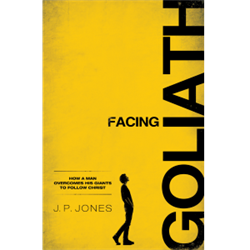
For your gift of twenty-five dollars or more, we will send you a signed copy of JP's new book, "Facing Goliath." Please join us every Sunday at 9:00 or 11:00 AM at Crossline Church in Laguna Hills. The address is 23331 Moulton Parkway, Laguna Hills, California, 92653, or check us out on the web at CrosslineChurch.com. We're going to get to the address and phone number again in a moment. But before we do that, Pastor JP, do you have any insight from today's message?
JP Jones: Thanks, Greg. In Matthew chapter 7, Jesus continues His teaching on the Sermon on the Mount. This is the greatest sermon ever preached by the greatest preacher who ever lived. Jesus is talking to us about the narrow way of kingdom discipleship. In Matthew 7, Jesus speaks about this whole issue of prayer.
Jesus commands us to keep on asking, keep on knocking, keep on seeking. He says for the person who asks and the person who knocks and the person who seeks, they'll find. Then Jesus gives an illustration of a son and a father and the desire of a father to give good gifts to his son.
He brings that illustration to bear upon this whole issue of prayer and He says we are children of God and God is our Father who wants to give us good gifts. So what we need to do is ask for them and God will answer our prayers. The teaching of Jesus is built upon this relationship dynamic.
Answered prayer is based upon the fact that we are in a relationship with God and God loves us. God has a good plan for our lives and God wants us to pursue Him and seek Him and find Him. God wants us to talk to Him. God wants us to open up every area of our lives to Him. God wants us to be in a personal relationship with Him.
As our Father, He delights in giving good gifts to us. Understanding prayer is built upon this wholesome, positive, great relationship between a son and a father. For us to understand the dynamic of prayer and answered prayer any other way, then we're going to miss the boat.
In fact, in John chapter 15, Jesus uses the illustration of the branch and the vine and the fact that the branch bears fruit, but the life, the fruit-producing capability comes through the vine into the branch and then the branch bears the fruit. So we as disciples are to abide in Jesus who is the vine and His life will flow through us and we'll bear fruit.
Jesus says that's the prerequisite for answered prayer. When we have this abiding relationship with Jesus, then His life naturally flows through us and part of that is Jesus working in and through us by answering our prayers. It's the relationship context that provides the background for understanding the Bible's teaching on prayer and answered prayer.
Apart from a relationship with God, we have no hope for God answering our prayers. We have no hope for God hearing our prayers. When we're in a relationship with God, we have the hope of God our Father who loves us hearing us and answering us and fulfilling for us the good plan that He has.
So back to the Sermon on the Mount, Matthew chapter 7. Jesus is telling us the way of kingdom discipleship. It's a narrow way. He says we've got to keep on asking, keep on knocking, keep on seeking. Just like a father who wants to give good gifts to his children, God will give good gifts to us.
We can pray with confidence that God will hear and answer when we have that strong abiding relationship with Him. That's what Jesus teaches. If that's what you want, that kind of abiding relationship with Jesus, why don't you talk to Him about it? Why don't you ask Him to be real in your life, to fill your life and give you the hope of answered prayer?
You can do that as simply as praying. I invite you to pray with me right now. Lord Jesus, I love You. I want You to be in the center of my life. I want to abide in You. I want to have a strong personal relationship with You. I want to open up every area of my life to You and I want to walk in the light of Your love. As my Heavenly Father I ask You to give me the good gifts that You want to give me because You love me. I believe that You're going to do that because I believe Your word. I pray for this in Jesus' name. Amen.
Guest (Male): We want to help you in your relationship with Christ. Please get in touch with us at Truth That Changes Lives, 23331 Moulton Parkway, Laguna Hills, California, 92653, or call us at 949-916-0250. On the internet, you will find us at CrosslineChurch.com. We hope to see you at one of our services every Sunday at our new campus in Laguna Hills. For more information and directions, please go to CrosslineChurch.com. Please join us next time on Truth That Changes Lives.
Featured Offer
Past Episodes

Featured Offer
About Truth That Changes Lives
About JP Jones
JP Jones is the founding Senior Pastor of Crossline Church in Laguna Hills, CA. Beginning with 16 people, Crossline has grown to a congregation of over 2,000 in 10 years. This growth has come largely through people receiving Christ and joining the church. JP is a dynamic and articulate Bible teacher with a passion to see people come to Christ and grow into being multiplying disciples for Jesus. JP began his ministry career with Campus Crusade for Christ and continues to have a heart for the Great Commission. Traveling on mission trips all over the world, JP preaches the gospel and trains pastors to be reproducing spiritual leaders.
For the past 25 years, JP has been an Adjunct Professor of Theology and Biblical Studies at Biola University and Talbot School of Theology. A published author, JP has written Facing Goliath by Baker Books and the discipleship curriculums, Transformed and Livin’ Large by Life Together. JP is a popular speaker at Men’s Retreats and Couples Conferences. JP is married to his wife Donna and they have 3 children. JP loves family vacation, the beach, Ultimate Fighting and a good cup of coffee.
Contact Truth That Changes Lives with JP Jones
info@crosslinechurch.com
http://pastorjpjones.com/
23331 Moulton Parkway
Laguna Hills CA 92653
(949) 916-0250